Jesus has sent us the Holy Spirit to lead us to experience rest and peace grounded in his love.

What is common to all of us is that we experience some expression of loneliness to varying degrees, sometimes consciously but mostly unconsciously. We are social beings, we want to belong, to be part of, and this is why we are communal. We may do, say, or turn a blind eye to behaviors that go against our conscience just to be accepted, acknowledged, and/or noticed. This behavior further feeds our loneliness, because though we may be “accepted”, we become more alienated from our true self. We are not accepted for who we are but who we portray ourselves to be.

At the core of our being, what we all seek is to be loved, and to love in return. We strive from the moment of our conception not only to exist but to actualize the fullness of who God is calling us to be. Through our time of gestation, we are not potential human beings, we are human beings actualizing out potential. A difference between me typing this now and when I was in my mother’s womb is that before my birth, I was smaller and more vulnerable.

We as human beings are a living, craving hunger and desire to be in communion with God and one another from the moment of our conception until our natural death and continuing on into eternity. This is true to the believer and the atheist alike. Until we embrace this deepest of needs and desires, we will be restless, anxious, and unfulfilled. We can feel isolated and alone, even in the midst of a hundred people or daily likes on social media. St. Augustine in the introduction to his autobiography said it best: “You have made us for yourself, O Lord, and our hearts are restless until they rest in thee.”

God has made us for himself and constantly invites us to be in a relationship with him and with each other because he is the foundation and source of our being. Sin is the turning away from that invitation, a curving, or caving in upon oneself away from God and others. It is also the unwillingness to bother or to care, to reach out toward another in need. For what we do to the least of our brothers and sisters, we do to Jesus. We are not just to be pro-birth though, we as Catholics are to be pro-life, and we are invited to promote a consistent ethic of life.

Jesus became human in his Incarnation. He too, as we did, developed in the womb of Mary to show the importance of the dignity of the person and that our dignity is grounded in our relationship with God our Father, meaning we are all brothers and sisters. We are his beloved daughters and sons, just by who we are not by what we do. Jesus was not a plan B, but he was always the primary plan. In the fullness of time, when God so willed, he sent his Son to become one with us in our humanity so that we can become one with him in his divinity. 

Jesus is the face, hands, and body of God. He came that we might see and experience God. Jesus experienced all we experience except for sin because he never, in any thought, word, or deed, rejected or said no to his Father. His whole life was a, “Yes” to the will of God. Jesus is the bridge, the way to love and be loved, authentically.

In today’s Gospel, Jesus continues preparing his disciples for the reality that he will be returning to the Father. Though he will ascend to the Father, he will not his apostles nor has he left us alone. He has and will continue to be with us for all ages. This is so because as the Son of God made man, in his Ascension, he returned to the Father not just in his divinity as the Son, but also in his humanity. God created all of humanity and his creation as interconnected, and because of that, we all experience this transcendent act of the Ascension when Jesus returned to the Father in his glorified, human body.

Jesus shared with his disciples: “When the Advocate comes whom I will send you from the Father, the Spirit of truth who proceeds from the Father, he will testify to me. And you also testify, because you have been with me from the beginning”(Jn 15:26-27). Jesus is talking about the Holy Spirit, the third person of the Trinity, the infinite Love experienced and shared between the Father and the Son. We become sharers in this divine love and communion of the Holy Trinity through our participation in the life of Jesus.

As we experience the love of the Holy Spirit, develop a relationship with him, we begin to feel alive, we begin to heal and to feel whole, because we have experienced the love we have been made for. We have experienced being loved for who we are and as we are. We no longer have to say, do, or accept those actions that we don’t agree with or that go against our conscience, to belong. St. John Henry Cardinal Newman has stated that our conscience is the “Aboriginal Vicar of Christ”. Jesus dwells within us, to guide and lead us, to help us to develop a well-formed conscience. He encourages us to also say, “Yes” to his Father as he has and continues to do.

We share in the trinitarian love when we grow our relationship and participate in the life of Jesus. This great gift of grace will continue to grow as we testify to this love and share it with others. The greatest gift of God, the love that he gives us, expands as we receive and give his love away. The more we give, the more we will receive. That does not mean fixing others or their problems. We are called to be present, to accompany, and journey with others, meeting them as Jesus met others and meets us, as and where we are. We are to laugh with, cry along, encourage, empower, and support, but above all to be present, to allow the love of the Holy Spirit to happen through us.

Jesus has not left us as orphans. Jesus cares, even if we believe or feel like he is not listening. His return to the Father through his Ascension has given us a greater and more intimate access to the Holy Spirit. By trusting in his love, we will begin to heal from and free ourselves from the tendrils of doubt, fear, and anxiety.

We are not alone. We will heal, and expand when we say, “Yes”, to God’s will and allow ourselves to be drawn in by the tender chords of his love to grow in our relationship with him. Allowing ourselves to experience and receive more of God’s love, helps us to slow down more so that we will better listen, be more aware of and present to our needs and the needs of each other. Once identified, we can choose with the guidance of the Holy Spirit how best to proceed.

As we strive to actualize and become truer to ourselves, and who God us has created us to be, and then rest there, we will experience that peace that surpasses all understanding and develop relationships with others based on authenticity and integrity, regardless of external pressures and internal stirrings. To know we are loved and to love in return, which is what we all seek, is an unbreakable foundation. A foundation upon which we can find the rest we have been created for, in God, in ourselves, and we can just be.

——————————————————————————–

Photo: Come Holy Spirit, fill the hearts of the faithful and kindle in us the fire of your love!!!

Link for the Mass readings for Monday, May 11, 2026

Trust in Jesus and follow his commandments and the freer we will be to hear and experience the love and guidance of the Holy Spirit.

We are living in such uncertain times in so many areas of our lives that we may be experiencing a mix of emotions such as feeling uneasy or unsure, unsettled or upended, fretting or fearful, anxious or angry, some or all of the above, and that is ok. These are human emotions that arise from our perceptions that all is not well and that there may appear to be some instability in our families, society, and world right now. 

Denying our more painful emotions, hiding our head in the sand is not the answer. If we deny them, we keep ourselves ignorant of the wounds that may be feeding them. As we continue to leave them in the shadows, they shape our view of reality and we can hurt others by saying and doing things in a defensive mode that we would not do if we were grounded in God’s love for us. 

Allowing ourselves to experience what we are feeling joys as well as sorrows, becoming more aware and mindful of them, we will find that we won’t actually be overwhelmed by them and we can slowly regain some agency back in our lives. This also helps us to move from mind fields of depression, anxiety, and instant reactions as well as incessant needs for instant gratification.

Growing up, I was drawn to lighthouses. These buildings set on the shore emit a penetrating light to guide sailors to a safe haven, especially during times of darkness and stormy seas. 

The Bible very much operates as a lighthouse for us. The words passed down to us from generations, help to guide us home to a safe haven, as well as lead us to our final destination. When we avail ourselves of the gift of God’s word we are never lost or alone no matter how strong the winds of unpredictability blow or how unstable and turbulent the waters are. No matter the external circumstances or even the internal maelstroms that swirl, what remains a constant source of direction and support is the light of God’s presence in our lives.

Each of our readings today offers us some illumination to ponder today and through the week.

In the Gospel, Jesus said to his disciples: “If you love me, you will keep my commandments. (Jn 14:15)”.

Upon first reading, if we still wear a pair of cynical glasses we might view this statement, “Well that is a pretty conceited thing to say. There goes the Church again telling me what to do. There’s unconditional love for you.” And that is the view many people take regarding authority because many view institutions, the Bible, the Church, Jesus, and God from the view of our wounds, sins, mistakes, and failures. Much of our society is steeped in a culture of celebrity and we place our sports figures, entertainers, political and religious leaders on pedestals where they don’t belong, and when they fall, we find ourselves in a crisis of leadership.

Jesus not only never sought celebrity, he denounced any whiff of it. What also kept a growing sense of celebrity at bay was that he spoke consistently as the way, the truth, and the life. He challenged everyone’s comfort zones with his words and actions. Those seeking a superficial and surface relationship with Jesus free of personal demands then and now, walked and walk away from him. Jesus challenged in love and as such, to those seeking a deeper healing than the physical, intimacy to satiate the core of our being, Jesus was the light that guided to a safe haven. Safety from the external and internal unrest that is to find our grounding in our ontology. We are at our core a beloved daughter and son. Nothing or no rejection, wound, or abandonment can change that truth. 

There is also a challenge in that truth. We as beloved children of God are called to live by his commandments. To say that we do not need the commandments is like telling the lighthouse keeper as we head off into the calm ocean to shut the light off, we will be able to find our own way back home. No problem if all of a sudden a storm rises, or darkness falls sooner than we expect, will we be able to find our way back. Not wise.

Too many of us do the same when being offered God’s commandments as a guide. We fail to do so, relying on our false stability of our self-sufficiency. God is God and we are not. Would we prefer to anchor ourselves in the infinite reality of all existence or the temporary finite nature of our wonderful yet fragile humanity? 

All we need for evidence of this is a quick review of the past few months. Have we accomplished all our New Year’s resolutions, overcome an addiction or disordered affection, failed to take time to plan and just wing it, determined too often that we can go it alone on our own will power and determination? Even with good intentions, many diversions and distractions arise, and we choose apparent goods over and above our highest hope and good and find ourselves adrift without direction.

In our first reading from the Book of Acts, we see how “Peter and John ‘laid hands on them and they received the Holy Spirit’” (Acts8:17).

The early Church took root and thrived even while under heavy persecution because they encountered Jesus, trusted in him, allowed themselves to be forgiven and healed, as they followed the principles he set forth. They did so not on their willpower alone. For left, to themselves, and we see plenty of evidence of the failures of the apostles throughout the gospels, they were all utter failures. It was not until the coming of the Holy Spirit at Pentecost that they were empowered by the love of God to now put into action what Jesus had prepared them to do. 

When we are, as were the apostles, willing to learn and follow Jesus’ commandments, Jesus, “will ask the Father, and he will give [us] another Advocate to be with [us] always, the Spirit of truth, whom the world cannot accept, because it neither sees nor knows him” (John 14:16-17).

We can see the work of the Holy Spirit most active and alive in the sacraments. These are direct encounters with Jesus in which we are transformed by the fire of his love, die to our self-centered focus, and are reborn in him as a part of his body and life. As we grow closer to Jesus, allow him access to more areas in need of healing, trust and follow his leading, we experience more and more the love of the Holy Spirit alive in our lives. 

There is no secret to living as a Christian. Each day we must set aside time to pray and meditate, spend time in the Bible, worship together as a community, go out from ourselves to serve others, all the while being attentive to those Jesus has entrusted to our care. This balancing act will ultimately play out depending on our station and demands in life. This is why we need the Holy Spirit to nudge us, a savior to lead us with his light back into the core relationship we have been created for with our Father.

Our final point comes from our second reading from St Peter.

Always be ready to give an explanation to anyone who asks you for a reason for your hope, but do it with gentleness and reverence, (1 Peter 3:15-16).

As our relationship with God grows, we share about our experiences with him to one another. This is who we are created to be. We are to share our faith, we are sent on mission to share our relationship with Jesus and our experience of the Holy Spirit. That does not mean imposing our views on others or assuming we are right and others are wrong, or that we are charged with saving those in our midst. It means that we are to share our stories, our encounters, our experiences with the living God and let God happen!

We do so when we know and put into practice the commandments, especially to love God, place him first in our lives and to love our neighbors as ourselves. We are to continually open our hearts and minds to accept the power of the Holy Spirit in the sacraments as well as in our daily spiritual disciplines and in our willingness to love, serve, and suffer with others.

When we live a life committed and guided by the commandments and are continually open to being transformed by the Spirit, when we trust and bring our trials and tribulations to Jesus, we will be people of hope and joy. Living a life of hope and joy in a world of suffering for some is like water in a desert. We may be the only Bible anyone ever experiences.

No matter what challenges we are experiencing now, or those that will rise before us, no matter how dark the night or how violent the storms, no matter how wounded or sinful, we know that God is our light, that he is with us, and that he will guide and provide for us in each of the ups and downs of our lives. We are not alone.


Photo: Holy Spirit moment! I was at my original gate typing merrily away this reflection when felt a nudge to look up, my gate said Houston instead of WPB. I then looked at my phone which I did not hear ding, and had just received a text that my gate was changed. One hop, skip, and a jump to the train, which was closed, and then another five minute walk all was good.  

Link to the Mass readings for Sunday, May 10, 2026
When we love, we reveal Jesus and his Father to others.

Philip said to him, “Master, show us the Father, and that will be enough for us.” Jesus said to him, “Have I been with you for so long a time and you still do not know me, Philip” (Jn 14:8-9)?

Again we see the Apostles struggling to understand that Jesus and the Father are one, that Jesus is the Son of God. Jesus attempts to explain again to Philip that whoever sees him sees the Father.

The challenge here is that Philip and Jesus are using the same language but talking from different points of view. When Philip is asking Jesus to show him the Father through physical eyes, he is asking to see God along the lines of what we might perceive from Michaelangelo’s Sistine Chapel painting of God. Jesus has been revealing the Father through the spiritual eyes of his works. Or: “He might be looking for a grand theophany, because his request of Jesus, Show us the Father, recalls Moses’ request of the Lord at Mount Sinai: ‘Let me see your glory!” (Exodus 33:18).” (Martin and Wright, 246).

God is not finite, he is not a being like we are. He is neither male nor female. We use the term Father because Jesus used it often to speak of him, and thus why we use the pronoun him. Jesus used analogous language to create a bridge of understanding for us who are finite, human beings to help us understand better that we can have a relationship with our God who is Infinite Act. God’s essence and his existence is one and the same. Even though God is beyond any genus of being, beyond any way for us to classify him, we can still know and experience God.

Jesus shared with Philip that “The Father who dwells in me is doing his works. Believe me that I am in the Father and the Father is in me, or else, believe because of the works themselves” (Jn 14:11).

When Jesus heals, exorcises demons, speaks on his own authority, associates with those on the peripheries, these are some of the ways he is revealing the Father. In these very acts, he is loving those in his midst, he is willing their good. When Philip and the Apostles believed in Jesus and acted in his name they revealed Jesus and so his Father to others. When we love one another as Jesus loves us, live and act from the love we have received from Jesus, we also will reveal Jesus and the Father to others!


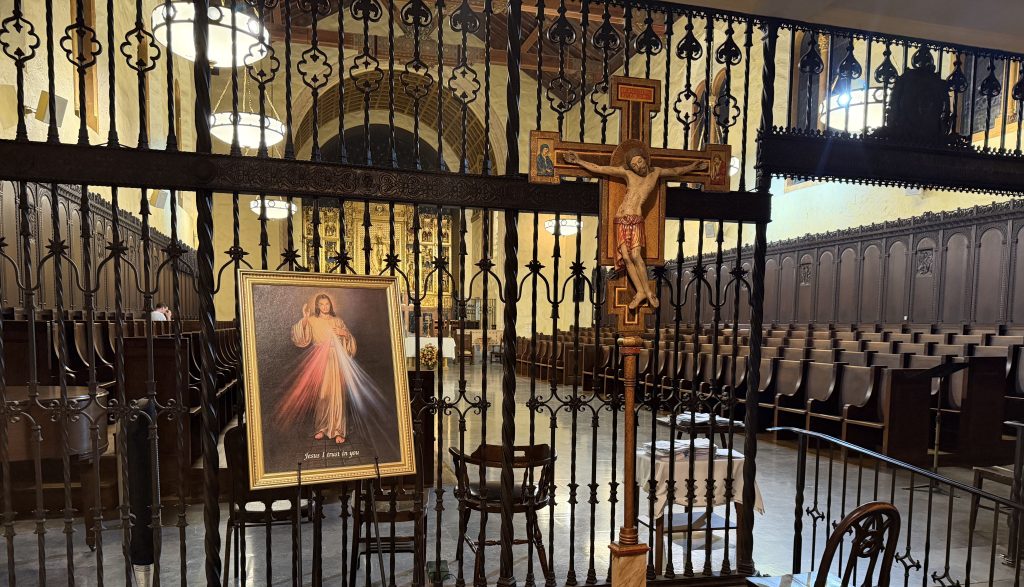
Photo: Jesus helps us to remember that we are each beloved daughters and sons of his Father, to be loved by him, to breathe, receive, rest and abide in his love for us and to love in return.

Martin, Francis and William M. Wright IV. The Gospel of John. Grand Rapids, MI: Baker Academic, 2015.

Link for the Mass readings for Sunday, May 3, 2026


“By means of baptism, we are born into communion with Jesus and the Father through the Holy Spirit”.

Nicodemus came to Jesus in the night. He was a Pharisee, showing that not all Pharisees refused to believe that Jesus was the Messiah. Most likely, Nicodemus was not there alone as he shared, “Rabbi, we know that you are a teacher who has come from God”. Although, Nicodemus did not reject Jesus outright, he did not understand the fullness of who he was either. His heart and mind was open to what Jesus was teaching and he recognized that Jesus was sent by God. His coming at night most likely showed he was also not yet willing to support Jesus publicly and also on the spiritual level conveyed his lack of understanding regarding the message of Jesus.
He was not alone. For throughout the gospels, it is rare that anyone gets Jesus’ teaching on the first presentation, or second or third, if they are willing to stay with him that long. Nor do they get his deeper meanings if they do have some comprehension. Jesus though recognizes the opening that Nicodemus offers and he approaches Nicodemus as he did with his disciples. Where they are willing and open to learn, Jesus met them where were are and sought to stretch and expand there understanding to move from the things of the finite and below to lift them to spiritual insight and the things from above.
Jesus offers the image of being “born from above” to Nicodemus to help him to exercise his spiritual sight and muscles. Nicodemus takes Jesus words on the literal level and asks how someone can be born again and go back into their mother’s womb. Jesus taught Nicodemus that we as human beings are in need of receiving a new life, a life “born of the Spirit.” When we are born from above we are born again a second time. Jesus is speaking of baptism. We are given our life the first time through our parents, being born from below, and through the water and the Spirit are born again and made new. We are baptized into the death of Jesus and born again in the newness of his resurrection.
“This second birth from heaven is baptism. which is an action of the Holy Spirit. Through the water rite, the believer is joined to Jesus’ death and resurrection (Rom 6:4-5) and receives the indwelling Holy Spirit. If the kingdom of God is Jesus himself, then to enter the kingdom is to be given a share in Jesus’ own life. By means of baptism, we are born into communion with Jesus and the Father through the Holy Spirit” (Martin and Wright, 71).
What Jesus has begun to convey to Nicodemus, he will continue. He has done the same with his Apostles, other disciples, as well as anyone with eyes to see and ears to hear. His teachings have continued because there are those who have stuck with even while struggling with his teachings, have been willing to be transformed by them through the Holy Spirit and so have passed Jesus teachings, such as, the life of being born from above through baptism and the other sacraments, on. This continued for generations and in each age up to us our present day.
Christianity is not like Gnosticism, some secret sect of knowledge that is shared with a select, elite few. Neither is Christianity a form of dualism or Manicheism such that our body and all that is material are bad and we need to shed the physical as soon as possible to attain the fullness of our potential through the absolute embrace of the spiritual only. Nor is Christianity Pelagianism, where we just need the proper discipline, will power, and persistence to follow the teachings of Jesus.
Jesus offers us a universal invitation for all to “be born from above”, which means to be baptized in his name, to follow him into his death, to die to our our false sense of self, to our sin, our pride, that attitude and disposition that strives to set apart, diminish, devalue, dehumanize, divide, and polarize, and to rise with him. In being “born from above”, we receive the offer to participate in his divinity through the purifying fire and love of the Holy Spirit and so, instead of rejecting our humanity, embrace the fullness of our humanity, as we are being perfected by our participation in the life of Jesus.
The grace of God builds on our nature, the goodness of the creation he has made and formed into existence through an outpouring of his love. We accomplish this the same way his mother Mary, the Apostles, Mary Magdalene, the disciples, and Nicodemus did. We answer the call to holiness and sanctity. We say, “Yes” to Jesus and give him all we are and recognize all that we have is a gift from God the Father.
Day by day we need to be willing to be lead by the hand of Jesus, the firstborn of the new creation, he will lead us to our healing and guide us to offer our hand to others. May we resist the temptation to put up barriers, to keep others at arm’s length. We are all, every one of us, invited to become saints through our participation in the life of Jesus.
I agree with Pope Francis who in his exhortation, Gaudete et Exsultate (“Rejoice and Be Glad”), wrote that we cannot “claim to say where God is not, because God is mysteriously present in the life of every person, in a way that he himself chooses, and we cannot exclude this by our presumed certainties. Even when someone’s life appears completely wrecked, even when we see it devastated by vices or addictions, God is present there. If we let ourselves be guided by the Spirit rather than our own preconceptions, we can and must try to find the Lord in every human life.”
God is present to us in each of our lives. For those of us who have been, may we embrace the gift of our baptism, so to better understand what Jesus was teaching Nicodemus, that we have been “born from above”. Through our dying and rising in Christ, we have better access and a share in the breath and life of the Holy Spirit. In this way, we are transformed and made new by the Holy Spirit when we believe and follow his guidance. We are invited to share and draw deeply from this spring of living water and lead others to the same source.
————————————————————————–
Photo: My baptism, July 18, 1965 and my journey to the priesthood begins.
Martin, Francis and William M. Wright IV. The Gospel of John. Grand Rapids, MI: Baker Academic, 2015.
Link for the Pope Francis article on “Rejoice and Be Glad”
Link for the Mass readings for Monday, April 13, 2026

Ponder with the One “begotten of the Father before the daystar shone.”

“Begotten of the Father before the daystar shone or time began, the Lord our Savior has appeared on earth today.”

These words come from the second antiphon from Evening Prayer 1 of the Solemnity of the Epiphany. Evening Prayer is found in the Liturgy of the Hours which is prayed by clergy, religious, and those laity blessed to be introduced to this beautiful daily prayer practice. Though these words do not come from today’s gospel from Matthew, they offer a beautiful opportunity for meditation on the mystery of Epiphany and are continuing to celebrate and ponder this Christmas Season.

The first line, “Begotten of the Father before the daystar shone or time began,” offers a beautiful rhythm that invites us to journey back in time before time existed! Before there was the sun or any sun, before anything existed, even time, God was. God was a Trinity of three persons, Father, Son, and Holy Spirit. The Father begot the Son, did not make him. His Son is not a created being, because there was no creation, this is a reality before even time. The Father eternally begot the Son, the Son was eternally begotten, and the infinite love and outpouring, the giving and receiving of one to the other is the procession, or spiration of the love between them, the Holy Spirit.

God was, is, and always will be. God was, is, and always will be a communion of an infinite three. Then in that wonderful moment in time, he sent his Son, to be conceived. The, “Yes,” of Mary and the overshadowing of the Holy Spirit, allowed our Lord and Savior to appear on earth. The divine Son took on flesh, became fully human in the womb of Mary. Heaven and earth became united in a way never known before or at any point of history before that moment. The wiseman followed a star to see this child king, the One who existed before any star.

We are given in these words an invitation to stop. Full stop, period. To breathe and read these words again slowly, “Begotten of the Father before the daystar shone and time began.” Breathe a few more times and read a few more times. Then close your eyes and breathe and let the words be spoken to you by the Word who became flesh. Listen and allow yourself to spend some time with the One who was before there was time, the One who was there when all was made and all came into being out of an outpouring of the trinitarian communion of love.

Breathe and allow yourself to be loved by the One who is love (1 John 4:). Breathe and spend some time with the one who obeyed his Father and came. He is “the Lord our Savior [who] has appeared on earth today.” Jesus, our Lord and Savior was born in time, died in time, conquered death in time, so now in his glorified body can transcend time so – Epiphany – to appear, to come into a clearer view and be with us today, in this moment.

Enough from me for this time. I hand you off to Jesus who offers his hand to you to spend time with him. My invitation is to follow his lead as he led me earlier with these words. Allow him to lead you now where he invites you to go. Trust in the One “begotten of the Father before the daystar shone and time began.”


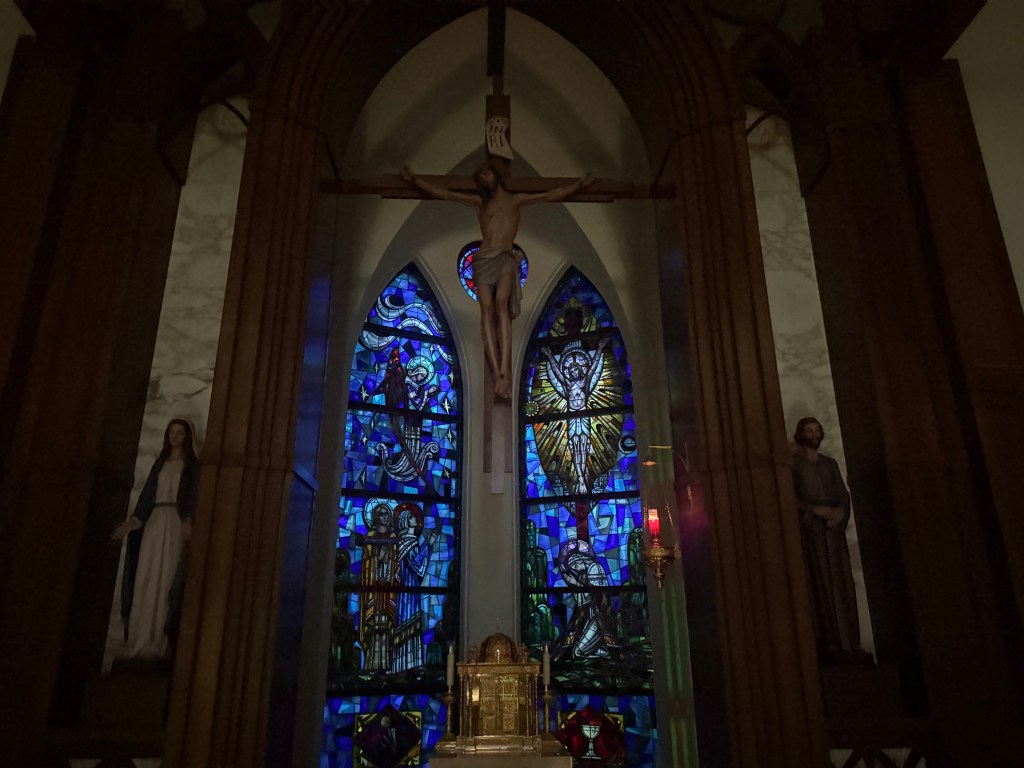
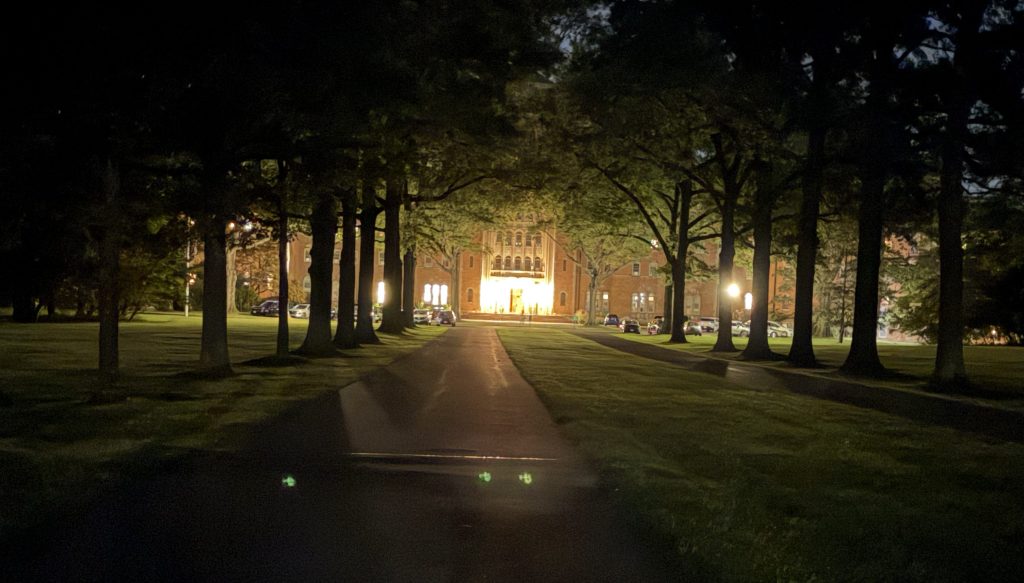
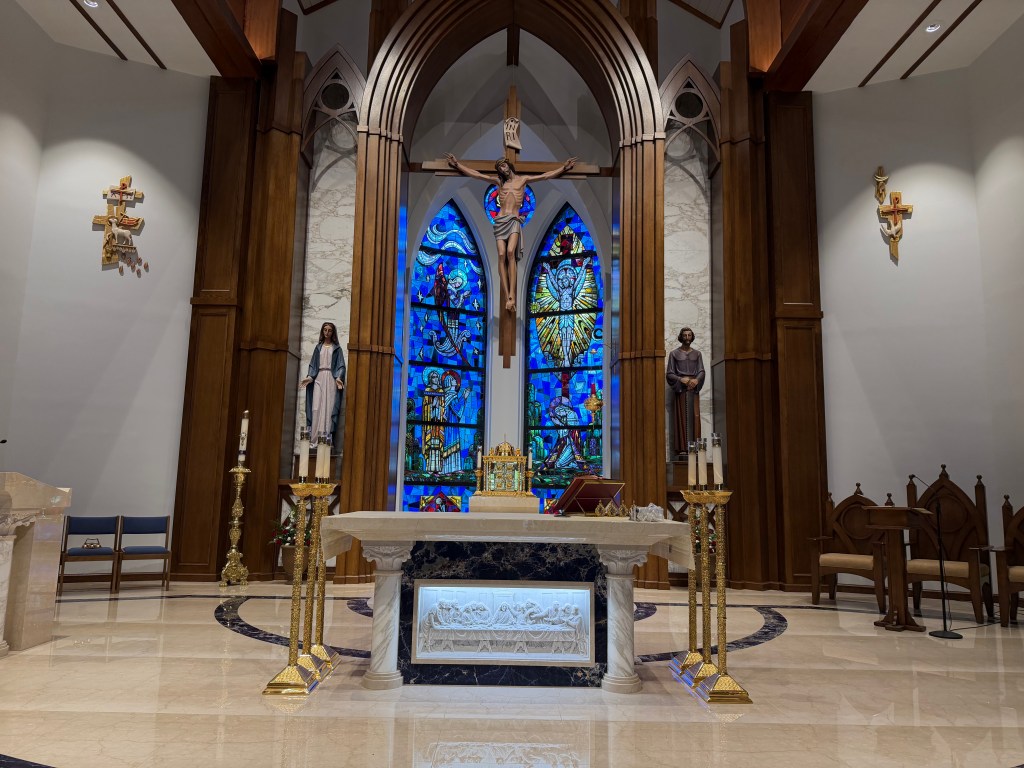
Photo: My view in the chapel in the Community Center at University of Mary of the Lake, Mundelein, IL, where I read these words during evening prayer and then spent the next hour pondering them with the one begotten of the Father! Wow.

Link for the Mass readings for Sunday, January 4, 2025

To heal, we need to trust.

“You will be hated by all because of my name, but whoever endures to the end will be saved” (Mt 10:22).

Why are we talking about being hated the day after Christmas? One reason could be that Jesus, this baby whose birth we just celebrated is “the light that shines in the darkness” (Jn 1:5). The very reality of Jesus’ divinity exposes darkness, he is the very embodiment of Love that exposes evil and hatred.

St. Stephen, whose feast we celebrate today, and whose death we read about in the first reading from Acts, experiences his words personally. For he is killed for the sole purpose of speaking the Gospel. While during his persecution he sees and communicates how even the heavens open for him. The reaction to those who hear his words are infuriation and they then throw him out of the city and “stone him” (cf. Acts 7:54-59).

Stephen radiated the light, love, and wisdom of Jesus and like Jesus he was put to death. His persecutors felt threatened by the light instead of welcoming it and walking out of the darkness that held them bound. Jesus exposes the truth of those dark places within our own hearts, minds, and the very depth of our being as well. What is our response? Will we also reject the light, not aware that it is an invitation to healing and to wholeness?

We may wince at the luminous brightness of Jesus’ light and resist the intimacy of the love he seeks to share. We may unconsciously do so, because we have so often faced so much of the opposite; hurt, pain, betrayal, and lack of understanding or acceptance. Because of our past experiences we don’t want to be hurt again and so we assume a defensive crouch as the best way to protect ourselves. Unfortunately, we are protecting ourselves from the very One who can heal us from our wounds.

Yet, to be fully alive, we need to embrace the light, not hide from it. When we are open to the healing touch of Jesus and receive the gift of his light in our lives, we begin to die to our false self and the lies that we have believed. Allowing ourselves to breathe and rest in God’s loving presence helps us to heal, indentify, and allow Jesus to transform our vices into virtues. Once we allow ourselves to be loved by Jesus, we begin to recognize that we are turned in upon ourselves, and then we can adjust our posture and begin to open ourselves to him. We also begin to recognize that we are not the center of the universe.

As we follow the model of John the Baptist, St. Stephen, and the other saints, we become less so that Jesus becomes more in our lives. We too will face at times the same rejection that Jesus faced. We will be labeled crazy, out of step, simple-minded, irrational, and worse. Yet we are to resist returning to a defensive posture, to refuse to react in kind, but instead, to be present, call upon and trust in the Holy Spirit to give us the words to speak, and allow God to happen. We are to remain open, accepting of the person where they are and as they are, and share the same transformative mercy, love, and forgiveness that Jesus has offered to us.

Change, maturation, and growth is not easy. As disciples, we are to be disciplined and persevere, while at the same time remember that our redemption does not come from our own doing or will power alone. Our healing, restoration, and transformation comes when we are able to share our poverty, our weakness, and wounds with the divine healer. We begin to heal when we trust Jesus, even if only a little at first. When we accept his invitation to walk with him, let him in to our places of darkness, we will receive the healing salve of his love, mercy, and forgiveness.

Transformation is not a one-time event. Christmas is not just a day, it is not just a season. Christmas is a time to remember that Jesus came as an infant, as a savior that in no way is threatening. If we have not been able to trust Jesus, maybe imagine taking him into our arms as a baby and begin there. Allowing him to come close and hold him, will help our hearts and minds to soften and feel safe.

In becoming human in the most vulnerable way as a fetus in the womb of Mary, as an infant in a violent world, Jesus lived and thrived because he trusted in Mary and Joseph and his Father. When we trust in God and begin to know him as a person, we will see his guidance not as a threat, but as a way when we might experience no way. We can begin to experience peace even when in times of conflict and even persecution. We can resist the temptation to react in kind and instead follow the lead of the Holy Spirit for each thought, word, and action we choose.

————————————————————————–

Photo: To learn to trust, we need to first learn to breathe and slow down. Christmas Eve in between Masses.

Link for the readings for Friday, December 26, 2025

Jesus, please send us the purifying fire of the Holy Spirit.

Jesus entered the temple area and proceeded to drive out all those who were selling things, saying to them, “It is written, My house shall be a house of prayer, but you have made it a den of thieves” (Lk 19:45-46).

Luke’s account of Jesus casting out the money changers is the most succinct of all four Gospels. Luke uses the Greek term for “drive or cast out” – ekballō, eight other times. Each time he used it, Luke was making reference to exorcising demons and unclean spirits. The profanation of the body through possession of evil is equivalent to the desecration of the Temple precincts.

Jesus justified his actions of driving the sellers out of the Temple precincts by saying: “Destroy this temple, and in three days I will raise it up” (Jn 2:19). Jesus showed the dignity of our humanity, when he, as the Son of God, entered our humanity. He entered into the chaos of our lives, our faults and foibles, as well as our sins, while remaining sinless himself. He showed that even though we have turned away from God, we were not destroyed and lost beyond hope. He reminds us that what God has created is good and that includes us. Even when we turn away, he continually and infinitely reaches out to us in love and calls us back into relationship with him.

One of the wonderful features of the upcoming holidays is that many families seek to come together and to return home. For some coming home has been longer than for others, for some there may be many miles of separation, and for others, coming home is no longer possible because they have changed their address from this life to the next. There are also those suffering today that are estranged from their families, those who are homeless, displaced, refugees and immigrants, or living in fear of deportation.

No matter who or where we are, Jesus remains close. He became one with us to restore our communion with his Father and one another. He provides the living water that quenches the thirst of our deepest longings. Jesus is our Temple, our new covenant, the dwelling place of God. He is alive and present to each one of us in every condition, situation, time, and place. Through his resurrection, ascension, and our participation in his life, we become precious stones of his Temple.

Jesus meets us where we are and loves us as we are, yet he wants the best for us and for us to settle for nothing less. Jesus, please cast out, as you did in the temple precincts, all from our being that would defile, distract, or divide us, and purge anything that would keep us bound in sin. Send the Holy Spirit as a purifying fire that will reign in our hearts so that each thought, word, and action may proceed not from our survival instincts or reactions, but from deciding to think, speak, and act according to our Father’s will.


Photo: Breathe in – Come Holy Spirit – Breathe out – repeat

Link for the Mass readings for Friday, November 21, 2025

Our lives will be much better when we realize we are temples of the Holy Spirit.

When I was still teaching, I would ask my students if Jesus ever sinned. Inevitably, someone referenced the account from today’s Gospel. In these verses, we read how Jesus, “made a whip out of cords and drove them all out of the temple area” (Jn 2:15). Jesus is not sinning here, rather, he is acting in line with prophetic tradition. Jesus is making a bold spectacle to drive home the point that the temple is not a “marketplace” or a “den of thieves” but it is to be a place of worship and right praise to his Father.

We can see prophetic echoes from Zechariah 14:21 where he prophesied that there would be a time when there would no longer be “merchants in the house of the LORD of hosts” and Jeremiah 7:11 where Jeremiah asked, “Has this house which bears my name become in your eyes a den of thieves? I have seen it for myself!” Jesus not only places himself in the line of prophets and professes their words from God, he acts like them in make such bold statements. There is a difference though.

Greater still than the temple, is the people of God. Further down in the text, when those present ask for a sign to justify this act, Jesus said: “Destroy this temple and in three days I will raise it up” (Jn 2:19). John makes the point clear that Jesus was pointing to his body as the temple of God and referring to his Resurrection to come. Jesus is the new temple and he is establishing a new covenant.

The temple, the house of God, believed to be the corporal presence, the very seat of God among his people, Israel, was destroyed in 70 AD by the Romans. This left a tremendous spiritual, political, and social vacuum. Two groups that were intimately tied to the sacrificial cult of the temple, the Sadducees and the Essenes, very soon after the destruction, ceased to exist as a sect within Judaism. The Pharisees, who already were moving to a practice of home worship that mirrored the worship in the temple, would survive and be the ancestral root of different expressions of Judaism today. Another sect would also arise as the followers of the new way of Jesus which became the Church, “God’s building” and “the temple of God”.

After Jesus’ death and resurrection, his rising after the third day, Jesus becomes the first born of the new creation. Those who are baptized do not just gather in a church, they are the Church, the temple of God.

Each one of us has a unique part to play in the Church. We are called to bear witness and practice, in our own unique way, our faith in our everyday experiences. We may be the only church someone ever enters and the only Bible someone ever reads. This call to put our faith into action is not an invitation to be overwhelmed by nor an excuse to assume a posture of elitism. We are no better than anyone else.

Pope Leo recently said to students participating in the Jubilee of the World of Education: “How wonderful it would be if one day your generation were remembered as the ‘generation plus,’ remembered for the extra drive you brought to the Church and the world.” May we all hear these words, seek and follow Jesus, the Way, the Truth, and the Life, and allow his truth and his love to shape and transform our lives. When we are willing to encounter and walk together, we learn and grow from one another. We are also less apt to keep other at a distance and become more willing to draw close.

We need to resist all that contributes in any way to the dehumanization, division, hate, and violence by rooting ourselves in Jesus, the living Temple. In doing so, we will become aware that we ourselves are temples of the Holy Spirit. In spending consistent time in silence, prayer, meditation, study, worship, and service, we not only purify our temple, we better know God and his will, become conformed to and empowered by the love of Christ to be instruments of peace, contemplatives in action, and advocates for healing and reconciliation in a wounded and weary church, politics, country, and world.


Photo: God speaks to us in many ways when we give ourselves time to be still, breathe, and look up.

Link for the Mass readings for Sunday, November 9, 2025

May we allow ourselves to be ablaze with the transforming love of God.

Jesus said to his disciples: “I have come to set the earth on fire, and how I wish it were already blazing” (Lk 12:49)!

What has been burned does not remain the same. What fire touches, it transforms. Jesus wants us to be consumed so as to be transformed by the fire of the Holy Spirit. Encountering Jesus affects a change in us. When we are open to allow the Holy Spirit to breathe on the embers in the depths of our souls they are fanned like tinder and ignite. We continue to fuel the fire by getting in touch with what God has called us to do in our place and in our time.

We are not to be a Christian in name alone but in thought, word, and deed. Pope Francis, in his exhortation The Joy of the Gospel, wrote: “THE JOY OF THE GOSPEL fills the hearts and lives of all who encounter Jesus. Those who accept this offer of salvation are set free from sin, sorrow, inner emptiness, and loneliness” (Francis 2013, 9). Joy is a gift, a holy flame, that is given to us by the Holy Spirit, it wells up within, and rises up and out to be shared with others. It is different than pleasure which has its source in the stimulation of the senses being aroused but fades once the external stimulus has ended.

Happiness is also external and fleeting. It lasts longer than pleasure in that the memory of the experience will linger but it too will fade away. Joy wells up from within, as it is imparted to us by God and can be present even when the external experiences are stressful or chaotic. I experienced this when I was still teaching 5th and 6th Grade Religion and acting as the dean of students at Rosarian Academy. At the same time, I was also immersed in family and parish life, as well as my studies and formation activities for the permanent diaconate.

One particular morning I woke up exhausted. When the alarm went off my first response was to skip my morning prayer and hit the snooze button to get an extra twenty minutes before rising. Instead, I literally crawled to my small chapel area, lit the candles, and opened my breviary. When I read the words in Psalm 42: “Hope in God; I will praise him still, my savior and my God”, something ignited within. I felt an energy well up within me that I cannot to this day describe. I felt an inexpressible joy. Not only did the experience carry me into the day but lasted throughout the whole week.

God is the foundation of our lives and our Father seeks to transform us with the fire of his love. Even when we are at our lowest, with only the smoldering embers of our faith, we need to resist the temptation to feed indifference, desolation, and/or despair. When we turn to and trust in Jesus, he offers a way when there seems no way. Begin with a breath, be thankful for what we do have, even if it isn’t much. We can be thankful for God’s love and presence even when we don’t feel it. Keep showing up to pray, even if sometimes we have to crawl to get there, and the Holy Spirit will fan the embers within our soul to set us ablaze.

May we, “know the love of Christ that surpasses knowledge, so that [we] may be filled with all the fullness of God” (Ephesians 3:19). To know the love of Jesus is more than knowing about him. We don’t read and study the Bible as we study a history text. We meditate, ponder, and pray with Sacred Scripture daily, to encounter a Person, Jesus Christ the Son of the living God. In doing so, the Holy Spirit will also enkindle in us the fire of his love and moments of consolation that we can experience regardless of our external or internal struggles.

Nothing else in this world can satisfy us as much as experiencing and being transformed by the love of our Father! When we seek God first, the attachments to finite things will begin to loosen. When we trust Jesus and align our will with his, we will come to know him and experience his love and that can be enough. We will no longer seek substitutes to place before God and can begin to let go of anything that is not of his will. When the fire the Holy Spirit burns only that which is pure will remain.


Photo: “Holiness is standing in the fire of self knowledge and letting it burn.” – Fr. Wayne Sattler

Pope Francis. Evangelii Gaudium: The Joy of the Gospel. Frederick, MD: The Word Among Us Press, 2013.

Link for the Mass readings for Thursday, October 23, 2025

Perseverance and trust are two key attitudes that will help us in prayer.

“And I tell you, ask and you will receive; seek and you will find; knock and the door will be opened to you. For everyone who asks, receives; and the one who seeks, finds; and to the one who knocks, the door will be opened” (Lk 11:9).

In today’s Gospel, Jesus continues to teach his disciples and us about prayer. The key point he is emphasizing is to be persistent in our prayer and to trust in God. He is our Father who cares for us more than any human can. He cares and will provide for us more than our own earthly parents or friends.

Yet, we can be at times frustrated in prayer because when we do make the time to pray, we may feel or think that nothing is happening or has happened. We may pray for a specific petition for our self, or for a particular intention for another and felt, or thought, that there was not an answer from God. One may pray a sincere, seemingly selfless prayer for a loved one, a child, a spouse, a friend, to be healed and the person still dies. They may be deeply hurt because they did what Jesus said; they asked, they pleaded and begged, but felt they did not receive the healing; that which they sought for, was not given and, instead what they found was nothing but pain and heartache from loss; they knocked until their knuckles were raw and experienced no one on the other side.

Our attitude and orientation to prayer matters. When we sincerely turn our hearts and minds to God in prayer, something happens between us and God, though it may be beyond our cognitive grasp to understand or our sensory awareness to experience. There may indeed be emotional highs and consolations experienced in prayer, but if seeking those is the primary motivation for prayer we will find ourselves more frustrated than not. There may also be lows in prayer, dryness, even desolations, and even feeling God’s absence are also a reality. Emotions are fleeting and not a good barometer when measuring the effectiveness of prayer.

Another big misconception is that we pray to God as if he were a gumball machine. It may seem a silly analogy but how many of us really do pray and worse, only pray that way, and when we do not receive the specific thing we asked for, at the time specified, when we wanted and as we wanted, we brood and think God doesn’t care or does not, in fact, even exist. We may even slip into the barter posture. God if you grant me this, I will do that. If we are only open to receive what we want on our terms, again we are setting ourselves up for frustration.

The very desire to pray is the beginning of our awareness of God’s invitation, for God is the one who reaches out to us first. The answer to what or who we ask, seek, and knock is found at the end of the Gospel reading for today: “If you then, who are wicked, know how to give good gifts to your children, how much more will the Father in heaven give the Holy Spirit to those who ask him” (Lk 11:13)?

God knows what is best for us, he sees our potential, he wants us to experience joy and be fulfilled. How can we best live our lives in this world to attain that reality? We do so by receiving the Holy Spirit. Who is the Holy Spirit? The infinite, communal love expressed between God the Father and God the Son. Our goal in prayer is to enter into God’s reality, the infinite communion of Love.

We pray first and foremost to help us to grow in relationship with God. This happens through our participation and conformation to the life of Jesus. When we take time to learn, meditate, pray with, and put into practice Jesus’ teachings as his disciples did we will start to see as he sees, we will come to see the truth of empty promises, apparent goods, substitutes to fill our emptiness and faulty defense and coping mechanisms that we have been utilizing as guideposts to merely survive and get through life.

When we stay consistent in an authentic life of prayer, God won’t bend to our will, but we will change. Instead of God becoming smaller to our demands, he expands our hearts and minds to be capable to receive his love. As we mature, we will begin to bear the fruits of the Holy Spirit which are love, joy, peace, patience, kindness, goodness, gentleness, and self-control (cf. Galatians 5:22-23)?

Why may God not appear to answer a prayer for our healing or for a loved one with a chronic condition or one who is dying? I do not know. But we need to resist running from the pain of loss and be willing to trust that God has not abandoned us but is with us. The tears that arise from our suffering can then become a healing salve, a doorway into the open arms and embrace of Jesus who awaits us in the depth of our grief and pain. Even our loved ones who have died have not come to an end but have experienced a new beginning. JoAnn often would say in her last few weeks that she was just changing her address.

Ultimately, what we ask, what we seek, and what we knock for when we pray is to be loved, to belong, to be a part of someone greater than ourselves. We have been created as a living, craving hunger, and desire to be one with God and each other. This is true for the atheist and the mystic alike. We have been created to be loved and to love.

The Holy Spirit is the gift of prayer that is open to us all. He is the love shared between the Father and the Son, that we too can experience. This is why he is the answer to our prayer, though sometimes to be aware of his presence takes perseverance. It may not be that God is not answering, but that we are not patient enough to receive the answer. We need to be patient enough to be still and know God. Prayer is about building a relationship and like any other relationship, that takes time and work.

To mature in our relationship with God not only takes perseverance, we also need to trust him. One of the enemy’s chief tactics is to sow the seeds of doubt and mistrust. Trust in God’s love for you. Trust that he hears every prayer. Continue to show up each day and pray. Even if you feel nothing is happening, God is working within you, fighting for you, helping you to feel safe, heal and grow in trust. It is also important to spend regular time in quiet, for God’s primary language is silence.

“Leave it all to God and leave your interests in His hands. He knows what is fitting for us… No matter: tell Him honestly, candidly, and ask Him to help you trust Him.” – St. Teresa of Avila


Photo: St. Teresa of Avila from St. John of the Cross Catholic Church

Link for the Mass readings for Thursday, October 9, 2025