Martha, Mary, Jesus’ disciples, and anyone else who experienced the sickness of Lazarus wondered why Jesus did not go to be with his friend as soon as he received word that he was dying. Jesus had healed and restored so many, why would he delay? Many of us who have experienced the death or in this moment may be accompanying a loved one in their final days and hours, may have asked or may be asking the same thing. Why is Jesus allowing this to happen? Why do so many have to suffer? Why the delay?
Jesus responded to the disciples’ inquiry by saying, “This illness is not to end in death,but is for the glory of God, that the Son of God may be glorified through it” (Jn 11:4). Not sure if Jesus’ response would have helped me if I was among the crowd. Many of us have experienced the death of our family and friends, as did Martha and Mary. What is Jesus up to?
Does Jesus care? Does this Gospel speak to us today? Yes. At the height of the Covid pandemic back in March of 2020, I remember being quarantined at home still on oxygen and watching Pope Francis come out on the steps of St. Peter at the Vatican in the dark and rain and said, Jesus, “more than anyone, cares about us.” Just as Jesus wept when he witnessed the anguish of Martha and Mary, the sisters of Lazarus, he also imagined the anguish of one of his closest friends sick and dying. So he wept and weeps with us in our present challenges, trials, and pain. Still he did not come until four days later. Why?
We may wonder in hearing or reading this account where Jesus is in the midst of our struggles at times, may wonder where he was in past challenges. There is good news here. Jesus had a plan for Lazarus and he has one for us. We need to have the same faith as Martha. Though she did not understand why Jesus had not come sooner, she trusted in him. Martha responded to Jesus when he asked he if she believed that he was the resurrection and the life and she responded: “I have come to believe that you are the Christ, the Son of God” (John 11:27). Just as Jesus was present to Martha, he is present and among us as well. But why the delay?
St. Peter Chrysologos offers a great response to that question, “for Christ, it was more important to conquer death than to cure disease. He showed his love for his friend not by healing him but by calling him back from the grave. Instead of a remedy for his illness, he offered him the glory of rising from the dead.” Jesus followed the lead of his Father to help those who were closest to him to understand that the reign of sin and death was over. Jesus came to usher in a new creation.
I believe Jesus conquered death and it has helped me with my deepest loss. Jesus did not cure my wife, JoAnn, from pancreatic cancer, and yet, it is my hope that he conquered her death, reached out to JoAnn, and led her home to the Father so that she may now be experiencing “the glory of rising from the dead.” But I am getting ahead of myself.
Jesus brought back Jairus’ daughter from the dead as well as the widow of Nain’s only son. The difference between each of them and Lazarus, was they were raised fairly soon after their death within even the same day or days. Lazarus had been dead for four days. Ancient Jews, unlike the ancient Egyptians, did not embalm the dead. By the fourth day, Lazarus’ body would have begun to decompose. In Jesus calling him back to life, and Lazarus rising, the effects of the decomposition were reversed and he walked out of the tomb on his own power, even while still wrapped in his burial cloths.
We need to resist just a complacent passing over of this incredible miracle that Jesus performed. This was beyond anything that anyone had ever experienced, and why, “many of the Jews who had come to Mary and seen what he had done began to believe in him” (John 11:45). Without diminishing the wonder of this event, it was only a forecast of the miracle of miracles to come and why the Church in her wisdom placed this account on the fifth Sunday of Lent. This is but a foreshadowing of the death and resurrection of Jesus.
Lazarus rose in a miraculous way but would die again. Jesus died, conquered death, and rose again never to die again. He was willing to do so for Martha, Mary, and Lazarus, so they could rise with him on the last day and have their souls be reunited with their bodies. The good news for us reading these words at this moment is that Jesus did the same for us today!
The key take away from the story of Lazarus is that no matter how wonderful the raising of Lazarus, a dead man four days in a tomb, was, it was just a foreshadowing of the truly incredible miracle of miracles we are about to celebrate in just a few weeks. The fact that Jesus rose from the dead himself was no mere resuscitation as with Lazarus. Jesus experienced the fullness of death and conquered it becoming the firstborn of the new creation. Jesus would later ascend into heaven and from the right hand of his Father, he would send us the Holy Spirit.
This is why we never need doubt that we are not alone ever, and especially in times of our deepest suffering. Jesus cares and accompanies us in each of our present situations as well as our unhealed traumas of the past. When we weep we can remember, “Jesus wept” also. Why? To teach us that it is ok to weep. Our tears remind us that we are human and that when we have lost a loved one, even if now we know death doesn’t have the final answer, there is a loss none the less.
We will live on, and just as if we experienced an amputation, our living without those that have died will never be the same. As we put our faith in the One who cares for us and loves us more than we can imagine, we will draw closer to him and to each other, we will see the glory of God at work in each of our lives, we will heal, and we will overcome and emerge stronger than before. Our healing happens when we too believe in Jesus the Christ the Son of God.
Our hope in this life is that we are invited to write our final chapter not here but in the new creation to come. “On the last day, Christ will call us forth from our graves as our friend, if we’ve lived in friendship with him. And he will command us as our Lord, the one who made the heavens and the earth, to come out of the tomb and to experience the resurrection of the dead, the new creation, and the life of the world to come” (Dr. Brant Pitre).
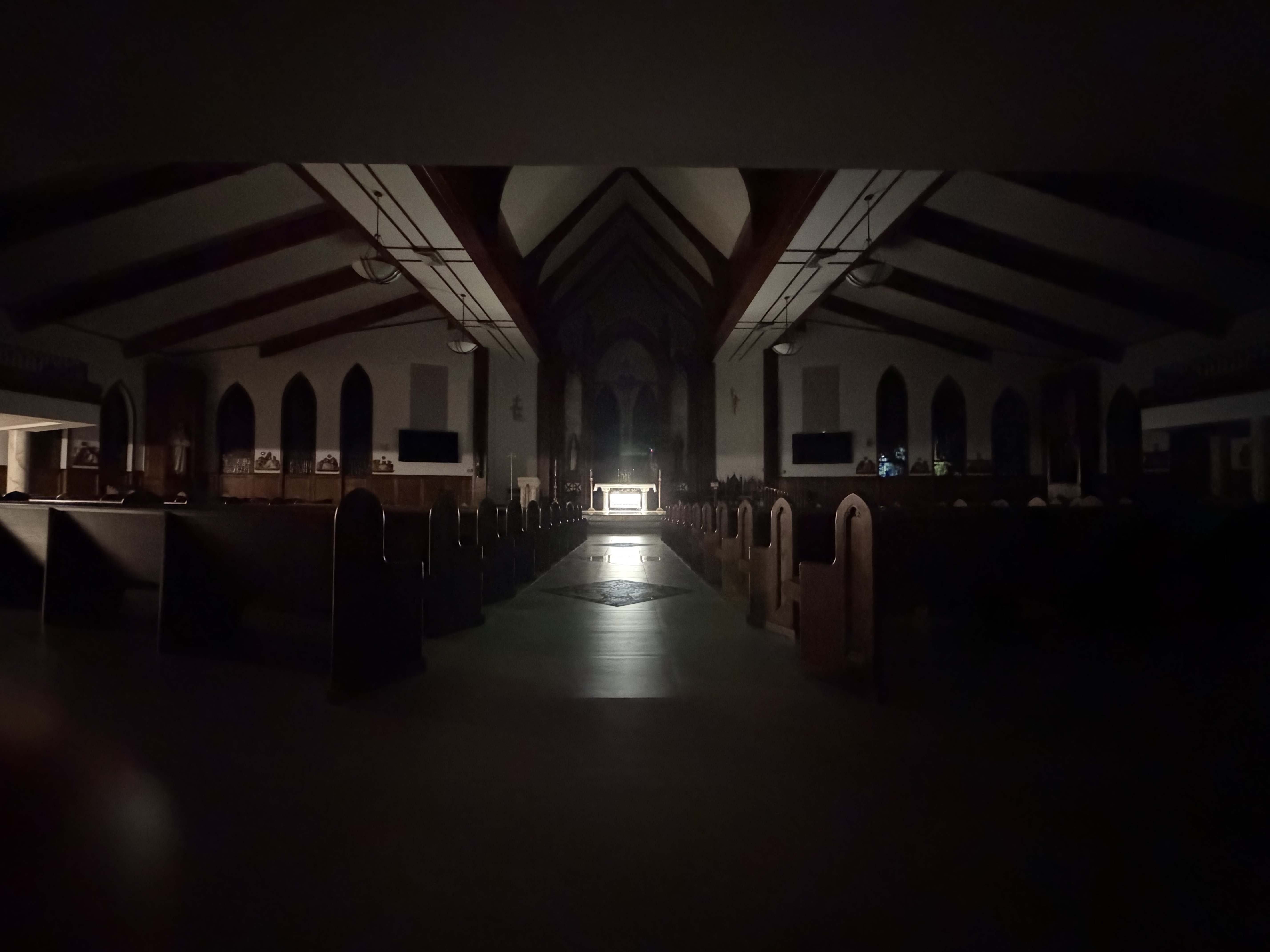
Photo: Each time we see the altar, we are reminded that Jesus died for us and conquered death so that death no longer has the final answer, Jesus the first born of the new creation does.

 Spiritual Stepping Stones