“In punishment the LORD sent among the people saraph serpents, which bit the people so that many of them died” (Numbers 21:6).
What kind of God would bring poisonous snakes upon his children? When Jesus taught his disciples about prayer didn’t he say, “Is there anyone among you… if a child asks for a fish, will give it a snake? If you then, who are evil, know how to give good gifts to your children, how much more will your Father in heaven give good things to those who ask him” (Mt 7:10).
Is God a loving Father or a harsh taskmaster?
He is a loving Father who not only wants his children to live but to experience life to the full. God freed his people from their slavery in Egypt and was not only leading them to the promised land but also providing for and protecting them every step of the way. And yet, the people did not focus on or extend any gratitude toward God. They instead consistently grumbled and then rose up against Moses. In this instance, they not only grumble, but they rejected the manna God was giving them by saying, “We are disgusted with this wretched food” (Numbers 21:5). The people were rejecting food from heaven, the bread of life, that God their Father was providing them.
In rejecting life, they were choosing death. God allowed them a stark image of their choice of opposition to him, their choosing to separate themselves from him, by sending the serpents. The imagery of the serpent would have come to mind quickly to the people. For it was the serpent who tempted Eve and Adam and led them to their Fall. It is the ancient serpent that seeks to distract, divert, and destroy. As St. Ephrem the Syrian (306-373 AD) wrote: “The serpent struck Adam in paradise and killed him. [It also struck] Israel in the camp and annihilated them” (Word on Fire Bible, p. 643).
As Christians, we interpret the serpent in Genesis as Satan, which in Hebrew means adversary or opposer. Those of the people who rose up against God opposed him as Satan did. God revealed to them who they were serving. In their rebellion, God showed them that when they rejected God and his love, protection, and provision, what the consequences to that choice would look like. Apart from God they would die. In repenting from their disobedience, trusting in and following God, even when the desert held no promise, they would live because God not only provides, he is the source of life. “This particular punishment is another way of insisting that negativity necessarily follows from rebellion against God’s will” (Barron, p. 641).
When the people saw and experienced the result of their sin so graphically, they correctly repented: “We have sinned, for we have spoken against the Lord and against you; pray to the Lord, the he take away the serpents from us” (Numbers 21:7). Moses interceded and God provided the healing antidote. He guided Moses to place a bronze image of a serpent on a pole. All who then looked upon it, were cured. In seeing clearly what had led to their poisoning, they could renounce it, and then receive God’s mercy, forgiveness, and healing. “Somehow, seeing sin for what it is serves to disempower the hold it has upon us” (Barron, p 641).
Jesus, the divine Son of God, becomes one with us in our humanity to reveal to us the path to participate in his divinity. When we are willing to see, Jesus shows us our own rebelliousness, pride, our sins that arise when we listen to the father of lies and separate us from God and each other. Jesus has not come to condemn us but to convict and save us. He leads us away from our slavery to sin. Jesus took the sin of the world upon himself as he was lifted up on the Cross. As he shared with Nicodemus, “just as Moses lifted up the serpent in the wilderness, so must the Son of Man be lifted up, that whoever believes in him may have eternal life” (Jn 3:14-15).
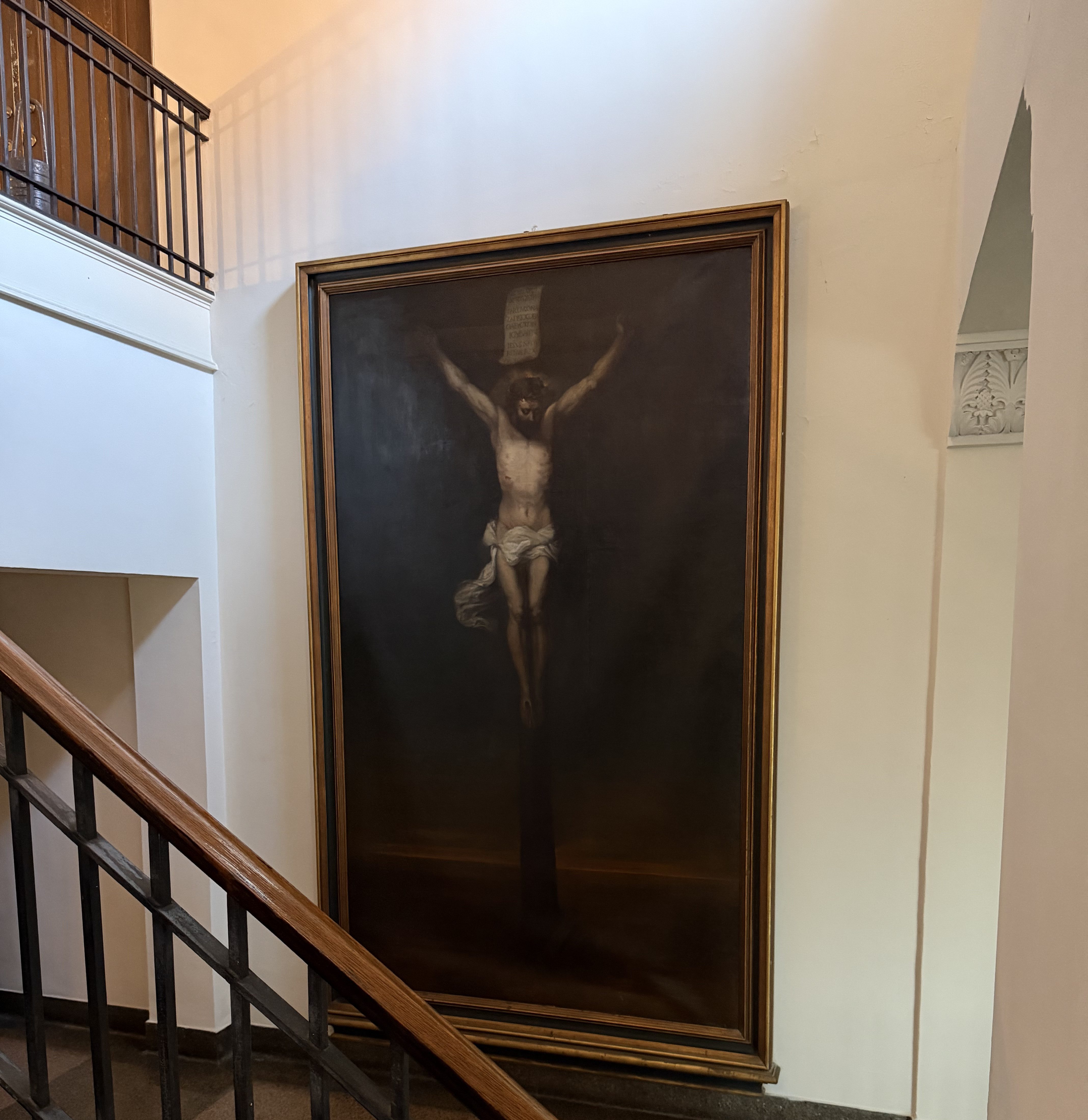
This is why we celebrate the feast of the Exaltation of the Holy Cross today. What was a wicked sign of oppression and horrific suffering has now become an incredible expression of love. As we look upon the crucifix, upon Jesus who has been lifted up for us, we are reminded of the suffering that Jesus bore. Jesus took upon himself “all the dysfunction of the fallen human race” (Barron, p. 642).
We see graphically on the Cross his death, the result of our sins, and our choice to separate ourselves from God. We also see love, God’s only Son who took upon himself the sin of the world. On that Cross is where Jesus died for each and every one of us, and in so doing conquered the sin and death brought into the world by Adam and opened up for us the door to eternal life through his resurrection. The Crucifix presents to us a clear choice, what our life looks like apart from God and what it looks like in communion with God. With every thought, word, and action, may we choose Jesus, the Bread of Life, and experience his love.
Painting: Jesus gave everything of himself holding nothing back to show us what true love is.
Link for the Mass readings for Monday, September 14, 2026
Word On Fire Bible: The Pentateuch. Elk Grove Village, IL: Word on Fire, 2023.

