Everything is possible when we believe, trust in Jesus and pray.

In the opening of today’s Gospel, we witness Jesus, Peter, James, and John returning from the experience of the transfiguration. While they were away, a man had brought his son to the other disciples to expel a demon from him but they were not able to do so. As they drew closer, the father appeals to Jesus: “But if you can do anything, have compassion on us and help us.” Jesus said to him, “‘If you can!’ Everything is possible to one who has faith.” Then the boy’s father cried out, “I do believe, help my unbelief” (Mk 9:22-24).

Jesus’ response to the man is clear and consistent with his teaching with authority, miracles, exorcisms, and healings. We see that the key ingredient over and over again throughout the Gospels is faith. Jesus receives this man’s request and seeks to empower him instead. What may be unclear is the man’s response, “I do believe, help my unbelief!” This statement may be a key to why Jesus’ disciples, who had exorcised and cast out evil spirits before could not this time. They were putting more faith in themselves instead of God. 

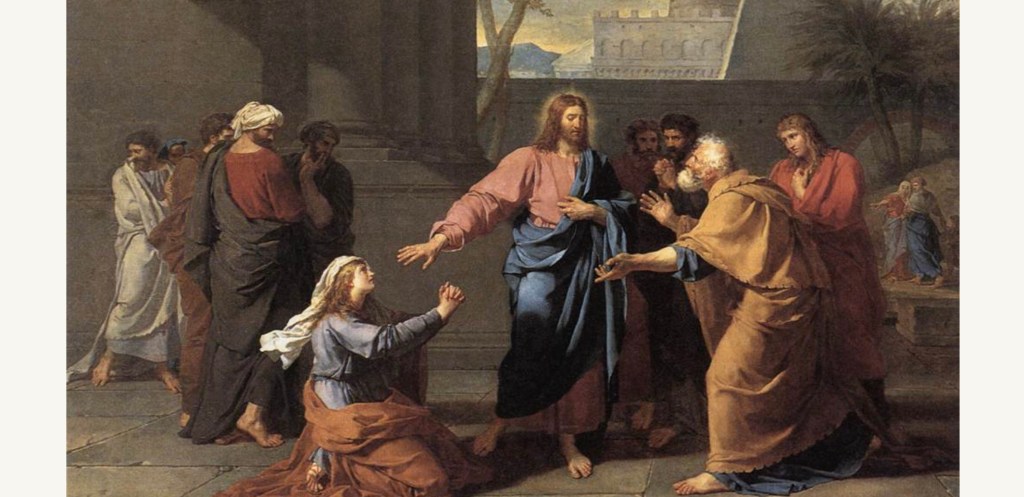
The man did have faith in Jesus to a point, for he brought his son to him believing that he could possibly heal him. His words now after his encounter with Jesus reveal the maturing of his faith, “But if you can do anything…” This request shows some doubt. This is much different than the woman with the hemorrhage who believed if she but just touched the tassel on his cloak she would be healed or the Canaanite woman who sought to have her daughter exorcised even though Jesus initially dismissed her for being a Gentile.

The father’s statement, “I do believe, help my unbelief!”, is beneficial to us all. The father believes in Jesus to a point, but recognizes he needs help from Jesus to go further. Jesus confirms that what is important in maturing in our faith life is being people of prayer. 

When his disciples talked to him in private, they asked him why they were not able to heal the boy and Jesus replied, “This kind can only come out through prayer.” Prayer is not some magic formula. Prayer is about becoming aware of God’s invitation to develop and mature in our relationship with him. When we make time for God and recognize his presence in every aspect of our lives, we come to know him and know his will, we come to know God’s voice. When we place him first before anyone and anything else, and trust in him, God’s grace builds on our nature and miracles happen. 

The exorcism of the young boy happened because his father appealed to Jesus hoping he could do something to help. The disciples could not heal him because they sought to do so through their will power alone instead of drawing on their relationship with God. The good news is that even though time and again the disciples fell short, they persisted in their faith and in their belief in Jesus. They learned, grew in their belief and trust in him such that they matured and recognized that apart from Jesus they could do nothing but with him, all things were possible. 

So much so, that we see Peter, who had denied Jesus, and reconciled with him after his resurrection, would come to encounter a man crippled from birth who was begging for alms. Peter said to the man: “I have neither silver nor gold, but what I do have I give to you: in the Name of Jesus Christ the Nazorean, [rise and] walk” (Acts 3:6).

Peter and the apostles’ faith grew over time, even through failure, sin, and unbelief, but they, like the father in today’s Gospel, did not give up, they continued to trust in and follow Jesus. We can mature in our faith as well. Let us begin our day with this prayer and return to it often: “Everything is possible to one who has faith.”

—————————————————

Photo: Jesus will guide us through any darkness and/or clouds. Rosary walk back in December.

Link for Mass readings for Monday, February 24, 2025

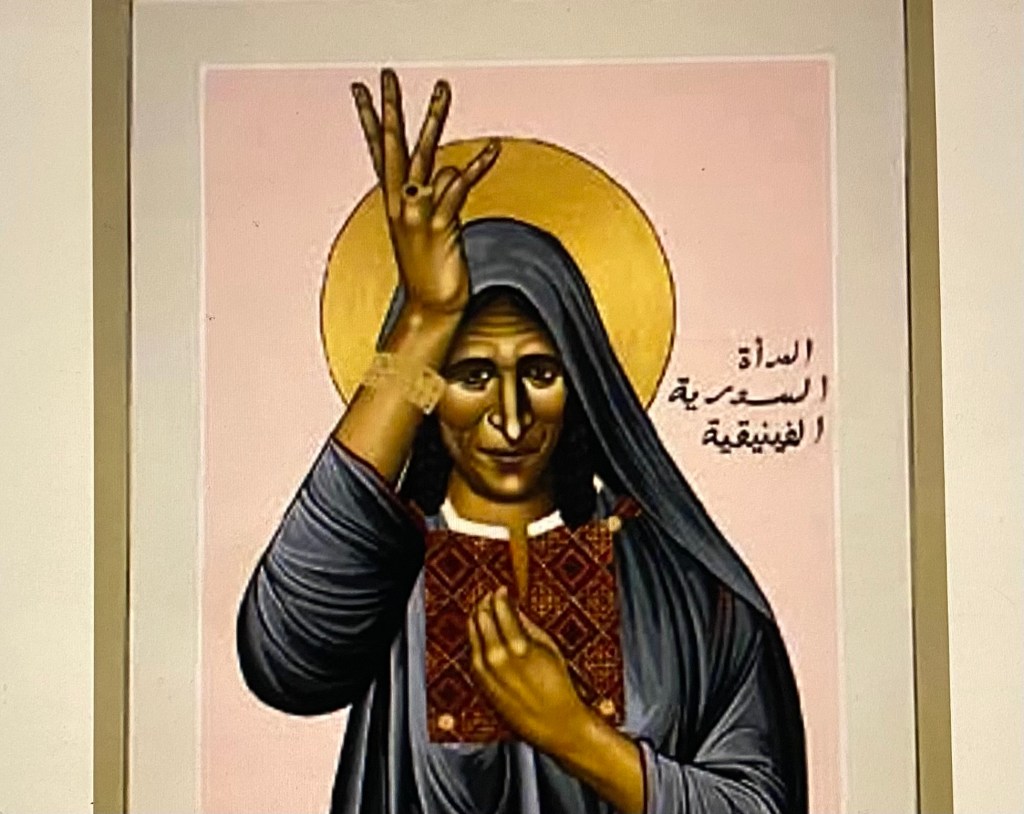
“Lord, even the dogs under the table eat the children’s scraps.”

In today’s encounter between Jesus and the Syrophoenician woman, we can observe again the crossing of societal norms by both the woman and Jesus. The woman, very much like the woman who had been hemorrhaging for twelve years, was desperate, faithful, and bold as she approached Jesus. She was willing to risk breaking the social taboo of speaking with Jesus on one hand and entering into the place where he was staying uninvited on the other! She walked into the home where Jesus was staying for the sole purpose that her daughter would be healed.

Jesus meets her with the derogatory language of equating her with a dog, considered one of the most unclean of animals by Jews: “Let the children be fed first. For it is not right to take the food of the children and throw it to the dogs” (Mk 7:27). This woman would have none of Jesus’ rebuke, she wasn’t leaving without receiving a healing for her daughter, even if that meant she was putting her life in danger. Her retort, “Lord, even the dogs under the table eat the children’s scraps”, emphasized this point. It was also the key that opened the door for the disciples and us to witness a consistent pattern with Jesus.

Just as the woman who was experiencing the hemorrhage (cf. Mk 5:25-34), both women had the faith and courage to approach Jesus. The outcome of this encounter was also similar to the one that Jesus had with another Gentile, the Roman centurion, who said that he was not worthy for Jesus to enter under his roof. In both accounts, Jesus healed solely by his word from afar. What is important to Jesus is the person’s faith and belief that Jesus was who he said he was and still is today!

Jesus’ apparent rebuke to the woman was more a statement of fact. He did first come to proclaim the Good News to the “children” first, the chosen ones of God’s children, the people of Israel. And how sad was the day as we saw not too long ago when Jesus came to proclaim this message to those in his hometown and none had the faith of this woman before him, a Gentile. Her faith not only saved her daughter from the possession of a demon, but was the opening for the Gospel to also be proclaimed to the Gentiles as well as to the Jewish people.

Do we have the courage, faith, and belief in Jesus as shown by the Syrophoenician woman? Are we willing to take the risk of crossing our own societal norms to draw closer to Jesus? When we let nothing hinder our stride closer to Jesus, including relinquishing the reigns of being our own masters, acknowledging that God is God and we are not, believing that Jesus is truly the Son of God and that he is still present and active in our lives, miracles still do happen! Jesus said that if we have faith but the size of the mustard seed, we can move mountains (cf. Mt 17:20) and what we ask for in prayer, we will receive (as we shall see in Mark 11:24).

If you or someone close to you are dealing with some conflicts, challenges, trials, or tribulations, if something, someone, or your own fear or anxiety is keeping you from making a deeper commitment to surrendering your life to Jesus, if there are opposing forces that feel as big as mountains, be not afraid! Trust in Jesus! Bring any and all burdens and lay them at his feet, and then take his hand. With Jesus all things are possible. We just need the courage to believe that our Lord is present with us especially in the midst of our challenges. Jesus has not left us as orphans. We are not alone, but we do need, as did the Syrophoenician woman, have faith that Jesus is who he says he is. Jesus is the Christ, the Son of the living God, our Savior and Redeemer, and he is present, is the kingdom of God at hand, and will see us through step by faithful step.


Photo: Syrophoenician Woman by Robert Lenz

Link for the Mass readings for Wednesday, February 13, 2025

Let us believe in the one whom God sent.

One of the best ways to celebrate the Easter Season is to continue to conform our lives to the one who gave his life for us that we may experience and be engaged in our life to the full. We can accomplish this better by putting into practice what we read in the Gospels as well as being open to encountering God in our daily experiences and one another.

Today’s Gospel reading continues after Jesus not only fed the 5,000 but also after he had walked across the Sea of Galilee and guided his disciples safely to the shore. When the crowd caught up to, found, and gathered around Jesus, he continued to teach them, guiding them to “not work for food that perishes but for the food that endures for eternal life, which the Son of Man will give you.” The people asked him what they could, “do to accomplish the works of God?” Jesus answered and said to them, “This is the work of God, that you believe in the one he sent” (cf: Jn 6:27-29).

The people asked Jesus what they were to do to accomplish the work of God, and he said to believe in the one he sent. The response of Jesus may not appear to fit the request. But to believe is not passive. Belief is to be followed by action. If we say that we believe in Jesus, do we pray with him, do we worship him independently and in communion with fellow believers, do we sing songs praising him, do we serve him through the giving of ourselves to one another by practicing the corporal and spiritual works of mercy?

When we experience setbacks, interruptions, conflicts, or are weighed down by tribulations, do we turn to cursing and yelling or turn instead to Jesus for guidance and direction? By the way, yelling or expressing our anger at Jesus is turning to him in honest prayer instead of turning our back on him. We are honestly letting him know how we feel. The key is to vent, but then let it go, and not stay there.

Do we turn within ourselves or only surround ourselves with those of like mind, color, political and/or religious views, and make others into scapegoats, or do we embrace the richness, uniqueness, and diversity of God’s people, open ourselves to dialogue, and new possibilities? When life goes well, do we thank God for the wonderful things that happen? Where are we spending our time, talent, and treasure?

Answering these questions is a good way to assess what and in who we truly believe. If our diagnosis today is that we are not as faithful as we would like, we don’t believe as much as we thought we did, that is not an invitation to beat ourselves up. It is a gift to begin again, to take a spoonful of belief in Jesus, spend a few silent minutes with him, begin the journey from our head to our heart, and put into practice one small thing today in his name with great love.
——————————————————-
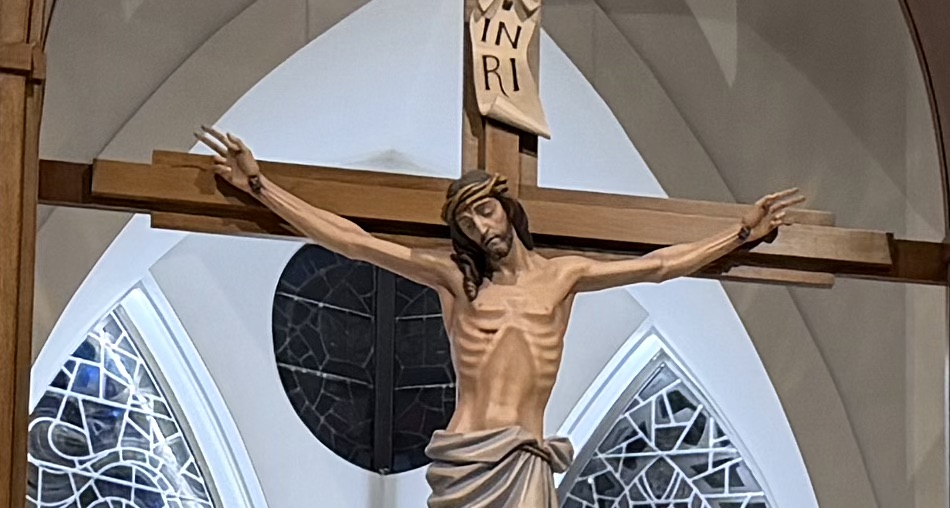
Photo: Jesus is the One whom God sent to die and conquer death that we might have life and have it to the full. Good Friday sunrise at Our Lady Of Florida Spiritual Center, North Palm Beach, FL.

Link for the Mass readings for Monday, April 15, 2024