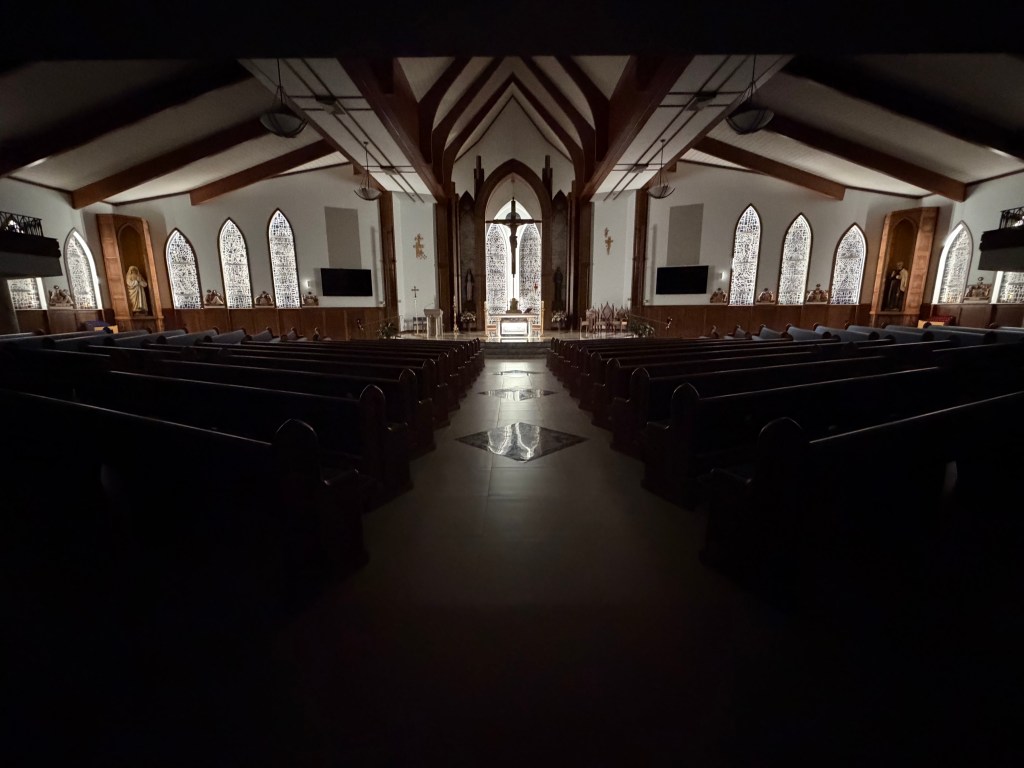
When we breathe intentionally and “focus on the indwelling presence of Jesus”, he will guide us in our prayer and life.

Prayer is not so much about bending God’s will to our will, but it is about being willing to be transformed and conformed to God’s will. Surrendering ourselves to God in prayer helps us to realize that life is not all about us and we can begin the shift away from placing our sole focus on ourselves as the center of the universe. The world actually does not revolve around us. Accepting these truths is freeing. As we shift the focus away from ourselves alone and accept the invitation to grow in our relationship with the One who is the creator and sustainer of all that exists, we experience the peace and rest in our souls that we all seek.

Jesus guides his disciples on this point when he teaches them how to pray. Jesus said to his disciples: “In praying, do not babble like the pagans, who think that they will be heard because of their many words. Do not be like them. Your Father knows what you need before you ask him” (Mt 6:7-8). The babbling Jesus is referring about is how some of the pagan cultures of the time believed that if they performed the proper incantations, said the proper words, they could bend the gods to their will.

A great example of this is to read the account of Elijah in 1 Kings 20-40. Elijah while on Mount Carmel faced off against 450 of the prophets of Baal. He challenged them to call down fire from Baal to consume the sacrifice they laid out. They spent hours chanting and calling out to their god, dancing and even slashing at their flesh and there was no response. Elijah was heard with a simple petition and God responded by sending his fire to consume the entire sacrifice.

Jesus is teaching us not just that God is all powerful but that he is personal. Our Father knows what we need before we even ask. He really knows what is the deepest yearnings of our hearts even when we often don’t because we are distracted, diverted, and anxious about many things. Our minds and hearts are tempted and misled by so much noise and glitter. We are invited to slow down, breathe slowly and rest with the Lord and sit at his feet. Then we can get in touch with what we are truly experiencing and share with God what we honestly feel, whether that be deep pain, sorrow, or grief, contrition for sin, imploring for guidance, or expressing thanksgiving for his love and presence. Formulaic expressions and the mere volume of words mean very little compared to a few words said with clear intent, focus, and in a mindful and heart filled way.

Jesus helps us to understand that the form prayer takes or the actual words used do not so much matter as understanding why we pray. We pray to deepen and develop our relationship with the Trinitarian communion of God the Father, God the Son, and God the Holy Spirit. The very desire to pray is a prayer in itself because we are hearing the invitation of God to be one with him. The first step is to acknowledge this invitation and then to turn our hearts and minds to God. Fr. Thomas Dubay, in his book, Fire Within, paraphrases St. Teresa of Avila, the 16th-century doctor of the Church, in saying that “one vocal prayer, even so little as one petition of the Our Father, if well said, is better than many recited thoughtlessly or hurriedly” (Dubay 1989, 76).

Reciting the Our Father, or Lord’s Prayer, that Jesus shared with his disciples in today’s Gospel of Matthew, can be a struggle, because the biggest challenge to a life of prayer is taming, what some Buddhists call, the “monkey mind”. Our thoughts can be actively engaged, random, distracting, and even anxiety inducing within one minute. To overcome the challenge of an unsettled mind we can return to St. Teresa again. When we begin to pray, St. Teresa of Avila suggests that we begin “with self-examination and the sign of the Cross” (Dubay 1989, 77).

In making the Sign of the Cross, we can then breathe deeply and slowly, one inhalation and exhalation for each person of the Trinity. Then continue to breathe and rest in the loving group hug of the Father, and the Son, and the Holy Spirit. Breathing, receiving, resting, and abiding in God’s love is a great way to recollect, to prepare our hearts and minds to enter into a time of prayer. When we pray, we often come from whatever physical or mental activity and then start to pray, even something as easy as the Lord’s Prayer. We may then wonder why there is so much mental noise. Recollecting before we pray, allows us to experience a time of transition from the busy to the quiet.

Making friends with silence, we can bring to awareness some issues, struggles, temptations, and sins that we have been dealing with. We can settle into, instead of run away from or deny them and seek God’s help for guidance, healing, and reconciliation. In making the sign of the Cross, and taking one slow deep inhalation and exhalation for each Person of the Trinity, we bring our self, as we are, into the presence of the Trinity and invite him to dwell within us. We receive and experience the love, acceptance, and mercy of God and recognize that we are loved as we are and that we are not alone because we belong to and are a part of this infinite community of love. In this simple gesture, we are also uniting our body, mind, and soul with the One who will lead us in our prayer.

The next step is to imagine that Jesus is with us to guide us in our prayer. “Imagine that this Lord Himself is at your side and see how lovingly and how humbly he is teaching you” (Dubay 1989, 77). By mindfully engaging with our breath and our body, we slow down and allow ourselves to become still.

Finally, we can imagine Jesus teaching us the Our Father as if for the first time, as he did his disciples. Going slowly, one word, one verse at a time, allow Jesus to not only share his words, but pause and add our own. By doing so, we begin to discipline the focus of our mind, move from the beginning of a rote prayer, move into a dialogue with God, and receive the blessing of his mercy and love. “Focusing on the indwelling presence, says Teresa, is for wandering minds ‘one of the best ways of concentrating the mind’ in prayer” (Dubay 1989, 77).

—————————————————————–

Photo: On our way, we can already begin to breathe and quiet our minds to ready ourselves for our time of prayer.

Dubay, S.M., Thomas. Fire Within: St. Teresa of Avila, St. John of the Cross, and the Gospel on Prayer. San Francisco: Ignatius, 1989.

Link for the Mass readings for Thursday, June 18, 2026

Giving alms, praying, and fasting helps us to experience the love of God and to heal.

The teachings of the Beatitudes as well as the six antitheses are powerful lessons that can transform our lives when we put them into action. As we continue to walk through the next presentation of Jesus’ Sermon on the Mount today, Jesus presents common practices of living a devout life of faith. While at the same time as we learned before, Jesus raised the standard practice of these three pillars to a higher level. The key point he is making though has again to do with our end goal. Jesus continued to show his disciples how to be “perfect just as [our] heavenly Father is perfect” (Mt 5:48). The perfection to be attained is oneness with God. Jesus’ disciple’s then were and we continue to be today called to become holy, to be saints, for the purpose of deepening our bond and relationship with God and each other.

Our being perfected in Jesus is a process whereby we become less and Jesus becomes more. What decreases is our focus on self, especially the ego-self, our sense of self-centeredness. We do so by seeking to heal from those disordered affections that we have chosen instead of seeking the love our Father offers us and will fulfill us. Jesus offered three ways or pillars of healing in which when practiced help us to draw closer into communion with God and one another. We are to give alms, pray, and fast. We may remember that these practices are the three pillars of Lent that we put extra emphasis on during that penitential season.

When we give alms, pray, and fast, our intent must be properly ordered. If we give alms with the intention to “win the praise of others” (Mt 6:2), pray in a public display “so that others may see” us (Mt 6:5), and in our fasting “look gloomy” and “neglect [our] appearance, so [we] may appear to others to be fasting” (Mt 6:16), then the focal point remains on us. We think to ourselves, how holy and pious I am. In fact, if we act in this way, how hypocritical we are because, in each of these actions, we are not seeking to improve our relationship with God, build up his kingdom, or experience healing. Instead we build up our pride and ego by seeking affirmation, adulation, and disordered affections for ourselves.

Jesus calls us to give alms and serve out of love for others. To do so, we must first allow ourselves to be loved by God. We then see what our life feels like when we are loved by God. Being affirmed by him, we no longer seek to grasp for love, but now have something to share. We seek Jesus in prayer not to conform his will to ours, but to surrender to his will and allow the purifying fire of the Holy Spirit to purge us from the dross of our accumulated sin, selfishness, and attachments. In our time of prayer and examination of conscience, Jesus will reveal to us those apparent goods and disordered affections that lead us astray. From these areas we can fast, turn back to God, and in doing so, we will receive that which we long for in the depths of our souls, Our Fathers love and find rest for our souls.

Let us go back, read, meditate and pray with today’s readings, and ask Jesus to reveal to us one way that we are putting ourselves before God, one habitual vice that keeps us bound, and/or something that we are attached to that we can fast from. What is one way we can reach out and give ourselves to someone else? Prayer, fasting, and almsgiving are not only for Lent. Following Jesus’ guidance in each of these three practices will help us to begin to heal because we will begin to remember who we are, God’s beloved daughter and son. When we allow ourselves to breathe, rest, receive, and abide in God’s love we experience something greater than ourselves. No longer isolated, we belong to the Body of Christ. As such we become the hands and feet of Jesus and can offer the healing we have received.

—————————————————–

“Do you wish your prayer to fly toward God? Make for it two wings: fasting and almsgiving.” St. Augustine Painting by Fra. Angelico, “The Conversion of St. Augustine”.

Link for the Mass readings for Wednesday, June 16, 2026

When we trust and have faith in Jesus, we will experience his help in times of trouble.

Our days are so full of activities, conflicts, health issues, technological stimulation, 24/7 news cycles, social media interaction, challenges, polarization, as well as good and healthy activities, pursuits, interactions, recreation, and engagements which can all contribute to our emotional, physical, psychological, and spiritual weariness. If we do not have the proper foundation and orientation, we can feel stretched, hollowed out, and/or fatigued at best. One day can seem to blend into another, and another, and another. The image of being on a hamster wheel or an unending treadmill can fall afresh in our mind’s eye when we actually do take a minute to breathe. Anxiety, worry, stress, fear, prescriptions, and addictions all appear to be on the rise and swirling out of control.
Is there an answer to this hyper pace or are we doomed to just keep going until the wheels fall off? The opening verse in today’s reading provides an antidote when we are feeling any or all of the above. As well as a bell going off if we are riding along at this pace unaware the lug nuts are even loosening!
Jesus said to his disciples: “Do not let your hearts be troubled. You have faith in God; have faith also in me” (Jn 14:1).
Jesus spoke specifically to his disciples after he had talked to him about leaving them. He was going back to the Father through the way of the cross. No matter what challenges we are experiencing, what is knocking on the door of our minds as we are reading these words, we are invited to breathe, identify them, seek the discernment of the Holy Spirit and renounce any thoughts that are not of his will, allow any emotions to be experienced and released, and seek clarification on any issues that we need to discern. We can trust Jesus with helping us to discern how best to deal with the external challenges as well as the internal, menacing thoughts. Putting God first does not mean that the externals to our life will immediately take an abrupt turn for the better, nor does it mean that we will feel a peace within from our mental maelstroms.
What establishing a foundational relationship with Jesus does mean is that we will have support and divine assistance. We will come to know and experience that we are not alone in our struggles. The disciples found this out when in the midst of a sudden sea squall. Their boat was taking on water as the waves grew higher such that they were terrified and so, called to a sleeping Jesus. Jesus awoke and with a word, he calmed the sea (cf. Mk 4:35-41).
Jesus may or may not calm the sea of our trials and tribulations, but what he will do is be present with us through our storms in life and we can trust in him that he will guide us through. As we grow more confident in our trust in Jesus, as we feel safer that he has our back, we will be assured that no matter who or what comes at us, he will be there by our side to assist us. We will experience a peace that surpasses all understanding and calm within ourselves. The ultimate assurance that Jesus provides is that when we surrender our life to him, we belong to him, we are not alone nor orphaned. He gave his life for us, to redeem and save us so that we can be assured of our home for eternity. “I will come back again and take you to myself, so that where I am you also may be” (John 14:3).
Jesus has not so much saved us from our sin as he has saved us for eternity. Jesus promises that he will come back for us at the hour of our death. He is preparing a place for us in the heavenly kingdom. We do not have to just wait for him to come back though. By growing in our relationship with him now, we enter into and participate in his life and so experience his relationship with his Father and experience the love of the Holy Spirit. Jesus grants us a participation in the life of the Trinity. Even though these moments of grace are fleeting, they are very powerful and consoling and last.
If we are struggling at any level and are seeking to build our trust and faith in Jesus, it is important to proceed patiently. God works slowly and this goes against the instant gratification culture we are swimming in. God is building a foundation in us which is meant to last not only for the moment, or even this life alone, but to lead us into the next. When we make time to sit at the feet of  Jesus, slow down and breathe, ask for his help, seek his discernment about where we can make changes in our life, he will lead us. We just need to trust him and be willing to follow his lead.
This time does not need to be lengthy, three to five minutes a day to start can do wonders. On the surface level, by stopping for five minutes to pray and breathe more deeply and consciously, we get off the wheel, we step out of survival and reaction mode, so that we can then make more intentional and insightful decisions, and we can come to see that we truly have options, but more importantly, we begin to develop a relationship and intimacy with Jesus so to begin to recognize his voice in our stillness and in our activity. When we show up, God will happen. When we show up, breathe a few deep breaths, allow the shoulders to come out of our ears, we can begin to experience God’s love as well. Once slowing down, then there are some practices that can help us to grow in our relationship with God.
The Liturgy of the Hours, and the daily readings of the Mass, meditating, praying, and contemplating the word of God have been foundational for me and my transformation, healing, and growth. Over my two years at the seminary, I was also introduced to practicing a holy hour of prayer, often before the Blessed Sacrament daily. Each of these practices have become foundational and non-negotiable anchors in my day. My schedule has gotten even busier in my second year of priesthood, and St. Francis de Sales wise words remind me, “It is important to set aside thirty minutes a day to pray, and if busy, one hour.” Seems counter intuitive. But if we hold firm to the half or full hour, other activities of the day must go. Then we discern what not have been there in the first place.
Having set times to stop to meditate and pray throughout the day has been helpful, especially on those days when my schedule is full to overflowing. Author Wanda E. Brunstetter, wrote, “If you are too busy to pray, you are busier than God wants you to be.” There is a lot of truth in her statement. I have had busy days, weeks and months, where I have wondered if taking the time to pray and meditate was really the most sensible choice. Time and again doing so has made an incredible difference and has now been helping me better reevaluate what I schedule into each day. 
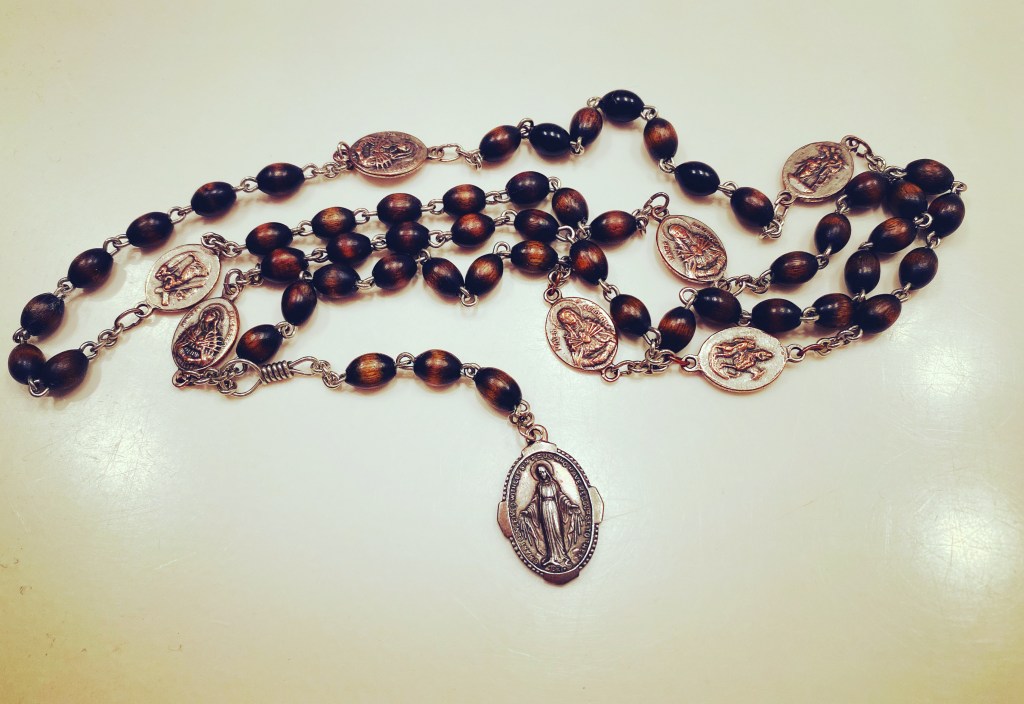
The Rosary is another great way to get into God’s word by meditating on the mysteries of the life of Jesus and Mary. If you are not able to pray the whole Rosary in one sitting, start with one decade a day. Read for a few minutes from the Bible once in the morning and then return to meditate on the same verse or verses that touch or challenge you throughout the day. You can also read the daily Mass readings and place your self in the scene and allow the account to open up before you as if were actually there – your own version of the Chosen.
A wonderful invitation given by St. Teresa of Avila is when we are reading and feel the sense to close our eyes and just be still, to do so. Each of these practices offer us a few of the many ways to stop the madness, to slow down, simplify, and connect with the power, the love, and the grace that Jesus yearns to share with us such that no matter the external or internal upheaval, we may experience his peace, that peace that surpasses all understanding (cf. Philippians 4:7).
—————————————————–
Photo: Tuesday afternoons with Jesus, refreshing and renewing time!
Link for the Mass readings for Friday, May 1, 2026

“Not as I will but as you will.”

Today, we celebrate the Passion of Jesus. The scene from the Passion account that I would like to reflect upon is Jesus in the Garden of Gethsemane (Mt 26:36-46). The disciples follow Jesus to the Mount of Olives and once arriving, Jesus withdraws about a stone’s throw from them, and kneeling, he prayed, saying, “Father, if it is possible, let this cup pass from me; yet, not as I will but as you will.” Jesus would pray this prayer again after finding his disciples asleep.
He probably reviewed his life, his simple beginnings with Mary and Joseph, his simple life as a carpenter, and then the past three years of his ministry. Jesus had done all that the Father had asked of him, he preached, taught, healed, exorcised demons, built relationships, and each time his Father requested something of him, Jesus said yes. Now as he pondered one more request, he could probably sense Judas and the Temple guards drawing close. He would be turned over to those who had rejected the will of his Father.
Jesus would say yes yet again, “My Father, if it is not possible that this cup pass without my drinking it, your will be done!”
Jesus could have refused, but he was sent by his Father to become one with us in our humanity so that we could become one with him in his divinity, and that meant all that he assumed, all that he took upon himself in being fully human, he could redeem.
This meant Jesus would also take upon himself our sins, although he himself never sinned. Jesus was willing to follow the will of his Father all the way into utter godforsakenness, experiencing as much as he was capable of experiencing the separation between him and his Father even into death.
With these words of surrender Jesus echoed a verse from Psalms 42 and 43: “Hope in God, I will praise him still, my savior and my God.” Even faced with his death, he trusted that there would be a greater good from the sacrifice of giving his life. Jesus would surrender all.
The God-man, Jesus, arose, and as he approached his disciples he found them sleeping from grief. Jesus was ready to face the cross even if his apostles were not. As he did with the Apostles, Jesus commands us to watch and pray this Holy Week. How many times have we also been in a situation of facing something that is too heavy to bear? We, like the disciples, fall short, for our flesh is weak. Yet, Jesus has faith in us that we will actualize who his Father calls us to be. Jesus still had faith in his apostles who persisted despite their failures and fulfilled their role in God’s plan.
No matter what challenges are before us, let us place our trust in God, as Jesus did in the Garden of Gethsemane.
No matter what personal trials or tribulations, doubts or uncertainties, temptations or needs for healing and forgiveness, let us allow ourselves to be loved by God as we are right now as we are in our poverty, imperfections, and our sins. We are beloved children of God and he loves us more than we can imagine or mess up.
No matter what medical, psychological, physical, mental, emotional, social or spiritual issues, come what may, we are not alone. Let us not be afraid, and place our trust and hope in Jesus, let us praise him still, our savior and our God.

Photo: Let us ponder this Passion Sunday, all that Jesus has sacrificed, suffered, and surrendered for us.
Link for the Mass readings for Sunday, March 29, 2026

Resist justifying or denying and instead confess our sins and we will experience God’s forgiveness, heal, and grow in his love.

It is much easier to find fault in others, and in some cases, the act of doing so has become entertainment in the private as well as the public sector. Gossip has a seductive allure and can be consuming. Judging others is also a way to justify and or project our own inappropriate behavior onto others. We may even place ourselves in a false sense of exalted pride. Have we ever, not just stated, but, thought or prayed something along the same lines as the Pharisee in today’s Gospel? “O God, I thank you that I am not like the rest of humanity — greedy, dishonest, adulterous — or even like this tax collector. I fast twice a week, and I pay tithes on my whole income…” (Lk 18:11-12).

To pray any part of this prayer stunts the growth in our spiritual life because we are focused on ourselves instead of emptying ourselves before God. A hyper sense of self reliance leads us away from the truth they we are dependent on God our Father for anything and everything and apart from him we can do nothing. Anytime we rationalize, cover over, deny, or completely ignore our sinful behavior we create and support habits of selfishness and feed our selfishness. Left unchecked, we can become enslaved to them. Lent is a time to pause and ponder, to be grateful for God’s love and his care, and also to give ourselves time to be aware of where we fall short of the glory of God. When we are willing to identify and confess our sins, we are forgiven and can begin to heal from sinful attitudes and actions that have become habitual vices.

In reading more lives of the saints, I have come to understand that their recognition and their confession of their sinfulness was not just pious platitudes, but true presentations that they were growing closer in their relationship with Jesus. The closer we grow in our relationship with Jesus the more we experience his light and love, which unveils more of our sins.

When we drive our car while it is dark we don’t give much thought to the cleanliness of our windshield because we can see fine. Yet as the headlights from an oncoming car illuminate our windshield we can see how dirty in actuality it is. This can be evident in our spiritual life as well. The more we remain in our own darkness of denial, self righteousness, resist slowing down to examine our conscience, we feel we are fine, all is right with the world. If we experience any problems, it is because of something or someone else, never us. The closer we grow in our relationship with Jesus though, the more his light shines in our darkness, and reveals to us our sin.

Jesus invites us to resist the prayer of the Pharisee who prays comparing himself to someone else, who refuses to acknowledge his own sinful actions and instead emphasizes that we are to follow the honest humility of the tax collector, who did “not even raise his eyes to heaven but beat his breast and prayed, ‘O God, be merciful to me a sinner’” (Lk 18:13). Now, Jesus is not saying this is the only way we pray. We have the opportunity to worship and praise the Lord joyfully, we can seek his help in praying for others through intercessory prayer or for ourselves in petitionary prayer, we can also sit in quiet meditation during adoration or out among God’s wonder of creation and experience deep consolation.

Each prayer has its time and place and each type of experience of prayer helps us to grow and deepen our relationship with Jesus and each other. The key to each of our prayers is our willingness to be the humble children we are and lift up of our hearts and minds to God who is always inviting us to spend time with him.

True humility happens when we are willing to see who we are from God’s loving gaze. If we are to set a standard to live up to and if we are to compare ourselves to anyone, let it be Jesus. A daily examination of conscience of allowing ourselves to rest in our Father’s loving gaze is a healthy practice and discipline. When we invite Jesus to shine his light of love into the darkness of our fear and anxiety, our loneliness and idols, we will see our sins. Jesus does not do so to shame and condemn us, but so that we can experience our sorrow and separation from God that sin causes.

As we experience our loneliness, pain, and wounds, and resist putting anyone or anything else before God to compensate for what we are feeling, we can feel his love and begin to realize that we are not alone, that we never have been alone. And that the only one who can fill our deepest longings is God. With this attitude, temptations and sins became opportunities for God’s grace, because we can now see clearer our life without Jesus and our life with him. Each time we choose Jesus over our temptations, we will experience him more, know him better, grow in our relationship with his Father, and experience the love shared between them, the Holy Spirit.

—————————————————————————————

Photo: Spending time with Jesus, helps us to slow down, then we can follow him as he leads us from the darkness our sins so that we may experience the light of his love.

Link for the Mass readings for Saturday, March 14, 2026

As the sun offers us warmth, God seeks to bless us.

Jesus said to his disciples: “Ask and it will be given to you; seek and you will find; knock and the door will be opened to you” (Mt 7:7). If taken in a purely secular, non-religious, or non-biblical sense, and out of context, this teaching of Jesus from his Sermon on the Mount may not seem possible. Someone might think can I really ask for anything and God will give it to me? Too many people have thought just that had their faith has weakened or left behind because they asked something of God and from their perspective, they did not receive what they asked for.

To understand this verse we need to understand a few key points. One is that God is God and we are not. That means that we do not have the full scope and sequence of God’s infinite viewpoint. We can only see from our limited and often times wounded perspective. Our God, who is Good, will only give us that which is good for us. What we are asking for may appear to be good, but may not, in fact, be truly good, and/or in our best interest beyond the moment. If someone wants to say, well, I ought to be able to decide that!

That means they have missed the first point, God is God and we are not. God not only seeks to give us what is good, he knows what will truly make us happy and fulfilled even when we don’t. God sees the very depths of the truth of our deepest desires, we often do not and often times are seeking things in the attempt to receive what we think we want, when in fact, the very seeking of the apparent good(s) we are seeking are keeping us from he very thing that will fulfill us.

Another point that I have learned from Bishop Robert Barron is that “Your life is not about you.” We are created by God for a reason and a specific purpose. Our life is about fulfilling our role in God’s theodrama. The context of this verse is best understood by reading in conjunction with when Jesus stated, “Seek first the kingdom of God and his righteousness” (Matthew 6:33). As we seek first his kingdom and our place and part to play our collaborative role with him, we can be assured he will answer us, we will find our place, and the door of the kingdom will be opened for us.

We are not the director in the great play of life, God is, but we do have a unique and significant part to play. That is good news! Meaning, joy, and fulfillment are experienced when we understand that God does not need us but desires us to share in his work of salvation history. This a wonderful truth we would do well to ponder. The other side of the coin for those of us who may not be seeking finite pursuits, but God’s will… this may seem a bit intimidating. We can be confident though that what God requires of us, he will give us the means and support necessary to fulfill the work he invites us to partake in. The last line of today’s gospel, expressing the Golden Rule, is no throw away line. The words express why God calls us and it echoes Jesus’ greatest commandment to love God with all our heart, soul, and strength and to love our neighbors as ourselves.

C.S. Lewis can also help us to understand our posture of prayer: “I pray because I can’t help myself. I pray because I’m helpless. I pray because the need flows out of me all the time, waking and sleeping. It doesn’t change God. It changes me.” When we pray with the intent to bend God’s will toward ours we will find frustration each time. We pray because we are answering God’s invitation to spend time with him. We pray not because God is dependent on us to do so, but because we are dependent on him for everything.

We are transformed by God’s love and his grace builds upon our nature when we begin our prayer with the truth that God is God and we are not and that our life is not about us. We will know God better, not as a philosophical idea, but instead as a person. In knowing God better, we grow in our love for him and want to follow his will and serve him. When we know, love, and serve God, we will change. Such change may sometimes not appear to be in our best interest. We like stability and safety, which is good. Where we want to place our safety and security though is not in the things of this world, but in God and the things of heaven.

When we approach prayer seeking not our’s but our Father’s will, we can be confident that we will grow in our relationship with him and that what we ask of God will be given to us, what we seek we will find, and when we knock, the door will be open. “The Father wants to give all who will ask, seek, and knock the blessings that will enable his will to be realized on earth as it is in heaven” (Mitch and Sri, 117). We are invited to be agents to share in the promise of this wonderful gift of participating in the emergence of a new heaven and a new earth.

—————————————————————–

Photo: Receiving the light of Jesus during prayer before morning Mass.

Link for the Mass readings for Thursday, February 26, 2026

Jesus taught John, the Our Father. John taught it, and it has been learned and prayed in every generation since.

Jesus begins his teaching on prayer by stating that prayer is not babbling. We are to resist just saying empty words that have no meaning or worse just praying in words that we think God wants us to hear. Prayer is to come from our hearts. We are to share honestly what we truly think and feel in the moment that we turn our hearts and minds up to God.

Prayer, first and foremost, is a response to the Holy Spirit moving within us, urging us to pray, “for we do not know how to pray as we ought” (cf. Romans 8:26). It is helpful to trust that invitation and allow ourselves to be in his presence in the chaos as well as in the joys in our lives. If we are upset with God, it is important to get in touch with that feeling and share that emotion with him. As we do so and get it out, it is just as important to be still and remain for a time, and listen for God’s response. To vent and walk away or tune God out is not helpful or giving him the opportunity to provide healing.

Even if we do walk away from him, our Father will not walk away from us. He will be there ready and willing to accompany us when we are ready to return, share again, and are willing to be still and listen. A good example of this type of open and honest prayer from the heart will be found in reading the psalms. They cover the full range of our human emotions as well as expressions of prayers of blessing, petition, intercession, thanksgiving, and praise. We will even come across one like Psalm 88, which may not appeal to us at the moment, as it is such a psalm of despair, yet someone, somewhere, might be feeling that prayer. If we read it and find as we do so that we don’t relate to it, we can pray it for others who may be experiencing those emotions.

In our Gospel today, we read Matthew’s familiar version of the Lord’s Prayer or the Our Father. It presents two ways to pray. First, it is a rote prayer that we memorize word for word. The blessing of a rote prayer is that we can pray it in communion with others, as we all know the same words. Another important gift of rote prayers is that we can pray them when we are physically in pain or emotionally distraught when we feel we can’t pray.

Jesus taught his disciples this prayer and it has been prayed daily since then up to and including this moment. That is an amazing reality, that we can pray today the same prayer that Jesus taught his disciples (Different language, yes, but the same prayer.). It is a prayer we can lean on to give us strength through the storms of our lives. Praying the Our Father gives us the words to speak when we have none to begin with, and by loosening our tongues, we can come to a place where we can speak more freely with God, who as Jesus shares is our Father, and experience the peace of his presence.

The Lord’s Prayer is also a model of prayer such that each word or phrase can be a starting point to enter into a deeper and loving dialogue. There are seven petitions throughout and as with the ten commandments have a similar pattern in that the first three petitions are directed toward our relationship with God. The next four have to do with our relationship with others. As an example, we begin with the words, “Our Father.” This is a reminder that God is the Father of us all and the beginning of all prayer. His sun shines on the good and the bad alike. Our prayer begins by putting our self in his presence and recognizing that we are all interconnected.

God, our Father, is with us even when we experience fear, sorrow, feel forgotten, misunderstood, or alone. We just need to remember to turn to him. Our every desire to pray is already a prayer because we are responding to his invitation to spend time exclusively with him. In turning to him, we experience that he is always present and he hasn’t forsaken us. He provides our daily bread and forgives us as we forgive others. God also rejoices with us, for the joy of God is the human being fully alive!

Carve out some time today to pray the Our Father s-l-o-w-l-y. Take some slow and deliberate breaths, five seconds in and five out. Allow whatever is going on in your life to enter into the recitation and remember that the best dialogue allows each party involved to spend some time listening to the other. As St Mother Teresa taught, “God speaks in the silence of our hearts.”

By pausing, being still, and not rushing these words, and then listening silently at the end of the verbal prayer, we can enter into that time of quiet to be still and listen. Doing so we will experience his love for us, better know our Father, his will, and begin to experience his peace and rest. Learning to listen to God who we can’t see might also help us to listen to each other who we can see.

—————————————————————

Photo: Jesus taught John the apostle the Our Father. It worked out pretty well for him, may we follow his lead!

Link for the Mass readings for Tuesday, February 24, 2026

Let us take up our cross and walk into the light of Jesus.

Jesus said to his disciples, all who could hear him, and his words have rippled out to his disciples in each successive generation up today: “If anyone wishes to come after me, he must deny himself and take up his cross daily and follow me” (Lk 9:23). We can best take up our cross daily by putting into practice the three pillars of Lent offered yesterday, which are almsgiving, prayer, and fasting. These disciplines aid us in resisting the temptations from those substitutes that we can place before God, seeking our fulfillment, stability, and security in power, pleasure, honor, and wealth apart from or instead of God. We can also allow ourselves to be tempted to stray from the guidance of the 10 Commandments as well as succumb to the root causes of all our sins found in the six capital or deadly sins: Avarice or greed, and some would include sorrow as another capital sin, envy, pride, wrath or anger, lust, gluttony, and sloth.

Giving ourselves some time to be still and to breathe deeply is a good, intentional action to begin Lent. It is important to make such a simple practice of recollection a daily routine. From this place of letting go and just stopping from everything else, of choosing to make time to spend with God alone, we can then pray about how we can put these pillars of Lent into practice for these next forty days. If forty days are too much, think about the next week, or even just how we can put one, two, or all three into practice today.

As we make steps to slow down and be still, we will also need to be aware of our own resistance. To be more aware of our sinful inclination to be indifferent or fearful of being present to those in need in our realm of influence is also helpful. Praying and seeking the help of God to give us the discernment and the eyes to see who among us are in need, the courage to act and to give of ourselves to others can also be a good start. This is how we will be moved to acts of almsgiving with our time, talent, and treasure.

Returning to prayer throughout the day will help to establish a habit of prayer. This often is accomplished best when we schedule set times to read, meditate, pray, and contemplate on the readings of Lent, to be still and rest in the Lord before the Eucharist in adoration or present in the tabernacle, pray the rosary, walk or sit among the beauty of God’s creation, and/or spend some quiet time reading a spiritual book, or the life of a saint. It is also good to just be silent and still. While at work, it can be as simple as stopping for a few moments at set times, say each hour, to stretch, take a breath, and repeat a verse or short prayer, such as, “God come to my assistance, Lord make haste to help me.” When we are feeling tired, instead of constantly saying, “Im so tired.”, ask God for strength to continue and the guidance to be sure to get the proper rest.

Each day it is helpful to evaluate what we consume, what time and energy we expend, and discern what we can fast from. We can identify what foods aren’t healthy for us, what activities that we can let go of so we can devote more time to practices that empower, encourage, and lift up others as well as ourselves. We can fast from thinking, speaking, or acting in any way that is judgmental, unkind, belittling, or demeaning.

When we put something in place that will help build a foundation for a closer walk with Jesus like reading the Bible, spending time in prayer, walking outside, taking a course online or in person, spending time in silence, we have to take something out of our lives. May we take something away that would lead us astray. Jesus guides us to take up his cross and follow him. Doing so helps us to discipline ourselves so that we will be transformed and freed from that which seeks to enslaves us.

We take up our cross when we make time to pray, to be still, and follow God’s lead. We take up our cross when we fast from any negative, demeaning, or derogatory thoughts, words, and actions and replace them with thinking, speaking, and acting in ways that bring hope, encouragement, and life. We take up our cross when we embrace opportunities to give of our time, talent, and treasure to build up and serve others in our realm of influence. Let us take up our cross today and each day during this season of Lent and repent, to turn away from sin and turn back to God, so to know better the One who died on the cross for us, the One who gave his life for us that we might restore our relationship with our God and Father and experience the love of the Holy Spirit!

——————————————————-

Photo: One way to take up our cross is to turn away from our phone, getting lost in anxious thoughts, or looking down at the ground, and instead look up to the glory happening above! Doing so yesterday morning on the way to 8:00 Mass! “Repent and believe in the Gospel.”

Link for the Mass readings for Thursday, February 19, 2026

Prayer, fasting, and almsgiving are the way to become less so God can be more in our lives.

In our Gospel reading from Matthew today, Jesus presents us with the three pillars of Lent: almsgiving, prayer, and fasting. With each pillar, he cautions his disciples to resist the temptation of engaging in these spiritual practices so that the focus is on them. Also, each spiritual practice is to not lead to accolades for their efforts.

We, like Jesus’ disciples then, are to embrace the purpose of almsgiving, prayer, and fasting which is to grow in our relationship with God. That means we are to become less and the Trinity is to become more real and realized in our lives. Humility is the virtue that is the antidote to the capital sin of all capital sins – pride.

“Pride is undue self-esteem or self-love, which seeks attention and honor and sets oneself in competition with God” (Catechism of the Catholic Church, Glossary/p. 895). We grow in a healthy sense of self when we rest in the truth that we are God’s children and experience his love. Pride is disordered when we seek to put ourself first before God and stand opposed to God, saying we know better than he does. We can do life on our own, thank you very much. When we set ourselves apart from God and seek to determine our own course we remove ourself from the protection and guidance of God and open ourselves up to the other capital sins such as anger/wrath, sloth, gluttony, lust, greed, and envy.

Each of these sins are considered capital in the tradition of the Church because they are at the root of all sins, all disordered affections that can lead us away from the true, the good, and the beautiful that God wants to share with us in our lives. The three pillars of Lent that Jesus shares with us helps us to identify and uncover these sins from our lives because all three help us to repent, to turn back to God by taking the focus off of ourselves and returning it back to God where it belongs.

When we make the time to pray, to slow down and allow ourselves to be loved by God, we will experience his peace and rest. We may also then get in touch with any unresolved issues, places in need of healing, that when left unidentified and denied, can lead to reactions and unintended outbursts. Prayer helps us to grow in the virtue of patience which counters the sin of anger.

Putting into action each of these pillars will help us to counter sloth which is more than physical laziness although our spiritual apathy can grow from physical laziness. Making a firm resolve to put into practice prayer, fasting, and almsgiving this Lent will help us to shake off the wet blanket of sloth. Fasting is the surest way to counter the sins of gluttony and lust which are both a disordering of our appetites for sensual pleasures. As we fast we will grow in the virtues of temperance and chastity. The practice of giving alms and willing the good of our neighbors counters the selfish grasping of greed and envy. When we practice being generous and kind and trust that God will truly provide for our every need, we will find less temptation to grasp and hold on and seek the downfall of others.

Jesus’ words help us to check in as we begin this Lent. Even if each Lent we have put into practice prayer, fasting, and almsgiving, we need to take a deeper look at our motives. We give to others not “to win the praise of others”, not even to receive thanks, but specifically because another is in need. We pray, not “that others may see” us, to puff ourselves up, but to empty ourselves into the arms of our Father, recognizing how dependent on him we really are. We fast not “to look gloomy like the hypocrites”, so to draw attention to ourselves, but we fast to discipline ourselves from any unbridled passions and pleasures. We recognize that our discipline comes from acknowledging that apart from God we can do nothing and only with God that all things are possible.

Today as we receive our ashes, and even if there are those reading who do not (even if you are not Catholic, you may!), we are reminded that from dust we have come and to dust, we will return. We are created, finite beings, that are given a limited time to live our life on this earth. This is important to acknowledge so that we resist the temptation of taking our life, the gift of our time on this earth, for granted. We will enjoy our lives more if we are grateful for each moment, and don’t take ourselves too seriously.

We are also reminded to repent and believe in the Gospel. Jesus, can help us to recognize and be contrite for our sinful thoughts, words, and actions and reveal to us the empty promises of our distractions, diversions, and temptations. Through our participation in almsgiving, prayer, and fasting, we turn back to the source of our lives. We will experience and better identify our restlessness, and seek not satisfaction in the finite, material things that will not last, but come to recognize that our fulfillment comes only when we find our true rest in the One who has made us for himself, our loving God and Father who awaits us with arms wide open.

——————————————————————-

Photo: “Repent and believe in the Gospel.” Me we all do so this Lent and come out holier than we enter!

Link for the Mass readings for Wednesday, February 18, 2026

May we guard ourselves against the leaven of the Pharisees and Herod.

Jesus convicted the Pharisees for demanding a sign and for their continued hardness of heart, their unwillingness to see and hear the work and presence of God right before them. He also saw the unsettling yeast of the Pharisees present in his own disciples. In today’s reading, Jesus seized on the opportunity of being together in the boat, Jesus seized on this teachable moment. He wanted to help the disciples of his inner circle to resist the same path of corruption when he enjoined them: “Watch out, guard against the leaven of the Pharisees and the leaven of Herod” (Mk 8:15).

As has been their pattern, the disciples missed the point as they focused on the literal reality that they only had one loaf of bread among them. Jesus was not, as they thought, taking them to task for not thinking ahead to bring enough bread. He had twice now multiplied minimal amounts of bread to feed thousands. One loaf with them would not have been an issue. He was more concerned about them falling into the danger of pride, seeking honor, power, and fame which had lead many of the Pharisees and Herod astray. To be his followers, striving to place themselves first would be not only the undoing of each of them but also undermine the authenticity of the Gospel message they were to proclaim and affect those they would be charged to care for.

Unfortunately, too many have not heeded the lesson that Jesus offered in today’s Gospel to his disciples regarding being aware of the corrupting leaven of many of the Pharisees and Herod. Just as the effects of original sin has wounded humanity, so it has also affected those in the Church. Throughout the ages, clergy and laity alike have succumbed to the temptations of placing our needs before and focusing on ourselves instead of God and who he calls us to serve. The curving in upon ourselves and the hardening of our hearts, close us off to the love of God and the reality of the truth that we can be in relationship with him, this truth that Jesus came to bring.

Yet throughout the worst corruptions and abuses, the Church remains. God continues to work through many who are faithful, like Mary his mother, and say “yes” to his invitation and follow his will in simple ways, living lives of quiet prayer, worship, and giving of themselves in acts of service daily. It is unfortunate that there are those who leave because they see hypocrisy, injustice, abuse, and corruption. For it is those with eyes to see and ears to hear that need to stay and be faithful witnesses to the call of the one true Bread from Heaven.

We must remain persistent and lean on Jesus to give us the strength and clarity on how best to seek healing for ourselves and proceed to help to heal his wounded Body. We also need to be aware of the sinful leaven that would seek to undo each of us. It is easy to point fingers. We will be on stable footing when we seek forgiveness, healing, transformation, and guidance from Jesus and choose to place God primary before any self-serving pursuits. Doing so will help us to live simple and holy lives of loving God, our neighbors, and ourselves.

——————————————————

Photo: Daily prayer and meditation, pondering the word of God, participating in the sacraments, and opening our hearts and minds to God’s guidance will help us to resist the spiritual leaven of hypocrisy, sin, and the hardening of our hearts.

Link for the Mass readings for Tuesday, February 17, 2026