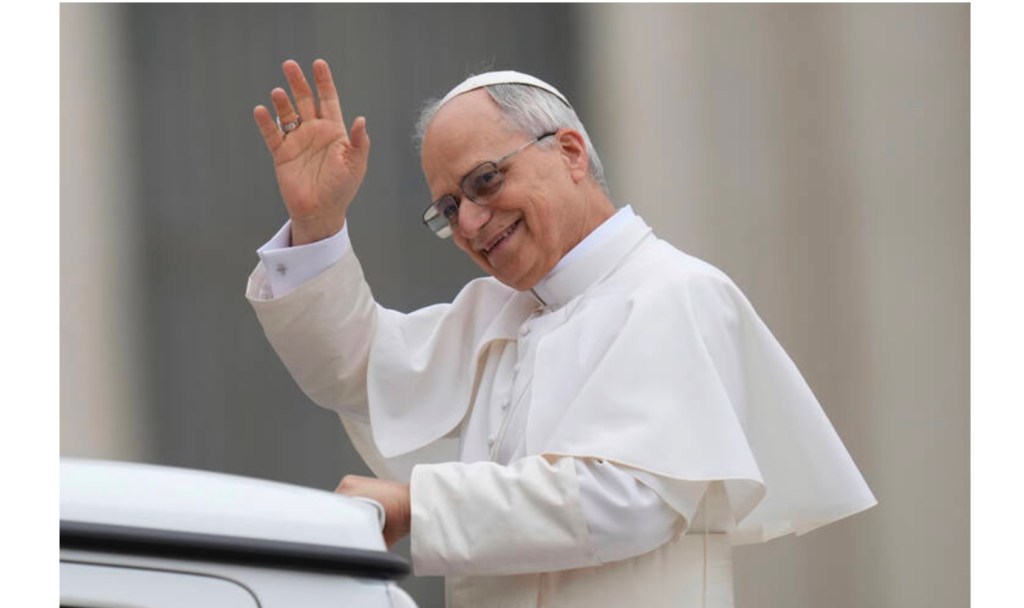
“Let us build a Church founded on God’s love.”

“At that time the Lord appointed seventy-two others whom he sent ahead of him in pairs to every town and place he intended to visit” (Lk 10:1). Jesus did not stop with this action, he continued and continues to call people to himself and sends them on mission to proclaim the same words: “The kingdom of God is at hand for you” (Lk 10:9).

To be a disciple of Jesus is to be both about maintaining the Church he instituted and going out on mission. This is why at the end of each Mass the deacon or priest in the absence of a deacon will say, “Go and proclaim the Gospel of the Lord” or three other formulas of being sent to be missionaries in our communities. This is not a call for clergy and religious only but for all of the baptized.

Pope Leo XIV said emphasized this same sentiment well at the close of his homily on May 18: “With the light and the strength of the Holy Spirit, let us build a Church founded on God’s love, a sign of unity, a missionary Church that opens its arms to the world, proclaims the word, allows itself to be made “restless” by history, and becomes a leaven of harmony for humanity. Together, as one people, as brothers and sisters, let us walk towards God and love one another.”

There is much here in the Pope’s words to meditate upon and put into action. We are not just to go out and do missionary work, to evangelize and share the Gospel, we are to embody mission. We “are to be a leaven of harmony for humanity.” At the moment of our conception we existed as unique individuals already distinct from our parents. We are endowed with dignity and worth just by the fact that we exist. In embracing that gift and dignity of our lives, in allowing ourselves to slow down long enough to be loved by God, then we can begin to see each other as brothers and sisters and begin to reach out in love toward one another.

The “Church founded on God’s love” is the Church established by Jesus Christ. In Luke recording how Jesus “appointed seventy-two others”, we see the further establishment of the Church leadership that Jesus instituted. This hierarchy echoes the one established by God through Moses (See Exodus 24:1-11). When Moses ratifies the covenant, he has with him Aaron the high priest with Nadab and Abihu, along with the twelve young men offering sacrifices, each representing the twelve tribes of Israel, along with seventy elders. Jesus is following the same pattern in calling Peter as the leader of the twelve apostles, along with James and John, and the seventy-two. Jesus is calling to himself those who would first preach to Israel, the twelve, and the seventy-two, to preach to the Gentile nations, and eventually the whole world.

The deposit of faith that Jesus handed on to Peter and the twelve along with the seventy-two has continued to be shared with each successive generation up to and including our own. We are to continue in our own time to receive the message of Jesus and share it as well. Each and EVERYONE of us are a unique gift to the world that has never been nor will ever be again. Jesus has called us to himself with the purpose to send us out on mission.

I agree with Pope Leo that, “this is the hour for love! The heart of the Gospel is the love of God that makes us brothers and sisters.” This is “the hour for love”, for: “The kingdom of God is at hand” (Lk 10:9). Let us go forth as missionary people, as contemplatives in action, to promote peace and reconciliation, to glorify the Lord with our every thought, word, and deed.  Let us open our hearts and minds to God’s love, receive, rest, and abide in his love, so that we may go out to prepare the way for others to receive the love of Jesus as we have. This is the Church Jesus calls us to continue to build up.


Photo: Pope Leo arriving at his first weekly general audience on May 21, 2025 (Credit: Gregoria Borgia, AP, accessed from America Media).

Homily of Pope Leo XIV from May 18, 2025

Link for the Mass readings for Sunday, July 6, 2025

Surrender all to Jesus.

We are now beginning the fifth week of Lent. We are coming closer to the cross, to remembering the suffering, crucifixion, and death of Jesus. In today’s Gospel, Jesus is sharing with those in his midst that he will lose his life in fulfillment of his Father’s will: “I am troubled now. Yet what should I say? ‘Father, save me from this hour’? But it was for this purpose that I came to this hour. Father, glorify your name” (Jn 12:27-28). Jesus has come among us, to be one with us and to experience the fullness of being human. In becoming human, he is opening the door for us to experience his divinity.

To be able to experience the divinity of Jesus, we have to die to our self. Death is not a partial thing, it is a total surrender. As Christians, our first experience of this death is Baptism. In Baptism we die with Christ, and we rise to new life with him. We are purified from the condition of Original Sin as we are born again in water and Spirit. We are conformed and indelibly marked to Jesus and incorporated into the living organism of the Church, the Body of Christ. We become a part of his new creation.

In Confirmation, we continue the path of giving more of our life to Jesus. We are sealed with the gift of the Holy Spirit, we are empowered through the imposition of the laying on of hands and the anointing with chrism. We join in the apostolic mission of those who were and continue to be sent by Jesus to proclaim the Gospel, the Good News, that Jesus has become one with us so that we can be one with him. Jesus has given his life and returned to the Father in the fullness of his humanity, so to unleash the power and fullness of the love that he shares with his Father.

This is possible because what one human being experiences, sin or grace, all people experience. Each one of us are distinct and unique, one of a kind, while at the same time in communion with God and one another and all of creation. The Son of God, in becoming human, and in his willingness to experience our suffering and death, has risen from that experience and returned to the Father in the fullness of his humanity. What Jesus experiences with the Father, we have access to, in the degree that we are willing to accept our humanity and his invitation to participate in his life and divinity.

When we reject our humanity, reject the fact that we are created beings, not self-sufficient within ourselves; when we assume, grasp at, and appropriate for ourselves, self-autonomy, and stand firm that we need no help from God, we assume that we are the center of the universe and all revolves us instead of God, we separate ourselves from the source of the very communion we live, crave, and hunger for.

Any disordered affections or attachments toward anyone or anything that we place before God must be renounced, let go of. To the extent that we can surrender our whole mind, heart, soul, and strength to Jesus, is the extent to which we will participate in his life and divinity. Jesus died for us so that he can also be with us always. We are abandoned and not left as orphans, for he continues to be with us in the Mass. We come to receive him, Body and Blood, Soul and Divinity, during each liturgical celebration. We consume him and so continue to be nourished, to be transformed into his Body. When we are dismissed from our time of worship and communion, we are sent to be bearers of Christ. We are sent to bring him to those we encounter in our realm of influence through the corporal and spiritual works of mercy. At the very least we are to respect the dignity of each person we interact with.

By participating in the Sacraments of Initiation; Baptism, Confirmation, and Eucharist, we become the grain of wheat that dies, germinates in the ground, then sends forth roots and shoots. As we continue in our daily surrender to God and participate in the disciplines of prayer, fasting, worship, study, service, and almsgiving those shoots will become stalks and eventually bear fruit. For whoever serves Jesus, must follow him, and wherever he is, there his servants will be. The Father will honor whoever serves his Son (cf. Jn 12:26). Surrendering our lives in this way to Jesus we can say with St. Mother Teresa of Calcutta: “Each time anyone comes into contact with us, they must become different and better people because of having met us. We must radiate God’s love” (Mother Teresa, pp. 18-19).

Let us, like the grain of wheat, die to our false self, allow the shell of our ego to be cracked open, so to rise with Christ in his glory of being fully alive in him, to actualize who he calls us to be, and to bear the fruit of his mercy and love with others!

———————–

Photo: Sun setting as I began my Rosary walk, St. Vincent de Paul Regional Seminary, Boynton Beach, FL.

Mother Teresa and Devananda, Brother Angelo, ed. Total Surrender. Ann Arbor, MI: Servant Publications, 1985.

Link for the Mass readings for Sunday, March 14, 2024