After hearing the accounts and success of the apostle’s missionary trip, Jesus invited them to step away from the crowds “to a deserted place [to] rest awhile” (Mk 6:31). Jesus is showing the apostles the importance of balance. There are times to work and serve as well as times to recharge, to reconnect, spend some quiet and reflective time with him. Jesus is our model, our guide and teacher, but he is at the same time more than that. Jesus is the source and sustenance of who we are as a living craving, hunger, and desire to be one with God and each another. As the deer longs to refresh itself from the waters of a running stream, we long to be nourished by the living water, Jesus, and this is true for the atheist as well as the mystic alike. This is true for each and every one of us, whether we are aware of this reality or not.
Our thirst for communion can be stifled because it is so easy to be caught up in our day to day schedule, life’s demands, and operating from survival mode. Even when all is good and we are serving well, as we see with the apostles return, there is a need for rest. There is so much that needs to be done, and at the same time, there are so many distractions and diversions that vie for our energy and attention.
In today’s Gospel, the intent of Jesus is to escape with his apostles for some rest and renewal, to decompress with them, and hear about their experiences of ministry. They get in a boat to do just that, yet the crowd that they thought they had left behind arrived on the other side before they did! This is a sign that the preaching, exorcisms, and healing work the apostles participated in was already bearing fruit. Just as people were flocking to Jesus, so word was getting out about his disciples! “When Jesus disembarked and saw the vast crowd, his heart was moved with pity for them, for they were like sheep without a shepherd; and he began to teach them many things” (Mk 6:34).
So much for being able to “rest away for awhile”! Or maybe the boat ride across was that moment of rest. The moment to take a breath and reconnect with Jesus. As Jesus and the apostles were coming closer to shore, they could have diverted their course to avoid them. Instead, Jesus, was moved with pity or compassion and taught them. A key for a more balanced life is to spend time daily with Jesus to know his will and follow his lead.
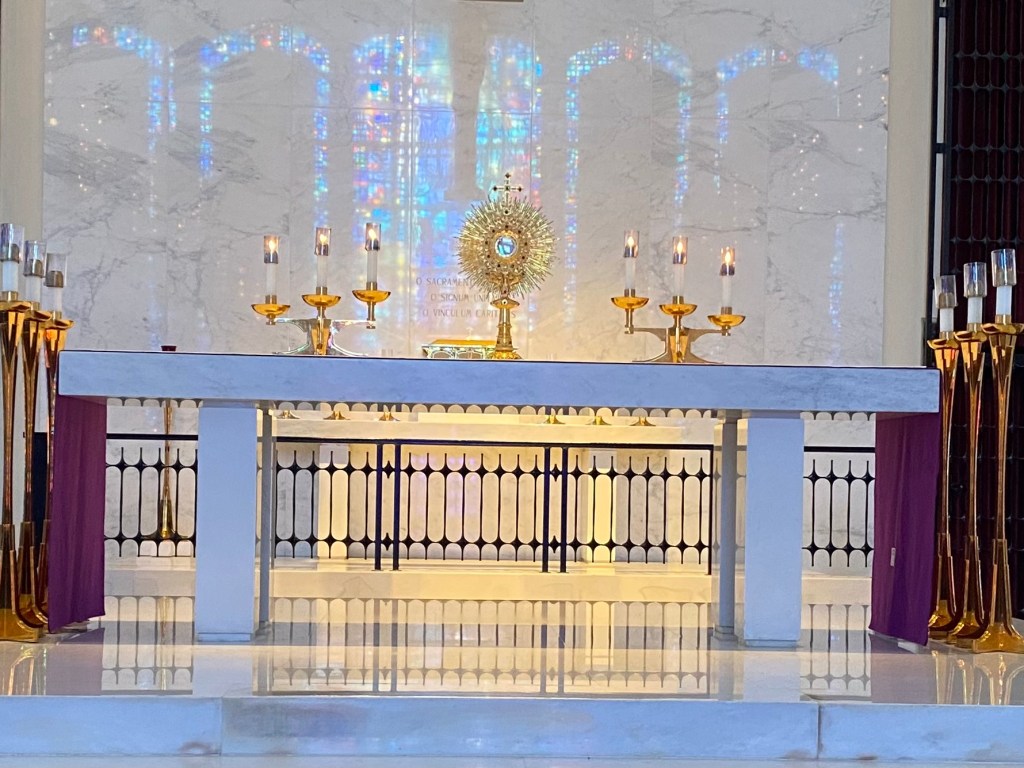
This is an important discipline and practice that we all need to attend to. As St. Francis de Sales taught: “Every one of us needs half an hour of prayer a day, except when we are busy — then we need an hour.” When I first began as a priest here at Holy Cross, I was having trouble fitting in my daily holy hour before the blessed sacrament. The light bulb went on when my spiritual director said to me, “You know what you are doing?”
I asked, “What?”
He said, “You are negotiating with a non-negotiable.”
He then said maybe you can do a half hour a day. Before he even finished the thought, I felt Jesus tell me that I needed to be faithful to that time alone with him each day. Without his grace and guidance and renewing in him, I would not be able to do what he requires me to do as his priest. I have been blessed by making time each evening to go away to the church and rest awhile with him.
When we intentionally put God first and make the time each day to spend with him, often there is a serendipitous alignment that we experience in our day, that we did not think possible at the outset. This often happens when we consciously make time for stillness, for meditation and prayer, even and especially, during the moment when we may feel we just don’t have the time.
As you ease into Saturday, my invitation is to give yourself a fifteen minute retreat. Read these words from Jesus slowly and reflectively: “Come away by yourselves to a deserted place and rest awhile” (Mark 6:31). Find a quiet place where you feel comfortable, take a few deep, slow breaths, close your eyes, then step into and sit in the boat with Jesus and his disciples.
Breathe some more, feel the breeze of the Sea of Galilee, feel the warmth of the sun on your face, and experience the rhythm of the boat on the water. Does Jesus remain silent and rest with you? Does he begin to teach, and if so, what does he share? Do any questions arise and if so what do you ask, and what is his answer? Allow yourself to be still, just you and Jesus for the time you have set aside. When the boat comes to shore, go forth into the day renewed and blessed by Jesus with a heart and mind able to be moved with compassion to follow God’s will in how best to serve him through those he brings you today and into the coming week.
—————————————————————-
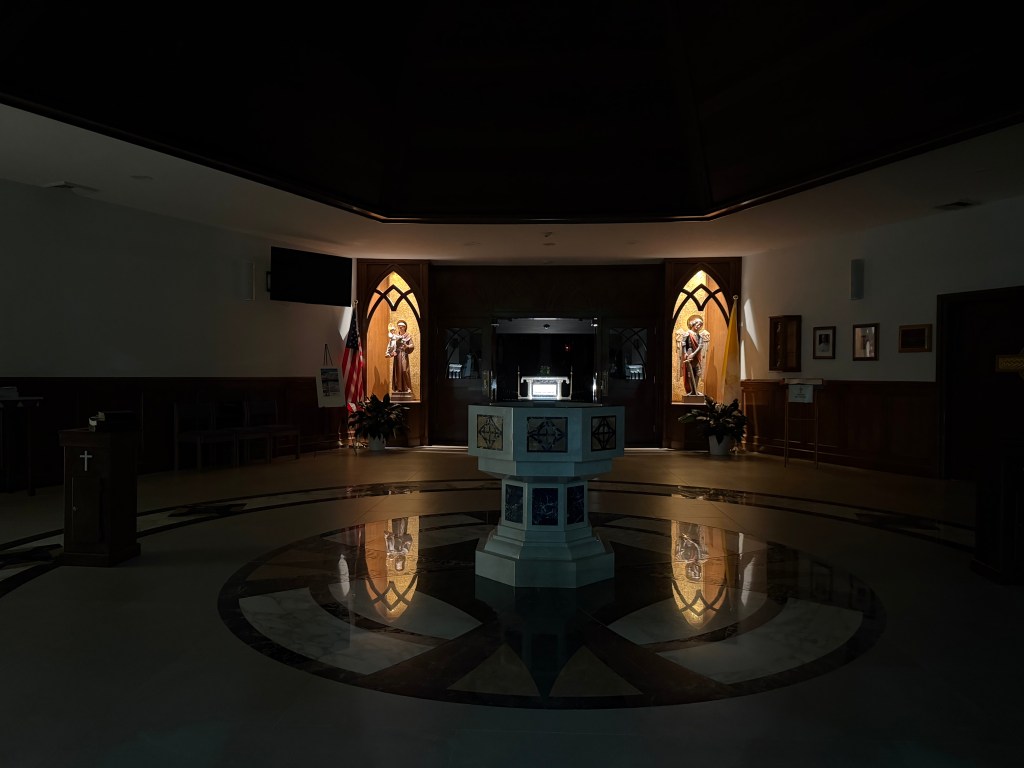
Photo: Heading in to spend some quiet time away with Jesus.
 Spiritual Stepping Stones