
The antidote for our hypocrisy is to accept our poverty.

The Lord said to him, “Although you cleanse the outside of the cup and the dish, inside you are filled with plunder and evil. You fools” (Lk 11:39).

Jesus’ harshest critiques were for acts of hypocrisy. He did so to show, in no uncertain terms, how dangerous this was, especially for religious leaders. These men were entrusted with the care of God’s people. They may have observed the proper rituals, spoke, and dressed to match the part but this all meant nothing if their hearts were hardened such that they were closed to the love and will of God. This situation was more perilous when they themselves became obstacles and stumbling blocks to those who sought God. Jesus indicting them as fools meant that they were bereft of the wisdom of God they projected to have.

In the depths of our very being, we seek and yearn for the transcendent, the infinite. We are spiritual seekers. We seek God while at the same time we experience suffering, injustice, and hypocrisy at the hands of the very ones who are our leaders in both the religious and political sphere. This is why Jesus convicted those who abused their positions because he knew the significant damage that they could inflict.

No one is perfect, our leaders nor ourselves. We all fall short of the glory of God, even those of us who seek and aspire to live by the Gospel. If we put anyone up on a pedestal, they, sooner or later, are going to fall, and the higher up they go, the greater the fall. God is to hold priority of place. We are to seek God first. God is to be our foundation, the light shining on the hill, our guide, and source.

One way we can sidestep the trap of hubris is by resisting the urge to project all is well and good, that we are fine when we are not. None of us are super men or women. If we think we can go it alone, on our own power and persistence, we will fall sooner or later. A hyper sense of self-reliance means we seek God and each other less for help and support.

When we turn to Jesus to reveal our weakness and our sin, we can experience his transformative and healing power in our lives. To be vulnerable, to allow Jesus to shine his light into our inner darkness takes courage, but when we open all of our lives to him, we will identify and be able to release our own “plunder and evil”. The Holy Spirit can also help us to trust one another with our weaknesses, faults, and shortcomings.

We are healthier and stronger when we accept our own spiritual poverty, where we need help, and reach out to ask for assistance. We are better when we entrust ourselves to Jesus and a core group of people we trust, firmly ground ourselves in the love of God and one another. We grow stronger when we support the unique gifts of each other while at the same time hold each other accountable. Isolated and in the darkness, our sin festers and grows. When brought into the light, sin starves and withers away.

Jesus challenges us to resist projecting an image of perfection when all is not well on the inside. When willing to reveal our weaknesses, sins, suffering, and pain, we can receive help, heal, and let go of carrying the weight of seeking an internal perfectionism. Healed and transformed from being the center of the universe, which we never were or never can be, we can let go of having to project an image of perfection. We can instead be free to be ourselves as God calls us to be and radiate his love as we receive his love. Instead of driving people to the nearest exit, we can begin to welcome people back home to be forgiven, healed, loved, and transformed.


Photo: Not a cloud in the sky. Would that we can say, no sin on our soul! We can get closer by seeking the cleansing healing from sin when we are willing to confess regularly and often.
Link for the Mass readings for Tuesday, October 14, 2025

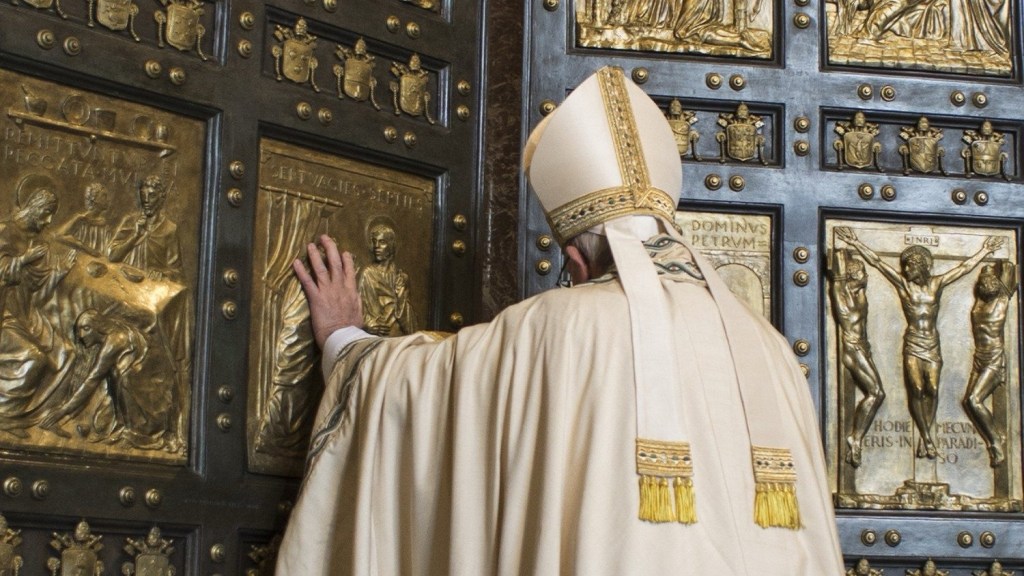
Are we locking the doors to the Kingdom of heaven or helping to open them?

“Woe to you, scribes and Pharisees, you hypocrites. You lock the Kingdom of heaven before men” (Mt 23: 13).

Context, in any reading of the Gospels, or any scriptural text, is important, but certainly with today’s reading. Our country is already experiencing enough division, polarization, and racial unrest as it is. These comments have too often been used to fuel anti-Semitic rhetoric. We need to remember that Jesus is Jewish. “The criticisms are leveled with those of power and/or influence as in the prophetic denunciations, not against the whole people of Israel. The aberrations denounced by Jesus were also denounced by other Jewish teachers in the rabbinic tradition. The goal of the denunciations is to highlight the error, to preserve others from it, and perhaps to bring those who err to the way of righteousness” (Harrington 2007, 327).

Those who would use these verses to denounce people of the Jewish faith tradition, just for being Jewish, would be acting in the same way as those for whom Jesus was convicting. Jesus spoke to the specific actions of specific leaders he had encountered who were using their power and influence for their own means and agendas. The hypocritical behavior that Jesus brought to light unfortunately still exists in some of our civil and religious leadership. This is one of the reasons many are disillusioned with authority and institutions. Jesus saw the danger of hypocrisy especially from the perspective of how it can alienate people such they turn away from his Father.

We seek truth, authenticity, and transparency because these qualities are foundational for building trust and relationships. St. Augustine, whose feast we celebrate this coming Thursday, wrote in his Introduction to his Confessions, “You have made us for yourself, O Lord, and we are restless until we rest in you.” He experienced a life without God and with him, and regretted the days he had resisted accepting Jesus’ invitation. It is unfortunate how many today have not come to embrace the words of Augustine, because of their experiences with those, who in the name of Christ, have “locked the kingdom of heaven” before them.

It is easy to point out the hypocrisy of others, but Jesus is convicting each of us as well. How have we erred, sinned, and been hypocritical? When have we allowed past hurts and wounds, anxieties and fears, prejudicial and judgmental attitudes, to limit us from living a life more aligned with his life and teachings? We all fall short in living the “Way, the Truth, and the Life” (cf Jn 14:6), but when we are willing to have the humility to be contrite, to recognize and to be sorry for the harm we have done, we have a loving Father with his arms wide open ready to embrace and comfort us, as well as offer us forgiveness and healing.

As we are more conformed to living and loving like Jesus, we have more credibility when we speak up, out, and against any act that diminishes or denounces the dignity of another, while at the same time resisting the temptation to do so in a way that diminishes even those who inflict division and hate. Jesus invites us to convict others and hold them accountable as he did with love and mercy but we need to begin with ourselves.

When we align our thoughts, words, and actions and are willing to be held accountable, we will have more credibility in guiding others. Our goal is not to humiliate, condemn, and/or shame, but to lead others to a place of contrition and reconciliation, such that each of us can be people of integrity, transparency, and holiness. Our hope is to win back a brother and sister and lead them toward the doors of heaven that Jesus opened for us in the humanity he assumed.


Photo: Pope Francis opening the Holy Door at St. Peter back in 2015 for the Jubilee Year of Mercy. Photo credit, Vatican News file.

Link for the Mass readings for Monday, August, 25, 2025

Harrington, S.J., Daniel J. The Gospel of Matthew, vol. 1, in Sacra Pagina, Ed. Daniel J. Harrington, S.J. Collegeville, MN: Liturgical Press, 2007.