Be not afraid, God loves and cares for us more than we know.

“And do not be afraid of those who kill the body but cannot kill the soul; rather be afraid of the one who can destroy both soul and body in Gehenna” (Mt 10:28).

Jesus is offering his words to his apostles before he is going to send them out on mission. He knows the persecutions they will face, because he has and will face worse, especially with his own crucifixion. And yet, even in the face of these attitudes of rejection, false accusations, ridicule, Jesus is encouraging them to not be afraid of even those “who kill the body“. Most of us hearing this today would understand this line of thought. The next line though could be a bit of a head scratcher though.

“Be afraid of the one who can destroy both soul and body in Gehenna.” Those words I am sure gave the disciples pause and more so us today. Jesus is speaking about the “one”, his Father, and we are to be afraid of him? Yes, but not from the perspective that God is a vengeful egomaniac, dictatorial, tyrant. The fear Jesus is talking about is one of reality and awe. God is beyond the reality of the finite, and encounters with him throughout Sacred Scripture have been referenced to being one of “awe and wonder”. Because of the blinding, radiance of divinity, the infinite nature, and other worldliness of a transcendent God.

Jesus is following in the tradition of the Law and the prophets, like the prophet of Isaiah who said, “Do not call conspiracy what this people calls conspiracy, nor fear what they fear, nor feel dread. But conspire with the LORD of hosts; he shall be your fear, he shall be your dread” (Isaiah 8:12-13). Isaiah and Jesus are encouraging us not to fear the things of this world no matter how horrific and terrifying this fallen world can be. This is because no matter the hardness and suffering of this life, it is only temporary, even death does not have the final say.

A holy fear, “is a rational awe, a rational fear of offending God, a fear of sinning against the righteous and holy God, such that you would be separated from him, that you would break covenant with him, that you would break your relationship with him. That’s the fear of the Lord that the Old Testament says is actually the beginning of wisdom.” Dr. Brant Pitre continues this important perspective, “the fear grows out of love… the fear of offending God because he is so good, because he is so holy, because he’s a loving father and also because sinning against him means being separated from him forever in hell.”

Jesus is helping us to make a clear choice that will have eternal consequences. We can save our lives for the immediate situation, compromise or deny our faith, or we can have the courage to live our faith with each breath, thought, word and action. Denying God can start us on a path that will lead to a second death. Accepting and proclaiming God will start us on the path that will lead to eternal life.

Jesus wants to make sure that his listeners and we still hearing and reading his words today get the important nuance. Even though God does not need us, he loves us into existence and thirsts and hungers for our love, and seeks to sustain us with his love. He does not seek to love us for his sake but for ours! He knows what our deepest hopes and desires are because he created us. God’s greatest joy is not that we merely exist, God’s greatest joy is that we will be fully alive.

“Are not two sparrows sold for a small coin? Yet not one of them falls to the ground without your Father’s knowledge. Even all the hairs of your head are counted. So do not be afraid; you are worth more than many sparrows” (Mt 10:29-31).

Each one of us is “worth more than many sparrows” because we are his beloved daughters and sons created in his image, to be loved and to love in return. What may seem insignificant to his hearers, two small sparrows, Jesus is saying has great significance to God. What has greater significance still is our humanity, he knows us so intimately, each hair on our head is counted, each thought is heard. God weeps with us in our sorrow and rejoices in our joys.

It was in the parallel verses to today’s Gospel from Matthew found in Luke 12:2-9, that I first remember God speaking to me in my late teens. I had returned home from a high school party. I remember feeling bored and not fitting in. I was at a place of wondering what direction my life would lead as graduation loomed on the horizon. I opened my Bible for the first time for some guidance and read the verses in Luke above.

As I read, “Be not afraid,” I paused. God continued on in the quiet of my heart by telling me that I would not win the lottery, but that he would provide work. In essence, if I trusted in him, he would take care of me. God has remained true to his word over these past forty plus years. Life hasn’t been perfect, and there have been some rough moments, especially over the past seven, but through it all, God has not only consistently provided a means for me to make a living, but more importantly, I have felt his comfort, his guidance, and above all his quiet, rock-solid presence, especially during times when I did not feel that I had the strength to go on.

No matter what you may be struggling with, what may be troubling you, or even feeling the pressures of witnessing your faith, as you are reading these words, don’t give in to the mind storm, because we are never alone. As the emotions swirl, breathe. Breathe slow from your stomach, in and out, and then experience the emotions, assess where they are in your body and then breathe there. As our breath slows, our body feels safe and knows how to heal, and we can identify the thoughts behind each of the emotions.

As we begin to intentionally feel and become aware of our thoughts, we can ask Jesus to reveal the truth of those thoughts. As we breathe, we can choose to receive and abide in his love. When Jesus says that even all "the hairs of your head are counted", he is assuring us that God knows each and every one of us that intimately, that closely. He knows us better than we know ourselves and ultimately, that he is with us for the long haul, in this life and into eternity. In bringing our concerns, worries, and fears to Jesus, he receives them and offers us his love, mercy, healing, and strength. 

In our faithfulness to trust and bring our fears to God, we are heard. The pressures then to conform to this world aren’t so tantalizing. Having been seen, heard, forgiven, and loved, we are no longer afraid. We can witness, even when pressured, the love we have received. Through the light and love of Jesus, we see more clearly. We can choose to sin and turn away from God for temporary pleasure, saving face or even our lives, but in doing so, lose our soul. In acknowledging Jesus before others, without counting the cost, even our lives, we will experience that death doesn’t have the final answer, Jesus does, and so gain our life for eternity. With each thought, word, and action, the choice is ours.


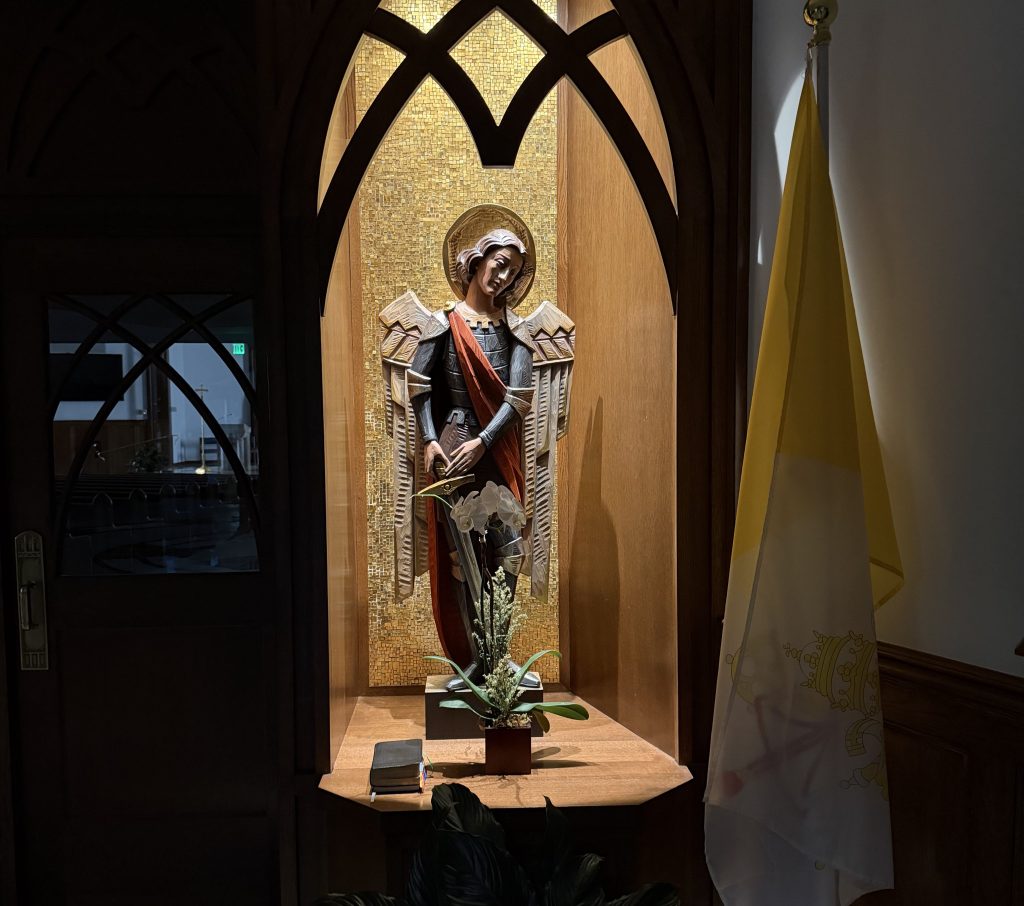
Photo: St. Micheal the Archangel, defend us in battle, be our protection against the wickedness and snares of the devil…

Dr. Brant Pitre reflection, Catholic Productions, 12th Week of Ordinary Time, Year A

Link for the Mass readings for Sunday, June 21, 2026

“No one can serve two masters.”

In today’s Gospel from Matthew, Jesus draws a direct correlation between our level of worry and our faith. Having faith is a common theme throughout Jesus’ teaching. How many times have we read or heard, “O you of little faith” (Mt 6:30). Faith is defined in the Catechism of the Catholic Church as, “man’s response to God, who reveals himself and gives himself to man, at the same time bringing man a superabundant light as he searches for the ultimate meaning of his life” (CCC, 26.) Jesus came to reveal his Father to us, to show us that he cares for, loves, and wants to provide for us.

When we are feeling anxious or worried, we are most likely not placing our trust or putting God first in our lives. We may be dwelling on the past, rehashing something we did or did not do, what someone did or did not do, fixating on whether or not we made the right decision. We could also be anxious about the future. Our minds plague us often with the worst-case scenarios of what might be or what could happen. We also may react to another’s actions or words, not fully understanding the context or source of the hurt or struggle they may be going through that caused those words or actions. We react and then the worry wheel begins to roll again. When we seek security first in anything other than God, remain hyper-focused and absorbed in ourselves, we will stay stuck in our emotions and reactions and then we continue to remain stuck in the vicious cycle. We become tossed about like a tumble weed and our insides often experience a perpetual churning.

When we focus on what we do not have instead of being grateful for what we do, we will also experience unrest. We exercise little faith or trust in God when we allow ourselves to be hyper preoccupied with anyone or anything apart from and other than God. Jesus is helping us to see that, “No one can serve two masters” (Mt 6:24). Either we place ourselves, someone, or something first, or we place God first. There really is no middle ground. Jesus’ command to put God first in our lives and to trust in him above all and everyone else: “If any one comes to me without hating his father and mother, wife and children, brothers and sisters, and even his own life, he cannot be my disciple” (Luke 14:26), embodies the reality of his radical pronouncement. We cannot be his disciple if we are not willing to put God first, because to be a disciple of Jesus is to be willing to do whatever he tells us.

When we come to experience the love of God, we can then trust him and let go of the false promises, the apparent and disordered goods that we have sought in place of God. Our life apart from God first is met with the feeling of that separation. Anxiety, worry, and fear then has a place to roam because we are unmoored from his love. These emotions can then become debilitating and paralyzing and can lead toward a downward spiral, a curving in upon ourselves, that leads to an unsettled mental state. From this posture we can become impatient, reactive, and more fearful.

Too many of us buy into the enemy’s lies that lead to isolating ourselves, keeping ourselves busy, distracted, and perpetually tired. Even when we seek to find some rest and to wind-down and renew, we reach for activities that do not bring us the rest we seek but instead continue to keep us in a perpetual state of unrest. Mindless channel surfing, lost hours on social media, or binging on YouTube clips, will not bring rest to our souls. These practices do the opposite; they keep us in a constant state of busy and overstimulation fueled by dopamine hits that contribute to a growing cycle of chronic stress.

One of the reasons we may be drawn to these technological avenues is to escape the anxieties and stresses we experience. They distract and divert us for the moment, we can enjoy instant gratification, and we may feel satisfied – for the moment. It comes at the cost though of further separating us from God and each other. Until we face our restlessness with the one who can forgive and heal us, we will continue to be unhinged, unanchored, and floating from this to that distraction. At our core, we are deeply hungering to be loved and to love. “The desire for God is written in the human heart, because man is created by God and for God; God never ceases to draw man to himself. Only in God will he find the truth and happiness he never stops searching for” (CCC, 27).

Jesus’ life, words, and actions provide a clearer way, a path that will lead us from the mist of diversion that continues to draw us deeper into the brambles of unbridled anxieties, attachments, and temptations. The way out of this inner downward spiral is to, “seek first the Kingdom of God and his righteousness, and all these things will be given you besides” (Mt 6:33). God truly knows what we seek and need in the depths of our souls. At the foundation, is deepening our relationship with him. When we spend time consistently reading, praying and meditating with the Bible, walking in creation, seeking the things of heaven instead of this world and feeling, experiencing, and bringing our anxieties, fears, and sources of stress to God, we will feel safe and experience moments of peace and renewal. We can come to a place of rest where we can breathe again, be loved as we are, and begin to heal.

Intentionally setting aside key anchor times to be with God each day is one way to put God first in our lives. As we offer vocal prayers to our loving God and Father, share with him our needs and thanksgiving, our anxieties and hopes, we will find rest in knowing that God hears our prayers and will guide us. As we spend time reading, meditating and praying with God’s word, we are nourished, transformed, and recognize we are not alone in our struggles as we thought we were. And as we become more consistent with vocal and meditative ways of praying, we can then engage in the deeper gift of contemplative prayer in which we can just be silent with God and rest in his presence. We can be like the beloved apostle, who rested his head on the chest of Jesus and listened to the beating of his Sacred Heart.

We cannot serve two masters. When we put God first in this moment and with each breathe, thought, word, and action throughout this day, our hearts will be less troubled, we will be less afraid, and we will trust in Jesus, know better his Father, and experience more often the love of the Holy Spirit.

———————————————————-

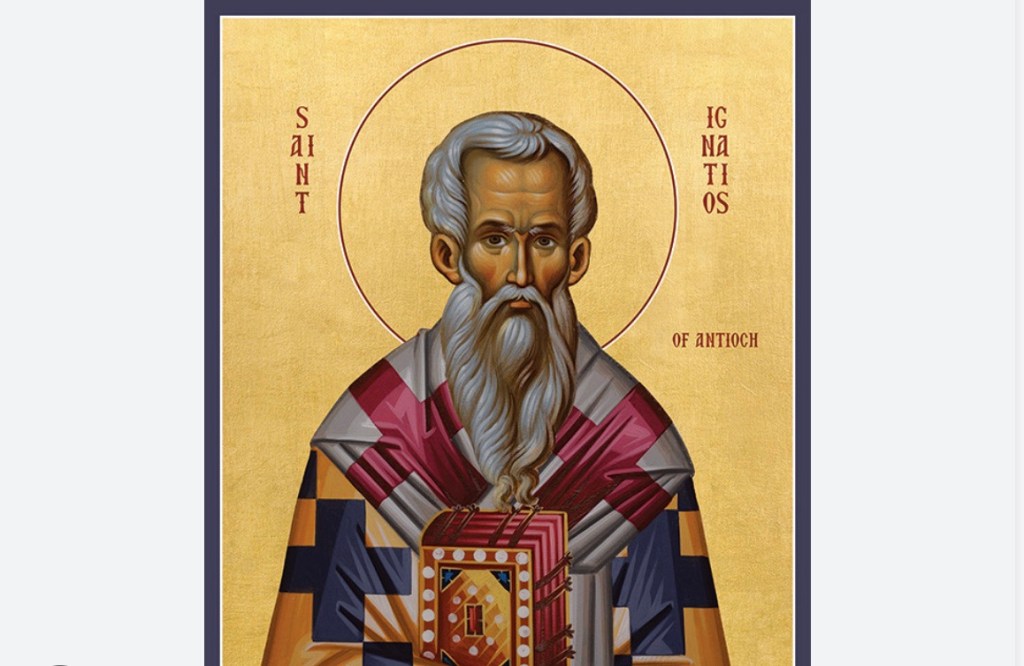
Photo: “For it is not my desire to act towards you as a man-pleaser, but as pleasing God, even as also you please Him.” – St. Ignatius of Antioch at the beginning of the second chapter of his Letter to the Romans.

Link for the Mass readings for Saturday, June 20, 2026

Blessed is the one who hears and ponders the word of God and puts it into practice.

Curtis Mitch and Edward Sri, in their commentary on Matthew, offer three key insights into how to understand the beatitudes. Contextually, Jesus does not make up the genre of beatitudes himself. The Greek, makarios, can be interpreted to mean happy and “denotes blessedness or happiness not in the sense of an emotional state but in terms of being in a fortunate situation… In the Jewish tradition, beatitudes either commended those who take a certain path of life or promised future consolation to those in affliction” (Mitch and Sri, 88). 

The Hebrew Scriptures provide examples that Joseph and Mary would have read or shared from memory to Jesus, and he would have prayed with himself. “Forty-five beatitudes are found in the Old Testament, most in the Psalms and Wisdom literature, where they commend a certain quality, condition or situation. For example, the blessed are those who delight in God’s law (Ps 1-2), who take refuge in the law (Ps 2:12)… and trust in him (Ps 84:12).” (Mitch and Sri, 89).

Who is blessed to Jesus? Not even his own mother because she is his mother, but blessed is the one who hears and ponders the word of God and puts it into practice (cf. Luke 11:28). Jesus presents to his followers a path of how they are going to live a particular way of life. He is setting a road map that will guide them through the trials and tribulations that will come in doing so, and even when challenges arise, Jesus promises that his Father will provide consolation. Those who put the beatitudes into practice and live as his disciples will experience happiness and fulfillment. 

Mitch and Sri also show that “Jesus’ beatitudes represent a reversal of values, turning the world’s standards for happiness upside down” (Mitch and Sri, 88). Mature disciples of Jesus will come to experience consolation no matter the external storms that arise. Even in times of desolation, they will remain persistent and on course, so to come out on the other side stronger for having trusted that Jesus is with them even when they did not feel his presence. 

Jesus does not commend those who wage war as blessed, but instead: “Blessed are the peacemakers, for they will be called the children of God” (Mt. 5:9). Jesus does not promote the lives of the rich and famous, but instead: “Blessed are the poor in spirit, for theirs is the kingdom of heaven” (Mt. 5:3). Jesus does not affirm those who thirst for power, pleasure, wealth, and fame, but instead: “Blessed are they who hunger and thirst for righteousness, for they will be satisfied” (Mt. 5:6).

These are just a few of the eight beatitudes Jesus presented. A good practice is to review each of the eight beatitudes that Jesus presents in the beginning of his Sermon on the Mount. Which one(s) strike a nerve. Stop there and meditate with Jesus leading us. Where is he helping us to see a way where we can release an attachment so to better follow more faithfully?

Jesus invited his disciples to sit at his feet as the “new Moses”. He came up the mountain like Moses who came up to receive the law. Jesus did not come to receive the law, he came to “teach it” (Mitch and Sri, 87). As he begins his Sermon on the Mount with the Beatitudes, the other wonderful thing we will realize about the beatitudes is that he was not just sharing head knowledge but practical ways to inherit the kingdom of Heaven, to grow in intimacy with his Father and share in the love of the Holy Spirit. All practices that he himself lived through and through.

The Beatitudes, like the Ten Commandments, are boundaries that define us as the children and inheritors of God’s will and blessing. They help us to uncover that which seeks to lead us astray, to isolation, and to our death, and instead identify how to stay focused on that which leads us to eternal life. The most important thing we can do every day is to pray, and the enemy knows that, so he will seek with all his means to distract, divert, and dissuade us from doing so or to keep our prayer and practices merely at the functional level. 

Jesus offers us his love that we might trust him to allow his light to shine in our hearts and minds and the places we would rather no one would see. Even those places that we may feel unlovable, because even there, Jesus will love us when we let him in. He seeks to reveal our sin and failures, not to condemn and shame us, but to help us to see what is enslaving and isolating us and that which keeps us from greater intimacy with his Father. The light and love of Jesus help us to see what our lives are like without God and what they are like with him.

As our consciences become better formed through following Jesus’ teaching, such as the Beatitudes, as we allow him access to our wounds and sins, as we are loved by Jesus even there, we will be purified by the loving fire of the Holy Spirit, and we will then be blessed with a clean heart and see God. See our Loving God and Father who has made us to be happy, fulfilled, and at rest; a rest that we will find when we breathe, receive, rest, and abide in Him.


Photo: Quiet time praying Evening Prayer after the Saturday Vigil Mass at St Helen Catholic Church in Vero Beach.

Mitch, Curtis. The Gospel of Matthew. Grand Rapids, MI: Baker Academic, 2010.

Link for the Mass readings for Monday, June 8, 2026

Jesus is our LORD!

The opening scene from today’s Gospel from Mark opens with Jesus teaching in the temple area. He poses this question to those gathered, “How do the scribes claim that the Christ is the son of David” (Mk 12:35)? The question that Jesus is offering engages in the Jewish debate regarding the promise of the Messiah or Mashiach in Hebrew, the Christ or Christos in Greek. Messiah or Christ is not a surname but a title meaning anointed one.

One interpretation of the long-awaited Messiah was a kingly figure descended from King David. Son of David is a common Messianic title. The blind Bartimaeus called out to Jesus using this title (cf. Mk 10:46-48). Jesus then quotes the beginning of Psalm 110 as he goes deeper. “David himself, inspired by the Holy Spirit, said: The Lord said to my lord, ‘Sit at my right hand until I place your enemies under your feet’” (Mk 12:36).

This statement can be a little confusing, especially if you are hearing this word proclaimed and not reading it closely. The first Lord referred to by Jesus has a capital letter “L”and the second lord has a lower case “l”. The reason for this is that in the original Hebrew the sacred name of God was not to be uttered or written. Instead, the Hebrew Adonai, meaning LORD, would be used to refer to God. The use of the word lord, Hebrew, adoni, with a lower case “l” could refer to a patriarch of a family, tribe, or military king and ruler like King David.

In this very short account from Mark today, Jesus deftly addresses some of the titles floating around about him, Messiah, Son of Man, Son of David, and with his final question, “David himself calls him ‘lord’; so how is he his son” (Mk 12:37). Jesus is saying that this One to follow David would be even greater than the expectations of these messianic titles because he preceded David and so is even greater than the genetic heir to David. Jesus is saying that he is the Son of God, LORD, as well as Lord. Just a little bit dizzy yet?

Jesus as Son of God, as LORD, as God, not only far surpasses even the highest ideal of messianic hope but would also be a direct challenge to the occupying Romans. For in the ancient Greek, of which Mark is written, Kyrios, means Lord. For the Romans, Caesar is Lord. Jesus is challenging the worldly establishment by saying that he, not Caesar, is Lord. He is challenging the religious establishment by saying that he is LORD, God.

Jesus, soon after speaking these words, will participate in his suffering, death, resurrection, and ascension, where he will return the right hand of God his Father. The enemies that will be subjected under his feet will be Satan, sin, and death, each of which he will defeat in his crucifixion, resurrection, and celebrate in his ascension as well as continue to lead us from his throne at the right hand of his Father.

This is why Jesus is our hope even and especially during our troubled times: personally, within our family and communities, country, and our world. Jesus is our Lord – not any emperor, president, or worldly leader. Jesus is our LORD to whom we are to place our trust and follow. Jesus our Lord, and our LORD, will lead us to freedom from our bondage to addiction, sin, suffering, fear, insecurity, powerlessness, poverty, self-sufficiency, and ultimately even our death.


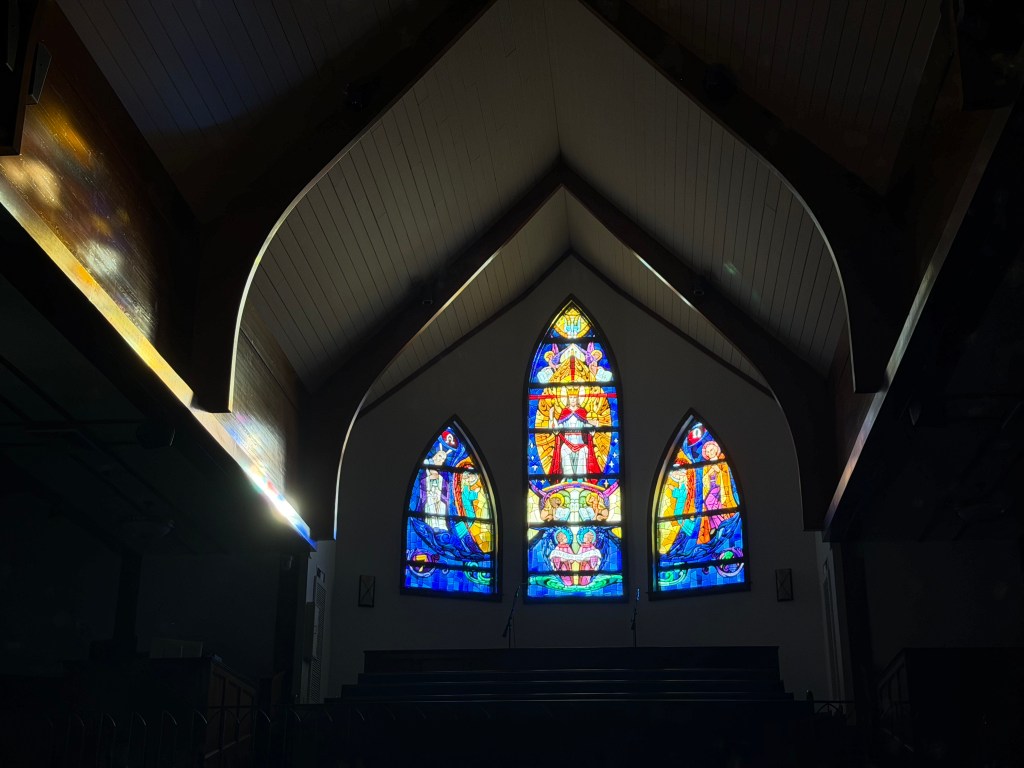
Photo: Jesus our Lord will lead us out of our present darkness and into his wonderful light.

Link for the Mass readings for Friday, June 5, 2026 

Loving God with all our heart, soul, mind, and strength and our neighbor as ourselves begins the moment we allow God to love us.

“Which is the first of all the commandments” (Mk 12:28). This may have been a challenge to Jesus, or it may just have been a valid question of one seeking the Truth. Scribes were the experts in securing and making known the Torah. They could read and write, a skill not only used for protecting and passing on the faith, but also for the daily tasks of commerce and contract writing.

This question of the scribe was one that was asked often by those who sought how best to live out the Torah. Not only were there the Ten Commandments, but throughout the Torah, there were 613 prescribed laws! A common debate that was often entered into was which were the most important to follow to be faithful, as well as the minimalist approach, being, which were the most important to be followed so someone could just get by?

Jesus replied, “The first is this: Hear, O Israel! The Lord our God is Lord alone! You shall love the Lord your God with all your heart, with all your soul, with all your mind, and with all your strength. The second is this: You shall love your neighbor as yourself. There is no other commandment greater than these.” With this response, Jesus drew first on Deuteronomy 6:4-5 and then regarding loving your neighbor, Leviticus 19:18. By answering in this way, Jesus stated that when we orient our lives to who God has created us to be, which is to Love God first, place God at the center instead of ourselves, we can then better love our neighbors and ourselves.

St Augustine, the bishop of Hippo (354-430), echoed Jesus’ “Greatest Commandment” by stating that we can love God and do whatever we want. The order of that statement is aligned to the commandment Jesus gave. God is first. The problem many of us have is that we place ourselves first and seek to bend God’s will to our own. We look to flip the words to: do what I want and God will love me. It is true that God will love us, but we will not experience the intimacy of his love, just as we weaken intimacy with our human relationships when we put ourselves, our interests first before others.

When we shift our orientation to God first, such that he is the foundation of our life, our world opens up and expands. Many of us are wounded by our own sin and the sin of others. We retreat into defensive postures and actualize defense mechanisms to survive. These may be good and necessary at the moment, but the challenge is that if we continue to live in a posture of survival mode, we are merely existing.

God lays out for us a life of consolation and joy, and we can experience this more when we recognize our need for and open ourselves up to receive God’s love. When we allow him to love us, we can then receive his healing balm of forgiveness, love, and mercy. Once we begin to experience these gifts, we will begin to see ourselves and others, not from our own limited perspectives where we can slip into defensive postures that may feed our insecurities, biases, and prejudices, but see from the greater breadth and depth of how God sees us as his children, made in his image. We are not constricted by God’s love but expanded.

God reaches out to us in so many ways to tell us that he loves us more than we can ever imagine. Unfortunately, when we are diverted and distracted by other false pursuits and find ourselves opposed to his will, we limit our experience of his love. Yet, God’s love for us remains unconditional. God loves us as we are, right now, right at this moment. We just need to take some time to sit, breathe, and be willing to accept the gift of being loved for who we are as well as embrace the fullness of who he has created us to be as mental, physical, emotional, and spiritual human beings; as well as resist repressing any aspect of who we are, allow God access to all of us, and when we do we will grow in holiness and wholeness.

Through embracing God’s healing forgiveness, love, and mercy and being engaged in the fullness of our humanity, we can begin to relax our defensive postures. We can become advocates for healing the division, dehumanization, disrespect, and polarization in our realm of influence, in person, and online. In being loved, we begin to feel safe and no longer controlled by our fears and insecurities. Being loved, we will project, react, and should over ourselves less, and be more open to encounter and accompany one another as human beings, and experience our differences not as obstacles but as gifts for our mutual growth.


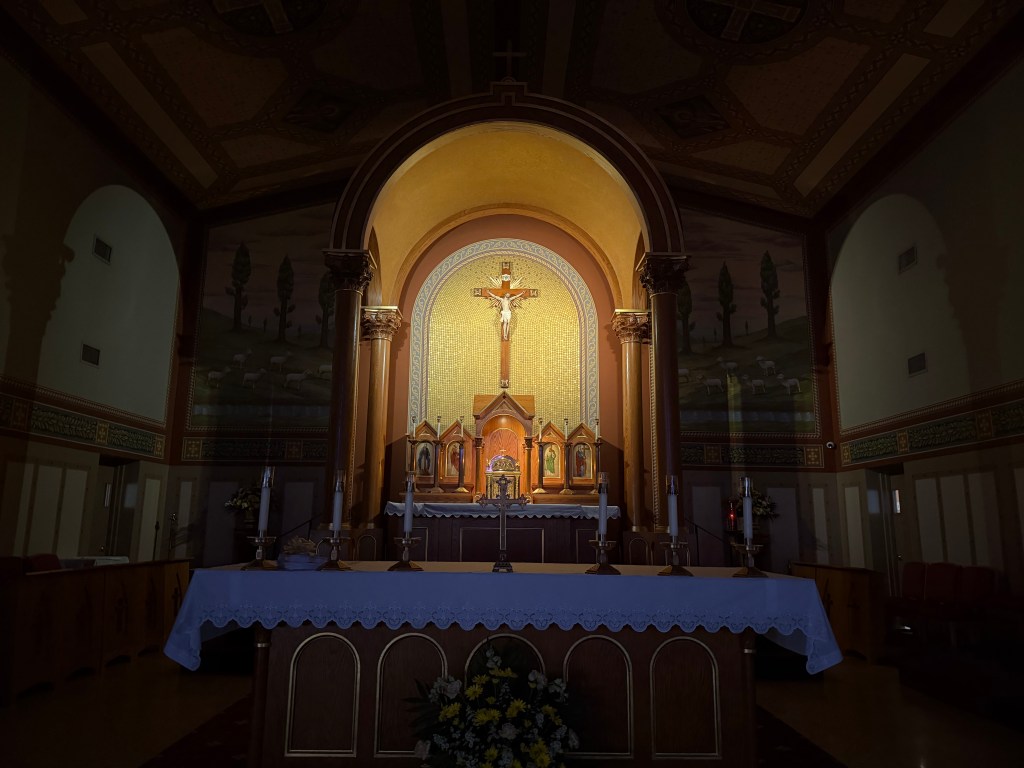
Photo: The fire of God’s love burns in each sanctuary lamp where his Son is present in the tabernacle. May we join him, sit awhile, breathe, receive, rest, and abide in his love.

Link for the Mass readings for Thursday, June 4, 2026

Jesus is never alone, and neither are we.

The disciples are beginning to have a better understanding that Jesus is who he says he is, that “he came from God.” Jesus does not rest on or savor this insight and affirmation, but shares with them how, they still do not fully comprehend. He lets them know how each will not be able to stand by him in his most desperate hour. Those he takes with him into the Garden of Gethsemane will fall asleep. When Jesus asks them to watch and pray with him, to be a support for him as he receives the crushing will of the Father that leads him to the cross, they fall asleep multiple times. When the guards come to arrest Jesus, led by Judas, all the disciples will flee. Peter will then betray Jesus three times without hesitation.

What is interesting is that just as Jesus shares with them, that even though they, his most intimate followers, his closest friends would betray him, he says: “I am not alone, because the Father is with me. I have told you this so that you might have peace in me. In the world you will have trouble, but take courage, I have conquered the world.” 

These words are words of comfort and hope. Comfort and hope for his disciples then as well as for us today! No matter if we betray or are betrayed ourselves, we let others down or are let down, we see and experience the devastating effects of our fallen world and fallen human nature, from without and within; no matter what conflict, challenges, or tribulations rise up before us, we do not need to succumb to cynicism, hopelessness, and despair.

It is important that we resist the temptation to curve in upon ourselves and drink from the poison of shame. In doing so, we cut ourselves off from the very source of our life and being, as well as forgiveness and healing. Having the humility to acknowledge where and when we have caused harm in any form requires embracing a healthy sense of guilt which is good. Then, instead of beating ourselves up, we are to seek forgiveness and reconciliation as well as be understanding and willing to forgive.

We also need to remember that in those times when we feel misunderstood, hurt, let down, or are facing the unbearable in life, we are not alone! Jesus, who experienced the same, reveals to us the way to his Father because Jesus is the Way! Seeking affirmation from the culture or the world is not the way. Our priority is to seek Jesus first, he who will lead us to the Father so we will experience the Love shared between them, the Holy Spirit!

Jesus is the light that shines in the darkness, and he will not be overcome, for he has conquered sin, death, and the world. We are an Alleluia people because through our participation in the life of Jesus the Christ we will overcome as well when we trust in and experience the love of the Father. As an Alleluia people, we are to resist being shaped by the culture and the world, our own wounds and fears, and renounce the shame and lies hurled at us from the enemy. Instead, let us choose to follow Jesus, and live out the Gospel and will of our loving God and Father as Jesus did. As we share the light, joy, peace, and love of Christ we have received with each other, we and those willing to receive, will be daily healed and transformed by trinitarian love.


Photo: The more we slow down and breathe, receive, rest, and abide in the love of God, we will know that no matter what we are experiencing, we are not alone.

Link for the Mass for Monday, May 18, 2026

The commandments of Jesus do not constrict but expand our freedom to be loved and to love.

“Whoever has my commandments and observes them is the one who loves me” (John 14:21).

Especially in our modern, western mind set, the idea or mere mention of following commandments may cause a bristling. Mostly this is because of the witnessing weakness of our fallen nature expressed in egregious ways through the abuse of power, abuse in relationships, and a weakening of trust in secular and religious institutions.

Jesus though is offering more of a challenge as he draws the following of commandments and love together. He is sharing with his apostles in the beginning stages of his farewell discourse, and before his crucifixion, what he feels is most important to share. His testament that he not only wants to give, but these final words he wants to impart upon them in such a way that they continue to learn and receive his teachings, put them into practice, allow themselves to be transformed by and so perpetuate them.

Just as commandments can lead one to bristle, love has many more superficial meanings than what Jesus means. One reason is that, even though the English language has a plethora of words to utilize and choose from, there is only one word for love and it is interpreted and used in many ways. In Ancient Greek, there are four words that are used to connote love. There is eros, which has to do with attraction. It is the beginning stage of love because we are drawn out of ourselves as we are attracted to another. The next word for love is philia, which aligns with friendship, a wanting to be together, to share between friends. If our love matures it moves from attraction or infatuation to friendship. The third word, storge, is the deeper love shared with family members which can be through blood or a deepening of friendship. The fourth word is agape, which is unconditional love, a sacrificial love.

When Jesus shares that we are to follow the commandments, he is not demanding that we do so as a tyrant would. He is providing boundaries, guard rail, parameters for us to grow and mature as people who love, who, in the words of St Thomas Aquinas, will the good of the other as other. As humans, we are social beings. We want to belong, to be accepted, and to be a part of. We seek meaning, purpose, and fulfillment in our lives. This is best done through cooperation and collaboration with God and with one another, striving to love unconditionally, agape. We desire to belong, to be loved, and to love in return. Yet, we need to ground our love in God first or our pursuit of love and belonging will be disordered.

As a good son of St. Augustine, Pope Leo XIV quoted Augustine in his inaugural Mass as Pope last year: “Lord, you have made us for yourself, and our heart is restless until it rests in you (Confessions, I: 1,1).” We are made by God to be loved and to love in return. Nothing we seek in this world will satisfy this deepest hunger that we all have in our soul besides the love God has for us. Unfortunately, we succumb to many disordered affections in pursuit of the love we seek. We are led astray by apparent goods that leave us hungry, thirsty, and wanting for more.

If we operate from a self-centered posture in which we are only turned in upon our self, and we only seek to manipulate and get from others, or worse, objectify others. Instead of working for consensus and sharing a common vision, we will ultimately be empty with the exchange on any level, because even in our relationships as with material things, we will be left wanting more. This is true because once the immediacy of the stimulation, whether material, emotional, or sensual, ends, so does the experience of the feeling. Some happiness may linger from the effect, but we will never be filled or satisfied with that which is finite. We will continue to seek more and more until the pursuit of instant and constant gratification ensnares us and we are entangled in a web of addiction.

God’s commandments, grounded in love, are meant to provide boundaries for us, training wheels, and to keep us free from enslavement to sin. The commandments point us to that which is not apparently but truly good for a wholesome and whole life. At the same time God’s commandments and the teachings of Jesus help us to mature as persons moving away from a posture of being self-centered to becoming disciples that love as Jesus loves.

Discipline in this way is meant to be a means of freedom for excellence such that we can become who God calls us to be and who we truly desire to be. God is not in competition with us. He is our biggest fan. As St Irenaeus wrote, the glory of God is the human being fully alive! When we can rest in the truth that God loves us as we are, even in our sin, when we can stop, breathe, receive, rest, and abide in his love, we can begin to settle and feel safe. Our restlessness can slow, the grasping can release, and we can just be, be loved, be ourselves, and experience peace.

Commandments and morality imposed indiscriminately, without reason or an end goal is a bludgeon. Love and mercy without accountability and justice can be enabling. Jesus’ invites us to receive and observe his commandments so that we may be freed from disordered affections and so properly order and discipline our desires and passions to be free to love authentically. Jesus knows what will truly fulfill and give us deeper meaning. May we trust in and learn from the deposit of faith passed on from Jesus to the Apostles, to each successive generation, as well as the ongoing guidance of the Holy Spirit, our Advocate that the Father sent in his name (John 14:26).

Pope Leo XIV, the vicar of Christ, implored us about a year ago: “Brothers and sisters, this is the hour for love! The heart of the gospel is the love of God that makes us brothers and sisters.” We are brothers and sisters, disciples of Jesus, when we receive and put into practice Jesus’s commandments, when we love him and his Father, we are given the discernment to reveal the lies of the enemy, we grow, and mature in our spiritual lives. The “heart of the gospel” Pope Leo preached in his inaugural address echoed again in his Sunday Regina Caeli address, May 3, 2026.

Having faith in God and Jesus “frees our hearts from the anxiety of possessing and acquiring, and from the illusion that we must pursue a position of prestige to have worth. Each person already has infinite worth in the mystery of God, which is the true reality. By loving one another as Jesus has loved us, we impart this awareness to one another… through love, amidst a multitude of brothers and sisters, each one discovers that they are uniquely made.”

Let us allow and continue to allow the tender chords of the Holy Spirit’s love to draw us deeper into intimacy with Jesus so that we can be transformed, forgiven, and healed by his love, and so freed from the false lures and promises that seek to divert us from being the beloved daughters and sons of God our Father that he has uniquely created us to be.


Photo: Pope Leo Regina Caeli address (Vatican Media)

Quotes above from Pope Leo XIV Inauguration Mass, May 18, 2025: Transcript of Pope Leo XIV’s Homily

Pope Leo XIV Regina Caeli, Sunday May 3

Link for the Mass readings for Monday, May 4, 2026

Jesus reveals us a better way so that we may learn from our mistakes and sin.

There are a handful of incidents in today’s Gospel reading from John that refer back to encounters Jesus had with his Apostles before his death and resurrection. Jesus waits on the shore as seven of his disciples; Peter, Thomas, Nathanael, James, John, and two others, return from a night of fishing. This is reminiscent of when Jesus first came to Andrew and Simon, James and John as they were casting and mending nets and he invited them to follow him.

The disciples are on their way back to shore with their nets empty, and Jesus suggests that they cast their net over the right side and they quickly find that they “were not able to pull it in because of the number of fish.” Peter had this experience in one of his first encounters with Jesus when he had been fishing all night and Jesus encouraged him to put out into the deep water, and they were able to fill two boats with fish.

After their great catch “of one hundred fifty-three large fish,” John told Peter that the Lord was the one who had instructed them. Peter again “jumped into the sea.” He couldn’t wait for the boats to come to shore, he dove into water and swam to shore. An echo of when Jesus approached his disciples one night walking on the stormy waters and Peter jumped out of the boat and walked on water until he took his eyes off Jesus and began to sink.

When Peter and the disciples came to shore “they saw a charcoal fire.” The most recent event with another charcoal fire was outside the gate where Jesus was led for his judgment. To keep warm Peter joined the servants and slaves huddled around a charcoal fire. It was at that charcoal fire that Peter denied Jesus three times. The final scene in today’s account was when Jesus offered cooked fish and bread to his disciples, this is reminiscent of Jesus feeding the five thousand with two loaves and a few fish and also an echo of the Last Supper and the road to Emmaus account we just read a few days ago in which Jesus was made known in the breaking of the bread.

Throughout our lives, we will have encounters with people and experience incidents that we have experienced. We may not have been as present as we have wanted to be when attempting to comfort someone, we may have been involved in some task and made a mistake, may have given in to temptation or fear that we regretted, just as Peter had denied Jesus three times at that first charcoal fire. Peter wept when he heard the cock crow. The sound brought back Jesus’ prediction, brought to light Peter’s own denial and cowardice. How many times must he have berated himself, as we have done when we have sinned, fallen short of our goals, or made mistakes?

Making mistakes and taking risks, are necessary for learning and growing in any endeavor in life. Jesus does not want us to beat ourselves up when we fall short or fail. What is required for maturation is an honest assessment of the situation, an acknowledgment of our mistakes and sins, and then a movement to correct and learn from them. Often we overcompensate in the beginning, but as we remain persistent we reach a healthy balance. Jesus does not seek to condemn or shame us when we make mistakes or sin. He shines his light that we might see to identify where we have missed the mark so we can identify and confess our sins, and improve going forward.

Jesus returns to his disciples after his Resurrection, meets them in very similar settings as he had before when he had first called them. All of his disciples failed him, yet Jesus did not condemn or shame them. Jesus helped to show them how far they had come since he first called them, while at the same time helped them to see how far they still had to go. Jesus was not only their teacher but the divine source of their own transformation. Apart from Jesus they and we can do nothing. In fishing all night on their own nothing happened, but as soon as they did what Jesus called them to do, they caught fish to bursting.

Jesus shows us a better way and empowers us with his love and encouragement. He reminds us we can’t nor ought we to go it alone. When we are with Jesus, grow in our relationship with and trust him as the disciples did, we will be more present to someone the next time we are in a position to provide comfort or understanding, have greater resolve when tempted, breathe more and resist reacting in kind during times of conflict, and be able to identify our sins and mistakes as well as learn from and be free from them.

Jesus has risen, appeared to his disciples to guide, encourage, and empower them to be who God has called them to be. Jesus offers us the same teaching, guidance, and power shared from the wellspring of his humanity and divinity so that we will be able to participate in his life. Our repentance and Jesus’ forgiveness go beyond helping us to become better people. Through the love of Jesus, our minds, hearts, and souls change, we are transfigured, and conformed to Jesus and his life of resurrection. This is good news to share not only in word but in deed. Alleluia!!!

————————————————-

Photo: Let us follow Jesus and leave our sin behind.

Link for the Mass readings for Friday, April 10, 2025

When we remember Jesus is with us and for us, we can always change, we can always change course.

As Jesus and his companions shared the Passover, Jesus offered this morsel, “One of you will betray me” (Mt 26:21). I am sure that this bitter herb shifted the mood of the meal and fellowship. Each apostle asked if they were the one to betray him. There is no recorded response, though the assumption is that Jesus says no to each, except for one.

A unique feature about this exchange was that each of the disciples in asking Jesus if they would betray him prefaced their request by calling him, Lord. In doing so, they acknowledged that Jesus was the Messiah. When Judas addressed Jesus he called him, Rabbi. He did not acknowledge Jesus as his Lord. Could this be a tell regarding why Judas was willing to turn Jesus over because he did not believe Jesus to be the Messiah, that he too believed Jesus to be a blasphemer?

Jesus’ response to Judas was an affirmation of truth: “You have said so” (Mt 26:25).

Jesus offered this affirmative response two other times, confirming each time the truth presented to him by another. When Caiaphas asked if he was the Messiah and then later with Pilate when he asked Jesus if he was the king of the Jews. In answering in the affirmative to Judas, was Jesus giving him the opportunity to look at himself in the mirror? Jesus knew that Judas would betray him, he did not have to make this point known. Judas could have remained silent, yet he asked, as did the others who went before him. Could he have been contemplating shifting his prior determination of betrayal? Was Jesus inviting Judas to acknowledge what he had agreed to do, confess, change course, and ask for forgiveness?

Judas chose his course of action to betray Jesus, and unfortunately, even with Jesus’ intervention, Judas was not able or willing to stop or change course. Judas fulfilled his agreement with the chief priests to turn Jesus over. Often we set a similar course of action and even when Jesus makes an attempt to intercede on our behalf, we do not slow down enough to hear.

God speaks to us in the silence of our hearts but too often we are focused on or diverted by other things and we do not hear. We can instead allow fear, anxiety, pride, prejudice, a grudge, or anger to be our guide. We can be too blind to see or too determined to do it our own way, regardless of the consequences. Habitual reactions can also be a big challenge. We can also buy into the lie that the momentum is already too strong to turn around. That it is too late to change course.

We need to know in the depth of our being, that it is never too late to change course, to make amends, to repent, and to turn back to God. The first step is being willing to be still or aware enough to hear or see his guidance. The second step is to be willing to look in the mirror and see what Jesus presents to us, accept what we see, and then seek his forgiveness and repent. Yet, sometimes we feel we are digging ourselves into a hole that we can’t escape from. The answer is that we need to just stop digging and put the shovel down. Jesus will meet us in the deepest of the holes we have dug for ourselves and when we are willing to stop, he will but us on his shoulders and lift us out!

————————————————————–

Photo: One way to remember Jesus is with us, is to breathe, slow down, and look up.

Link for the Mass readings for Wednesday, April 1, 2026

With Jesus no one is last.

Has there ever been a time when you were picked last for the team, whether on the playground, P.E., or gym class? I remember being on both sides, being picked last, and picking others to join and having to pick someone last. I preferred being chosen last rather than having to be in the situation to choose a classmate last. In our Gospel reading today, Jesus comes upon a man who has experienced an even worse situation.

This man had been in need of healing for thirty-eight years. Apparently, there was a limited time to get into the waters of the pool at Bethesda to experience the healing properties that it afforded, for each time the water stirred, while the man moved to get closer to and enter the water, “someone else [got] down there before” him. This is worse than getting picked last, as he doesn’t in a sense even make the team!

But with Jesus, the last shall become first. Key ingredients are belief, faith, as we heard in yesterday’s account and also along with belief and faith, is there a willingness to be healed. Jesus asks the sick man, “Do you want to be well?” When the man in need of healing explains the limitations he has experienced in the past regarding getting to the pool, Jesus does not hesitate. Jesus commands him to rise, pick up his mat and walk. The man is no longer the one picked over, the one ignored, the one unseen. The sick man encounters Jesus and is healed by his word.

Jesus approaches us in the same way that he encountered the sick man by the pool of Bethesda in today’s Gospel. He meets us in our need, where we are, no matter our station in life. He does not leave us on the outside looking in, he does not leave us wondering if we are loved or if we belong. He comes close and if we are willing, to forgive, heal, and empower us to be about the mission given to us by his Father. Jesus gives meaning and purpose to our lives. Each and every one of us is a gift from God, a beloved daughter or son, and we have been graced with something to contribute, something unique to help make the kingdom of God a reality.

May we enter a place of silence and stillness, without and within. Breathe intentional and slow, settle into a rhytm with no or little distractions, breathe in deep and exhale a few times more, one deep breath for each person of the Trinity, and then close our eyes. How do we see ourselves in our present moment, what is happening, what are we experiencing? As we take a few more breathes, notice Jesus walking toward us.

Jesus is present, right here and right now, for each of us if we are willing to be still long enough to engage with him. There are no boundaries, no limitations, only those we impose on ourselves. We are no longer misunderstood, left out, or picked last. Jesus has come close to be with us in this moment, to embrace us, and help us to really know that we are loved, heard, and we belong in the kingdom of God.

————————————————————————-

Painting:”Do you want to be well?” If yes, then continue to breathe, receive, rest, and abide in God’s love.

Link for the Mass readings for Tuesday, March 17, 2026