The closer we are to Jesus the easier it will be to give without counting the cost.

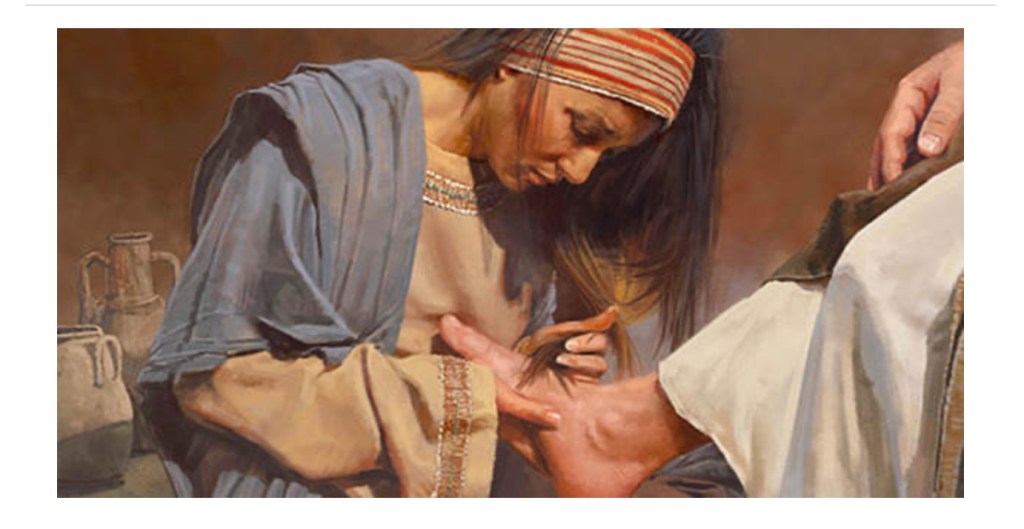
“Mary took a liter of costly perfumed oil made from genuine aromatic nard and anointed the feet of Jesus and dried them with her hair; the house was filled with the fragrance of the oil” (Jn 12:3). This is indeed some gift that Mary shares with Jesus, though Judas’ critical response showed that he missed the point of her offering, which went well beyond the material cost of the perfume. Mary even exceeded the gesture of hospitality by going beyond washing Jesus’ feet and anointing them as well. This act of caring could have been a bestowal of appreciation and gratefulness toward Jesus who brought Lazarus, her brother, back to life, but it was even more than that.

In Jesus’ correction of Judas, “Leave her alone. Let her keep this for the day of my burial” (Jn 12:7), we may intuit the best source for interpreting Mary’s act. Mary comprehended better than any of the Apostles that Jesus’ death was imminent. Mary’s washing the feet of Jesus, anointing them, and drying them with her hair was a gift of love, of giving herself in service to the Son of God. This exchange mirrors the communion between God the Father, God the Son, and the love shared between them, God the Holy Spirit. Mary follows the will of the Father and plays her part in salvation history.

Martha is also present and seemed to have learned from their last encounter. She is again serving the meal, but this time she is not complaining nor anxious and worried about many things. Judas was the one corrected this time when Jesus told him to, “Leave her alone.” Mary has shown her spiritual growth as well. She is no longer sitting at Jesus’ feet but anointing them for his imminent death. Her generosity in pouring out such a large amount of perfumed oil was evident because the fragrance filled the entire house. Mary’s generosity foreshadowed the generosity of Jesus not just in his eventual washing of the feet of his apostles but ultimately, his total self-gift pouring out all of himself and holding nothing back on the cross.

We do not know how Mary came to possess this precious oil, but what we do know is much more important. She did not grasp or cling to the oil, she did not count the cost and just pour out a little bit. Mary was moved with compassion and generosity. The same compassion and generosity she experienced from Jesus, she was now sharing with him. May we be open to receive the compassion and generosity of Jesus and share without hesitation as he guides us.

Is there something or some way that God is calling us to pour out, not just for the sake of doing so, but in service to Jesus? The path to holiness and sanctity becomes smoother and the way clearer when can identify and let go of that which we are attached and clinging to. May we follow the lead of St. Mother Teresa who said that she sought to be just a pencil in God’s hand. The freedom of the pencil is that it moves and writes as the author does. Would that we become so free in the hand of our loving God and Father.

————————————————————————————–

Painting: May we follow Mary’s lead to love as Jesus teaches us to.

Link for the Mass readings for Monday, March 30, 2026

Jesus the Christ, the Son of God, will make all things new.

Hospitality was a key virtue for people of the ancient Near East. Martha approached Jesus as he was teaching looking for support from her sister Mary in preparing the meal. Mary was sitting at Jesus’ feet with the male disciples gathered around him while Martha appeared do be doing all the work. Martha was hoping that Jesus would support her in her request. Jesus not only did not, but said that Mary had chosen the better part and that Martha was “anxious and worried about many things” (cf. Luke 10:38-42).

We don’t know how Martha reacted to Jesus. A subtle key in today’s Gospel account from John may shed light on their last encounter and Martha’s reaction. Martha’s boldness was on display again. As soon as she was aware that Jesus was coming near, she did not wait for him to arrive but “went to meet him” (Jn 11:20). Martha’s brother, Lazarus, had now been dead for four days and Jesus, who had the time to arrive before his death, was not present to help his friend, her brother, Lazarus in his time of need.

How many times have we been in Martha’s position? Feel that Jesus was not there when we needed him most? Why do bad things happen to good people? Part of the answer is that we live in a fallen world of sin and self-centeredness. God does not bring about suffering but he does allow it. God loves us so much that he is willing to give us the free will to reject him. The cost of our freedom to choose means that there are consequences to our choices which can be detrimental or beneficial. We are all interconnected so when we choose to act on our own apart from God’s guidance and the welfare of others, the damage that ensues affects not only those around us but everyone. On the other side of the coin, there is the presence of grace, forgiveness, and love when we choose to draw close to God, especially in challenging times.

When we choose God, we will find out that we are not alone in our suffering, especially, when we do as Martha did and go out to meet Jesus. She most likely did not holding back any of the full range of her hurt and pain. Martha’s words expressed her anguish, “Lord, if you had been here, my brother would not have died” (Jn 11:21). We can only see from our limited point of view, especially with our own experiences of grief. Yet God sees far beyond our finite perspectives and Jesus helps to not only bring about a greater good, though it may take time to come to understand and experience, he accompanies us in each agonizing breath of our suffering.

Jesus came too late to heal his friend, which Martha and Mary could not understand. What he came to do, was beyond their wildest imaginings. Jesus came to restore Lazarus to life, which would also be a foreshadowing of his own Resurrection. The difference being that Jesus would not merely be resuscitated as Lazarus was and die again.

Martha was not holding a grudge from their last exchange. She came directly to him. She knew he could have healed her brother if he had been there, but did not say so accusingly. Martha immediately followed instead with: “But even now I know that whatever you ask of God, God will give you” (John 11:22). Then even before Jesus called Lazarus back to life, Martha showed her faith. Jesus asked if Martha believed. Martha, as did Peter, made the affirmation of our faith: “Yes, Lord. I have come to believe that you are the Messiah, the Son of God” (John 11:27).

We have been blessed by the witnesses of Martha, Mary, and Lazarus. Each show their trust in Jesus in their own unique way and follow his guidance. Those of us who have suffered the loss of a loved one, or more, know something of the pain that Martha and Mary experienced. May we also all trust in Jesus, the Son of God, the “resurrection and the life” who conquered death and became the firstborn of the new creation. We need not fear our time of suffering or death, our own, or for our loved ones as long as we give our lives to him. When we call on Jesus he will give us the strength to endure and overcome, in this life and into the next.


Painting: The Raising of Lazarus – Caravaggio, Martha, Mary, and Lazarus help us to trust and have faith in Jesus as you did. Pray for us!

Link to the Mass readings for Tuesday, July 29, 2025

May we embody the boldness and faith of St. Martha.

Enough of waiting. They had sent word to Jesus while Lazarus was dying but still alive, and he did not come. Now Jesus is close to their home, and Martha does not wait for him to come to her but “went to meet him” (Jn 11:20). She went boldly, and most likely, did not hold back any of the full range of her hurt and pain.

Martha’s words expressed her anguish. “Lord, if you had been here, my brother would not have died” (Jn 11:21). She believed in Jesus, knew of his power to heal, but could not understand why he did not come. She could not understand because she could only see the loss of her brother which was right in front of her. He was dead and now in a tomb.

It is true that Jesus came too late to heal his friend, it is also true that he felt the pain of his friends. What Lazarus had to go through in his death and what Martha and Mary were experiencing in their grief. That is why he wept. But Jesus came with a purpose, and what he came to do was beyond their wildest imaginings. Jesus came to restore Lazarus to life.

What is so amazing is that as Martha speaks with Jesus, she is not aware of what Jesus is about to do. And when Jesus asks her if she believes that he is the “resurrection and the life” she says without missing a beat: “Yes, Lord, I have come to believe that you are the Christ, the Son of God” (Jn 11:27). Martha believed Jesus was the Christ before the raising of her brother and even while still experiencing the rawness of her grief.

Martha’s boldness and faith give us a model of how to face the challenges in our lives. We are to go to Jesus with them directly and believe that he is the Christ the Son of God. What may at first appear to be hopeless is not. Our loving God and Father will always bring about a greater good, even when it does not seem possible in the moment of our trials and tribulations. And even death, our own or of our loved ones, no longer has the final say, Jesus does. For those of us who die with Christ will rise with him because Jesus opened up heaven for us in the humanity he assumed.

Let us begin and continue our day ahead with the boldness and faith of Martha. We, like her, will not be free of the pain and suffering of life this side of heaven but we will not have to go through any of it alone as long as we believe in and turn to Jesus.

————————–

Icon: Close up of Icon of St. Martha, Monastery Icons.

Link for the Mass readings for Monday, July 29, 2024