“Awake my soul, awake lyre and harp, I will awake the dawn.”

Rising very early before dawn, he left and went off to a deserted place, where he prayed” (Mk 1:35). This was a common practice of pious Jews at the time. The intent was to spend time away from the everyday hustle and bustle, to be still, to better be able to connect with God. Jesus is making the effort and time to do the same, to go off to a place of quiet and stillness before the day’s activity begins, and to seek guidance from his Father as to how best to proceed in his ministry. When Simon Peter tracked Jesus down, Jesus shared the guidance he received to move on to the nearby villages to preach there also.

I have found this practice beneficial as well. In the early 90’s when I entered the Franciscans, I learned how to pray the Liturgy of the Hours. During my first week of participating in this practice, a verse resonated with me: “My heart is ready, O God, my heart is ready. I will sing, I will sing your praise. Awake my soul, awake lyre and harp, I will awake the dawn” (cf. Psalm 57). Even though my body and mind groan in protest, there is a feeling and experience of peace, renewal, and empowerment with making the time to “awake the dawn.”

I have been blessed to do so over the past eighteen years or so. Having the privilege and opportunity to teach for eight and a half years at Rosarian Academy and then nine years at Cardinal Newman HS, I began each day in the chapel sitting quietly and praying the Office of Readings and Morning Prayer. For the past year and a half, I have been able to not only pray the Liturgy of the Hours but also participate in daily Mass with the clergy, religious, and my brother seminarians at St. Vincent de Paul Regional Seminary.

It is nice to begin the morning slowly with God, to be infused with his Word and to be in the presence of Jesus in the Eucharist, then to go forward into the day to share the joy of that morning’s encounter. I also introduced a “Holy Hour” into my day as well since coming to the seminary which has been an opportunity to grow even closer in intimacy with Jesus and experience moments of healing and growth.

How we go off to a deserted place will be different for each of us based on our station and responsibilities in life. There is much pulling at us to distract and divert us from making the time, but our lives will be transformed when we do. To commit to 10 to 20 minutes of quiet a day to start will mean we need to let go of something else. It may mean hitting the snooze button is no longer an option, maybe it is getting up 20 minutes before your spouse and kids, quiet time with morning coffee or breakfast, sitting quietly on the porch, at the kitchen table, or favorite quiet spot, quiet time in the car, maybe there is a gap in between classes, any time outside for a quiet walk or sitting by water is great. There are so many options.

There is something for me that is special about the stillness before the dawn, experiencing night giving way to the morning light, hearing the bird song, and yet, there are many ways, as there are many places and times that we can create for ourselves to show up with God and allow him to happen. I also enjoy ending the day with a quiet walk around our lake after supper. As we make time to experience stillness, we will also begin to notice God more often in our activities, interactions, and interruptions. Making time to go off to a deserted place is a wonderful gift that I pray you may give to yourself this week.


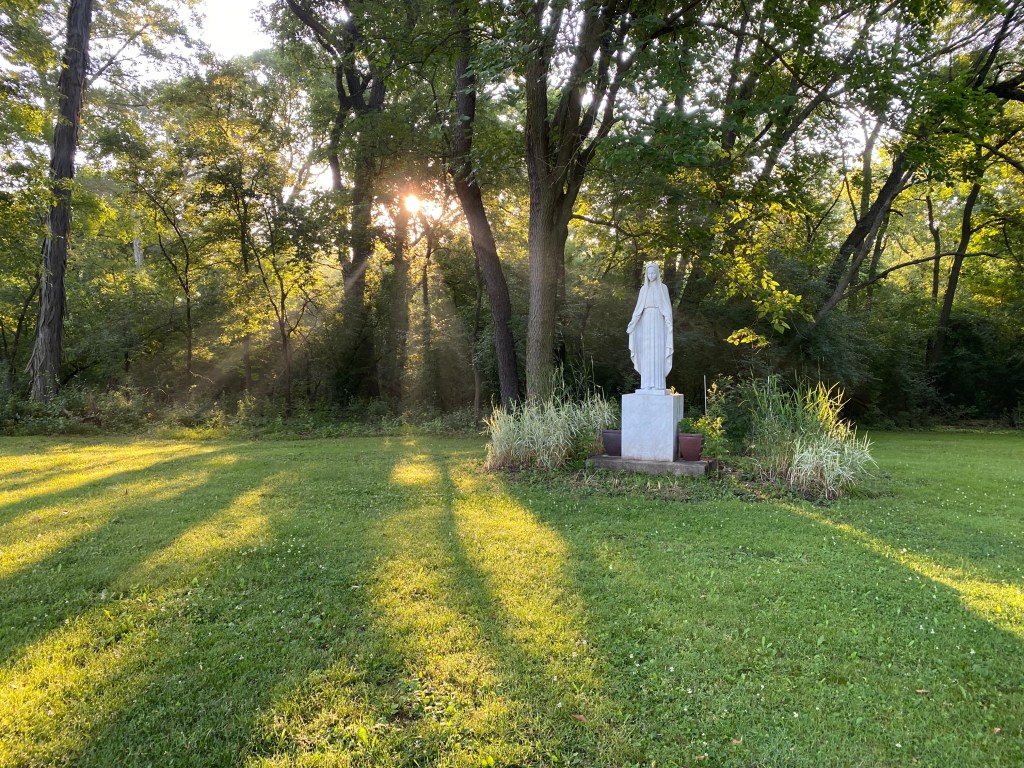
Photo: Waking the dawn during my 30-Day silent retreat this past July at Joseph and Mary Retreat House, Mundelein, Illinois.

Link for the Mass readings for Sunday, February 4, 2024

Come away and rest for a bit.

After hearing the accounts of the missionary trip, Jesus invited his apostles to step away from the crowds “to a deserted place [to] rest awhile” (Mk 6:31). Jesus is showing the apostles the importance of balance. There are times to serve and times to recharge, to reconnect, and spend some quiet and reflective time with him. Jesus is our model, our guide and teacher, but he is at the same time more than that. Jesus is the source and sustenance of who we are as a living craving, hunger, and desire to be one with God and each another. As the deer longs to refresh itself from the waters of a running stream, we long to be nourished by the living water, the love and communion with Jesus, and this is true for the atheist as well as the mystic alike, for each and every one of us, whether we are aware of this reality or not.

Our thirst for communion can be stifled because it is so easy to be caught up in our day-to-day schedule, life’s demands, and even survival. There is so much that needs to be done, and at the same time, there are so many distractions and diversions that vie for our energy and attention.

In today’s Gospel, the intent of Jesus is to escape with his apostles for some rest and renewal. They get in a boat to do just that, yet the crowd that they thought they had left behind has arrived on the other side before they did! “When Jesus disembarked and saw the vast crowd, his heart was moved with pity for them, for they were like sheep without a shepherd; and he began to teach them many things” (Mk 6:34). So much for being able to “rest away for awhile”! Or maybe the boat ride across was that moment of rest.

Choosing five to ten minutes to be still, to rest in the Lord, may not seem like much but can make a huge difference. Our challenge is to be able to discern and develop a healthy balance that becomes fruitful through aligning our will with Jesus. When we intentionally put God first and make the time each day to spend with him, often there is a serendipitous alignment that we experience in our day, that we did not think possible at the outset. This often happens when we consciously make time for stillness, for meditation, contemplation, and prayer, even and especially, during those moments when we may feel we just don’t have the time. As St. Francis de Sales taught, no matter what station we are in life it is good to pray at least thirty minutes a day, and for those who are busy, sixty.

If you haven’t practiced time sitting still and silent, that may be too much to ask in the beginning. It is better to start with small increments of time and be consistent.

I invite you to begin with today’s Gospel. Read it slowly and reflectively for a few minutes. Then step into and sit in the boat with Jesus and his disciples. Breathe in deep, let your head fall back to feel the breeze of the Sea of Galilee, feel the warmth of the sun on your face, and experience the rhythm of the boat on the water. Does Jesus remain silent and rest with you? Does he begin to teach, what does he share? In your time of quiet, do you have questions for him, what do you ask, and what is his answer?

Allow yourself to leave the desire for doing at the shore and rest in just being. Enter into the experience, and when the boat comes to shore, go forth into the day renewed and blessed by Jesus so to go forward with a heart and mind able to be moved with compassion to serve others. From such periods of renewal, breathing, resting, receiving, and abiding in God’s love, even for short periods, we can better embrace interruptions in our days with the heart and compassion of Jesus, and see them instead as opportunities of encounter and service.

—————————————————————-

Photo: Enjoying some quiet time with a Rosary walk in Egret Landing, Jupiter, FL as I prayed in the new year.

Link for the Mass readings for Saturday, February 3, 2024

We will mature when we keep God first.

God loves us and he shows us this love by caring, providing, guiding, convicting, forgiving, healing, and saving us from our fallen tendencies. We are more open to receive his love and the gifts of his presence in our lives when we are willing to acknowledge that God is God, and we are not, and that we need and depend on him. God is our Father, and we are his beloved children.

This may seem like a small matter, but it is not. The moment we begin to place ourselves, anyone, and/or anything before God, we open ourselves up for trouble. We saw this with the kingship of Saul and are now beginning to see the cracks in David’s foundation as king.

Building a temple for God sounds like a reasonable and pious thing to do, but God, through the prophet Nathan convicted David: “Thus says the LORD: Should you build me a house to dwell in” (2 Samuel 7:5)? God then continues to outline how he never had asked before through any of the patriarchs or judges for a dwelling, and shared how he brought David out from the shepherd fields, made him King, defeated his enemies, and provided for him, and it would be God who would build a house and a kingdom that would endure forever.

Jesus helps us to understand how, like David, we can miss the mark when he told and interpreted the Parable of the Sower. God sews his seed as creator and the key is whether we receive it and care for it or not. There are forces that can counter God’s gift, like Satan, the accuser and liar, who through his lies, temptations, and manipulations steals the seeds from us.

Those who do receive them also can have challenges. Some receive them with great joy, but do not savor and care for the gift given. They only receive God’s word in the moment at the surface level of their emotions, but do not do anything to foster its growth. There is no root to anchor them in times of trouble. Anxieties, worries, distractions, and diversions, choke out any growth that may begin after the seeds have taken root and begun to grow.

When we keep God first in our lives before all else, he will help us to prepare our soil so that the seeds he sows finds rich and healthy soil. This takes time and energy on our part to follow his guidance and those in our lives that he speaks through. The effort and discipline expended are well worth the effort and will bear great fruit in our lives and those we serve.


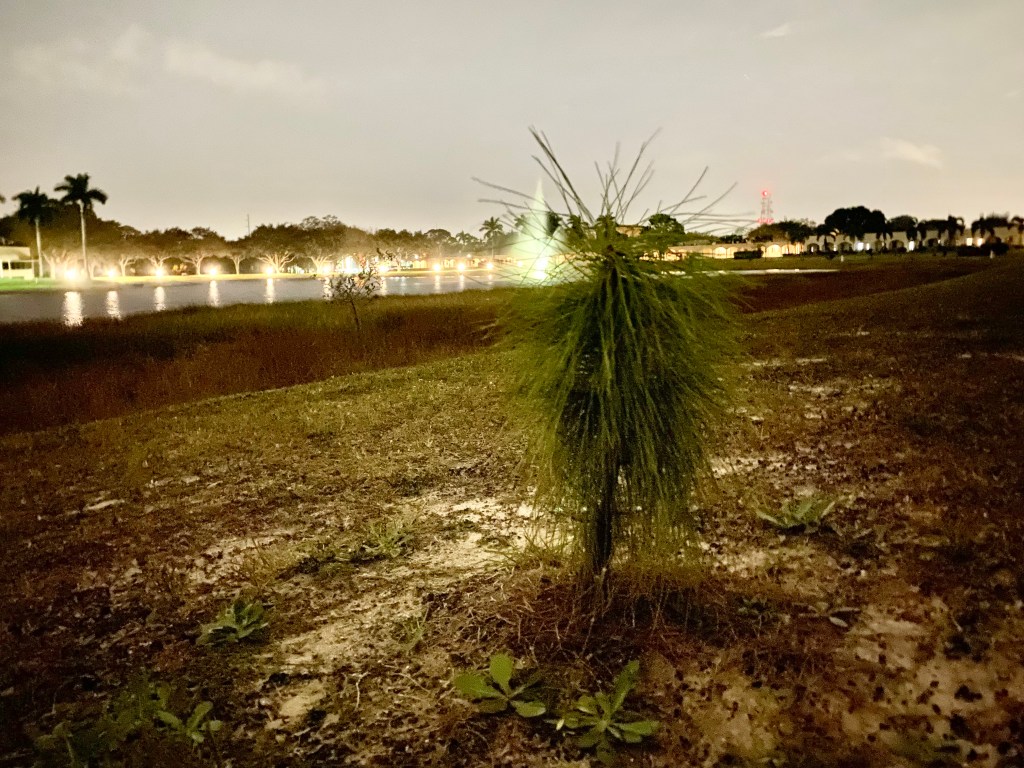
Photo: A pine sapling here at the seminary off to a good start!

Link for the Mass readings for Wednesday, January 24, 2024

“Speak, your servant is listening.”

God.

Even if we believe in God, do we make the time to think or ponder about God? Doing so may be difficult because there are so many diversions and distractions and we can be busy, busy, busy, and anxious about so many things that we can even take each other for granted, those who we see in a concrete and tangible way right before us.

We, being finite and so small, how can we even begin to comprehend God? He is transcendent and infinite, meaning he is not just another being among the many beings of creation. He is not even a supreme being. God is the foundation, the creator, the redeemer of all of creation. All that God has created has come to be as an outpouring of his love. Nothing would exist, we would not exist, without God. And even though he seems so far beyond our reach, God is closer to us than we are to ourselves!

Jesus helps us to understand this truth when he gives us the Lord’s Prayer. The first line tells us so much: “Our Father who art in heaven” (Matthew 6:9). The words who art, meaning who is, in heaven while we are here on earth, represents the reality that he is so beyond us. God transcends all space and time, and yet… Jesus begins this prayer, that we have been saying generation after generation since he taught his apostles and others, that the One who is in heaven is our Father. We are to address and relate to the infinite God not as some impersonal, random force, but as Father. In a healthy and whole sense, that is an intimate and close relationship.

How do we then relate to “Our Father, who art in Heaven”? The first reading and the gospel can be of help.

The young Samuel who has been dedicated by his mother Hannah to serve in the temple at Shiloh has woken up three times hearing, who he thought was the priest, Eli, call his name. Eli confirmed that it was not he who spoke. He then guided Samuel that if his name was called again, to say, “Speak, for your servant is listening” (I Samuel 3:10). Which Samuel does and God speaks.

God can speak to us directly or as Joseph and Mary experienced through the intercession of angels. This happens most often as with Samuel, Mary, and Joseph in times of quiet. As St. Mother Teresa taught, “God speaks in the silence of the heart.” It is not so much that we have to go looking for God because as the foundation of our being and our loving Father, he is already inviting us to encounter and experience him. Our very desire to seek him is our first awareness of his invitation to enter into a relationship with him. What is needed is that we learn to stop and listen, and then like Samuel, come to know and distinguish his voice.

We can also come to know God through the guidance of others. In our Gospel today, John the Baptist points his disciples to Jesus and says, “Behold the Lamb of God” (John 1:36). There are people in our lives that have experienced the voice of God, developed a relationship with him, and they can guide us as John did.

Some other ways that I have experienced God speak to me in the silence of my heart has been through my own personal reading of the Bible, times of prayer and meditation, hearing his word proclaimed in Mass, through Jesus, present in the Eucharist, through music, in experiencing the beauty of creation, spiritual direction, and experiences with many others who have guided me. None of these experiences have been booming, mystical encounters. Most have been quiet urgings, prods, and invitations.

The other challenge is that we hear so many voices inside and outside of our minds that we need to develop and discern whose voice we are listening to. Understandably, when Samuel first heard his name called, he would think it to be Eli. It took a bit for Eli to also recognize what was happening. Discerning God’s voice in the midst of so many voices in our world today is a challenge.

The enemy and the liar also seek to undo and destroy us. He and his demons will do the opposite of God and the angels. They will entice and tempt us to choose apparent goods that will lead us away from God and what will truly make us happy, then condemn us for doing so and seek to get a hold in our minds to continue to isolate us.

The voice of the Father, Jesus, the Holy Spirit, and his angels, convict us when we are doing or choosing something that leads us astray, but the choice is still ours to make as well as receiving the consequences. No matter what, God is right beside us to catch us when we fall, forgives us, and heals us when we are willing to come back to him. As soon as we do, he will embrace us with open arms.

There is no limit to the ways that God communicates to us. He knows us best and he knows what will open our hearts and minds to him most. What we need to do is learn to slow ourselves down, be willing to take some deep breaths, be still, say, “Speak, Lord your servant is listening”, continue to be still, listen in the moment and throughout the day and each day and allow God to happen!

As we more consistently do so, we will begin to discern better the deceptive voices of the enemy, be able to renounce them, and free ourselves from his grasp. We will also recognize God’s voice, experience his forgiveness, healing, and love and will be freer to live lives of meaning, fulfillment, and joy and help others to do the same.


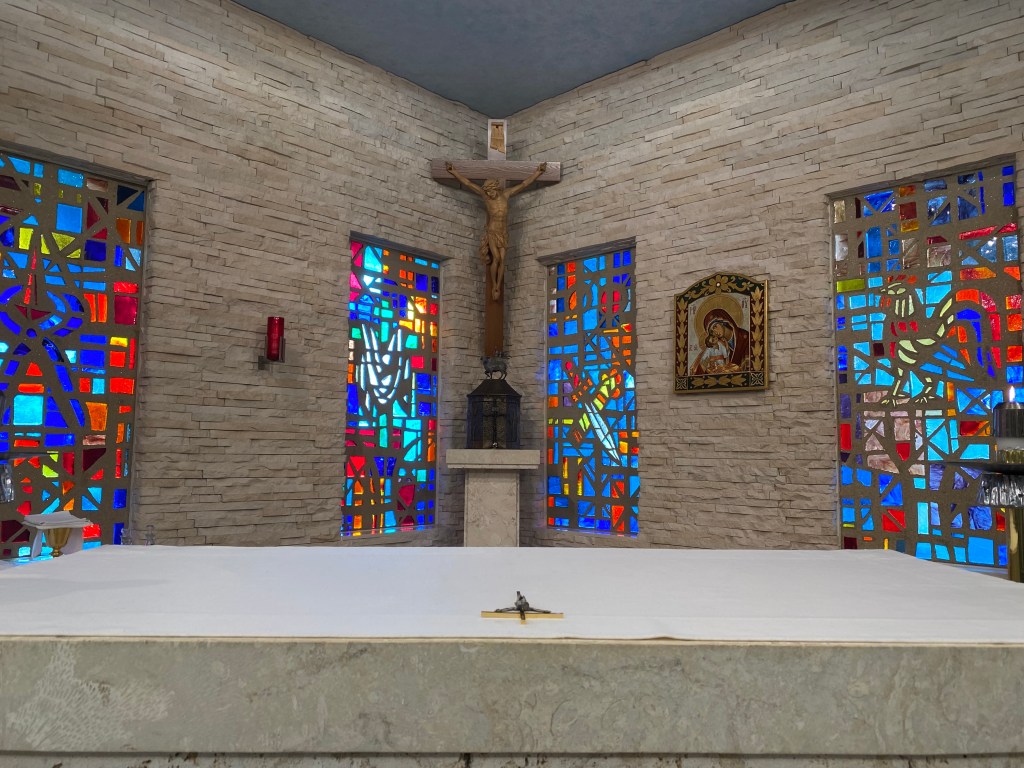
Photo: St. Mary’s Chapel, St. Vincent de Paul Regional Seminary, Boynton Beach, FL., one of my favorite places to pray and listen for God’s voice.

Link for the Mass readings for Sunday, January 14, 2023