source-and-summit
Body and Blood, Soul and Divinity
Last week we ended the gospel account with these words from Jesus: “I am the bread of life; whoever comes to me will never hunger, and whoever believes in me will never thirst” (Jn 6:35).
Jesus is offering these words from the context of how his Father has constantly provided for his people as seen in the examples of the Hebrews being freed from their slavery from Egypt, and then God providing bread from heaven in the form of manna. Jesus multiplied the five loaves and fish to provide for the thousands. In our first reading today, God sends an angel to feed Elijah a hearth cake and water to give him nourishment and strength for his forty-day journey.
As a good Father, God provides for his children. He also loves us so much that he is willing to risk that we will reject his offer, which unfortunately, many people have done for generations. Yet, God remains faithful, awaiting the time to help and provide need when there is an opening.
This week we heard the reaction of the people to Jesus’ statement that he himself is the bread of life, he will be the one to satisfy the people’s hunger and his thirst, their deepest hunger, their soul hunger. He is inviting the people to receive him so that they will never have to hunger again. Jesus is not met with open arms of wonder, but “grumbling.”
This word was not chosen at random. This is the same word that was used to describe the Hebrews who were freed from their slavery and provided for by God but instead of being grateful for their freedom and God’s care, they sought for what they left behind. They complained that with Moses and God they were in a worse state than when they were enslaved in Egypt.
The people witnessed Jesus multiplying of the five loaves and two fish and they were amazed with the physical manifestation of that miracle, but now as Jesus is going deeper into the spiritual reality, they, as did his own hometown crowd, balk. And even respond in a similar fashion. Who does this Jesus think he is saying that he came down from heaven? “Do we not know his mother and father” (Jn 6:42). Apparently not!
Mary is his mother, but Joseph is not his father. His Father is God. Jesus is the Son of God who became man in the womb of Mary. While remaining fully divine as Son, he takes on human flesh and becomes fully human. His appearance is that of any other man, on the surface he appears to be the son of Joseph and Mary. Jesus is the incarnation of the Son of God the Father. He is the bread of life that has come down from heaven to nourish us physically and spiritually.
Jesus does not soften his language as he continues. He affirms that he knows God the Father because he has come from the Father and he invites those who are listening to believe in this truth and for those who do, they will have “eternal life.” Jesus does not stop there but continues to share how as “living bread”he will give life forever and then he goes over the top: “the bread I shall give for the life of the world is my flesh.”
If Jesus was concerned about their grumbling when he said he was the bread come down from heaven, he didn’t show it here by stating that he will give his own flesh. This is not symbolic language to recall the quail God sent in the desert either. Jesus was offering his own flesh.
This he did in giving his life to the full on the Cross and will be represented again on the altar at each Mass. People were having trouble understanding how Jesus could have come down from heaven, how he could be the bread from heaven, and now what were they going to do with his statement that he was going to give his flesh to eat? They were having trouble understanding what Jesus was saying because they did not understand who he is.
Understanding who Jesus is helps us to understand the Bread of Life discourse we have been exploring these past two weeks. At the surface, the physical level, even with the miracles that Jesus performs, even those who are eyewitnesses, do not see Jesus being anyone other than a human being, extraordinary to some, ordinary to many others, just the son of Joseph and Mary. And yet, Jesus is so much more.
Jesus is the Son of God come down from heaven, he took on flesh in the womb of Mary, lived, died, and conquered death so that he could ascend, return to the Father, not as he came as fully divine but now fully divine and fully human. This is how he can give us his Body and Blood in the appearance of bread and wine, because he has transcended time and space. He truly is the Bread of Life. We like the crowd are given a choice.
God the Father, God the Son, and God the Holy Spirit do not impose, they invite, they draw us in with tender chords of love. They give us the free will to either reject their invitation or to ascent with our faith and accept their invitation to participate in their communion of love.
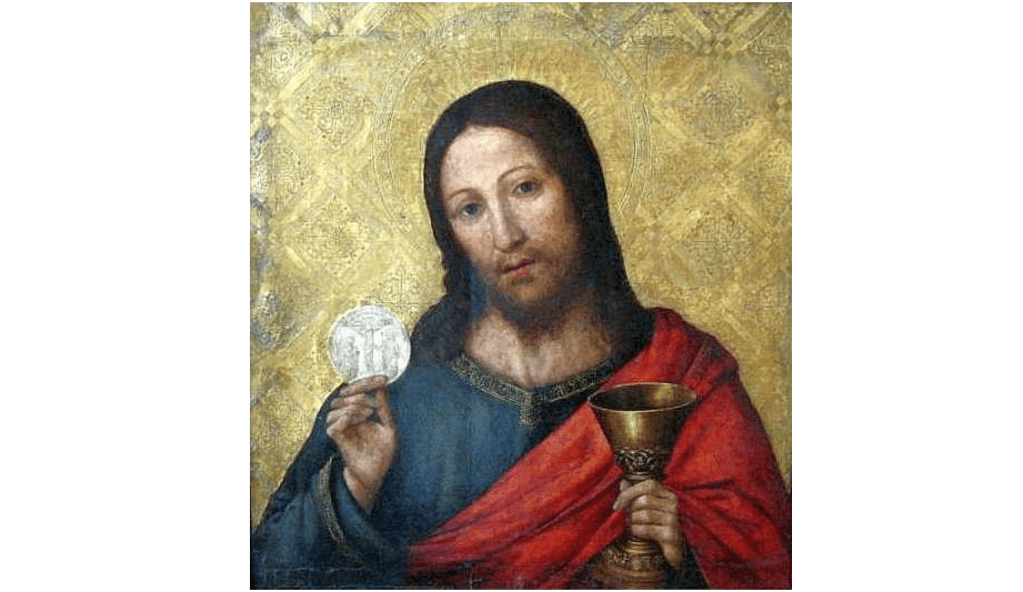
In the Mass, Jesus will come among us again through the power of the Holy Spirit and the words of institution: the words of Jesus said in the first person by the priest. Jesus is the bread of life who will again come down from heaven, not as the same human body that walked among the apostles and the crowd, but in his glorified body that has ascended into heaven. Although the appearance of the bread and wine will remain, the substance will be transfigured to be the Body and Blood, Soul and Divinity, the source and summit of our faith!!! Today we will receive our daily bread, the superabundant bread of life that will satisfy the deepest yearning of our souls and sustain us as we journey through this life to the next!
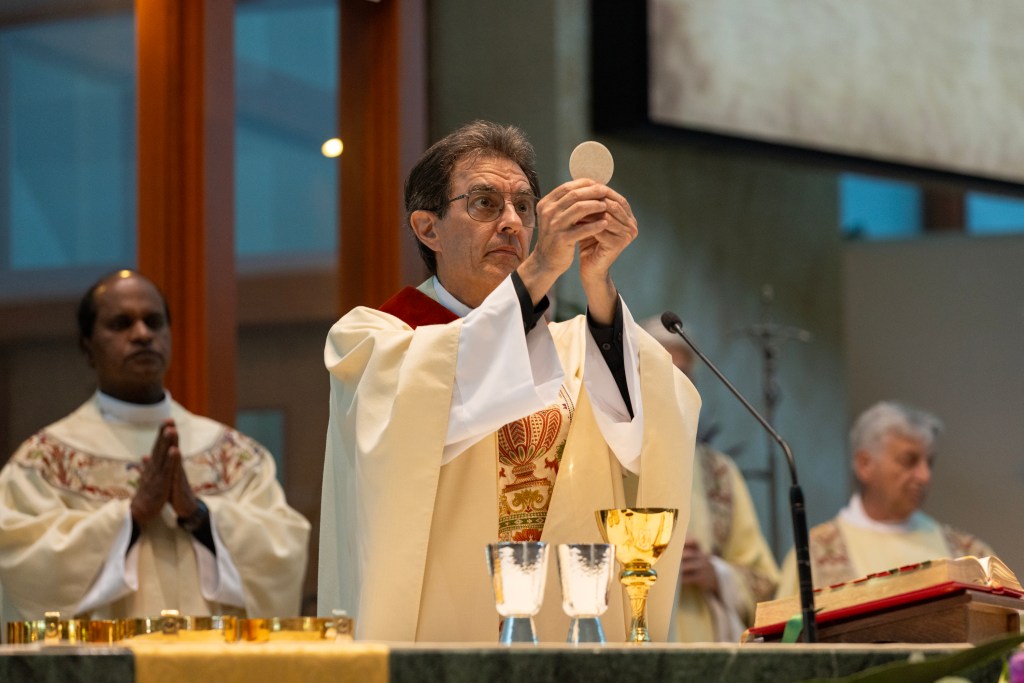
Photo: First Mass of Thanksgiving at St Peter Catholic Church; I am blessed at each Mass to hold in my hands, the Body and Blood of Christ.
Link for the Mass readings for Sunday, August 11, 2024

