Nicodemus came to Jesus in the night. He was a Pharisee, showing that not all Pharisees refused to believe that Jesus was the Messiah. Most likely, Nicodemus was not there alone as he shared, “Rabbi, we know that you are a teacher who has come from God”. Although, Nicodemus did not reject Jesus outright, he did not understand the fullness of who he was either. His heart and mind was open to what Jesus was teaching and he recognized that Jesus was sent by God. His coming at night most likely showed he was also not yet willing to support Jesus publicly and also on the spiritual level conveyed his lack of understanding regarding the message of Jesus.
He was not alone. For throughout the gospels, it is rare that anyone gets Jesus’ teaching on the first presentation, or second or third, if they are willing to stay with him that long. Nor do they get his deeper meanings if they do have some comprehension. Jesus though recognizes the opening that Nicodemus offers and he approaches Nicodemus as he did with his disciples. Where they are willing and open to learn, Jesus met them where were are and sought to stretch and expand there understanding to move from the things of the finite and below to lift them to spiritual insight and the things from above.
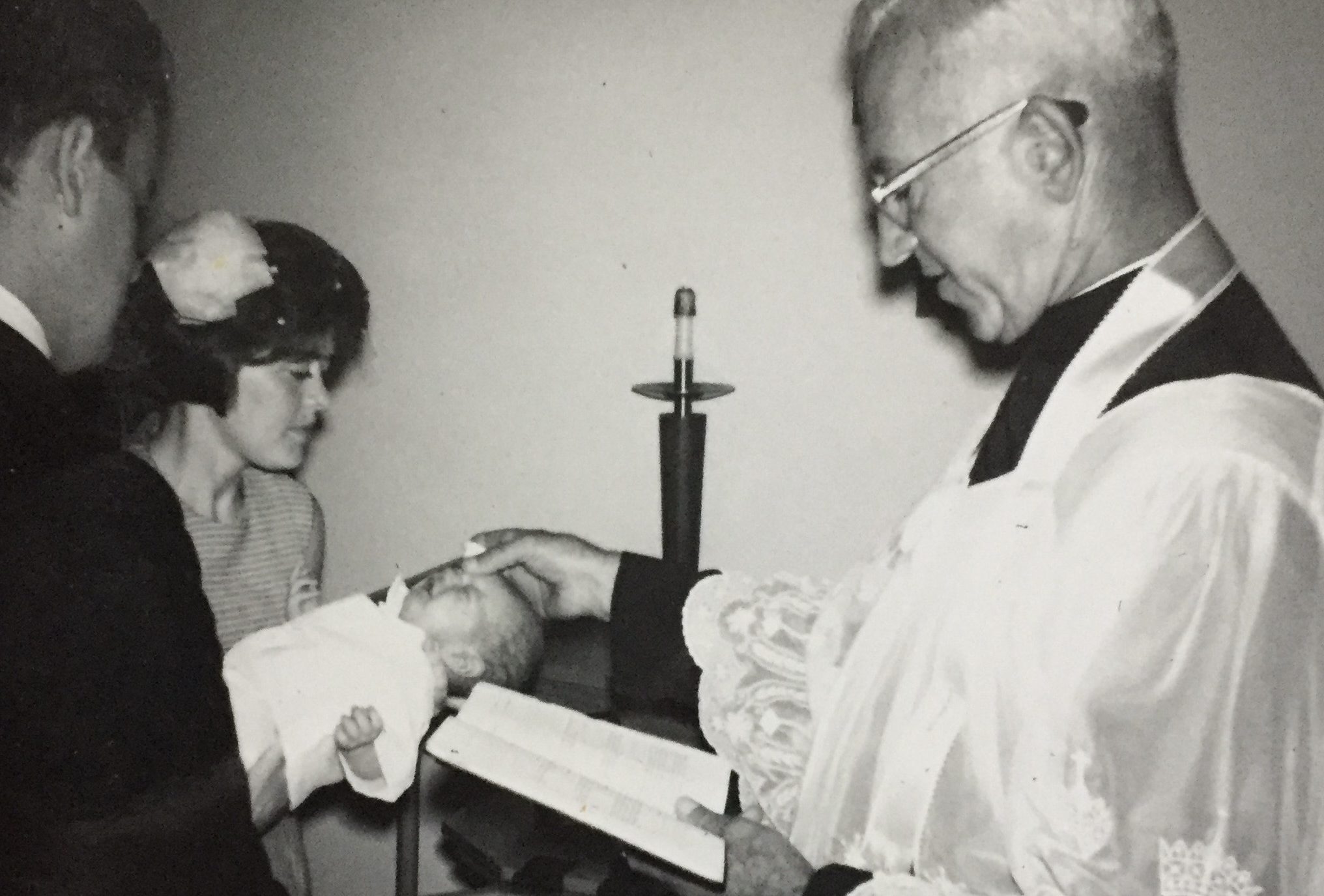
Jesus offers the image of being “born from above” to Nicodemus to help him to exercise his spiritual sight and muscles. Nicodemus takes Jesus words on the literal level and asks how someone can be born again and go back into their mother’s womb. Jesus taught Nicodemus that we as human beings are in need of receiving a new life, a life “born of the Spirit.” When we are born from above we are born again a second time. Jesus is speaking of baptism. We are given our life the first time through our parents, being born from below, and through the water and the Spirit are born again and made new. We are baptized into the death of Jesus and born again in the newness of his resurrection.
“This second birth from heaven is baptism. which is an action of the Holy Spirit. Through the water rite, the believer is joined to Jesus’ death and resurrection (Rom 6:4-5) and receives the indwelling Holy Spirit. If the kingdom of God is Jesus himself, then to enter the kingdom is to be given a share in Jesus’ own life. By means of baptism, we are born into communion with Jesus and the Father through the Holy Spirit” (Martin and Wright, 71).
What Jesus has begun to convey to Nicodemus, he will continue. He has done the same with his Apostles, other disciples, as well as anyone with eyes to see and ears to hear. His teachings have continued because there are those who have stuck with even while struggling with his teachings, have been willing to be transformed by them through the Holy Spirit and so have passed Jesus teachings, such as, the life of being born from above through baptism and the other sacraments, on. This continued for generations and in each age up to us our present day.
Christianity is not like Gnosticism, some secret sect of knowledge that is shared with a select, elite few. Neither is Christianity a form of dualism or Manicheism such that our body and all that is material are bad and we need to shed the physical as soon as possible to attain the fullness of our potential through the absolute embrace of the spiritual only. Nor is Christianity Pelagianism, where we just need the proper discipline, will power, and persistence to follow the teachings of Jesus.
Jesus offers us a universal invitation for all to “be born from above”, which means to be baptized in his name, to follow him into his death, to die to our our false sense of self, to our sin, our pride, that attitude and disposition that strives to set apart, diminish, devalue, dehumanize, divide, and polarize, and to rise with him. In being “born from above”, we receive the offer to participate in his divinity through the purifying fire and love of the Holy Spirit and so, instead of rejecting our humanity, embrace the fullness of our humanity, as we are being perfected by our participation in the life of Jesus.
The grace of God builds on our nature, the goodness of the creation he has made and formed into existence through an outpouring of his love. We accomplish this the same way his mother Mary, the Apostles, Mary Magdalene, the disciples, and Nicodemus did. We answer the call to holiness and sanctity. We say, “Yes” to Jesus and give him all we are and recognize all that we have is a gift from God the Father.
Day by day we need to be willing to be lead by the hand of Jesus, the firstborn of the new creation, he will lead us to our healing and guide us to offer our hand to others. May we resist the temptation to put up barriers, to keep others at arm’s length. We are all, every one of us, invited to become saints through our participation in the life of Jesus.
I agree with Pope Francis who in his exhortation, Gaudete et Exsultate (“Rejoice and Be Glad”), wrote that we cannot “claim to say where God is not, because God is mysteriously present in the life of every person, in a way that he himself chooses, and we cannot exclude this by our presumed certainties. Even when someone’s life appears completely wrecked, even when we see it devastated by vices or addictions, God is present there. If we let ourselves be guided by the Spirit rather than our own preconceptions, we can and must try to find the Lord in every human life.”
God is present to us in each of our lives. For those of us who have been, may we embrace the gift of our baptism, so to better understand what Jesus was teaching Nicodemus, that we have been “born from above”. Through our dying and rising in Christ, we have better access and a share in the breath and life of the Holy Spirit. In this way, we are transformed and made new by the Holy Spirit when we believe and follow his guidance. We are invited to share and draw deeply from this spring of living water and lead others to the same source.
————————————————————————–
Photo: My baptism, July 18, 1965 and my journey to the priesthood begins.
Martin, Francis and William M. Wright IV. The Gospel of John. Grand Rapids, MI: Baker Academic, 2015.

 Spiritual Stepping Stones