Will we serve ourselves or the owner of the vineyard?

“At the proper time he sent a servant to the tenants to obtain from them some of the produce of the vineyard” (Mark 12:1-12).

Unfortunately, not only did the tenants not offer the produce due to the true owner of the vineyard, but they also beat his servant and sent him back empty handed. This pattern repeated. The owner sent more servants. They were beaten and some killed, and then the owner sent his son, thinking that they would respect him. They killed him as well, thinking that then the inheritance would be theirs. Jesus ended the parable with an account of the swift retribution of the tenant farmers by the owner and the redistribution of the vineyard to others. The chief priests, the scribes, and the elders realized that the parable was directed at them.

The leaders were not happy about being compared to the wicked, tenant farmers. This only deepened their resolve to arrest and persecute him. Instead of digging in their heals, had they saw instead that the parable was an opportunity to see their own sinful behavior of not being faithful stewards, they could have repented and reconciled themselves to the will of God.

We who read Parable of the Tenants may be quick to judge the whole lot: the stewards, chief priests, scribes, and elders. If we do so, we do at our own peril. What does this parable say to us? How have we been good stewards of that which God has given, including our own lives? A common mantra is that this is my body and I can do whatever I want with it. Though this may be a popular cry of individualism and self-autonomy, it is not biblical.

All that we have is a gift from God, including our life and our very being. Each of us is a unique wonder, while at the same time we are not our own to do with as we please. We are God’s beloved children, daughters and sons created in his image and likeness. Our likeness has been dimmed by sin and so feeds our knee jerk and sometimes visceral reaction against the notion that we are not our own to do with as we please. This mentality is fueled by a radical individualism that seeks to be in control. We believe that we know better, that we know what will make us happy and what will fulfill us. So we give in to our pleasures, passions, and wants. 

Discipline, temperance, and self-control are shunned. This selfish posture often comes from our unhealed wounds, the whispers of the father of lies, as well as living under the influences of a fallen world. Where God is not first, someone or something will be. This is what gives rise to a cult of personality. These pedestals are often built on the weak legs of the precarious wood of our finite and fallen nature. This is why so many leaders, religious, political and familial, have time and again all fallen off and let us down. They were placed where they never ought to have been placed.

This will continue to be the pattern, just as we saw in Jesus’ parable, which will lead to our own undoing, unless we are willing to let go of our attachment to the things of this world, including our own self-aggrandizement and narcissism. “I, me, mine”, is a debilitating cry. 

The tenants in today’s parable looked for what they could get and take from what was never theirs. This grasping for immediate gratification undid the very core of their humanity and led not only to the desecration of the dignity of those the owner of the vineyard sent but lead to their own demise. In idolizing the things of the world instead of the things of heaven, they became undone. 

Will we feed on the same radical individualism, or embrace our role as good steward, acknowledging, all that we have, even our very lives, are a gift from God, the owner of the vineyard. Recognizing that God is God and we are not, and trusting in his will for our lives will truly make us happy, fulfill, and help us to embrace who we are: co-redeemers with God. God has given each of us gifts to better his kingdom. May we serve well and seek to bear fruit that will last.

When we fall short, let us acknowledge that God has sent his Son to us. He has come to lead us to all that is Good, all that is True, and all that is Beautiful. He is also the only one we can count on. We need to place our trust in Jesus first, so when others fall, we do not fall with them and/or despair, because none of us are perfect. Each of us have our strengths as well as our weaknesses. As we grow in humility, we will grow in freedom and restore our likeness with God. As Jesus redeems us, we will experience our freedom and healing. As we heal, we can serve to help others who have fallen to experience a true freedom that will last.


Photo: Blessed to serve God and my parish family here at Holy Cross!

Link for the Mass readings for Monday, June 1, 2026

Not hangry but a holy zeal for God’s house.

Upon a first reading of today’s Gospel from Mark it appears that Jesus woke up on the wrong side of the bed. He and the disciples were heading to Jerusalem, he was hungry, so spying a fig tree in leaf, he walked up to it and when he saw that there were no figs growing, he unleashed the words, “May no one ever eat of your fruit again”(Mk 11:14)!

In the next scene, we find Jesus returning to the Temple. He witnessed the money changers in the outer court, and he began to drive out those selling and buying there. He overturned the tables of the money changers and the seats of those who were selling doves (Mk 11:15). Good thing for the doves that Jesus only went for the seats!

There was a series of commercials which ran a while back in which a character was very hungry and acting out of sorts until they were able to eat the candy bar being promoted. Once they did so, the character transformed back into themselves. Is this what is going on with Jesus? Is he just hangry? Has his blood-glucose level taken a nosedive? Or is there something deeper going on?

Remembering that Jesus fasted for forty days in the Judean desert, I would speculate that there is something else going on. What is more likely is that Jesus is asserting his prophetic role. As with other prophets recorded in the Old Testament, like Jeremiah, who gathered the elders of the people, then smashed a potter’s flask, then shared that this is what God would do to them for being unfaithful (cf. Jeremiah 19), Jesus is most likely going with a similar hyperbolic display to make a dramatic point.

The fig tree is often a sign for Israel and is recorded as such in both Hosea and Jeremiah. When Jesus comes to the fig tree, his reaction is an expression of the unfaithfulness of Israel not so much at the fig tree. The chosen people are to be faithful to God in and out of season. When the disciples and Jesus passed by the fig tree the next morning, Peter exclaimed that the fig tree Jesus had cursed had withered to the roots. Jesus, not missing a step, mentions to his disciples that they are to: “Have faith in God” (Mk 11:22). By doing so, they will not whither and fade as those not being faithful to the covenant.

Jesus assumes his role as a prophet again when he is casting out the money changers in the temple precincts. It is no minor detail that the tables with caged doves were spared. If Jesus was going off in some kind of unabandoned rage, he would not have thought twice about turning over the tables on them as well. Jesus is making a spectacle that people would take notice. “Is it not written: My house shall be called a house of prayer for all peoples? But you have made it a den of thieves” (Mk 11:17).

Jesus is cleansing and restoring the Temple to its proper place as a house of prayer, but he is also showing that the temple tax that has been paid and the sacrifices that have been offered will no longer be needed. “Jesus’ actions signal the arrival of ‘that day’ prophesied by Zechariah, when the Lord would gather all the nations to worship him in Jerusalem, and ‘there shall no longer be any merchant in the house of the LORD of hosts’ (Zech 14:21)” (Healy, 227).

Jesus is foreshadowing how he will replace the brick and mortar and he himself will become the New Temple. Jesus will be scourged and crucified, he will be the sacrifice offered and the price paid for our sins. The altar will be the new table where his sacrifice will be memorialized and re-presented.

Jesus’ message at the fig tree and the cleansing of the Temple are just as important for us today. As his followers, we are to bear fruit in and out of season, this means that we are to live out his teachings in all areas of our lives, individually and in communion with one another. Jesus has given us all a gift to offer, something that no one else can or ever will quite do in the way we can. This is how we are to bear fruit. Jesus in cleansing the Temple, shows that he is the new Temple. We too are to be a part of this Temple. We are to resist the corrosive and corruptive temptations that assail us. 

May we not be transformed by the fallen tendencies of the culture, but instead transformed by the love of God and remain steadfast and true to our calling. Let us be faithful to God’s will as members of the living Temple. We are precious stones, to be polished and refined, that we might radiate the light of Christ to those in our midst.


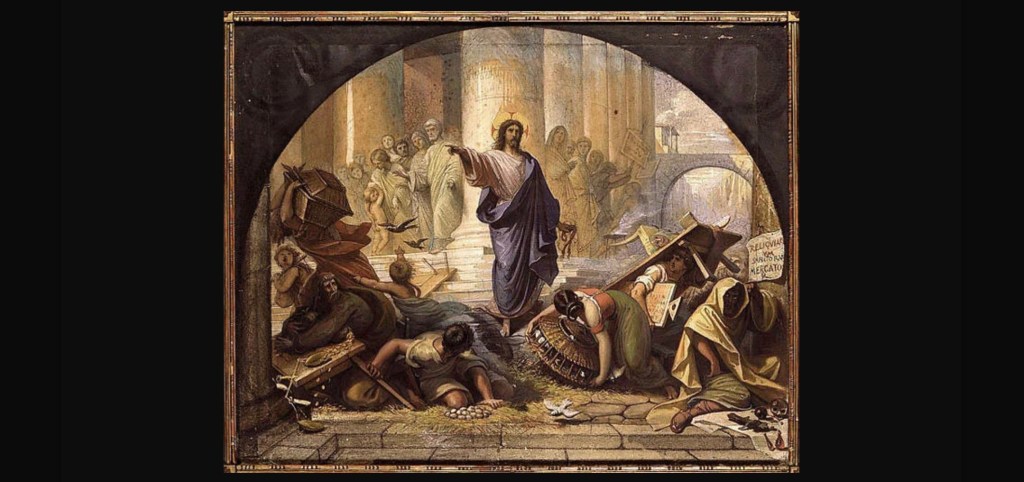
Painting: Raymond Balze, “Jesus Chasing Merchants from the Temple”

Healy, Mary. The Gospel of Mark. Grand Rapids, MI: Baker Academic, 2008.

Link for the Mass readings for Friday, May 29, 2026

Jesus invites us to share in the dance of trinitarian love.

“I came from the Father and have come into the world. Now I am leaving the world and going back to the Father” (Jn 16:28).

This phrase, in one form or another, has been a consistent message in John’s recording of Jesus’ farewell discourse. These words not only show Jesus’ connection to the Father through his coming from and returning to the Father and then his sending of the Holy Spirit, but these statements help to prepare the way for our understanding of the Trinitarian Communion.

Theologians have termed this reality the Immanent Trinity, God within himself. Which is expressed by the divine communion of God the Father, God the Son, and God the Holy Spirit. All that God the Father is, he gives all, holding nothing back, to God the Son perfectly. God the Son receives all that God the Father has given perfectly, and returns all that he has received, perfectly, holding nothing back, to God the Father. This giving and receiving, this going out from and returning to, this perfect willing of each other’s good, is the purest expression of Love. This Love shared infinitely and perfectly between God the Father and God the Son is God the Holy Spirit.

The Son of God became one with us, sharing in our humanity, so we can also share in his divinity. His ascent and return back to the Father makes this even more possible. Now his divine nature, as the Son, always remained in full communion with the Father. Jesus is one divine Person as the Son, yet he subsists in two natures the divine and the human. The Ascension of Jesus was a point in salvation history, in which the human nature of Jesus transcended our three-dimensional reality and realm, so to enter the eternal present, the immanence of the Trinitarian communion. Because God created all humanity and creation as interconnected with one another, we are now able to share in the intimate, divine dance, or perichoresis, of the Love, shared between God the Father, God the Son, and God the Holy Spirit.

We are all invited, 24/7/365, with every breath, thought, word, and action, to experience the Holy Spirit, the communion of Trinitarian Love. But this is not an imposition, it is an invitation, meaning no matter how wonderful, no matter that this is what we have been created for and will truly bring us fulfillment and joy, we can reject or accept this offer.

Thankfully, because of the Divine Mercy of God this is an open invitation. Even if we have said no for years, we can say yes at this moment. Once we say yes, even just a little, the love of God grows within us, just like the image of the mustard seed. As we experience the love of God in our own lives, we begin to realize how God is the foundation of our being and all of creation. We realize we are not the center of the universe, that the world does not revolve around us, and that it is not all about us. 

We come to see how God is the foundation of all things, how he is present to us in our everyday actions when we participate in the very being and life of Jesus. We do so most intimately when we participate in the sacraments. Jesus is even more present to us in the sacraments than when he was present to the Apostles in person. 

We also experience and encounter God through our participation in the three transcendentals, the ways of our being that God has imparted to us to experience him, which are the Good, the True, and the Beautiful. It is through the expression of our creativity in music, dance, and the arts that we come to experience the Beautiful. By embracing our gift of reason and intellect, through prayer, study, and sharing of ideas, we come to know the True. In recognizing the gift of others as human, through our fellowship, loving and engaging one another in the corporeal and spiritual works of mercy we come to experience Love which leads us to the Good.

God has given us the wonderful gift of life not just to endure but to experience fully, even in the midst of our trials, tribulations, and sufferings we are invited to experience joy and love. We just need to remember who we are and open our hearts, minds, and souls to receive the gift of God working in and through us. Just as the Son has been, we are sent to risk, to give our love away, by sharing his love with others. Our offer can be turned down or rejected. Even so, we must resist the temptation to judge or to take offense, but instead to assume a posture of understanding, of being present, and being available to witness and to allow God to reach others through us.

We never truly know the pain and suffering of another, nor what they may be dealing with. Instead of a knee-jerk reaction or adding fuel to the fire, we can instead take a deep breath, seek to be more understanding, and ask God to be present. Ask the Holy Spirit to love us and the person with us. In that simple choice to receive the love of God in a conflict or disagreement, we might become a healing presence that can make a difference.

Each one of us is on a journey. We are invited to open ourselves to the will of God, so that we can experience the Good, the True, and the Beautiful, as well as, perichoresis, the infinite dance of the Love shared between God the Father, God the Son, and God the Holy Spirit. Our fundamental option, our end goal, is to enter the fullness of the divine dance and communion of the Trinity. What Jesus has brought to us through his Paschal Mystery; his life, suffering, and death, as well as his resurrection and ascension into heaven, is the reality of how we can experience heaven on earth right now.

Fr. John Horn, SJ, teaches that, “The most fruitful human activity that we can experience is to receive God.” Our vocation is to say yes to God’s invitation and to breathe, receive, rest, and abide in the love of the Trinity. So having received, we now have something to give. We can now love others as we have been loved. This is the regenerating and transformative power of the Holy Spirit first activated in our Baptism that can continue to flourish and expand. As our prayer and activity in life becomes more trinitarian and thus more loving, we experience freedom, healing, and spiritual maturity.

————————————————————————

Photo: When we allow ourselves to receive moments to be still to breathe, receive, rest, and abide in God’s love, our minds, hearts, and souls experience healing and transformation!

Link for the Mass readings for Saturday, May 16, 2026

“By means of baptism, we are born into communion with Jesus and the Father through the Holy Spirit”.

Nicodemus came to Jesus in the night. He was a Pharisee, showing that not all Pharisees refused to believe that Jesus was the Messiah. Most likely, Nicodemus was not there alone as he shared, “Rabbi, we know that you are a teacher who has come from God”. Although, Nicodemus did not reject Jesus outright, he did not understand the fullness of who he was either. His heart and mind was open to what Jesus was teaching and he recognized that Jesus was sent by God. His coming at night most likely showed he was also not yet willing to support Jesus publicly and also on the spiritual level conveyed his lack of understanding regarding the message of Jesus.
He was not alone. For throughout the gospels, it is rare that anyone gets Jesus’ teaching on the first presentation, or second or third, if they are willing to stay with him that long. Nor do they get his deeper meanings if they do have some comprehension. Jesus though recognizes the opening that Nicodemus offers and he approaches Nicodemus as he did with his disciples. Where they are willing and open to learn, Jesus met them where were are and sought to stretch and expand there understanding to move from the things of the finite and below to lift them to spiritual insight and the things from above.
Jesus offers the image of being “born from above” to Nicodemus to help him to exercise his spiritual sight and muscles. Nicodemus takes Jesus words on the literal level and asks how someone can be born again and go back into their mother’s womb. Jesus taught Nicodemus that we as human beings are in need of receiving a new life, a life “born of the Spirit.” When we are born from above we are born again a second time. Jesus is speaking of baptism. We are given our life the first time through our parents, being born from below, and through the water and the Spirit are born again and made new. We are baptized into the death of Jesus and born again in the newness of his resurrection.
“This second birth from heaven is baptism. which is an action of the Holy Spirit. Through the water rite, the believer is joined to Jesus’ death and resurrection (Rom 6:4-5) and receives the indwelling Holy Spirit. If the kingdom of God is Jesus himself, then to enter the kingdom is to be given a share in Jesus’ own life. By means of baptism, we are born into communion with Jesus and the Father through the Holy Spirit” (Martin and Wright, 71).
What Jesus has begun to convey to Nicodemus, he will continue. He has done the same with his Apostles, other disciples, as well as anyone with eyes to see and ears to hear. His teachings have continued because there are those who have stuck with even while struggling with his teachings, have been willing to be transformed by them through the Holy Spirit and so have passed Jesus teachings, such as, the life of being born from above through baptism and the other sacraments, on. This continued for generations and in each age up to us our present day.
Christianity is not like Gnosticism, some secret sect of knowledge that is shared with a select, elite few. Neither is Christianity a form of dualism or Manicheism such that our body and all that is material are bad and we need to shed the physical as soon as possible to attain the fullness of our potential through the absolute embrace of the spiritual only. Nor is Christianity Pelagianism, where we just need the proper discipline, will power, and persistence to follow the teachings of Jesus.
Jesus offers us a universal invitation for all to “be born from above”, which means to be baptized in his name, to follow him into his death, to die to our our false sense of self, to our sin, our pride, that attitude and disposition that strives to set apart, diminish, devalue, dehumanize, divide, and polarize, and to rise with him. In being “born from above”, we receive the offer to participate in his divinity through the purifying fire and love of the Holy Spirit and so, instead of rejecting our humanity, embrace the fullness of our humanity, as we are being perfected by our participation in the life of Jesus.
The grace of God builds on our nature, the goodness of the creation he has made and formed into existence through an outpouring of his love. We accomplish this the same way his mother Mary, the Apostles, Mary Magdalene, the disciples, and Nicodemus did. We answer the call to holiness and sanctity. We say, “Yes” to Jesus and give him all we are and recognize all that we have is a gift from God the Father.
Day by day we need to be willing to be lead by the hand of Jesus, the firstborn of the new creation, he will lead us to our healing and guide us to offer our hand to others. May we resist the temptation to put up barriers, to keep others at arm’s length. We are all, every one of us, invited to become saints through our participation in the life of Jesus.
I agree with Pope Francis who in his exhortation, Gaudete et Exsultate (“Rejoice and Be Glad”), wrote that we cannot “claim to say where God is not, because God is mysteriously present in the life of every person, in a way that he himself chooses, and we cannot exclude this by our presumed certainties. Even when someone’s life appears completely wrecked, even when we see it devastated by vices or addictions, God is present there. If we let ourselves be guided by the Spirit rather than our own preconceptions, we can and must try to find the Lord in every human life.”
God is present to us in each of our lives. For those of us who have been, may we embrace the gift of our baptism, so to better understand what Jesus was teaching Nicodemus, that we have been “born from above”. Through our dying and rising in Christ, we have better access and a share in the breath and life of the Holy Spirit. In this way, we are transformed and made new by the Holy Spirit when we believe and follow his guidance. We are invited to share and draw deeply from this spring of living water and lead others to the same source.
————————————————————————–
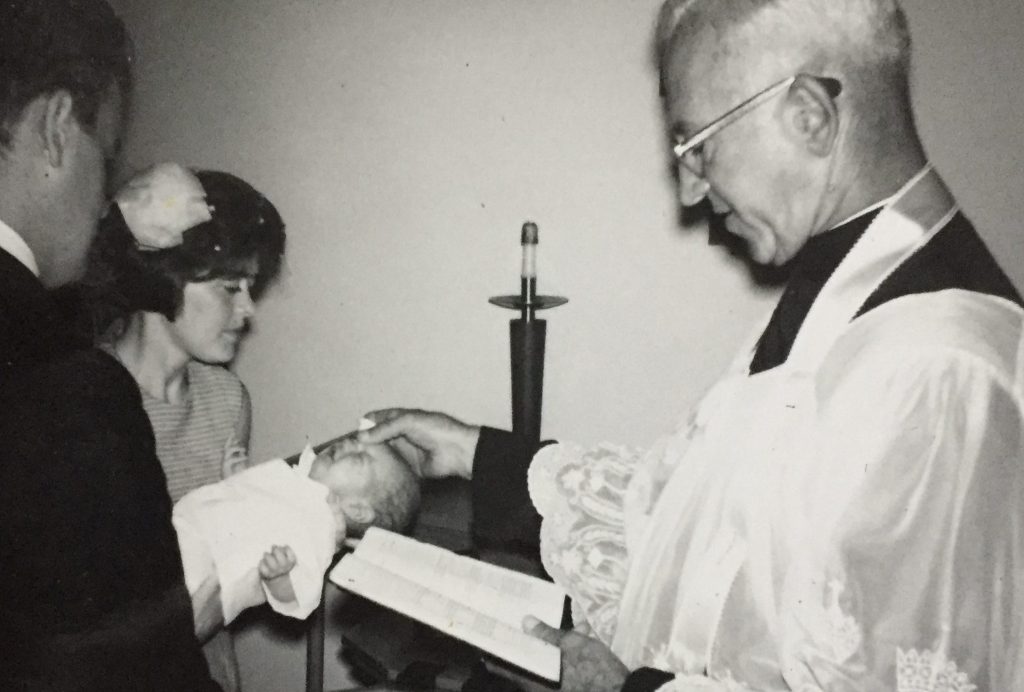
Photo: My baptism, July 18, 1965 and my journey to the priesthood begins.
Martin, Francis and William M. Wright IV. The Gospel of John. Grand Rapids, MI: Baker Academic, 2015.
Link for the Pope Francis article on “Rejoice and Be Glad”
Link for the Mass readings for Monday, April 13, 2026

May we allow Jesus to open the Scriptures to us!

Despair was creeping in on the pair. The hope of Jesus being the Messiah, the promised one who came to redeem and deliver his people Israel had died a brutal and humiliating death. Even though Jesus sought to prepare his followers for this reality, they could not conceive, believe, or thought possible that the promised Messiah could die.
Cleopas and his companion are in mourning as they walk along the road to Emmaus. They have left Jerusalem and are commiserating among themselves about their dashed hopes. They were so sure that Jesus was who he said he was, now what were they to do? Even though they had heard about the empty tomb from the women, they did not believe, and they left Jerusalem. Jesus met them where they were and wove his way into the conversation and their journey.
When the time for them to part arrived, Jesus motioned to them that he was going to continue on. The pair of disciples urged him, “Stay with us, for it is nearly evening and the day is almost over” (Lk 24:29). Jesus did just that and he revealed himself to them “in the breaking of the bread”(Lk 24:35).
The account of the road to Emmaus has significant relevance for our own spiritual journeys. How many times have we had an inaccurate understanding of Jesus in such a way that we felt let down? Have we domesticated Jesus, or limited who he is, seeing only one aspect of his totality, attempted to shape or conform him into our image and likeness? Have we prayed for something and then that petition or intention was not fulfilled in the way we had hoped? Have we sought Jesus and felt that he wasn’t there for us in our time of struggle or during those times that we felt that we needed his guidance most?
Jesus is the Son of God and we are not. He meets us as we are, accepts us as we are, walks with us even when we are walking in the wrong direction, but he also calls us to repent and be transformed. He invites us to stretch out beyond our comfort zones, to let go of our safety nets and take off our training wheels. Jesus invites us to nothing less than being transfigured by entering into the participation of Trinitarian Love. This begins when we resist withdrawing into and curving in upon ourselves, and instead are willing to be loved and to be expanded outward beyond ourselves and so to love in return.
We would do well to spend some time each day reading, praying, meditating and contemplating the wonderful daily readings of the Acts of the Apostles and the Gospels. In doing so, our hearts and minds like that of Cleopas and his companion, may also be set aflame. Once this pair encountered the risen Jesus, they corrected their course immediately and returned to the community of Jerusalem, even though it was evening and not safe.
As we put into practice what we hear and receive, we too will begin to: see Jesus more active in the midst of our everyday activities, recognize him in our daily events and even in the interruptions, be more inspired to share the sacrificial love we have received from Jesus, and come to realize that Jesus is among us, closer to us than we are to ourselves. We just need to invite him to walk with us, even when we are heading the wrong way, we can turn around. When we invite Jesus into our lives God will happen and we will come to believe. Alleluia!!!
————————————————————-
Painting: “Road to Emmaus” by Robert Zünd
Link for the Mass readings for Wednesday, April 8, 2026

“Love your enemies, and pray for those who persecute you.” Really? Yeap.

“You have heard that it was said, You shall love your neighbor and hate your enemy. But I say to you, love your enemies, and pray for those who persecute you, that you may be children of your heavenly Father” (Mt 5:43-45). With these words, Jesus continues to raise the bar of discipleship and outlines what the pursuit of love truly is.

The command to love our enemies and pray for those who persecute us is challenging today, but we may be a bit removed from the original power of those words. The inference that Jesus was making to his listener’s was that their enemies and those who were persecuting them, were the soldiers of the Roman imperial that were occupying Israel. Though we can still relate, and also be shocked by it and think that this command is impossible. And that is just the point. Apart from Jesus and our relationship and the transformation of our hearts and minds through our discipleship with Jesus, there is no way we are going to love our enemies and pray for those who persecute us.

One reason is that for us our definition of love is limited to the romantic, emotional, sensual, or mere sentimental. It can also be reduced to the mere sublime of loving ketchup or mustard on a hot dog, loving our cat or dog, or even at best getting closer to what Jesus is talking about when we love the members of our families or close friends. But all of these perspectives of love would not make sense in the context of Jesus’ command.

The bond of friendship and family goes beyond mere attraction and is built through shared interests and experiences. Through sharing our lives with others, working through conflicts, trust is built, and relationships will hopefully grow and deepen. Jesus, though, is calling us to mature in our growth of loving even beyond friendship or familial ties. If we love those who willingly love us in return, greet only our brothers and sisters (if we actually get along with them, blessed that I get along with my sister ;)), only those in our clique, group, tribe, or political party, what is the recompense or satisfaction in that? Agape, in Greek, loving without conditions, with little or no chance of mutual exchange, is what Jesus is calling us to strive for.

Many of us could not conceive of loving our enemy or someone who is persecuting us, because we have, minimally only experienced doing no overt harm to others and at best, loved our friends and family. But do we risk going outside of our group, our like-minded safety net? Life is hard enough and it is often safer, we believe, not to take the risk. We continue to operate from a concept of love as an emotion or feeling, because it feels good. We want to be happy and feel good. We avoid suffering at all costs.

Jesus challenged “his disciples to love and pray for the very people who occupy their land, tax them heavily, and treat them with violence and injustice” (Mitch and Sri, 100). How could they love the Roman occupiers? How can we love, those that we feel in some form or fashion in a similar way? St. Thomas Aquinas can be of help. He defined the love that Jesus describes as willing the good of the other as other. We make an act of the will, a free choice to accept the person as they are, to see them, not from our limited finite perspective but as God sees them, as a person with dignity. Can we pray for, seek kinder thoughts and to be more understanding, be more patient, and resist reacting in kind? Can we resist judging and labeling others?

On our own, we may not even conceive of the possibility, loving our enemies, but we can be assured that if Jesus has asked us to strive for this height and depth of love, he will provide the means. We love others unconditionally by allowing Jesus to love us. To breathe, receive, receive, and abide in his love, we experience his love. As we do so daily, we experience more of and are transformed by his love, and begin to allow God to love others through us.

We strive to reach the summit of loving our enemy only with the help of the Holy Spirit. Jesus called his disciples and he calls us to “imitate God by being perfect in love… to reflect the Father’s perfect, committed, selfless, merciful love in their own lives… to go beyond external conformity to the requirements of the law and imitate the perfect love of the heavenly Father, who is love himself” (Mitch and Sri, 101).

Even when we fall short, how much better would our families, communities, countries and world be if we sought this goal? To counter divisiveness, fear, and hatred, we need to refuse to react and instead choose to engage in an act of the will to love one another as Jesus loves us. “Jesus summons us to a heavenly way of life; the saints show that it is possible to live this way on earth.” If the saints can love their enemies and pray for those who persecute them, then by following their example, and allowing ourselves to abide in God’s love as they did, then so can we.


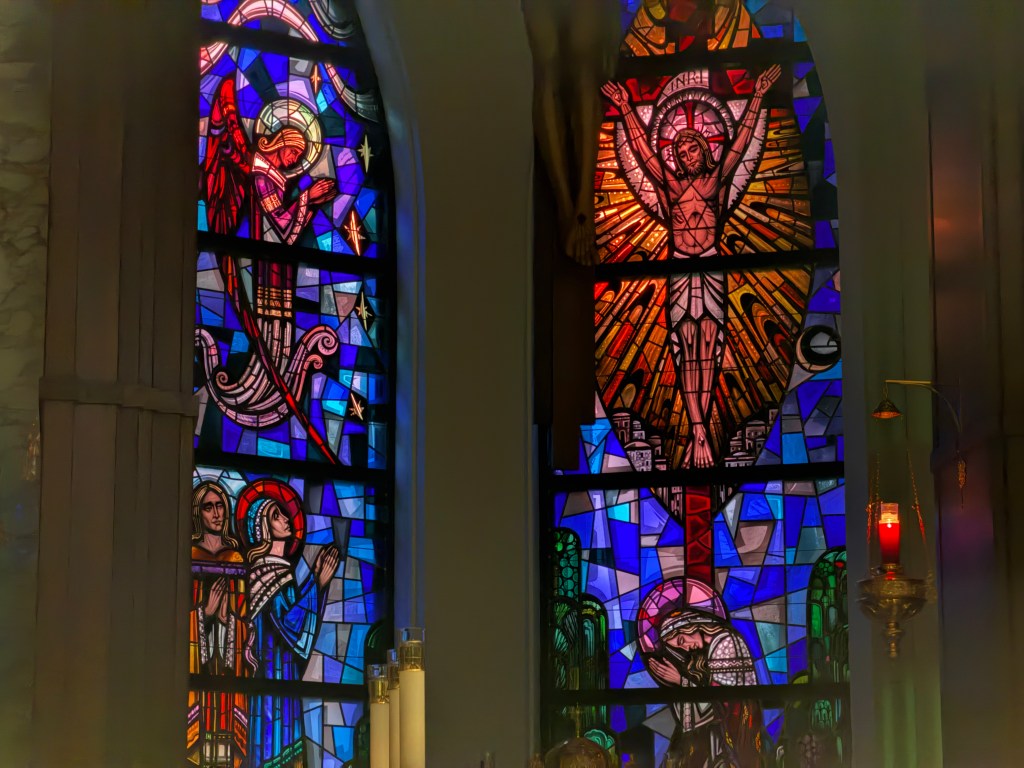
Photo: Jesus lived his command of loving his enemies and praying for those who persecuted them most radically when while dying on the cross he asked his Father to “forgive them for they know not what they do.”

Curtis Mitch and Edward Sri. The Gospel of Matthew. Grand Rapids, MI: Baker Academic, 2010

Link for the Mass readings for Saturday, February 28, 2026

May we guard ourselves against the leaven of the Pharisees and Herod.

Jesus convicted the Pharisees for demanding a sign and for their continued hardness of heart, their unwillingness to see and hear the work and presence of God right before them. He also saw the unsettling yeast of the Pharisees present in his own disciples. In today’s reading, Jesus seized on the opportunity of being together in the boat, Jesus seized on this teachable moment. He wanted to help the disciples of his inner circle to resist the same path of corruption when he enjoined them: “Watch out, guard against the leaven of the Pharisees and the leaven of Herod” (Mk 8:15).

As has been their pattern, the disciples missed the point as they focused on the literal reality that they only had one loaf of bread among them. Jesus was not, as they thought, taking them to task for not thinking ahead to bring enough bread. He had twice now multiplied minimal amounts of bread to feed thousands. One loaf with them would not have been an issue. He was more concerned about them falling into the danger of pride, seeking honor, power, and fame which had lead many of the Pharisees and Herod astray. To be his followers, striving to place themselves first would be not only the undoing of each of them but also undermine the authenticity of the Gospel message they were to proclaim and affect those they would be charged to care for.

Unfortunately, too many have not heeded the lesson that Jesus offered in today’s Gospel to his disciples regarding being aware of the corrupting leaven of many of the Pharisees and Herod. Just as the effects of original sin has wounded humanity, so it has also affected those in the Church. Throughout the ages, clergy and laity alike have succumbed to the temptations of placing our needs before and focusing on ourselves instead of God and who he calls us to serve. The curving in upon ourselves and the hardening of our hearts, close us off to the love of God and the reality of the truth that we can be in relationship with him, this truth that Jesus came to bring.

Yet throughout the worst corruptions and abuses, the Church remains. God continues to work through many who are faithful, like Mary his mother, and say “yes” to his invitation and follow his will in simple ways, living lives of quiet prayer, worship, and giving of themselves in acts of service daily. It is unfortunate that there are those who leave because they see hypocrisy, injustice, abuse, and corruption. For it is those with eyes to see and ears to hear that need to stay and be faithful witnesses to the call of the one true Bread from Heaven.

We must remain persistent and lean on Jesus to give us the strength and clarity on how best to seek healing for ourselves and proceed to help to heal his wounded Body. We also need to be aware of the sinful leaven that would seek to undo each of us. It is easy to point fingers. We will be on stable footing when we seek forgiveness, healing, transformation, and guidance from Jesus and choose to place God primary before any self-serving pursuits. Doing so will help us to live simple and holy lives of loving God, our neighbors, and ourselves.

——————————————————

Photo: Daily prayer and meditation, pondering the word of God, participating in the sacraments, and opening our hearts and minds to God’s guidance will help us to resist the spiritual leaven of hypocrisy, sin, and the hardening of our hearts.

Link for the Mass readings for Tuesday, February 17, 2026

May we think, speak, and act as if Jesus was before us, because he is.

“[W]hat comes out of the man, that is what defiles him” (Mk 7:20).

Jesus offers a list in today’s gospel of what can be unleashed from within and then directed out toward another. These are examples of what defiles us because, at some level, we make the decision to think about, speak, and put into action those thoughts, words, and actions. Jesus is making a clear distinction that external things don’t defile or make a person unclean, “rather uncleanness comes from within, from the deep inner wellspring of a person’s words and actions” (Healy, 141).

To resist the temptation to defile ourselves and others, we can follow the lead of the writer from the letter to the Hebrews who offered a wonderful verse, which I pray each morning in my recitation of the Office: “Encourage each other daily while it is still today” (Hebrews 3:13). There are many that we will encounter or hear about each day that will do the exact opposite.

A valuable goal is to resist spending any time or energy supporting any thoughts, words, or actions that demean, belittle, or dehumanize. We can call those out who do so, stand up for those impoverished from these attacks who do not have a voice, but we must not succumb, engage, or in any way be lowered to the negativity unleashed. Otherwise, we become agents in perpetuating the same vileness and poison already unleashed.

Our thoughts, words, and actions matter because we are all interconnected, and even what we ruminate upon can be projected through our faces and directed out toward another without saying one word. Thoughts entertained can then lead to words and actions that deeply wound. Our thoughts can wound as well. We are better when we approach each moment accessing more intentional choices. Instead of reacting on automatic pilot, we can take a few, slow deep breaths, think, and pray about our response. If God is not calling us to think in some way, we renounce and resist speaking or acting upon it.

Let us choose to align our thoughts, words, and actions with those of Jesus. We can follow St Mother Teresa of Calcutta’s five-finger gospel as a reminder: “You-did-it-to-me.” What we say and do to the least of our brothers and sisters, we say and do to Jesus (cf. Mt 25:35-45). This begins when we resist defiling ourselves by never letting evil talk pass our lips and instead think, speak, and act in ways that empower, convict, and build up others. Our effort is strengthened when we choose to forgive any negativity hurled at us, and meet it with a posture of compassion that seeks to understand the perspective of the hurler. In our efforts, we are not alone when we call upon the help and strength of Jesus and strive to become ambassadors of his transforming love.

————————————————————————————————-

Photo: We become disciples of Jesus when we are willing to be transformed by his love and to live as he did and put into practice his teachings.

Link for the Mass readings for Wednesday, February 11, 2026

The Son of God came and continues to come close to forgive, heal, and transform us.

The man in today’s Gospel scene takes a tremendous risk by approaching Jesus. He is a leper and so considered unclean. The appropriate response when someone was coming into his general vicinity would have been to give as wide a berth as possible, if not remove themselves from view entirely, or to make themselves known to be unclean to any passerby.

This state of uncleanness was not a mere sense of hygiene. This was considered ritual impurity. So anyone touching or being touched by a leper would be considered ritually impure. For this reason, lepers were ostracized from family, friends, and the larger community socially as well as being forbidden access to public worship. This is a horrific state to find oneself in, for as human beings we are social beings who want to belong, to be a part of, and to be loved.

The leper cast aside all social norms and fell prostrate before Jesus and said, “Lord, if you wish, you can make me clean” (Lk 5:12). Jesus knew full well the social norms, and it is very telling that not only did Jesus heal the man, but he did so by placing his hand on him. He could have easily said, “I do will it. Be made clean” (Lk 5:13), without touching him and the man would have been healed. There are Gospel accounts of Jesus not only healing with his word but also with his word from afar.

Jesus says more in his willingness to touch the leper than he does even with his words of healing. He does not keep the man at a distance but instead places himself on the same level as the man. In Jesus’ touch he is not made unclean, but the man becomes clean. The tremendous stigma of this man having to be separated from something as simple, yet as significant, as a human embrace is removed. With that simple touch, Jesus comes close and in doing so, the man will no longer be kept at arm’s length but restored to his community and the opportunity for fellowship.

This is what the Son of God has come to do. He has come close to all of us. He has become human so we can see the face of God. We can experience the tenderness of his touch, his closeness, and being understood when no one else can or is willing to do so. Jesus has come close so that we know that we are not alone, that we are loved more than we can ever imagine, more than we can ever mess up, more than our worst mistakes, or even our gravest sins. Jesus has come close so we can experience how it feels to forgiven, healed, restored, so to belong, cared for and loved.

Having received this wonderful gift of his love, we are invited to also come close and be willing to love one another. In doing so, we can move a bit closer to actualizing the words of Pierre Teilhard de Chardin, SJ, “Someday after we have mastered the winds, the waves, the tides, and gravity, we shall harness for God the energies of love; and then for the second time in the history of the world, humanity will have discovered fire.”

——————————————————————————————————-

Photo: A few minutes before Mass this morning and preparing for Jesus to come close again in his glorified Body.

Link for the Mass readings for Friday, January 9, 2025

May we, like Anna, speak about how our encounter with Jesus has changed our lives.

We have no evidence of what the encounter with the baby Jesus meant for Anna, Simeon, the Magi, or the shepherds. What most likely happened was that they all did as Anna did, she “spoke about the child to all who were awaiting the redemption of Jerusalem” (Luke 2:38). Since they followed God’s invitation to come and see the baby in their own unique ways, even though their part in God’s theodrama was no longer recorded in the Bible, their lives were most likely not ever the same again as they continued to share the good news they experienced.

The account continued for Joseph, Mary, and Jesus who, “returned to Galilee, to their own town of Nazareth. The child grew and became strong, filled with wisdom; and the favor of God was upon him” (Lk 2:39-40). No ticker-tape parade, no giving the key to the city, and no gala ball awaited the Holy Family when they returned to Nazareth. They went on to live very simple lives preparing for the appointed hour.

The Advent and Christmas accounts of these past few weeks have revealed a wonderful tapestry of men and women accepting God’s invitation. In their own small and unique ways they have collaborated with God who works through the everyday events of people’s lives, more often than not unseen. We would do well to ponder and follow their examples. St. Mother Teresa learned from her namesake, the Little Flower, St. Therese of Lisieux, to do just that, not get caught up seeking to do great things, but to do little things with great love.

As the Christmas Season continues, let us do the same as life has already or has begun to shift; families and friends have come and gone or are readying to go, vacation days are coming to an end. Let us resist the temptation to get lost again in the busyness of life. Let us appreciate the gift we have been given, to meditate, ponder, and think a bit more about the accounts of Jesus and the supporting cast around him. What do these stories mean for each of us? Life can be hard and can change in an instant because it is fragile. Let us not take our family and friends for granted. May we take a deep breath and renew our commitment to God and each other.

As the Holy Family begins their journey to Nazareth and their simple life, as we begin to return to our regular daily routines, may we be a little more aware and open to the quiet and gentle ways of how God is working in our lives. May we commit to supporting and caring for one another, be a little more aware and reach out to those in need, express our need for help and allow others to assist us. As we do so, we will start to recognize the simplicity of divinity operating within the midst of our human interactions. The Holy Spirit is inviting us to be transformed in this new year, to watch, pray, and cooperate, so that he may kindle in us the fire of his love so that it may spread to others and renew the face of the earth.


Photo: “Holding the Redemption of Israel.”

Link for the Mass readings for Tuesday, December 30, 2025