The Parable of the Rich Man and Lazarus (Luke 16:19-31) is well worth the read. Jesus challenges us through parables such as these. For the people of his time, those who had wealth and status in society did so, it was believed for the most part, because they were blessed by God. And likewise, those who were poor, were so because of God’s punishment. When the rich man and the beggar, Lazarus, die, I am sure Jesus paused to allow his listeners to imagine what would happen to these two men and to give their presumptions some time to ferment. Many would not have predicted what happened next.
Lazarus was taken up “by angels to the bosom of Abraham” (Lk 16:22). The rich man found himself suffering from the torment of flames, such that he was parched, begging just for a drop of water from Lazarus (cf. Lk 16:23-24). Abraham, the model of faith and father of Judaism, was not sitting with the rich man, who must have always been seated at the highest places in his day. Now that seat, at the bosom of Abraham, was offered to Lazarus. There was no hope at this moment for the rich man to cross over because of the wide chasm that separated them. An ironic subtlety was afoot as well in Jesus’ telling of the parable to the Pharisees. Lazarus the poor beggar is named, whereas, the rich man is not. Some biblical scholars, based on the context of this exchange with Jesus and the Pharisees, believe that Jesus was alluding to the rich man to be Herod Antipas and indirectly calling out the Pharisees for their close association with Herod, especially regarding the death of John the Baptist.
This state of suffering and separation for this rich man because of the uncrossable chasm, is a revelation of the life he lived prior to his death. He walked over or by Lazarus day after day not giving him even a second look. Lazarus would have been grateful even for the mere scraps that fell from the rich man’s table, just as the rich man now sought just a drop of water from the finger of Lazarus. The rich man committed the root offense from which sprouts much of our sin; he failed to bother, to care, to love his brother, to will his good. He failed to come close to Lazarus who was in need.
Jesus’ parable of the Rich Man and Lazarus, echoes very closely Matthew 25:40, “whatever you did for one of the least brothers of mine, you did for me.” How we treat each other matters. Failing to care, to reach out to those in need around us is sinful. We, probably like those who first heard this parable, experience time and again, a wicked mind storm that swirls with reasons, rationalizations, and justifications as to why we do not reach out to help. The majority, if any, are not valid. We are invited to give and to love joyfully from a natural, not a hesitant disposition, to provide aid and support.
Almsgiving is one of the three pillars of Lent and the practice helps us to heal our relationship with others. The first step is to be aware of those who are in need. This can be in our own home! Second, when we see someone in need and we feel the wind and the waves of our mind surging with reasons of why not to help, it is important to take a breath and call on Jesus. In that moment of pause, may we allow our eyes to adjust so that we can see the person before us as a human being, as a brother or sister with dignity, value, and worth.
What we are to seek in each moment of encounter is the guidance of Jesus and our willingness to allow him to work through us. May we be willing to be present and allow the Holy Spirit to happen in whatever form or act of kindness we are directed. We can do this best when we are daily entering into God’s word and allowing the Old and New Testament readings, especially these Lenten readings, to shape and transform us. When we trust “in the Lord”, we will be “like a tree planted beside the waters” (Jeremiah 17:7-8).
Almsgiving is the sharing of this spring flowing from the love of Jesus and helps us to grow in compassion and generosity. This flow will never run dry as long as we seek to be nourished by God’s word and his laws that teach us how to love one another. If not sure where to begin, we can pause and listen to Mary and do the same as she directed the servants at the wedding feast to: “Do whatever he tells you” (John 2:5).
——————————————————————-
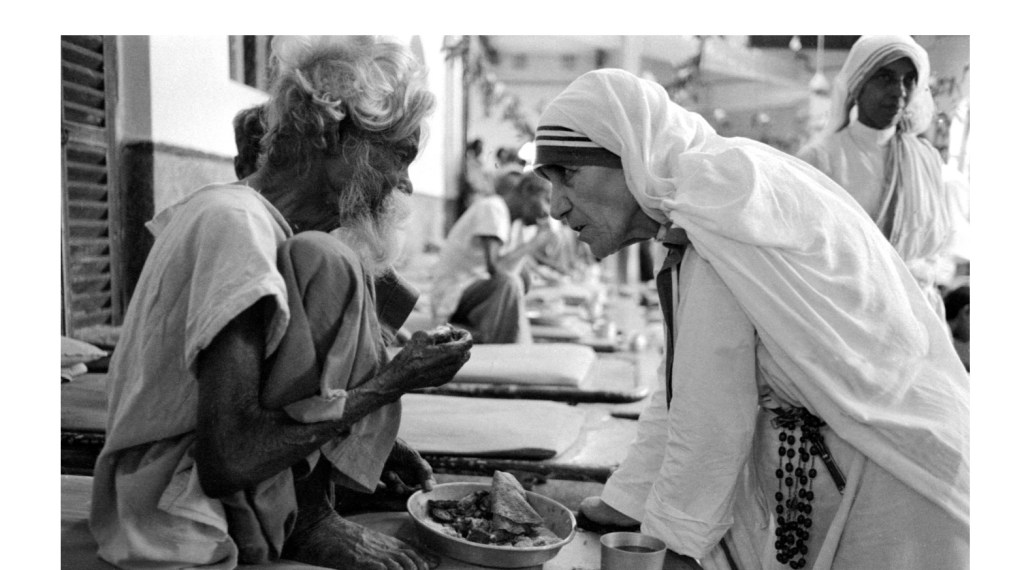
Photo credit: When St. Mother Teresa picked up the first man dying in the street she began to put into action her call within a call to serve the poorest of the poor. How and who is God calling us to serve?
 Spiritual Stepping Stones