When he disembarked and saw the vast crowd, his heart was moved with pity for them, and he cured their sick. (Mt 14:14).
The feast of the feeding of the five thousand was quite different from the birthday feast of Herod Antipas (Mt 14:1-12) that we read yesterday. Herod’s focus was on himself, not the welfare of the guests attending his banquet. Herod’s pride was on full display, and it culminated in his ordering the head of John the Baptist to be served up on a platter.
Jesus focused instead on those who gathered around him; “his heart was moved with pity for them”. Jesus “peered out across the vast human see of hunger and heartache that pressed in around him. However fatigued, Jesus made himself available to the sick and suffering” (Mitch and Sri, 189). Jesus was aware of their need, their hunger, not only for something to eat but a deeper spiritual hunger. He made himself available to them. Jesus taught, healed, and when that time ended instead of sending them off to fend for themselves, in the multiplication of the bread and fish, he met their most basic need for nourishment.
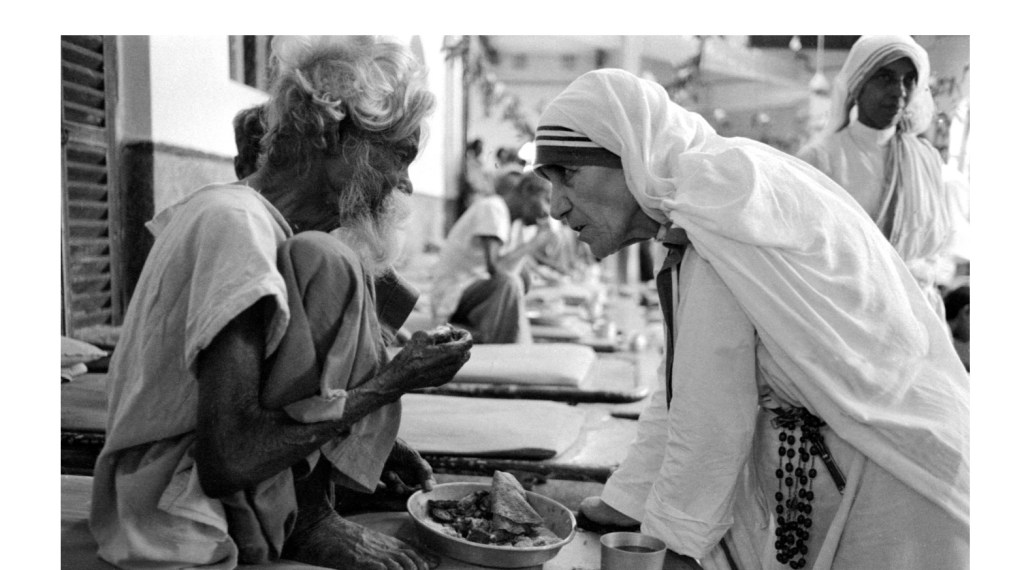
There is a stark contrast between the attitude of Herod and Jesus (cf. Mt 14:13-21). We can certainly see these two scenes playing out clearly in our country and the world today. The question for us is do we close ourselves off, embrace an indifference to those who are in need, and let others fend for themselves, or do we make an effort to be aware of the needs of those around us and attempt to be of help.
Mother Teresa said: “People are hungry for God. People are hungry for love. Are we aware of that? … Do we have eyes to see? Quite often we look but don’t see. We are all just passing through this world. We need to open our eyes and see” (Mother Teresa, 56).
We do not have to feed five thousand. The effort of putting our love into action for one person is a good way to begin. People often yearn for more than material need. They hunger to be seen, heard, and loved. Jesus, please grant us the eyes to see and to be more aware. Please help us to have compassionate hearts, and set our souls on fire with the Holy Spirit to put into practice acts of love. May we recognize with St. Mother Teresa that: “We are collaborators with Christ, fertile branches on the vine” (56).
———————————————————————–
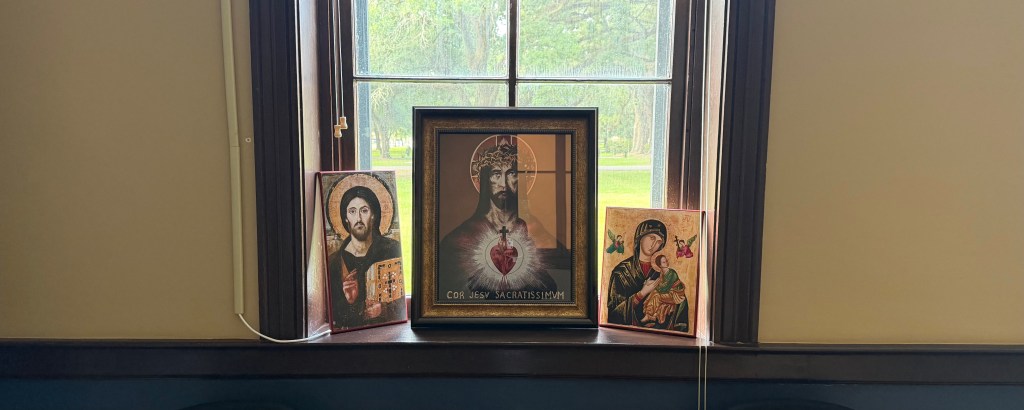
Photo: When we bring all we experience to Jesus and Mary, we will have a better chance to be moved with compassion.
Mitch, Curtis and Edward Sri. The Gospel of Matthew. Grand Rapids, MI: Baker Academic, 2010
Mother Teresa. No Greater Love. Edited by Becky Benenate, Joseph Durepos. Novato, CA: New World Library, 2001