Placing Jesus first will help us to detach from the attachments in this world.

Jesus continued build on his teaching about the entrance into the kingdom of God as the rich man walked away sad by stating, “Children how hard it is to enter the kingdom of God! It is easier for a camel to pass through the eye of a needle, than one who is rich to enter the kingdom of God” (Mk 10:24-25). The disciples are stymied, primarily because present Jewish belief held that those who had amassed wealth and riches did so because they were blessed by God. If someone who had followed the commandments of God, appeared to be blessed by God, would he or she not be a part of God’s kingdom, if not then, what was one to do?

Yesterday’s reading ended with Jesus responding to the disciples astonishment. First by stating that “For human beings it is impossible.” Jesus said this because there is nothing that we can do to earn or buy our way into heaven. It is not through perseverance, dogged determination, or will power that we are saved. Our security also is not to be placed in the things of this world, our happiness and fulfillment is not to be placed in the apparent goods and glitter of the finite things that offer comfort and pleasure. For if we place our hope in the things of this world, in our own belief that we can control our own destiny, we will be building our foundation on sand. Jesus continued, “For human beings, it is impossible, but not for God. All things are possible for God” (Mk 10:27).

There is only one way to enter the kingdom of God. A person is to say yes to his invitation. The rich man refused the invitation to come and follow Jesus. He chose his possessions over the kingdom. The disciples of Jesus chose differently. The opening line of today’s Gospel reading is given by Peter, speaking up for those, who like him, did what the rich man did not do, when he said “We have given up everything and followed you” (Mk 10:28). Jesus affirmed Peter and the other disciple’s acceptance of the invitation to come and follow him, as well as to assure those who would willingly sacrifice and voluntarily give up, house, family, or land, to follow him. He insisted that they would receive back “a hundred times more in this present age… and eternal life to come” (Mk 10:30).

Jesus, in today nor yesterday’s Gospel accounts, is not a preaching a kind of prosperity gospel or free reigning capitalism, nor is he a proponent of socialism or communism. Each of these are human socio-political, economic constructs. Jesus instead is painting a picture of the reign of God as a new family. One that exists, not of the world’s making, but of God’s design. A kingdom not of this world, though still present in it, and the good news is that all are invited to be a part of it. The apostles were on the way. They had indeed given up the material and familial to follow Jesus, but they, who argued among themselves regarding who was to be the greatest in God’s kingdom, still had their mental attachments and preconceived notions to let go of.

Those who are a part of the kingdom of God are not connected through bloodline, tribe, political party, or nation, but are united through a transformation of their hearts and minds. The followers of Jesus become brothers and sisters. They care for one another, provide hospitality, charity, support, access, means, and encouragement for one another. Together, they meet the challenges and persecutions that come from those who oppose the kingdom.

Jesus offers us the same invitation that he offered the rich man and his disciples; to follow him by letting go of that which distracts us and binds us from giving our life more fully over to him and building up his kingdom. It is helpful to assess our lives, to determine where we can let go, be less attached, and resist looking to material goods for our security and pleasure. Our true and solid foundation we will find in developing our relationship with Jesus, his Father, and the love of the Holy Spirit.


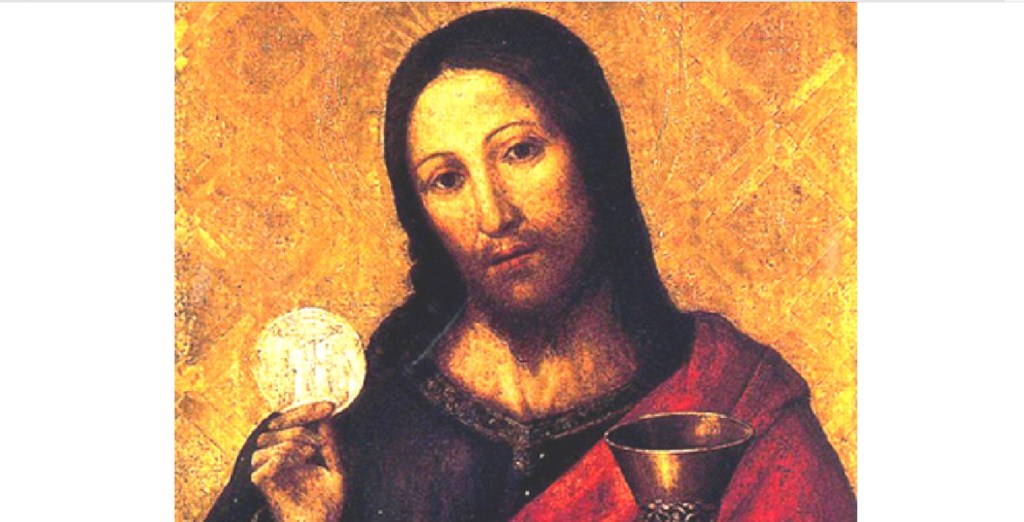
Photo: Encountering Jesus in his Word and the Eucharist at St. Clement Church, Santa Monica, CA.

Link for the Mass readings for Tuesday, March 4, 2025

“You are lacking one thing…”

A man approached Jesus seeking to know what he must, “do to inherit eternal life” (Mk 10:17). Jesus shared that following the commandments, such as: do not kill, commit adultery, steal or bear false witness; do not defraud, but do honor his father and mother (cf. Mk 10:19), would be a good place to start. The man affirmed that he had followed them all. I can imagine the eyebrows of Jesus raise and his mouth curl into a smile as he realized the sincerity of the man kneeling before him. The disciples recognized that look and held their breath.

Jesus, looking at him, loved him and said, “You are lacking one thing. Go, sell what you have, and give to [the] poor and you will have treasure in heaven; then come and follow me” (Mk 10:21).

The man, instead of overjoyed, was crushed. He had followed the prescriptions of Torah all his life, he was blessed by God with the gift of having many material goods, but in the end it was those possessions that enslaved him. He genuinely came seeking eternal life, and Jesus gave him just what he sought, and more. As Jesus called the twelve, he made the same offer to this man when he said, “come and follow me.”

The commandments are a good first step for properly ordering our lives toward God and one another. Jesus quotes overtly from the Ten Commandments as well as adds another one from Deuteronomy 24:24 in asking him not to defraud. These commandments are from the second tablet of seven regarding how we are to relate to one another. Jesus then calling him to sell what he had and to give the proceeds to the poor and follow him, was a covert invitation to put into practice the first tablet of loving God first and foremost before anyone and anything.

The Ten Commandments are the foundational stones that we are to build our discipleship on if we want to be faithful to God and to be freed from that which enslaves us. We are to put God first and when we do so all of our thoughts, words, actions, and relationships will then be properly ordered. This is what we all have been created for, as St. Augustine came to realize and expressed in the introduction of his Confessions: “You have made us for yourself, O Lord, and our hearts are restless until they rest in you”.

The man in today’s Gospel account knew what he needed to do, but was too attached to his wealth and material things to let them go. He walked away sad, because he clung to the false substitute of wealth that would not ultimately satisfy him. He placed his security and trust in wealth not in God as he had thought he had done. He like Peter saw the promise in Jesus, but unlike Peter, turned away from the One who offered him eternal life. Jesus invited him to become one of his disciples and to walk with him on the path of love, to give, share, and serve along side him, but he could not bring himself to do it. How about us?

Return to this scene in Mark 10:17-31, make the Sign of the Cross, then breathe slowly in for the count of five and out for the count of five, once for the Father, once for the Son, and once for the Holy Spirit. Read each of the words of this passage slowly, two or three times. Then set your Bible aside. Next, visualize each of the details of this account of Jesus and the rich man and place yourself in this scene. As the narrative comes to an end, and as the rich man walks away with his head bowed, see the disciples turn to face you.

You receive their looks of curiosity. Your head turns and you meet the gaze of Jesus. You feel his invitation without a word spoken between you. Like the man, you ask, “What must I do to inherit eternal life?”

Jesus holds your eyes in his. He loves you as he speaks, “You are lacking one thing…” What does Jesus say next? Allow the love and light of Jesus to touch your mind, heart, and soul. Allow him to reveal to you that which you are holding onto too tightly, that which you are attached to and need to renounce and/or release, to be healed from. What is preventing you from giving yourself completely to Jesus? You may not have an answer now. This may be a meditation that you would like to carry with you into Lent. In this moment, are you willing to resist walking away? Will you instead trust in Jesus and walk with him one step at a time and see what happens next?
————————————
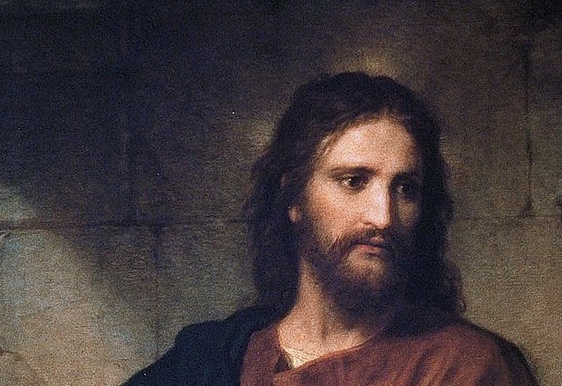
Painting: “Christ and the Rich Young Ruler”, 1889, by Heinrich Hofmann

Link for the Mass readings for Monday, March 3, 2025

Jesus seeks to welcome, embrace, and bless us as he did the children.

In today’s Gospel account, or pericope, people are bringing their children to Jesus to receive a blessing. To offer a blessing, especially this is an action a father would offer, was common. It is understandable that parents would want to bring their children to be blessed by Jesus. Even though children had very little status in the ancient near East of this time, especially in the very young because of high mortality rate, parents did care. They, as with others, sought Jesus for his healing touch, whether they needed a healing or a blessing.

Yet, the disciples step in to prevent this process from happening. Mark does not share the reason for their interference. The disciples apparently missed the lesson that Jesus sought to teach them earlier when they were arguing among themselves about who was the greatest. Jesus had then asked for a child to be brought to him and said, “Whoever receives one child such as this in my name, receives me” (Mk 9:37). This could be why Jesus was none to happy, in fact “indignant” for their interference. Jesus rebuked his disciples: “Let the children come to me; do not prevent them, for the Kingdom of God belongs to such as these. Amen, I say to you, whoever does not accept the Kingdom of God like a child will not enter it” (Mk 10:14-15).

Jesus consistently offered grace to those who might otherwise in the society of his time be prevented from receiving it. Jesus provided healings for the possessed, lepers, women, the blind, the lame, tax collectors and sinners. The very fact that this short account mentioning children is even included in an ancient near Eastern text says something profound. Jesus recognized the dignity of children as he already attempted to teach his disciples.

Children in the ancient Near East had no recognized social status. Orphans were at risk and needed to be taken care of. Children up to two years old were vulnerable in many ways and as such, experienced a high rate of infant mortality. Because of this reality, many parents may have developed an unconscious, defensive posture that they did not become too attached to their children until after they were two years of age. This harsh reality could also be a reason why these children were being brought to Jesus for a blessing.

Jesus, in his reaching out to the children to offer a blessing, impresses the point that he takes the life of children seriously and so encourages others to do so. There are historical accounts that Christians continued to take this teaching seriously. In ancient Roman society, if parents did not want a child, one recourse was to leave them in a local dump to die. Christians would retrieve the infants and bring them into their homes and raise them.

Jesus also used this opportunity as a teachable moment when he shared that “the kingdom of God belongs to such as these.” Jesus is recorded as using the image of God as a Father one hundred seventy five times in the Gospels. Jesus equating that the kingdom of heaven belongs to such as these would have been hard for his disciples to fathom. Maybe one of the reasons this message did not stick the first time. Jesus was helping his followers and us today to see the love of the Father for all his children. To enter the kingdom, we must accept that we are to depend totally on and place all our trust in God as our Father.

God has created us to be in relationship with him and one another. We need him just as much as an infant does for his or her very existence and survival. We do not buy or earn our way into the kingdom of Heaven because God and his realm is so transcendent, so beyond us, that we cannot possibly get there on our own efforts. We enter the kingdom of God through the door of his Son, who is the way, the truth and the life.

Just as Jesus opens his arms to embrace the children to receive and bless them, he seeks to do so with us. In our willingness to enter into and receive his embrace, we enter into the kingdom of our Father. It is relationship with God who we are wired for, he is our hope, our meaning, and our fulfillment. “[T]o receive the kingdom is as simple, trusting, and humble an action as receiving the embrace of Jesus. Indeed, to enter the kingdom is nothing other than to enter into a relationship with Jesus” (Healy, 201).

Thank you Jesus for the gift of loving us and revealing to us our dignity, value, and worth. Help us to accept and embrace this gift of your love so that we may love each other as brothers and sisters. Help us to promote a culture of life that recognizes and acknowledges the dignity and value of each and every person without exception from the moment of their conception, birth, throughout the ups and downs of daily life, up to and including our elder years until natural death.

——————————————————————

Photo: Stained glass depiction at the Cathedral of Our Lady of the Angels, Los Angeles, CA.Healy, Mary.

Healy, Mary. The Gospel of Mark. Grand Rapids, MI: Baker Academic, 2008.

Link for the Mass readings for Saturday, March 1, 2025

We become whole by serving the One who came to serve us.

Power and honor are attractive temptations. Power is alluring because we want to be in control. Many of us believe that control provides security and safety. Many of us believe that power provides access and control over our environment and situations as they arise. Honor has an attraction also because we want to belong, we want to be a part of. With honor and fame, we believe we will be accepted, liked, have access, without the risk of rejection.

Power and honor become a problem when they are grounded in our self and when we feel we attain them on our own initiative. They become an asset if we recognize them as gifts from God that help us to promote his kingdom. In and of themselves, power and honor are finite expressions. If they are only fueled by our insatiable desire to put our self first, front and center, we will not only constantly fall short, but we will constantly be seeking more because nothing finite can fulfill the transcendental hunger that we have to belong to someone so much greater than ourselves.

The disciples of Jesus fell for the temptations of power and honor in today’s Gospel from Mark. Jesus had just shared with them for the second time that he was to be handed over and killed and that he will rise again. The disciples do not understand what Jesus was saying to them and instead grasped at their idea of what the Messiah meant to them based on their experience and culture. In their minds, the messiah would be a powerful ruler that would overthrow the occupying army of Rome, and so they began to jockey among themselves for seats of honor in his kingdom.

Jesus was aware that the disciples were squabbling about who among them would be the greatest, even though they were not willing to admit to that fact. Jesus had been using this time as they drew closer to Jerusalem to instruct them more deeply about his role in his Father’s plan, but also guiding them in knowing theirs. Jesus sat down among them and said: “If anyone wishes to be first, he shall be the last of all and the servant of all” (Mk 9:35). Power and honor do not come by being served. True power and honor come from the source of all existence, God the Creator. Nor is the infinite power of God some impersonal force that we tap into.

True power is trusting not in the material and finite things of the world because they are unstable. True power comes from God, the one who is omnipotent, all-powerful, and worthy of all glory, honor, and praise. We receive the power of God by experiencing, developing, and sustaining our relationship with him, through participation in the life of his Son and the Love of the Holy Spirit. The path of discipleship is traveled not by those who are worthy but by those willing to follow the lead of Jesus, submitting to his will, embracing the gifts that the Holy Spirit grants us, and sharing what we have received.

Lent begins in just about a week. One thing we might want to consider is to relinquish our perceived access of control in a fallen world that is ever unstable and changing and instead place our hope and trust in the one who is our destiny, who is our hope, our refuge, and our strength: Jesus the Christ, the Son of the living God. Let us let go of the desire to be liked and affirmed by others which can lead to unhealthy attachments and instead strive to be true to who Jesus calls us to be. May we not seek our security in control and self-sufficiency but in trusting in God and serving him and his will.

——————————————————————————————-

Photo: Sculpture of Jesus at the St. Clement Church, Santa Monica, CA.

Link for the Mass readings for Tuesday, February 25, 2025

Jesus calls us not just to exist but to live by a higher calling which is to love.

The Word of God proclaimed is alive. God has given his Word for all people and for all times with the purpose to shape and form us to be a people uniquely his own (cf. Deut 26:18). We are to be holy as the Lord our God is holy (cf. Lv 19:1-2). To be holy means that we are to be set apart. There ought to be something different about us. The word church comes from the Greek word ekklesia. Ek means out, kaleo, means called. As Church then, we are called out from the world to be holy, to be saints. We become saints when we repent and allow God to forgive us and restore the glory and likeness that was lost in the Fall.

Jesus also called us to be salt and light. The intent of our thoughts, words, and actions are not to be divisive but unitive, not to be a source of darkness but illumination, and not to be dehumanizing but empowering. I have heard often after someone speaks or acts in a negative way a comment along the lines of, he or she is just being human. Meaning we are fallible, that we are not perfect.

This is only partially true. We are finite, imperfect beings, yes, but when we act in ways that are self-servicing and hurtful, we are not acting humanely. These words and actions are a reflection of our fallen and distorted humanity. The reality is that we are wounded by sin, but the good news is that we are not destroyed by it. We are more than our fallen nature, more than our base instincts. We do not have to stay stuck there, and for God’s sake, may we resist the temptation to condone any abusive or hurtful behavior as acceptable and normal!

All of us are in need of healing, and this begins when we diagnose our sickness accurately. God has not created us to merely exist, to go through the motions, to accept a minimalist approach, to be anxious and stressed moment by moment, and to consistently assume a reactive and defensive posture. God calls us to be so much more. As St Irenaeus has written, “The joy of God is the human being fully alive.” God didn’t create us just to survive, he created us to thrive!

How do we work to be fully alive, to thrive, to be holy? We love.

To love is not merely an emotional, romantic, or sensory feeling, but an act of the will. As St Thomas Aquinas taught, “To love, is to will the good of the other as other.”

This is how Jesus can say in the our gospel reading from Luke today: “But to you who hear I say, love your enemies, do good to those who hate you, bless those who curse you, pray for those who mistreat you” (Luke 6:27-28). As with many of the teachings of Jesus, these can be shocking and appear to be impossible to accept let alone put into practice. Loving our enemies was certainly something beyond comprehending in his day and age let alone ours.

When Jesus gave the great commandment, he was not saying anything necessarily new. In calling us to love the LORD with all our hearts, strength, and souls he was referring to Deuteronomy 6:5, and to love our neighbors as we love ourselves he drew from Leviticus 19:17. When Jesus stated that we are to love our enemies, this was unprecedented and sounds impossible to comprehend, let alone put into practice. Jesus does not leave his disciples or us hanging though. He outlines specific practices regarding how we can actually love our enemies.

We are to: do good to those who hate us, bless those who curse us, pray for those who abuse us, offer the other cheek to those who strike us, give to those in need, and to do unto others as you would have them do. Doing each of these makes loving our enemies easier, right? Not a chance. Each of these are just as challenging, if we are operating from our baser selves and fallen nature living in the world. But as I started, Jesus is calling us to go beyond a minimalist approach. He is calling us to be holy. As disciples of Jesus we are to be marked as different and one of the most powerful ways is by reading, praying, meditating, contemplating upon, and putting into practice Jesus’ teachings.

When we do so, our hearts and minds will change. We will change. The people of the world, love those who love them, do good to those who do good to them, and lend money to those who will pay them back. As disciples we are to resist the temptation to judge, condemn, and instead to forgive and to give, to love those who don’t love us, do good to those who mistreat us, and lend money to those who won’t pay us back. When we put these teachings of Jesus into practice we will be blessed by God abundantly and to overflowing with his love given beyond measure.

The words of the Gospel, the teachings of Jesus, mean nothing if they have no relevance to us, if we do not put them into practice and if we do allow our hearts to be transformed from hearts of stone into hearts of flesh. Jesus loves us and invites us to receive his love so we can heal, so we can experience forgiveness, and we can be forgiving, merciful and loving. Discipleship with Jesus is not an easy path to walk. It is possible to love our enemies, bless those who curse us, and pray for those who abuse us, when we seek to think not as fallen humanity does but as God does, when we ask Jesus to love through us until we can do so.

————————

Picture: Jesus putting his teachings into practice on the cross, where he loved his enemies, blessed those who cursed him, and prayed for those who abused him. Through his love and power we can do the same. Crucifix from the sanctuary at St. Vincent de Paul Regional Seminary in Boynton Beach, FL.

Link for the Mass readings for Sunday, February 23, 2025

“You are Peter and upon this rock I will build my Church.”

“You are the Christ, the Son of the living God” (Matthew 16:16).

If you have been walking through each of the daily readings through Mark, this quote from Peter might sound very familiar and you would be correct. For the Mark parallel version of this account was presented this past Thursday: “You are the Messiah” (Mark 8:29). Peter is saying more than he is aware of because he is speaking through the inspiration of the Holy Spirit not from his own insight, not as man does but as God does. He is recognizing that Jesus is the long awaited Messiah, but still not with full comprehension, as again we saw in Mark’s account when he Peter sought to rebuke Jesus for saying what kind of Messiah he would be.

That Jesus is the Messiah, the Christ, the Anointed One for whom the people of Israel have been waiting for with great anticipation, is beyond what anyone could have even imagined. Peter, in Matthew’s account, also stated that Jesus is “the Son of the living God.” Messiah and Son of God, bringing to the fore that Jesus is the preeminent priest, prophet, and king. Jesus indeed was the One to “gather the tribes and cleanse the temple and defeat Israel’s enemies” and Peter knew “that there was something qualitatively different about his Master” (Barron, 100).

Jesus does not hide or sidestep Peter’s affirmation. He commends Peter by saying, “Blessed are you, Simon son of Jonah.” (Matthew 16:17). Imperfect Peter, shared the deposit of faith that is the ground of what we believe as Christians. Jesus not only affirms this statement but goes further and renames Simon as Peter. Throughout the Bible when there are those who follow the will of God through their acts of faith they are renamed, as was Abram who became Abraham. Simon becomes Peter, the rock, upon which Jesus will build his Church.

Our lives will be changed when we not only accept this truth but like Peter follow Jesus. Step by faithful step, we come to know, Jesus the Christ, the Son of the living God. At each Mass we can behold Jesus re-presented on the altar, receive him, and consume him so that we can be transformed by his love. In reading these accounts we are invited to meditate, pray, and listen to God speaking to us through them. Being nourished by the Gospels we can then like, Peter, think, speak, and act not as humans do, but as God does.

When we allow God in, he will touch our minds, hearts, and the depths of our souls to reveal to us our sins and those areas of our lives in need of healing. Not to condemn us, but to free and heal us. When we trust in Jesus, when we are willing to take up our cross and follow him, our lives will never be the same. There is a freedom and love that we will experience that is beyond anything that we can ever imagine and it continues to expand and grow the more we receive and share what we have received.

Let us meditate on this great testament of faith given to us by Peter our first Pope. Let us ponder what it means that Jesus is the Christ the Son of the living God, and that he came to forgive and heal, guide and lead us to be members of his Church, the Body of Christ, so that we may conquer evil and reign with him in this life and into the next.


Photo: St. Peter with the keys in front of St. Peter’s Basilica. Accessed from Vaticannews.va

Link for the Mass readings for Saturday, February 22, 2025

To be a disciple of Jesus we need to follow the way of the cross.

Jesus summoned the crowd with his disciples and said to them, “Whoever wishes to come after me must deny himself, take up his cross, and follow me” (Mk 8:34).

Our life is not about us, and about what we can accumulate. It is not about achieving and placing our security in power, fame, wealth, and pleasure. Nor are we here on this earth to merely exist, to just get by, and live in survival mode. We exist to be loved by God, to love others as we have been loved, and to live life to the fullest.

The challenge is, are we willing to truly deny ourselves, take up the cross of Jesus, and follow him? The followers of Jesus hearing him say that was quite visceral as many of them had witnessed a crucifixion personally. It is a humiliating, degrading, and horrifically painful death. And yet, Jesus is saying openly that this is a requirement to following him as a disciple.

We may be removed from the, in the face quality of a crucifixion, but we can still recoil at the invitation to renunciation. To accept this cost of discipleship, it is helpful to recall Jesus’ words to Peter in yesterday’s account when Jesus convicted Peter for rebuking Jesus saying that he was to suffer, be rejected by the elders, and killed. Jesus rebuked Peter because he was “not thinking as God does but as human beings do” (Mk 8:33).

We take up our cross and follow Jesus when we are ready and willing to renounce any thought, word, or deed, person, place, or thing that we have place before God; when we are willing to put Jesus first in our lives whether or not we will be ridiculed, persecuted, or killed. This willingness to be Jesus’ disciple comes slowly with each, “yes”, as we see with Peter himself. He and the other Apostles, especially in the Gospel of Mark stumble time and again. Just like the blind man who Jesus just healed, it took a second healing for him to see (cf. Mark 8:22-26). To truly see as God sees will take time with us as well.

Peter affirmed who Jesus was, the Messiah, the Son of God, in one breath with the insight of God, taking a step ahead, and yet, in the next breath, he could not accept that Jesus would be a suffering Messiah and die, taking a few steps back. Peter would also deny him publicly to a slave girl (cf. Mark 14:66-72). Many times Peter would refuse to take up his cross, but he continued to “repent and believe in the Gospel” (Mark 1:15).

Jesus calls us to follow him. We do so one decision at a time. Like Peter, we will sometimes, think as humans do, while at other times, we will think as God does. We will say, “yes” more times than not when we are willing to allow our minds and hearts to be transformed by God’s love. As disciples, we are to follow the way that leads to the cross, which means letting go of our attachments, disordered affections, and idols, and as Jesus and Mary did, say “yes” each time to the invitation to follow our Father’s will. We will sink less when we keep our eyes on Jesus (Matthew 14:22-33) and remain faithful more when we follow Mary’s direction to do whatever he tells us (John 2:5).


Picture: Crucifix in the sanctuary of St. Ignatius of Loyola, ordination day.

Link for the Mass readings for Friday, February 21, 2025

Called, loved, and sent.

The rejection of Jesus by those in his hometown did not slow down his mission. We can imagine that Jesus knew what he was going to do already, but en route wanted to stop by to see if any from his “native land” would like to participate in his public outreach. Apparently, no one, or only a very few, those who were healed by him, did. Jesus, as he does throughout the Gospel of Mark moves on without missing a beat, much like Mary going in haste to bring the good news to Elizabeth. Jesus went ahead and, “summoned the Twelve and began to send them out two by two and gave them authority over unclean spirits” (Mk 6:7).

Could the rejection of the people of Nazareth then also have been a preparation for the sending of the Twelve? They had experienced his exorcisms, teaching with authority and healing with miracles, and also saw the reaction of the crowds. Before he gives them some final instructions, maybe the most important of all was to be faithful to the message of repentance that they were sent to preach. They were to bring the light of Christ to those for him they were sent to reveal those sins they needed to turn away from those sins, attachments, and idols and instead turn to God and invite them to give their whole hearts and minds to them.

Jesus summons us and sends us out as well. We too have been accompanying Jesus and his disciples through each chapter. The word of God is living and alive and Jesus still reaches out and calls us as he called the Twelve.

At the end of each Mass, we are sent, just as the Apostles, to proclaim the Good News! All of us as the Body of Christ, believers in Jesus the Christ, those of us baptized into his death, are to live as his disciples and bear witness to how Jesus has transformed our lives. This is best done by repenting ourselves and placing God at the center of our lives. Jesus gives us each a unique call of evangelization with a particular charism and gift that the Holy Spirit imparts within us at our Confirmation.

Jesus is the one who calls, sends, and empowers us for mission. We are sanctified, made holy, and set apart when we say yes to his invitation, participate in his sacramental life, and follow the will of his Father. Jesus not only teaches with authority, but he also calls and sends us with that same authority. We are to rely on the divine providence of our Father. He prepares us and provides that which we need to accomplish the task he has given, and he will also send the Holy Spirit and others to provide help, aid, guidance, and support. We see this over and over again in the lives of the Apostles and each generation of saints thereafter.

At first sight, we may not agree with God’s choosing. Me, really? Those he sends to walk with us, are you sure! Yet, we only need to recall what he accomplished with the Apostles, remembering the imperfections of each apostle and their simple beginnings. Just as mustard seeds, that grew to mighty bushes, what wonders they accomplished in Jesus’ name. God does not see as we do, for we are often misled by appearances “or lofty stature” but God sees into the depths of the heart (cf 1 Samuel 16:7).

Ultimately it is not about us after all. It is about our willingness to be open to and led by God and to work arm in arm with those he has invited to walk with us. That makes all the difference. We are not to go forward alone. We are called to be in community as the Body of Christ. Jesus sent his disciples out two by two in the beginning, so that they could provide mutual support, guidance, encouragement, prayer, and accountability. We each begin best each day by making time to be still, to breathe, receive, rest, abide in God’s love, and listen to his word and guidance. Then we begin, step by faithful step, walking with our brothers and sisters to follow the light that Jesus shines before us.

—————————————————————————

Photo: Blessed to have begun my seminary journey with these my brothers in Christ!

Link for the Mass for Thursday, February 6, 2025

Will we follow Jesus as Levi did?

In both the first reading from Hebrews and verse from Psalm 19 we read about the power of God’s word. “The word of God is living and effective” (Hebrews 4:12) and the words of the “Lord, are spirit and life” (Psalm 19). Jesus gives face to the living word of God come down from heaven to transform his people as he continues to teach with authority and offer healing. In today’s account of Mark, Jesus calls his fifth disciple, Levi. The key difference with this call of Levi and the four fisherman is Levi’s occupational hazard.

Tax collectors were disliked, even despised by many in ancient Palestine because they were considered unclean, and categorized as with lepers and sinners. They were cast in this net because the tax collector had a responsibility to pay a fixed amount to the occupying power of Rome. This in itself was bad enough because their own countrymen were colluding with the enemy. What made matters worse was that too many kept as a commission anything he collected over and above that fixed amount. The majority of the population, already just getting by, paying a temple tax, and the Roman tax, then finding out their local tax collector was taking more than their fair share, did not make for feelings of endearment.

Jesus surprises all who had come to hear him teach when he not only invites Levi, also known as Matthew, to follow him but then they have dinner together. We are witnessing yet again another healing miracle. Jesus provides an opportunity of bridging divides by inviting someone to his inner circle, to turn away from one way of life to begin anew, to: “Repent and believe in the gospel” (cf. Mk 1:15). The Pharisees question his choice of table fellowship companions. It is not clear if the Pharisees are eating with them or are on the outside looking in. The other curious point is that the Pharisees are conversing with Jesus’ disciples. So both groups are together witnessing the communal exchange, from a distance. They choose not to engage in the fullness of the fellowship.

They could not have been at too great a distance though because Jesus could hear their concerns and responded to them: “Those who are well do not need a physician, but the sick do. I did not come to call the righteous but sinners” (Mk 2:17). The Pharisees, and possibly some of his disciples, were not a part of the intimacy of this communion because of their own unwillingness to accept those that Jesus invited to share a meal, to accept that they too were sinners also in need of healing.

All have sinned and fallen short of the glory of God. Jesus forgives and offers mercy to all who are willing to be aware of his invitation to fellowship. In surrendering our finite freedom over to his divine freedom, we receive healing and transformation, then are offered an opportunity to develop an intimate relationship and participate in communion with the one who is ushering in the kingdom of God. This is a foreshadowing of the last supper and the celebration of the Mass.

We too are invited as sinners to join the banquet, to be in fellowship with Jesus. As Levi received, we are given an opportunity to begin again, to leave behind anything that separates us from God and one another and follow Jesus, who came that we might be forgiven and healed.

As with many Gospel passages, today’s offers a wonderful opportunity to place ourselves in the scene. Mark presents Jesus teaching the people though he again does not tell us anything about what he shared. Knowing what follows, we might think about and ask ourselves, “What might Jesus have taught before going to Levi at the custom’s post?” Could he have been talking, as Matthew adds in his parallel account, about how Amos preached that God desires mercy and not sacrifice (Mt 9:12)?

Let us read this passage slowly a few times (Mark 2:13-17) and meditate upon these words of God that are “living and effective.” Then as Jesus moves to the custom post, follow him, and the others in your imagination. What is our honest reaction to Jesus calling the tax collector, Levi? Are there sins that others commit that we find easy to forgive, others that we find hard to forgive? As the scene shifts to the breaking of the bread, do we dive in with this motley crew, stay at a distance, or walk away?

The words of the “Lord, are spirit and life.” May we not only read them, but also meditate upon and pray with them so that we may be transformed by them. May we also encounter Jesus in this passage and be willing to listen to Jesus speak to us in the silence of our hearts. This is a wonderful spiritual practice that can bring us much joy, forgiveness, healing, and deeper communion with the Divine Physician and healer of our souls. No RSVP needed, just come, open up your Bible, and join the feast!

————————————————————————-

Painting: Caravaggio’s “The Call of St. Matthew”

Link for the Mass reading for Saturday, January 18, 2025

When we trust in the will of God and persevere, we will be saved.

“You will be hated by all because of my name, but whoever endures to the end will be saved” (Mt 10:22).

Why are we talking about being hated the day after Christmas? One reason could be that Jesus, this baby whose birth we just celebrated is “the light that shines in the darkness” (Jn 1:5). The very reality of Jesus is that he is the light that exposes darkness, he is the very embodiment of Love that exposes evil and hatred.

St. Stephen, whose feast we celebrate today, and whose death we read about in the first reading from Acts, experiences his words personally. For he is killed for the sole purpose of speaking the Gospel. While during his persecution he sees and communicates how even the heavens open for him. The reaction to those who hear his words are infuriation and they then throw him out of the city and “stone him” (cf. Acts 7:54-59).

Stephen radiated the light, love, and wisdom of Jesus and like Jesus he was put to death. His persecutors felt threatened by the light instead of welcomed to let go of the darkness that held them bound. Jesus exposes the truth of those dark places within our own hearts, minds, and the very depth of our being as well. What is our response? Will we also reject the light, not aware that it is an invitation to healing and to wholeness?

We may wince at the luminous brightness of Jesus’ light and resist the intimacy of the love he seeks to share. We may unconsciously do so, because we have so often faced so much of the opposite; hurt, pain, betrayal, and lack of understanding or acceptance, that we assume a defensive crouch is best to protect our false sense of self, when in fact that is just what we are invited to let go of. As time passes and we keep to the shadows, we risk becoming ingrained in our fear and pride and our posture of protecting our ego.

Yet, to be fully alive, we need to embrace the light, not hide from it. When we are open to the healing touch of Jesus and receive the gift of his light in our lives, we begin to die to our false self and the lies that we have believed. Allowing ourselves to breathe and rest in God’s loving presence helps us to heal, indentify, and allow Jesus to transform our vice to virtue. Once we allow ourselves to be loved by Jesus, we begin to recognize that we are turned in upon ourselves, and then we can adjust our posture and begin to open ourselves to him. We also begin to recognize that we are not the center of the universe.

As we follow the model of John the Baptist, St. Stephen, the other saints, we become less so that Jesus becomes more in our lives. We too will face the same rejection that Jesus faced. We will be labeled crazy, out of step, simple-minded, irrational, and worse. Yet we are to resist returning to a defensive posture, to refuse to react in kind, but instead, to be present, call upon and trust in the Holy Spirit to give us the words to speak, and allow God to happen. We are to remain open, accepting of the person where they are and as they are, and share the same transformative mercy, love, and forgiveness of Jesus that we have received from our attacker.

Change, maturation, and growth are not easy. As disciples, we are to be disciplined and persevere, while at the same time remember that our redemption does not come from our own doing or willing it to be so on our efforts alone. Our healing, restoration, and transformation come first and foremost from a willingness to accept the invitation to experience a deepening of our relationship with Jesus. When we accept his invitation to walk with him, and trust him, we will receive the healing salve of his love, mercy, and forgiveness. We will then heal from and let go of our biases, prejudices, hatred, and selfishness.

Transformation is not a one-time event. Christmas is not just a day, it is not just a season. Christmas is a time when we can recommit to allowing Jesus to enter into and to transform our lives each and every day, each and every moment, with each and every decision. When we are tempted in any way, let us call on the name of Jesus, trust in him, take a few deep breaths, and we will better be able to resist that which seeks to divert us.

In becoming human, Jesus lived showing us that this life was not all there is. The fullness of our lives are to be lived in and for God his Father. When we, like, Jesus, Stephen, and the saints, trust and obey God’s will, no matter where that will lead, we will be transformed, whole, and more alive than we can ever imagine, in this life and the next.

————————————————————————–

Photo: St Stephen the Protomartyr – icon by Theophili Saint Stephen, pray for us!

Link for today’s Mass readings for Thursday, December 26, 2024