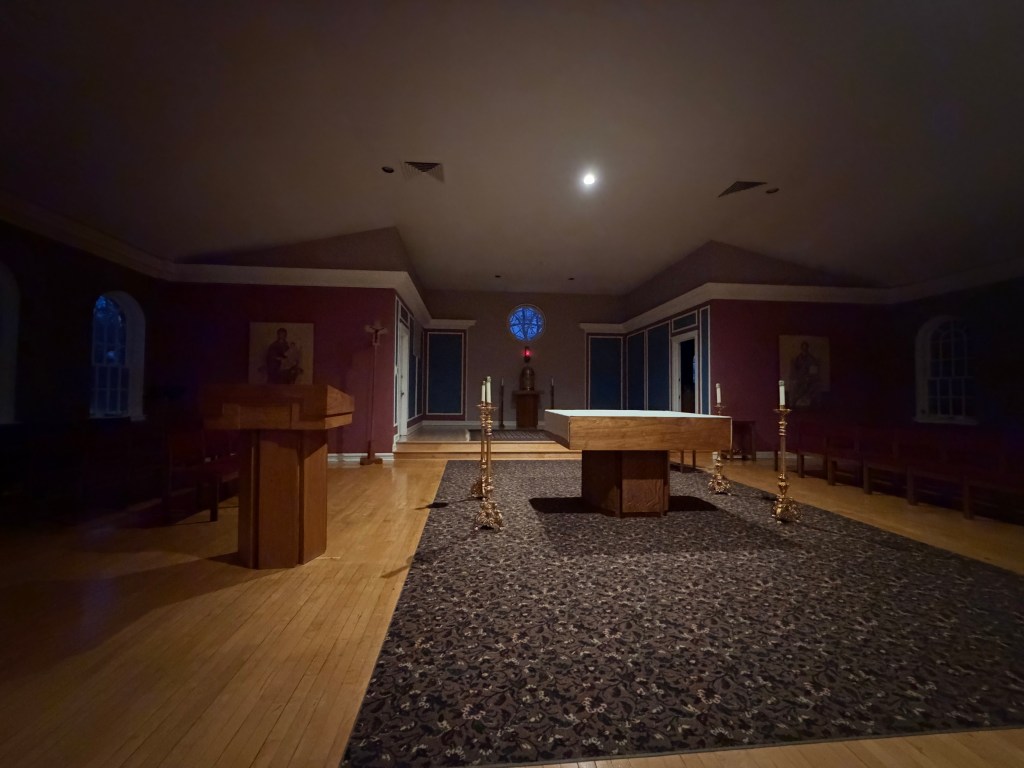
Praying helps us to grow in our relationship with God, as well as in humility and love.

“Rather, when you hold a banquet, invite the poor, the crippled, the lame, the blind; blessed indeed will you be because of their inability to repay you. For you will be repaid at the resurrection of the righteous” (Lk 14:13-14).

At the end of this parable, Jesus is expressing a deeper definition of love that we in our culture may not be accustomed. When we hear someone talking about love, most likely we think of an emotion, a feeling, sentiment, or a state of mind. As I have written often, I follow St Thomas Aquinas in his definition of love as the willing the good of other as other. This definition of love is unconditional. There are no restrictions placed on another for a return of the good given. In fact, as we read Jesus’ words, no return is to be expected.

This is what Jesus means by inviting the poor, the crippled, the lame, and the blind. These are people of his time who had nothing to give to someone who has the means of offering a banquet. They could even come, because of their ostracized status without the proper etiquette to even express the most minimal of thank you for the invitation and the meal, and instead to complain about the food, the decor, and even be insulting to the host. Yet, they would be served with humility and grace anyway, because the point is to give without expectation of reciprocity.

Some may say this is impossible, that nobody gives without expecting something in return. Everybody’s got an angle, even if we do something for a compliment. Jesus would probably agree with this claim, for on our own we may not conceive of giving without looking to get something back in return, let alone make such an offer. Jesus has countered this claim in a different context, but it applies here just as well: “For human beings this is impossible, but for God all things are possible” (Mt 19:26).

To be able to love then, to will the good of the other without condition, we need to first be willing to receive the love of God that he offers. We are only capable of love because first and foremost, we have been loved ourselves. If we spend no time with God, no time in his word, prayer, worship, acts of service, or most importantly his silence, we set ourselves apart from the love of God, and separate ourselves from him, the very source of our being. Our very existence, in fact, the reality of all creation, is the result of the outpouring of the love of God.

To receive the love of God, it helps when we respond to the invitation of the Holy Spirit to pray each day. Our very desire to pray, seeking the existence of God, the urge to move out from our self to reach out to the need of another, is the first response we might experience to his invitation even if we may not even be fully be aware. Another important movement to make time for prayer is to resist the many distractions, diversions, and temptations that keep us from praying and make time for God and God alone.

Humility is a key virtue that helps us to resist seeing ourselves as first and foremost. God is God and we are his children. As we enter into relationship with him and receive his love, it is important to resist keeping his love for ourselves. Yes, share with those closest to us, but also with those who will not give back. We need not fear that there will be a finite end to our giving, for with God there is an inexhaustible supply and a joy for its own sake which comes up from within our soul from our loving Father who is the source.

Having received God’s caritas, charity, we are to give until it hurts, as St. Mother Teresa taught. Jesus is not teaching us to build up fame and fortune here in this life, but to build up treasure in heaven where we will receive our eternal reward. If we don’t follow through on the movement of love dwelling up and share, if we only seek a return or equal exchange for the love given, we will often be let down and disillusioned. When the Holy Spirit nudges us to reach out in concrete situations, we are to follow without hesitation and seek nothing in return.


Photo: Divine Jesus Prayer Canvas from ArtisianCanvasPrint

Link for the Mass readings for Sunday, August 31, 2025

We are never alone, the Father is always with us.

The disciples are beginning to have a better understanding that Jesus is who he says he is, that “he came from God.” Jesus does not rest on or savor this insight and affirmation, but shares with them how, they still do not fully comprehend. He lets them know how each will leave him alone in his most desperate hour. They will do just that. Those he takes with him into the Garden of Gethsemane will fall asleep. When Jesus asks them to watch and pray with him, to be a support for him as he receives the crushing will of the Father that leads him to the cross, they fall asleep multiple times. When the guards come to arrest Jesus, led by Judas, the disciples would flee. Peter will then betray him three times.

What is interesting is that just as Jesus shares with them, that even though they, his most intimate followers, his closest friends would betray him, he says: “I am not alone, because the Father is with me. I have told you this so that you might have peace in me. In the world you will have trouble, but take courage, I have conquered the world.” 

These words are words of comfort and hope. Comfort and hope for his disciples then as well as for us today! No matter if we betray or are betrayed ourselves, we let others down or are let down, we see and experience the devastating effects of our fallen world and fallen human nature, from without and within; no matter what conflict, challenges, or tribulations rise up before us, we do not need to succumb to cynicism, hopelessness, and despair.

What is important is that we resist the temptation to curve in upon ourselves and drink from the poison of shame. In doing so, we cut ourselves off from the very source of our life and being. Having the humility to acknowledge where and when we have caused harm in any form requires embracing a healthy sense of guilt which is good. Then, instead of beating ourselves up, we are to seek forgiveness and reconciliation as well as be understanding and willing to forgive.

We also need to remember that in those times when we feel misunderstood, betrayed, or are facing the unbearable in life, we are not alone! Jesus, who experienced the same. reveals to us the way to his Father because Jesus is the Way! Seeking affirmation from the culture or the world is not the way. Our priority instead is build our relationship with Jesus, who will lead us to the Father so to experience the Love of the Holy Spirit!

Jesus is the light that shines in the darkness, and he will not be overcome by it, for he has conquered death, and has overcome the world. We are an Alleluia people because through our participation in the life of Jesus the Christ we will overcome as well when we trust in and experience the love of the Father. As an Alleluia people, we are to resist being shaped by the culture and the world, and are to instead evangelize it by authentically living out the Gospel and will of our Father as Jesus did; by sharing the light, joy, peace, and love of Christ we have received in each our interactions with one another.


Photo: The more we slow down and breathe, receive, rest, and abide in the love of God, we will know no matter what we are experiencing, we are not alone.

Link for the Mass readings for Monday, June 2, 2025