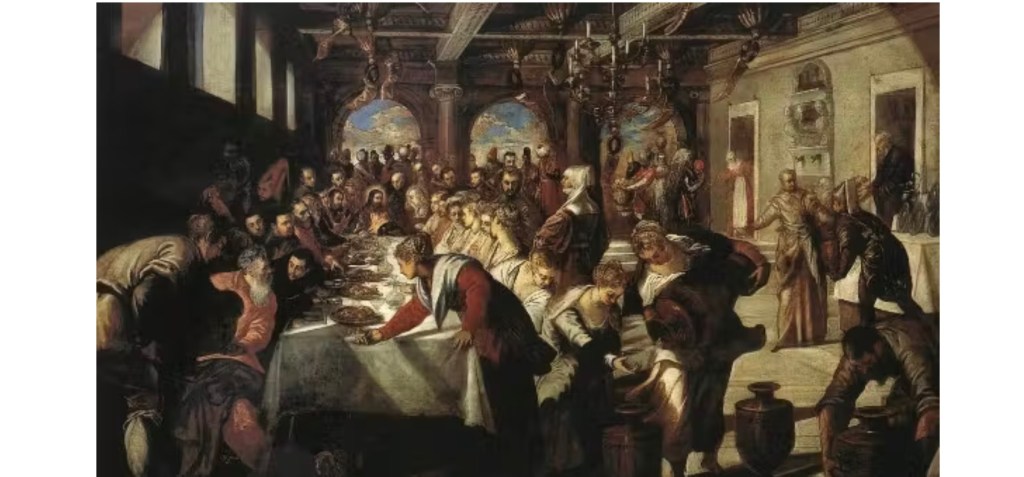
“The Kingdom of heaven may be likened to a king who gave a wedding feast for his son” (Mt 22:2).
Throughout the Gospels, Jesus not only talked about feasts but he is recorded as often celebrating table fellowship with others. Those he ate with ranged from people who were considered sinners to the religious elite among the Pharisees.
In the parable from today’s Gospel, Jesus presented a range of reactions to the invitation already supposed to have been accepted to a great, wedding banquet offered by the king for his son. The custom of the time for a wedding feast, which often was a celebration that would not last just a day but often a week, was that a first invitation would be sent out, and when accepted, at the time to begin the banquet, a second invitation would be sent for those to now come to enjoy the festivities.
In Jesus’ parable, the first group are so caught up in their own lives, that they are not willing to break away from their daily activities. The second group rejects the invitation outright and does so violently, by mistreating and even killing the servants of the king. The retribution of the king is swift and punitive. Then he sent his servants out into the streets, “and gathered all they found, bad and good alike,” and they not only welcomed the invitation, they said yes to the invitation, “and the hall was filled with guests” (Matthew 22:10).
God invites us into a relationship with him, but we must be willing to repent, to change our hearts and minds to see the invitation for what it is, an eternal gift. Those who refused were unwilling to change their plans, as well as others who, with hearts of stone, were outright hostile, willing to abuse and even kill the servants. Are we willing to choose our busyness over time with God each day or will we stubbornly hold on to our own self-reliance and pride and refuse God’s gift?
Near the end of the parable, Jesus presents a curious fellow that the king found present without the proper attire. This is not a literal indictment of not having the proper clothes, but the wedding garment imagery may be a recognition of a willingness to receive the benefits of the invitation without a yes to the responsibility involved. A desiring to reap the gift without accepting the responsibility. We need to be willing to take off the clothes of our old ways of life, our ways of sin, self-indulgence and reliance, and receive the wedding garments offered to us by the king who seeks to clothe us “with the garments of salvation;” and cover us “with the robe of righteousness” (see Isaiah 61:10).
We are invited to participate in the banquet of eternal life with God. The invitation is freely given, yet it requires that we dress for the occasion. Again, this dress is no material garment of fine linen and gold embroidery, but our willingness to repent, to turn away from those idols, that which we have placed or put before God, to have our hearts and spirits renewed. We are invited to be a part of God’s new creation by participating in the life of his Son, the firstborn of the new creation.
We see this played out in salvation history as well. God the Father offered this invitation of the eternal banquet to the patriarchs, judges, prophets, and the people of Israel, to be one with him that they might shine brightly before all so to make his will and glory known to the world. In God’s timing, he sent his Son to fulfill that mission of invitation and to be with us in our present moment and in our present condition in life. Jesus meets us where we are right now in our everyday experiences and tells us that “the feast is ready.”
We are invited each day to begin again, to pray, to turn away from our selfish ways, to receive a new heart and a renewed spirit. God invites us. Are we willing to let go of our idols, our disordered affections, and attachments. We are called to be transformed and perfected through our participation in the life of Jesus and through the purifying fire and love of the Holy Spirit.
Our yes demands accountability. We can’t just show up dressed for the part and take up space. Our ultimate attire is the transformation from within, in which our posture changes from a curving in upon ourselves to an opening and willingness to praying with and being guided by God, to devote our time, discipline, talent, and treasure to serving at the banquet and inviting others to attend.
“Many are invited, but few are chosen” (Mt 22:14). The first step is saying yes to the invitation. The second step is to be prepared for and be ready to come when the time for the wedding feast is announced. We need to be willing to allow the Holy Spirit to renew our hearts and minds, to take up our cross, to know and follow the Father’s will, serve and sacrifice by the giving up of ourselves in love. The way to the banquet is no easy path, but we can take comfort in the truth that we do not walk alone. Jesus guides and empowers us when we are willing to follow.
Painting: May we refuse the temptation of callousness, indignation, and indifference, be willing to repent, and join the great feast!