Let us ponder Mary’s, “Yes.”

Mary said, “Behold, I am the handmaid of the Lord. May it be done to me according to your word.” Then the angel departed from her (Lk 1:38).

Whether this is the first or thousandth time we have read or heard this verse, the more important question for us is how many times have we said to God, “May it be done to me according to your word”? How would it be for us to begin each day with this prayer and then at the end of the day reflect on how well we have heard and answered yes to God’s will?

Mary’s “yes” changed the course of human history. Her willingness to bear the Son of God allowed him to come close. He entered our wounded, human condition to offer us healing, forgiveness, and to lead us home to communion with his Father and each other. Jesus is the gift that keeps giving – and we receive his gift each time we, as did Mary, say, “Yes.” When we do so, we become less, as he becomes more, and the kingdom of God continues to expand.

Along with Mary, the “yes” that we make is not a one-time, “yes,” but we are to affirm a daily, moment by moment “yes”. As St Paul wrote to the Church of Thessalonica, we are to: “Rejoice always. Pray without ceasing” (1 Thessalonians 16-17). We are able to rejoice always and pray without ceasing when we say, “yes,” to God by developing and sustaining our relationship with him such that even when we experience pain, suffering, and struggles, we are not overcome or overwhelmed. When we allow Jesus to be close, we can even feel joy in the midst of whatever arises. He does not abandon us to random fate. He is our source, our refuge, and our strength, present to us in all that we experience.

Our prayers of petition for ourselves and intercession for others are another “yes” to God’s will because they are an “admission of one’s own helplessness” (Lohfink 2014, 240). Prayer is a, “no,” to pride. We cannot get through this life on our own, nor are we meant to, for apart from God we can do nothing. We are all interconnected and interdependent and God is the foundation and source of our very being, and with God all things are possible.

Our willingness to ask for help and to help others are also practical ways of saying “yes” to God. There is no such thing as a “Lone Ranger Christian”. Even the Lone Ranger had Tonto. Two by two, just as Jesus sent his disciples. Prayer is a “yes” to our acknowledgment that we need Jesus to guide and help us, also to save us from ourselves! Service is a “yes” to the love we have received from him and a willingness to share this love with and receive it from others.

Let us rejoice as we are readying to begin this fourth week of Advent because we are drawing ever closer to celebrating the birth of Jesus who is Emmanuel, God with us. Let not the busyness of the preparations and plans impede the invitation to experience God’s love in our time of meditation, prayer and serving one another. This reality is made possible because of the handmaid of the Lord.


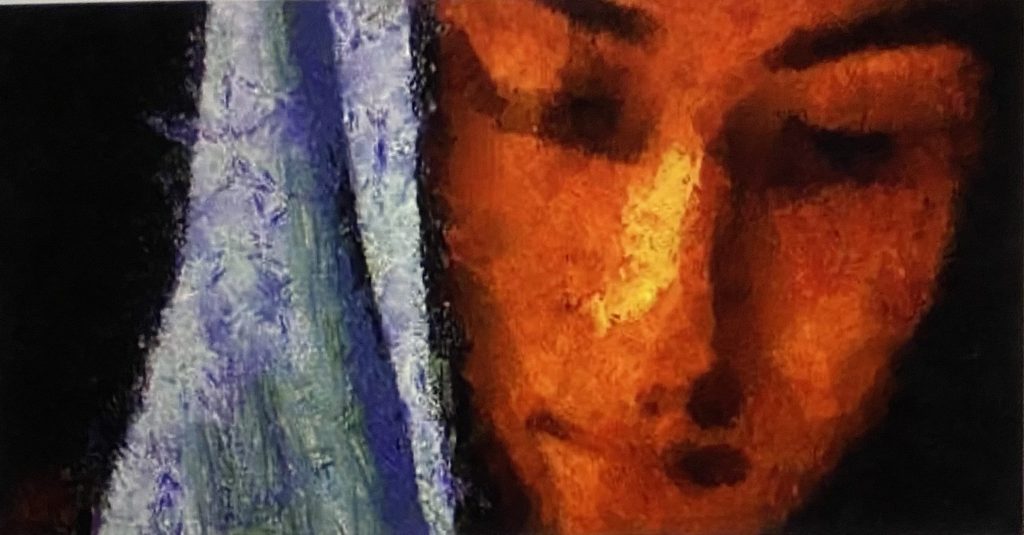
Painting: “The Annunciation” by Ossawa Tanner 

Lohfink, Gerhard. No Irrelevant Jesus: On Jesus and the Church Today. Collegeville, MN: Liturgical Press, 2014.
Link for the Mass readings for Saturday, December 20, 2025

Mary’s, “yes” brought joy to the world.

Mary said, “Behold, I am the handmaid of the Lord. May it be done to me according to your word.” Then the angel departed from her (Lk 1:38).

Whether this is the first or thousandth time we have read or heard this verse, the more important question for us is how many times have we said to God, “May it be done to me according to your word”? How would it be for us to begin each day with this prayer and then at the end of the day reflect on how well we have heard and answered yes to God’s will?

Mary’s “yes” changed the course of human history. Her willingness to bear the Son of God allowed him to come close. He entered our wounded, human condition to offer us healing, forgiveness, and to lead us home to communion with his Father and each other. Jesus is the gift that keeps giving – and we receive his gift each time we, as did Mary, say “yes” to him. When we do so, we become less, as he becomes more, and the kingdom of God continues to expand.

Along with Mary, the “yes” that we make is not a one-time, “yes,” but we are to affirm a daily, moment by moment “yes”. As St Paul wrote to the Church of Thessalonica, we are to: “Rejoice always. Pray without ceasing” (1 Thessalonians 16-17). We are able to rejoice always and pray without ceasing when we say, “yes,” to God by developing and sustaining our relationship with him such that even when we experience pain, suffering, and struggles, we are not overcome or overwhelmed. When we allow Jesus to be close, we can even feel joy in the midst of them. He does not abandon us to random fate. He is our source, our refuge, and our strength, present to us in all that we experience.

Our prayers of petition for ourselves and intercession for others are another “yes” to God’s will because they are an “admission of one’s own helplessness” (Lohfink 2014, 240). Prayer is a, “no,” to pride. We cannot get through this life on our own, nor are we meant to for apart from God we can do nothing. We are all interconnected and interdependent and God is the foundation and source of our very being, and with God all things are possible.

Our willingness to ask for help and to help others are also practical ways of saying “yes” to God. There is no such thing as a “Lone Ranger Christian”. Even the Lone Ranger had Tonto. Two by two, just as Jesus sent his disciples. Prayer is a “yes” to our acknowledgment that we need Jesus to guide and help us, also to save us from ourselves! Service is a “yes” to the love we have received from him and a willingness to share this love with and receive it from others.

We are to rejoice as we are readying to begin this fourth week of Advent because we draw ever closer to celebrating the birth of Jesus who is Emmanuel, God with us. May we have the grace to experience his love in our time of meditation, prayer and serving one another. This reality was made possible by the handmaid of the Lord.


Photo: May we say with Mary, “May it be done to me according to your word” and rejoice! Accessed from Our Lady Help of Christians Catholic Church.

Lohfink, Gerhard. No Irrelevant Jesus: On Jesus and the Church Today. Collegeville, MN: Liturgical Press, 2014.

Link for the Mass readings for Friday, December 20, 2024

Will we say, “Yes” and play our part as Mary did?

Why are we celebrating the Solemnity of the Ascension today, April 8? Typically, this special day is celebrated on March 25, nine months before December 25. The only time that is interrupted is when March 25 comes on Palm Sunday, Holy Week, or during the Easter Octave. In that case, we celebrate this solemnity on the first Monday after the second Sunday of Easter. Now, back to our regularly scheduled program and our Gospel from Luke.

Gabriel, an arch-angel, a messenger of God, a spiritual being, interacts with a human being; though Mary is not the first one to experience such an encounter. There are personal encounters with God and his messengers throughout the Bible. This is how the God of Israel, the God of Jesus Christ acts, person to person, through invitation, either directly himself or indirectly through one of his angels.

We can read such encounters going back to Genesis. God invited Abraham to be the father of a people that God would call to be his own. This reality would come to be with the birth of Isaac, while Sarah was well past child-bearing years. Jacob would wrestle all night with an angel and become the father of the twelve tribes of Israel, during the time of the Judges the mother of Sampson and Hannah, the mother of Samuel, both barren women would encounter angels bearing the message that each would give birth to those who would grow to lead the people Israel in their time of need. Moses, the judges, David, and the prophets all would hear and answer God’s invitation. Zechariah had an encounter in the temple and his wife Elizabeth, also barren and older, would give birth to John the Baptist. God has communicated and reached out to his created beings in history, in time, and in specific places.

With Mary, this announcement and encounter was different, for, at this appointed time, the Son of God himself would become, while remaining fully divine, a human being in the womb of Mary. The God who is. Period. Full stop. He is not a being, not a human, or even a supreme being. Infinite Act of Existence, the Sheer Act of to Be, who took on flesh and dwelt among his created beings. This is the message that Mary receives, and we can understand why she might be “troubled”. Yet Mary, the model of discipleship, pondered what this might mean as Gabriel said to her:

“Do not be afraid, Mary, for you have found favor with God” (Lk 1:30).

Mary, who knew the arc of salvation history, as briefly sketched above, knew of the encounters God had with his people, her ancestors. She knew of the promised Messiah who would be the bridge between heaven and earth, the old and the new covenant, between a people lost and a people found. Mary in her fiat, her saying yes, would bear the Messiah become Theotokos, the God-bearer.

This is why we celebrate this feast each year: The Son of God has been born to us because Mary said yes. Yet, her yes is not in isolation. It is made possible by so many who had gone before her. Joachim and Anna, Mary’s parents who provided care and guidance, as well as the many named above and not named throughout the Biblical tradition who said yes to God and played a part in making this moment possible. Mary is not alone in the Annunciation, not alone in this definitive moment. This is the distinctive feature of Judaism and Christianity: We cannot save ourselves. We are not God. Our very life as created beings is a gift from God and we are in need of constant help and support from God and one another (cf. Lohfink, 254).

God invites us, today as we celebrate the Solemnity of the Annunciation, as well as every day to ponder, to wonder, to be still, and to be in awe. The Son of God, the Second Person of the Trinity, loves us so much more than we can ever imagine no matter what. He was willing to be conceived in the womb of Mary to become one with us to save us. Us, you who are reading this at this moment, me who is writing this, and each unique person taking a breath on this earth.

No matter how much we have messed up, no matter how distant we may feel from him, no matter how confused, overwhelmed, disillusioned, Jesus is present for and with us. The question is not whether we are worthy, for none of us are, the question is, “Are we willing?”

Are we willing to play our unique part in the ongoing drama of salvation history? Mary’s answer to this invitation was: “Behold, I am the handmaid of the Lord. May it be done to me according to your word” (Lk 1:38). This is her definitive yes. The Holy Spirit helped Mary and will help us as we place our trust in him. What will our response be?
——————————————

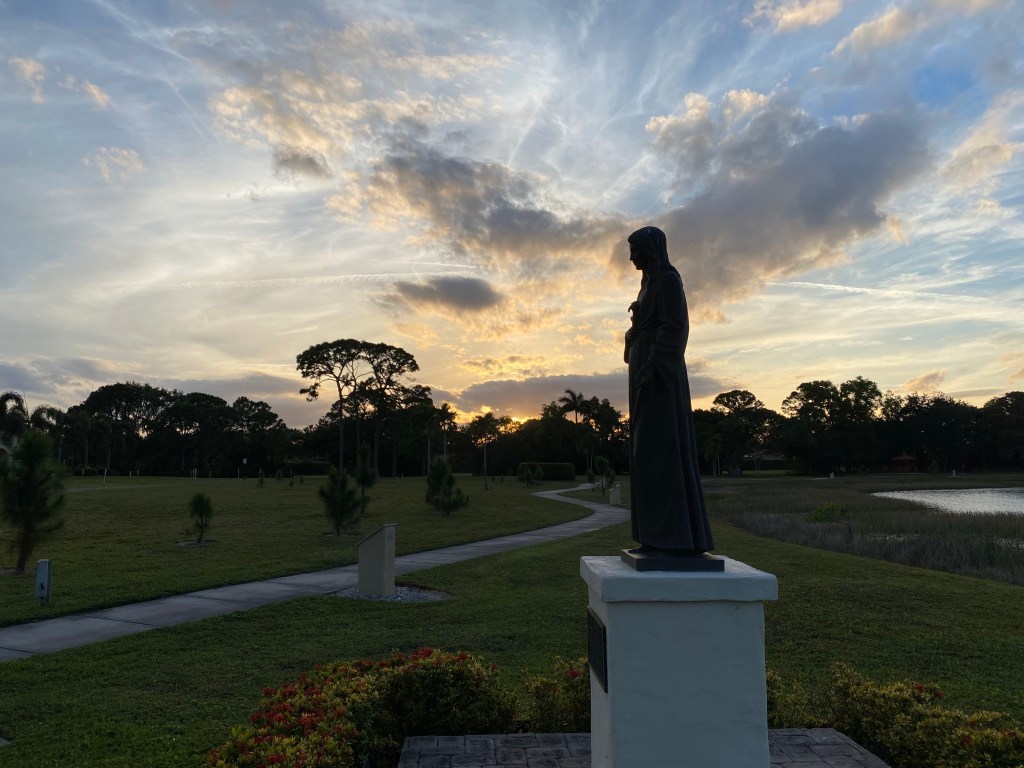
Photo: Enjoying some time of pondering, praying, and surrendering on my Rosary walk, St. Vincent de Paul Regional Seminary, Boynton Beach, FL. 

Lohfink, Gerhard. No Irrelevant Jesus: On Jesus and the Church Today. Collegeville, MN: Liturgical Press, 2014.

Link for today’s readings for Wednesday, April 8, 2024