“Martha, Martha, you are anxious and worried about many things. There is need of only one thing. Mary has chosen the better part and it will not be taken from her” (Lk 10:41-42).
My wife, JoAnn, and I used to have more than a few spirited discussions on this Gospel passage each time that it arose because, at first reading, it appears that Jesus does not show any empathy or regard for Martha’s gift of hospitality nor for all the work that she is doing, she who was “burdened with much serving”. All the men are sitting around listening to Jesus, and Mary… she is doing the same, and who is left to do all the work? Martha.
Blessed to serve as a permanent deacon for ten years, I saw my own, as well as other deacon’s wives, carry extra weight and burdens in support on the home front to allow their husbands the time to serve. Many of us also still held full time jobs. Not only deacon’s wives, this reality is also true for many wives who are full-time homemakers, run in-home businesses, or carry a job outside the home, as well as care for the children, overseeing the bills, the day to day grind. They too may find themselves, feeling under-appreciated, undervalued, not respected for all they do, and “burdened with much serving”.
Husbands can do a better job of being present, more patient, respectful, and attentive to their wives and be more of an equal partner on the journey. There are challenges of being overwhelmed being single as well. Not having someone to help out to share the load, especially as we age. Our mortality, married or single, is a little closer on the horizon.
The point Jesus is making, that he makes throughout the Gospels, is to put God first, then family, work, and our unique vocation. The expression of that is going to be different for each station in life. There will be more time constraints for parents of infants. No matter how little time we may have, setting time aside to pray daily, to allow time to as Mary did, sit at the feet of Jesus and receive his nourishing word, rest and receive his love, and confer with him our challenges to receive his guidance is so important. Doing so, will then help us to properly order the chaos of our day as well as feel peace even in the mundane. The more we can “choose the better part”, we will find that time we did not think we had and Jesus will help our lives to be properly ordered.
This short account acknowledges the reality of how much we all juggle with in all ages. There is much to do and much to be done. Jesus was not disregarding Martha’s hospitality. Especially in the Gospel of Luke, there are many instances in which Jesus empowers women so far beyond the cultural reality of his time. We read this as we do any biblical account from our twenty-first-century mindset. Contextually, the men sitting at the teacher’s feet in a different room, the women cooking, and most times eating separately were commonplace for those in the ancient near east of the first century AD. Mary was the only person out of step with the times.
The interpretive key to understanding this account is what Jesus said. He pointed out that Martha was “anxious and worried about many things.” Mary could have been one of those worries, and not so much that Mary wasn’t helping in the kitchen, but because she was breaking the social norm of sitting with the men. When Martha calls Jesus to redirect Mary, she probably expects him to support her plea. Yet, Jesus acknowledges that: “There is need of only one thing. Mary has chosen the better part and it will not be taken from her” (Luke 10:42).
Mary, sitting and having her primary focus on Jesus was the posture of a disciple. Jesus was not only allowing her to do so, he was commending her for doing so. I can visualize Martha being taken aback at first, but then slowly feeling the muscles in her face relax as the lightbulb went on. We don’t know. But could Martha in that moment have experienced peace, that peace that surpasses all understanding, such that the anxiety and worry left her? Feeling the peace instead of fear, she too like Mary approached Jesus as Mary had done. Did Martha then take her apron off, throw it to the side, and sit down next to her sister and also become his disciple?
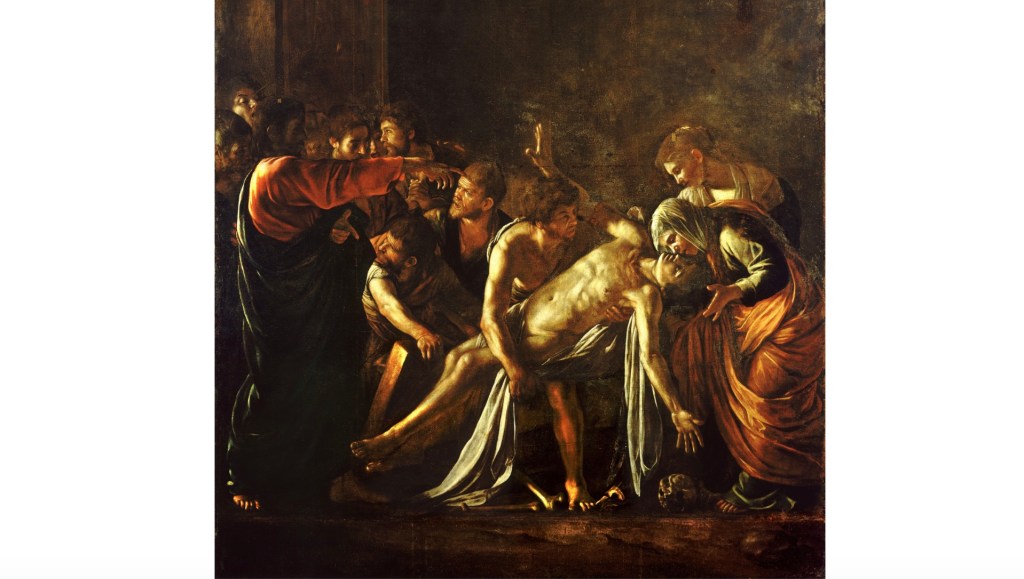
There is biblical evidence that beyond the Twelve, Martha, Mary, and Lazarus, were Jesus’ friends. When Jesus came four days after the death of Lazarus, as soon as Martha heard Jesus was outside, she, not Mary, came immediately out to Jesus, and in that exchange, it was Martha who made the claim that Jesus was the Messiah, the Son of God (cf Jn 11:27). Would she have had this insight, the same as Peter, if she was still holding a grudge from this encounter?
Our modern reaction and push back to this Martha and Mary account in Luke may not so much be a reflection on Jesus but how poorly men have treated women over the generations and how poorly women continue to be treated even today. No matter their ages, young, old, and everywhere in between, women are human beings created in the image of God. No one has the right to abuse, demean, disparage, devalue, or exploit any woman. Women are to be appreciated, heard, respected, cherished, and valued. Jesus showed that truth time and again, especially in the Gospel of Luke.
God has given each of us gifts to participate in his Father’s plan. May we resist the temptation to fear coming close to Jesus and taking time out to sit at his feet, to engage in mental maelstroms, to be “anxious and worried about many things.” Instead, when we experience the beginning tremors of any stress or strain, catch the effective movement, stop, breathe, be still and rest in Jesus’ presence as Mary, and hopefully Martha, did.
In Jesus’ presence, we will feel safe and can then share with him what is going on and hopefully be able to identify the source of the anxiety, share it with him and receive his love and consolation. Entering into this dance with Jesus of bringing him all that comes our way from within and without will help us to better know Jesus, his voice, and his teaching, know and follow his will, love others as he loves us, and live our lives respecting, encouraging, and supporting one another with the gifts and guidance that God has given us.
When we choose the better part of sitting at Jesus’ feet before making a decision, we can experience less chaos and more of his peace and guidance. Instead of living in a perpetual state of chronic stress and anxiety, being “worried and anxious about many things”,we can instead choose to breathe, rest, receive and abide in God’s love. Then from that place of stillness, like Mary, and I believe Martha, instead of reacting, we can make a choice based on God’s guidance.
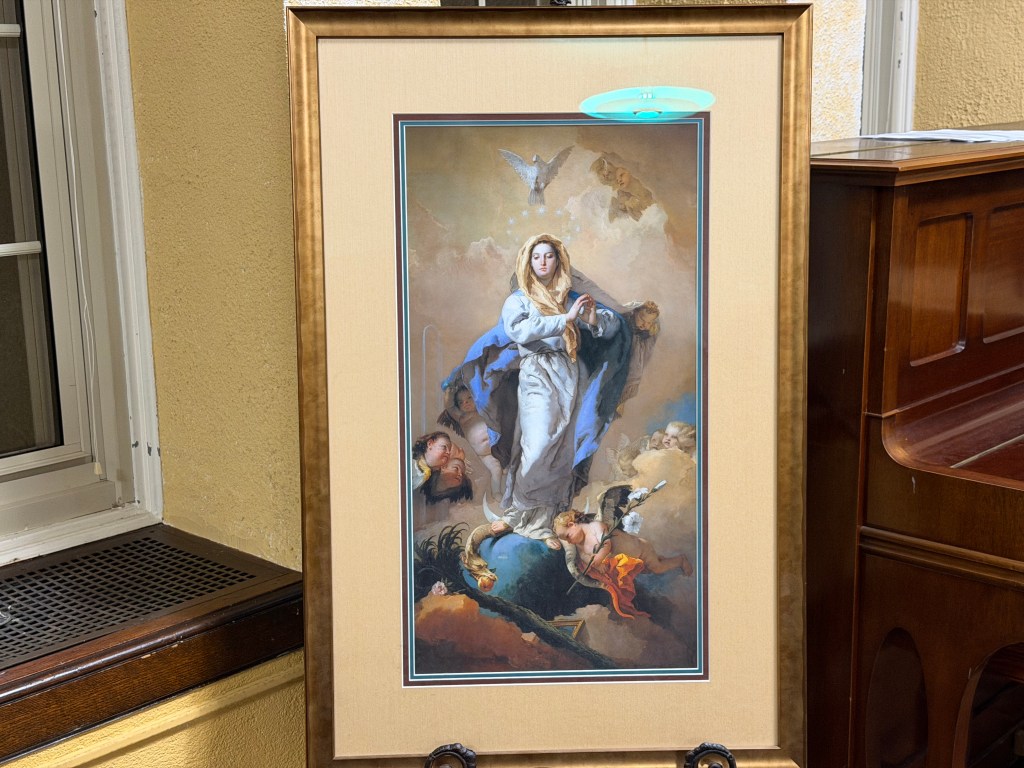
Photo: Mary, Jesus’ mother, was the premier disciple for she “pondered” the mysteries she experienced with Jesus “in her heart” (Luke 2:19) and “heard the word of God and observed it” (Luke 11:28).