“No. He will be called John.”

Zechariah had not spoken since the time he encountered the angel Gabriel. Gabriel shared with Zechariah that his wife Elizabeth, though barren and past childbearing age, would give birth to a son and his name would be called John. The time for the fulfillment of Gabriel’s prediction had now come to pass, Elizabeth gave birth, and with friends and relatives gathered around on the eighth day for his circumcision and naming. Elizabeth announced that her son will be named John. Those with her balked, “There is no one among your relatives who has this name” (Lk 1:61).

There may also be some hesitancy because John, or יוֹחָנָן, Yôḥanan in Hebrew, means one who is graced by God. Who did Elizabeth think she was naming her son by this sacred name? They then appealed to Zechariah. He supported his wife by writing on a tablet that “John is his name.” Zechariah confirmed Elizabeth’s words and: “Immediately his mouth was opened, his tongue freed, and he spoke blessing God” (Lk 1:63-64).

Filled with the Holy Spirit, Zechariah spoke what we call today the Benedictus or Canticle of Zechariah, the beginning lines of which read: “Blessed be the Lord, the God of Israel; for he has come to his people and set them free. He has raised up for us a mighty Savior, born of the house of his servant David” (Lk 1:68-69).

Zechariah did not proclaim that John was the Messiah. As Christians, we believe that Micah prophesied that John was to be the herald of the Messiah. He prepared the way for the coming of the Lord. The Benedictus, like the Magnificat, is a song of great promise. This is why the Church proclaims that they are to be prayed every day in the recitation of the Book of Christian Prayer or the Liturgy of the Hours. We are living in the time of its fulfillment.

The year 2025 A.D. does not stand for after the death of Jesus, it stands for anno domini, in the year of our Lord. We live in the in between times of Jesus’ first coming as we prepare for his next coming. We live in great joy because we can prepare to receive Jesus everyday. This is why St. Paul wrote to the Philippians, we are “to rejoice always.” No matter the external circumstances or internal angst, our Lord Jesus the Christ, the Son of the living God is at hand. Jesus has come to forgive, heal, accompany and deliver, give us guidance and strength. Jesus has come to save us!

In the midst of continuing violence, war, polarization, endless forms and acts of dehumanization, fear, and growing anxiety, we will celebrate again this Thursday. We will celebrate Christmas, the reality that the Son of God agreed to draw close to us. To become human, to die, and conquer death so that he can be with us and lead us into eternity. John helped to prepare the way to receive Jesus by calling people to repentance. May we seek his intercession as we prepare well in these final days of Advent so to better remember and celebrate again the reason for the season. Our Savior has come. Sin, suffering, and death no longer have the final answer. Jesus does.

May we heed the call of John and Jesus to repent so that we may be freed from our entanglements with sin, receive God’s forgiveness, and so better experience his grace and love. May we let go of anything that separates us from our relationship with God and resist the temptation to curve in upon ourselves which leads us to death. Let us turn away from our pride and the false promise of self sufficiency and instead depend upon and place our trust in Jesus who offers us eternal life. Each and every day, with the courage of John, let us prepare the way of the Lord and “give people knowledge of salvation” that Jesus is at hand so that God may “guide our feet into the way of peace.”


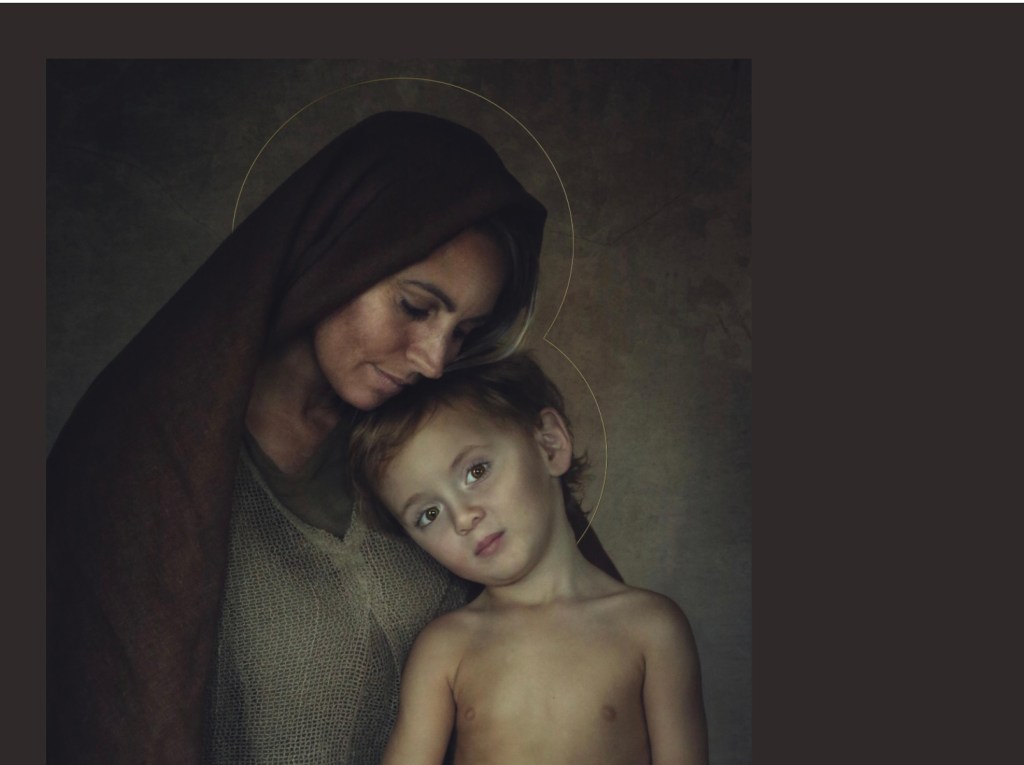
Photo: St. Elizabeth and John the Baptist by Krysten Brown, The Saints Project

Link for the Mass readings for Tuesday, December 23, 2025

May we awaken each morning seeking to decrease so God may increase in our lives.

“So this joy of mine has been made complete. He must increase; I must decrease.”(Jn 3:29b-30).

How could John be feeling joy with decrease? This is counter to what many aspire to in our country. Aren’t we supposed to obtain more, be more popular, and not rest on our laurels if we are to be happy? If our end goal is, fame or honor, wealth, power, and/or pleasure, then yes, that would be true. But John is giving us an insight here about what brings us real joy.

True joy comes from within when we have found our meaning and purpose in life, our mission. John was clear about his mission. John came to prepare the way of the Lord. He experienced this from the time when he leaped in the womb when Mary first arrived to see Elizabeth. From that moment, he was preparing the way for Jesus and continued to do so into his adult life. He was not distracted by how many people he was or was not baptizing, but instead was focused on preparing people to be ready for the coming of the “Lamb of God, who takes away the sins of the world” (Jn 1:29).

John was not threatened by Jesus as was Herod, he is overjoyed that the time of fulfillment had come. What John had been called to do by God he had been doing. The reality that Jesus increased and John decreased brought John joy because this was the fulfillment of his mission. How many of us get to experience the fruits of our labor?

If we want to be happy, experience joy, and be fulfilled in our life, then following the lead of John the Baptist is a pretty good way to start. I do not necessarily mean selling off everything, moving to the wilderness, and subsisting on a staple of locusts and honey. The important point is that John cultivated a relationship with God. He came to know his voice, was open to his direction, acted on God’s leading, because he was clear of the part he was to play in salvation history.

Each and every one of us come to know our mission, our specific role to play in God’s plan when we slow down daily, pray, spend time reading and meditating on his word. We  become consciously aware of the relationship God is inviting us to participate in. As we do so, we will better experience the Holy Spirit who “impels us to open the doors and go forth to proclaim and bear witness to the good news of the Gospel, to communicate the joy of faith, the encounter with Christ. The Holy Spirit is the soul of mission” (Francis 2014, 48).

I have been blessed to have been instilled with a sense of mission during my days with the Franciscans in my early twenties, my twenty-three years of marriage to JoAnn, and my twenty-five plus years teaching. Each of these as well as all of my other experiences have prepared me well for this next chapter of my life serving as a priest. The key practice that has helped me during each step along this path has been to ask God what he wanted me to do, to trust in his guidance, and follow him.

When we make the time to listen, we will hear and begin to recognize the voice of Jesus in the silence of our hearts, we will better discern where we are placing our time and energy, and will be better able to discern what and who we have placed before God as idols and let them go. When we are willing to have eyes to see and ears to hear, we will see where God is inviting us through his creation, our experiences, and relationships. As we step out of our comfort zones and risk, follow the lead of the Holy Spirit, and are willing to allow Jesus to increase within us, he will not only confirm for us but provide for us the means to accomplish our mission.

—————————————————————————–

Photo by Josh Sorenson from Pexels

Pope Francis. The Church of Mercy: A Vision for the Church. Chicago: Loyola Press, 2014

Link for the Mass readings for Saturday, January 11, 2024

“Come and you will see.”

After hearing John the Baptist point out Jesus as the Lamb of God, Andrew and another disciple of John seem to understand the meaning of what John means. The two follow Jesus as he walks by them. Jesus senses they are behind him. He stops, faces them, and asks, “What are you looking for?”

Their response to the question, “Rabbi” (which translated means Teacher) “where are you staying?” (Jn 1:38), is odd. Unless we understand that, in fact, the two disciples of John did not grasp the full relevance of John calling Jesus the Lamb of God after all. They related to Jesus, from the context of what they knew, their default position. They were approaching his as a rabbi, a teacher. Most rabbis of the time would have a place where they would gather their disciples and teach them. Another thought is that they did not want to come right out and say, “Jesus, are you the Messiah?”, there was some doubt, so they went with addressing him as rabbi.

Jesus said: “Come and you will see” (Jn 1:39). Andrew and the disciple then spent the day with Jesus and that made all the difference. If Andrew had any doubt before, it was now gone. We do not know what he experienced with Jesus in their time together, but the first thing that Andrew does is go and tell Simon, his brother, that he had found the Messiah, the Anointed, the Christ! There was no hesitation. He wanted to share what he had seen and experienced. Most likely as we hear time and again in the Gospels, Andrew witnessed some or all of these examples: the blind saw, the deaf heard, the lame walked, the possessed were exorcised, sins were forgiven, and Jesus taught with authority.

May we place ourselves in this scene of the Gospel today and follow the finger of John the Baptist who points over to this man walking ahead of us at a pretty good clip. As we turn to follow, the brightness of the morning sun catches our eyes. We squint, look down, and lose him for a moment, but take a few steps to keep pace. We hear the crunch of the stone and sand under our sandals and as we look up again to see how far ahead of us Jesus is, and then we notice he is standing still only a few feet away. He is smiling, his eyes are inviting as is his question: “What are you looking for” (Jn 1:38).

Stay with the scene. How do you answer, and what happens next? Allow your imagination and senses to come alive. Place your self in this moment with Jesus. Be aware of any emotions or thoughts that arise. This is not just a mind game. Jesus experienced this scene himself in full and living color. He was there, and when we meditate on Scripture, we pray with the words we read, and ask the Holy Spirit to guide us, we can enter into the memory of Jesus. If we are willing to come and see, as Andrew and the other disciple were, Jesus will lead us as well. Allow yourself some time with Jesus today as Andrew did and let God happen.

————————————————————————————-

Photo: Let us be willing to follow Jesus, the way, the truth, and the life. Photo accessed online from housemixblog.com

Link for the Mass readings for Saturday, January 4, 2024

Are we willing to decrease so that Jesus may increase in our lives?

John the Baptist shared that he must decrease, and Jesus must increase. He had the humility and foresight that he was preparing the way for the Lord and he himself was not him. These words of John came in the last verse before today’s Gospel verses begin. There is no clear indication who then is continuing the verses read in today’s Gospel. Were they the continuing words of John the Baptist, Jesus himself, or the author of John.

The author is not as important as the words that describe Jesus as the one who “comes from above” and the one who “comes from heaven is above all”; this one “testifies to what he has seen and heard” and he is sent by God to speak “the words of God”; he is also generous in that he “does not ration the gift of the Spirit”; and the Son is loved by the Father and God “has given everything over to him”.

Each of these phrases point to the truth that Jesus is the Son of God who has come from above, he has come to reveal the truth about the Father, and is able to do so because he has seen and has an infinite relationship with him. He preaches the Gospel, the Good News, that God loves us, that he seeks and has always sought, to be in communion with us, his created beings and help us to grow in our communion with the Father as well. Jesus has come to reveal the Love of the Father and that his love is unlimited.

The proclamation that Jesus is the Messiah, is not just revealed in the Gospel of John, but each of the three other Gospels, Matthew, Mark, and Luke, as well as the epistles. Jesus, as the Son of God, is also the key to unlocking the Hebrew Scriptures, and we can see how the Torah, the Prophets, and the Writings all point to Jesus as well. Jesus shared this outline of salvation history with Cleopas and the other disciple on the road to Emmaus, such that their hearts were burning within them while Jesus spoke and opened the scriptures to them (cf. Lk 24:32).

John the Baptist gets it and that is why he is willing to pass on the baton of his ministry. Jesus is the Son of the Living God, and John offers the model for us to follow when he shared with his disciples: “He must increase; I must decrease” (Jn 3:30).

I invite you to spend some time in quiet reflection today by pondering the phrases that arise from John’s Gospel regarding the truth of who Jesus is. Pick one that calls to you and carry it with you through the day.

“The one who comes from above is above all.”
“The one who comes from heaven is above all.”
“He testifies to what he has seen and heard.”

“For the one whom God sent speaks the words of God.”
“He does not ration his gift of the Spirit.”
“The Father loves the Son and has given everything over to him.”

Do we “accept his testimony” and “certify that God is trustworthy”? If we “accept his testimony”, are we willing to decrease, such that he will increase his influence in our lives. Do we believe that Jesus is the Christ, the Son of the Living God?


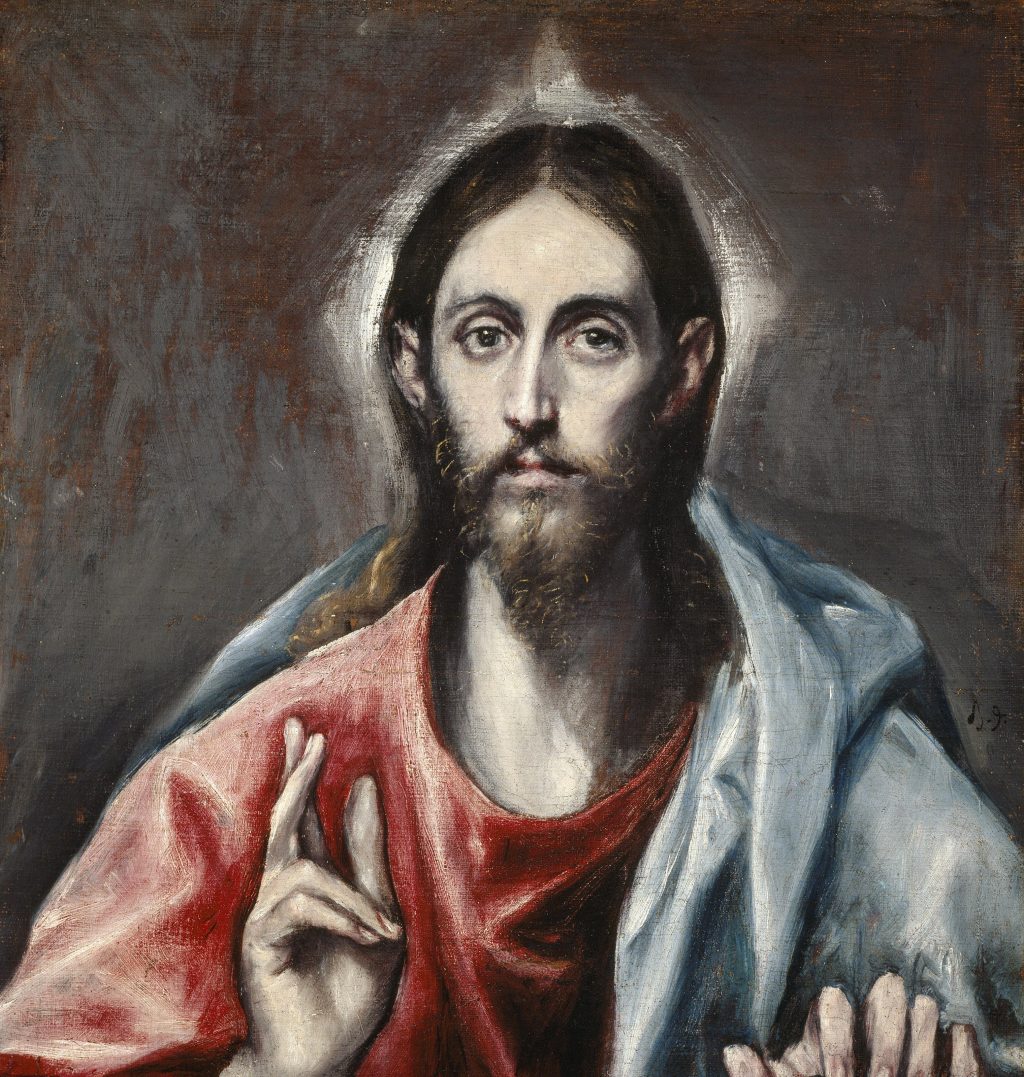
Painting: Christ Blessing (‘The Savior of the World’), by El Greco, 1600

Link for the Mass readings for Thursday, April 11, 2024

With Jesus, each day is a new beginning.

There are a handful of incidents in today’s Gospel reading from John that refer back to encounters Jesus had with his Apostles before his death and resurrection. Jesus waits on the shore as seven of his disciples; Peter, Thomas, Nathanael, James, John, and two others, return from a night of fishing. This is reminiscent of when Jesus first came to Andrew and Simon, James, and John as they were casting and mending nets and he invited them to follow him.

The disciples are on their way back to shore with their nets empty, and Jesus suggests that they cast their net over the right side, and they quickly find that they “were not able to pull it in because of the number of fish.” Peter had this experience in one of his first encounters with Jesus when he had been fishing all night and Jesus encouraged him to put out into the deep water, and that time they were able to fill two boats with fish.

After their great catch “of one hundred fifty-three large fish,” John told Peter that the Lord was the one who had instructed them. Just as when Jesus approached his disciples that night walking on the stormy waters, Peter jumped out of the boat and walked on water until he took his eyes off Jesus and began to sink. Peter again “jumped into the sea.” Did he walk on water all the way to shore this time? And when Peter and the disciples came to shore “they saw a charcoal fire.” The most recent event with another charcoal fire was outside the gate where Jesus was led for his judgment. To keep warm Peter joined the servants and slaves huddled around a charcoal fire. It was at that charcoal fire that Peter denied Jesus. The final scene in today’s account was when Jesus offered cooked fish and bread to his disciples, this is reminiscent of Jesus feeding the five thousand with two loaves and a few fish.

Throughout our lives, we will have encounters with people and experience incidents that we have experienced before. We may not have been as present as we may have wanted to be when attempting to comfort someone, we may have given in to temptation we regretted, we may have been involved in some task and made a mistake, or as Peter had done gone against our better instincts, as he had denied Jesus three times at that charcoal fire. Peter wept when he heard the cock crow. The sound brought back Jesus’ prediction, brought to light Peter’s own denial and cowardice. How many times must he have berated himself, how many times have we done so when we have sinned, fallen short of our goals, or made mistakes?

Making mistakes and taking risks, are necessary for learning and growing in any endeavor in life. Jesus does not want us to beat ourselves up when we fall short, fail, nor even when we sin. What is required for maturation is an honest assessment of the situation, an acknowledgment of our mistakes and sins, a healthy sense of guilt but not a turning in upon ourselves and steeping in our own guilt. Once we have recognized what we have done or have failed to do, we then repent, correct our mistakes, confess, and make the proper adjustments. Often, we overcompensate in the beginning, but as we remain persistent and seek God’s help and guidance, we will reach a healthy balance.

Jesus returns to be with his disciples after his resurrection, he meets them in very similar settings as he had before his death. All of his disciples failed him. Jesus did not condemn, but instead forgave them. Jesus showed them how far they had come since he first called them, while at the same time helped them to see how far they still had to go to. Jesus is not only their teacher but the divine source of their own transformation.

Jesus has risen, he is new life, he appeared to his disciples to guide, encourage, and empower them to be who God called them to be. Jesus offers us the same access to the wellspring of his humanity and divinity. Our repentance and Jesus’ forgiveness go beyond helping us to become better people. Through the love of Jesus, we are invited to experience a new beginning each day. When we are willing to surrender to him, participate in the sacraments, and pray, our minds, hearts, and souls will change, we will be redeemed, transformed, and conformed to Jesus and share more in his life. Good news to not only share in word but in deed. Alleluia!!!

————————————————-

Photo credit: While on my evening Rosary walk, a new bloom of Bermuda Buttercups. In Jesus’ name, may this day be a new beginning for us as well! St. Vincent de Paul Regional Seminar, Boynton Beach, FL.

Link for the Mass readings for Friday, April 5, 2024


Spend some time with Jesus.

In our gospel readings, over the past few days we have experienced Jesus’ initial encounters with who will become his apostles. Andrew encountered Jesus and was moved by his experience during their time together and then went to tell his brother Peter about Jesus.

Today, Philip is found by Jesus, and Jesus asks Philip to follow him. Apparently, he does, and something happens because in the next scene Philip has found Nathaniel and shared with him: “We have found the one about whom Moses wrote in the law, and also the prophets, Jesus, son of Joseph, from Nazareth.”

Nathanael hesitates as he first hears this news. What pulls him up short, even though Philip has just shared with him that Jesus is the one who is to fulfill the promise of Moses, is where Jesus is from as revealed when he asks, “Can anything good come from Nazareth?”

The Pharisees also resisted believing in Jesus because of where he was from. Despite Nathanael’s hesitancy, he trusted Philip enough to “come and see.” Unlike many of the Pharisees, when Nathanael heard Jesus say that he had already seen him under the fig tree before they met, Nathanael let go of his prejudgment and believed.

Through the Apostles who came, saw, and believed, Jesus began his Church. As they came to know Jesus, like Nathanael, each had to let go of preconceptions that limited their understandings of Jesus. Also, their limitations as finite human beings held them back. Through their trust and belief, and commitment, they deepened their relationship with Jesus, and they were transformed, made new.

Jesus met them where they were in those first encounters, and slowly but surely, with fits and starts, missteps and misunderstandings, they grew and matured. Jesus has found and calls us as well.

Like his Apostles and those who continued and continue to follow Jesus through each generation since then, we too can come and see. We can see and experience him in his word alive in Sacred Scripture, personally in our time of daily prayer and meditation, as well as proclaimed during the Mass. We can encounter him intimately and are transformed by him in the Eucharist and the sacraments. We encounter him in our serving and love of one another and in our sharing of the experiences we had with him as Andrew and Philip did.

Jesus has come to be with you right now in this moment. He has found you just as he found Philip. I invite you to read today’s gospel passage slowly (John 1:43-51). You can read once or a few times, and then slow and deepen your breath, close your eyes, and allow yourself to enter the scene you just read.

Allow yourself to enter Jesus’ memory, invite him to lead you as you walk up to stand by Philip and Nathanael. Spend some time in silence with Jesus now. See Jesus turn his face from them and look to you. Is there anything or any thoughts that may be causing you to hesitate as did Nathanael? What does Jesus say to you? How do you respond? What happens next? Do you stay with Philip and Nathanael, or does Jesus lead you off to the side to talk? This time is for you and him to spend together, to get to know one another better. These questions are only guides to get you going. You can use some or all, or disregard some or all. Trust in Jesus, he will lead you. Enjoy!


Photo: Last night’s Rosary walk, Egret Landing, Jupiter, FL.

Link for the Mass readings for Thursday, January 5, 2023