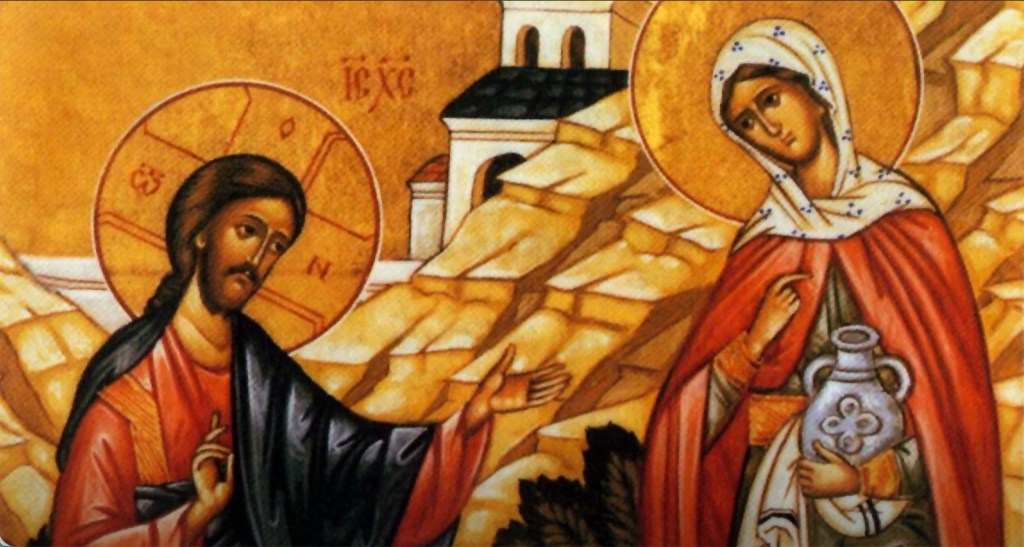
“You have heard what I said… But I say to you…”

“Do not think that I have come to abolish the law or the prophets. I have come not to abolish but to fulfill” (Mt 5:17). Jesus then went on to teach what he meant by that statement by following up with his six antitheses. Four of which are covered in today’s reading.

Upon first reading, Jesus may appear to be opposing, this is why these statements are labeled antitheses, the teachings passed down generation after generation from Moses. Jesus is doing no such thing. He is digging deeper to expose the root of each condition. As he himself said, he has not come to abolish the law and the prophets, the Hebrew sacred scrolls, he has come to fulfill them and give them deeper context and meaning.

When Jesus recounts Moses’ prohibition against killing, he follows up by stating that we are not to give in to the temptation of anger or lashing out with derogatory words. By being more intentional with our words and less reactive, we have a better chance of making more sound and rational statements. When we are more conscious of our thoughts and think them through before letting them lose, we are more apt to respect the dignity of the person we are speaking with as well as ourselves. We are also less likely to unleash our anger or lash out with harsh words. Doing both, will help us not to escalate to physical violence. Something we are very much in need of in our time.

Jesus then addressed the prohibition against committing adultery. Not only are we not to have sexual relations with someone else’s spouse, but we are also to resist the temptation of thinking about anyone in any lustful way. Again, Jesus is lifting up the dignity of the person. People are not to be objectified and lessened to mere carnal objects of satisfaction through our actions or our thoughts.

Now in both cases above, Jesus is not saying the we are robots. We will get angry, we will experience attractions, neither which are bad nor what Jesus is asking us to resist. With each emotion, we are to experience them. They are not to have free reign and to be disordered. Instead as we experience each, we bring them to Jesus with a prayerful pause or period so to properly order them to the will of his Father. Anger properly channeled can lead to healthy fraternal correction and attraction can lead to a chaste and blessed friendship.

Such a friendship can then blossom into marriage. Jesus, upholds the dignity and sacredness of marriage, recognizing that this is to be a covenantal relationship. There were some prescriptions for dismissing a wife in ancient Israel considered to be valid just because the wife had cooked a bad meal. Jesus recognized that the reality of a bill of divorce, especially for the women in his time, placed them in a very precarious position economically as well as socially. Not to mention the toll that the rupture of the relationship could cause. Women, without any means to support themselves, would seek to remarry or sought prostitution. Often their families would not take them in to care for them.

This is why Jesus stated that “whoever divorces his wife – unless the marriage is unlawful – causes her to commit adultery and whoever marries a divorced woman commits adultery” (Matthew 5:32). A bill of divorce in this time is not equivalent to the civil divorce of our time. The couple was still considered married. Moses made an allowance for a bill of divorce, because of the hardness of men’s hearts and to protect women from abuse. In the most egregious of cases, men would kill their wives to marry another.

Jesus is holding up the dignity and sacredness of marriage which is a sacrificial gift of love between husband and wife, with the openness to bring forth life into the world. The Church continues to follow Jesus’ teaching today, considering marriage, even in the event of a civil divorce as valid until proved differently. Thus a declaration of nullity granted is not considered Catholic divorce, nor if one is issued does the ruling consider the children of the marriage illegitimate. God brings about a greater good, even from marriages that he did not bring together. The good in this circumstance can be the children.

One more antithesis presented in today’s account was the value of giving our word. What we say reveals something about our character. We are to resist saying what is expedient in the moment, as well as swearing false oaths to justify false claims. Instead, Jesus commands us to be honest and truthful in each situation such that our “‘Yes’ mean ‘Yes,’ and [our] ‘No’ mean ‘No'” (Mt 5:37). If we are telling the truth, there is no need to make an oath. We speak the truth and stand on the truth.

In each of the four antitheses that we read about today, resisting not only murder but also anger and unleashing dehumanizing words, not only committing adultery but also remaining chaste in mind and heart, being faithful in marriage which is a unbreakable covenant, and being true to our word, Jesus calls his disciples to a higher standard. This is just as true for us today.

The light of Jesus reveals to us the darkness of our survival and fight or flight instincts. By slowing down, stepping out of the constant noise and business, we can resist the disordered affections and baser temptations of our fallen nature. This begins in our thoughts. For if we choose to be more aware of and intentional in engaging with our interior lives, our thoughts and emotions, begin to breathe into and experience them instead of deny or not pay attention to them, we will become less reactive and impulsive. We then stand a much better chance of thinking and speaking about and acting better toward one another.

Unfortunately, the effects when we don’t can be devastating, dehumanizing, and isolating. We can see results of not following God’s laws and its destabilizing effects all too often in our culture and society. Lowering the bar of these foundational principles is not the answer. We need not separate ourselves from the commands of Jesus, but yolk ourselves to him, and then we can heal and move closer to putting into practice his teachings. The sprouts of our words and actions spring forth from the seeds of our thoughts, for good or for ill.

Practicing the teachings of Jesus begins by acknowledging the value and relevance of them. We need to resolve with a deeper commitment and firmer intent to be more careful in what we feed our thoughts, words, and actions with, while at the same time understanding that on our own we will fall short. God is God and we are not. We need the support of the Holy Spirit as well as the support and accountability of others. Aligned with Jesus, trusted family and friends, we too can fulfill the law and the prophets, by fulfilling the way of love Jesus calls us to aspire to, and will become more human in the process.


Photo: Jesus can make the antithesis statements, “You have heard that it was said” relating to the Hebrew Scriptures, and then, “But I say to you…”, expanding the teaching of the law and the prophets by his own authority because he is the Son of God come to save us.

Link for the Mass readings for Sunday, February 15, 2026


“What God has joined together, no human being must separate.”

“But from the beginning of creation, ‘God made them male and female. For this reason a man shall leave his father and mother and be joined to his wife, and the two shall become one flesh.’ So they are no longer two but one flesh.Therefore what God has joined together, no human being must separate” (Mk 10:6-9).

With this response, Jesus clarified the original plan of God from the beginning. Divorce, along with death and sin, was never part of God’s plan. God promotes unity, life, and truth.

God is a perfect communion of three Persons existing as one through their infinite self-gift to one another. While at the same time, each are distinct in their relation to one another. The Father is not the Son, the Son is not the Holy Spirit, the Holy Spirit is not the Father, each are distinct while at the same time they are one because of their infinite self-giving and receiving.

The Sacrament of Marriage is to be a finite expression of the reality of the infinite communion of the Holy Trinity. The Father, through infinite, self-sacrificial love, gives all that he is, holding nothing back of himself to the Son. The Son receives perfectly all that the Father has given and returns infinitely all that he has received to the Father holding nothing back. The Holy Spirit is the infinite love shared between the Father and the Son. 

Man and woman have been created in the image and likeness of God to do the same. When a man and a woman are brought together by God, “they are no longer two but one flesh.” The husband and wife are to also be a self-gift and offer sacrificial love to one another as do the three Persons of the Trinity. In each giving of themselves to one another and becoming one flesh in the marital act, there is an openness to a third person, born of the love shared in their union, a child. 

Jesus, did not come to abolish the law and the prophets, he came to restore and fulfill the truth of what God intended from the beginning. He does so here again with his teaching on marriage. As with many, if not most, of his teachings they can seem impossible to put into practice. not only in his time, but in ours where about fifty percent of marriages end in divorce. 

There are many reasons divorces come about, the scope of which is beyond what I can explore here. What we can do though is not lose hope and meditate upon a key phrase that Jesus offered, “What God has joined together, no human must separate.”

When we live and make our decisions apart from God’s will, we miss the mark. This is true with marriages as well. Many whose marriages do not last may not do so because they were not ordained by God. There were false or non compatible reasons the couple may not have seen or were unwilling to address early on. There also may be marriages in which God has led the pair to come together, although they did not build their marriage on God as their center and foundation, nor sought his help to persevere. 

When a marriage ends, there may be grounds for an annulment, which is not a Catholic divorce. The Church presumes a marriage is valid until proven otherwise. The annulment process looks at whether the marriage was valid at the outset and if proven not to be, there is an opportunity for healing and a new beginning, in which the individuals are free to marry. Another often misunderstood point is that if an annulment is granted, the children of this union are still considered legitimate.

The Sacrament of Matrimony is a wonderful gift and with Jesus as the center of the marriage there is the possibility for a faithful, indissoluble covenant that is open to procreation. As with any of the teachings of Jesus in this fallen world, marriage is hard but well worth the effort. Marriage is still possible when the husband and wife seek to put Jesus first in their lives, seek his help and guidance daily, pray individually and together, communicate, see as God sees not as man sees, and are willing to grow together, love and sacrifice for one another.


Photo: Very blessed and thankful that God brought JoAnn and me together and that we enjoyed 23 years of marriage. This time together has also helped me to become a better priest.

Link for the Mass readings for Friday, February 28, 2024

The indissoluble union of the sacrament of Matrimony is to mirror the loving union of the Trinity.

The Pharisees approached Jesus and asked, “Is it lawful for a husband to divorce his wife?” They were testing him (Mark 10:2).

Among the Pharisees, there were different schools that arose from following the teachings of their rabbis. They sought how best to interpret the Torah, the Law or Teachings of Moses. Allowance for divorce was one of those debates. A stricter interpretation was found by the school of Shammai, in which he taught that the only grounds for divorce was infidelity. On the other end of the spectrum fell the school of Hillel which found that a man could divorce his wife if he felt she cooked a bad meal or with the school of Akiva, a divorce was permissible if the man found another woman more attractive.

The Pharisees that were approaching Jesus were not really looking for him to wade into the debate and get his insight. As Mark wrote, “They were testing him.” They were seeking to divide his support just as they would do in a few chapters when they asked whether it was permissible to pay the Roman tax. In both cases, they thought they had a good plan to trap Jesus and gain support against him. If he assented to paying taxes to Rome, the Jews would surely turn against him and if he said not to pay the tax, the Pharisees could turn him in to the centurions for going against Caesar. Jesus turned their question on its head when he said to pay to Caesar what belonged to Caesar and to God what belonged to God (Mark 12:14-17).

Jesus refused to take the bait with divorce as well. Instead of picking one of the Pharisaical school’s interpretations, Jesus did what he did when tempted by the devil in the desert. Jesus referred to the source, the Torah, and went back to the beginning in Genesis. God instituted marriage to be indissoluble for “what God has joined together, no human being must separate” (Mark 10:9).

Jesus also clarified that Moses allowed for the provision of divorce because of the hardness of the people’s hearts. Moses made such provisions to help to prevent a worse tragedy, such as a husband killing his wife so he could remarry.

When pressed further by his disciples afterward, Jesus did not water down his point, he instead remained on target and put both husbands and wives on the same standing. Husbands who divorce their wives and remarry as well as wives who divorce their husbands and remarry both committed adultery. Then as if on cue people bring their children to be blessed. The disciples attempt to turn them away, and Jesus said, “Let the children come to me, do not prevent them, for the kingdom of God belongs to such as these.”

Jesus seeks to restore the sacredness of marriage that God set in place so that we might be free to fulfill God’s plan for us to be in relationship with him and one another. Marriage as a monogamous and indissoluble union mirrors in the physical realm what the Trinity and divine communion of Father, Son, and the Holy Spirit reveal in the heavenly realm.

God the Father gives all that he is to the Son holding nothing back. The Son returns all that he has received from the Father, holding nothing back. This infinite exchange between the Father and the Son is the Holy Spirit, the love shared between them. In marriage, “a man shall leave his father and mother and be joined to his wife, and the two shall become one flesh.” In this union, there is the possibility of a third. The child that is conceived between the love and sacrifice shared between the husband and the wife.

This side of heaven, life and relationships are messy, they are not perfect, and unfortunately, relationships rupture. There are many reasons for this, there is much pain and suffering in those relationships that end in divorce or an annulment. Even so, Jesus will remain faithful to the Church, his bride. Just as Eve was “built” out of the rib of Adam, the Church was built out of the water and blood that flowed from the side of Jesus.

Jesus gave his life for his bride, and he will always remain faithful, and he will not lower the bar for his expectations of Marriage. Nor ought we settle for anything less. We remain faithful ourselves when we seek his help. Let us not give up on marriage, the gift of children, or each other.

Jesus’ teachings on marriage as well as the others that we have been receiving this summer are challenging. Many of us may feel that we cannot measure up, that they are too hard. When we feel this way, we are not to give up or to seek concessions. We are to trust in and seek help from Jesus.

Apart from him, we cannot fulfill what Jesus calls us to do, but with him, all things are possible. His teachings are hard, only because we are far from him. As we trust and rely on him and not ourselves alone, we come closer to his outstretched arms awaiting to embrace us. Jesus helps us to understand the truth of God’s divine laws, he gives us the grace to fulfill them, forgives us when we fall short, and encourages us to begin again.

This is why Jesus taught that we are to be like children. We must place all our trust and depend on God the Father, just as Jesus does. When we are willing to follow God’s guidance as his children and are willing to place our trust and total dependence on him, when we let go of what he reveals to us to be untrue, when we renounce the distortions of the father of lies who seeks only to divide, disrupt, and destroy us, we will inherit the kingdom of God. This is our birth rite and who we have been created to be, let us not lose it. We have been created to be in an intimate communion with God and one another. Let us not settle for anything less.


Photo: Jesus brought us together, and helped us to grow closer to him and to each other.

Link for the Mass readings for Sunday, October 6, 2024