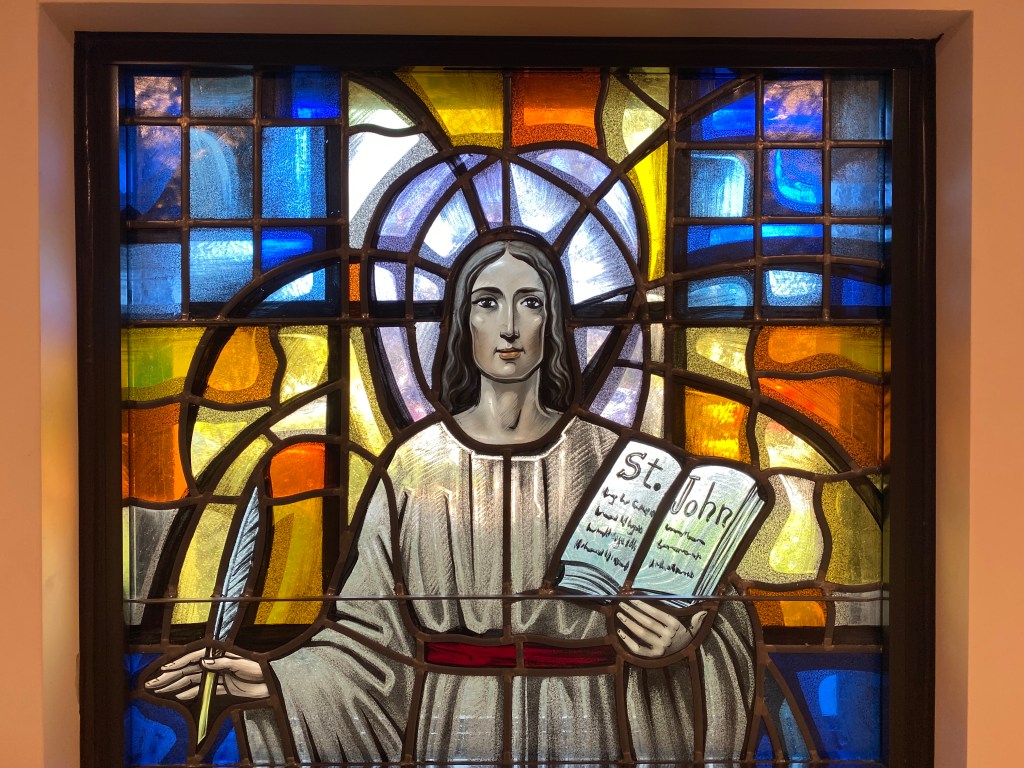
Jesus taught John, the Our Father. John taught it, and it has been learned and prayed in every generation since.

Jesus begins his teaching on prayer by stating that prayer is not babbling. We are to resist just saying empty words that have no meaning or worse just praying in words that we think God wants us to hear. Prayer is to come from our hearts. We are to share honestly what we truly think and feel in the moment that we turn our hearts and minds up to God.

Prayer, first and foremost, is a response to the Holy Spirit moving within us, urging us to pray, “for we do not know how to pray as we ought” (cf. Romans 8:26). It is helpful to trust that invitation and allow ourselves to be in his presence in the chaos as well as in the joys in our lives. If we are upset with God, it is important to get in touch with that feeling and share that emotion with him. As we do so and get it out, it is just as important to be still and remain for a time, and listen for God’s response. To vent and walk away or tune God out is not helpful or giving him the opportunity to provide healing.

Even if we do walk away from him, our Father will not walk away from us. He will be there ready and willing to accompany us when we are ready to return, share again, and are willing to be still and listen. A good example of this type of open and honest prayer from the heart will be found in reading the psalms. They cover the full range of our human emotions as well as expressions of prayers of blessing, petition, intercession, thanksgiving, and praise. We will even come across one like Psalm 88, which may not appeal to us at the moment, as it is such a psalm of despair, yet someone, somewhere, might be feeling that prayer. If we read it and find as we do so that we don’t relate to it, we can pray it for others who may be experiencing those emotions.

In our Gospel today, we read Matthew’s familiar version of the Lord’s Prayer or the Our Father. It presents two ways to pray. First, it is a rote prayer that we memorize word for word. The blessing of a rote prayer is that we can pray it in communion with others, as we all know the same words. Another important gift of rote prayers is that we can pray them when we are physically in pain or emotionally distraught when we feel we can’t pray.

Jesus taught his disciples this prayer and it has been prayed daily since then up to and including this moment. That is an amazing reality, that we can pray today the same prayer that Jesus taught his disciples (Different language, yes, but the same prayer.). It is a prayer we can lean on to give us strength through the storms of our lives. Praying the Our Father gives us the words to speak when we have none to begin with, and by loosening our tongues, we can come to a place where we can speak more freely with God, who as Jesus shares is our Father, and experience the peace of his presence.

The Lord’s Prayer is also a model of prayer such that each word or phrase can be a starting point to enter into a deeper and loving dialogue. There are seven petitions throughout and as with the ten commandments have a similar pattern in that the first three petitions are directed toward our relationship with God. The next four have to do with our relationship with others. As an example, we begin with the words, “Our Father.” This is a reminder that God is the Father of us all and the beginning of all prayer. His sun shines on the good and the bad alike. Our prayer begins by putting our self in his presence and recognizing that we are all interconnected.

God, our Father, is with us even when we experience fear, sorrow, feel forgotten, misunderstood, or alone. We just need to remember to turn to him. Our every desire to pray is already a prayer because we are responding to his invitation to spend time exclusively with him. In turning to him, we experience that he is always present and he hasn’t forsaken us. He provides our daily bread and forgives us as we forgive others. God also rejoices with us, for the joy of God is the human being fully alive!

Carve out some time today to pray the Our Father s-l-o-w-l-y. Take some slow and deliberate breaths, five seconds in and five out. Allow whatever is going on in your life to enter into the recitation and remember that the best dialogue allows each party involved to spend some time listening to the other. As St Mother Teresa taught, “God speaks in the silence of our hearts.”

By pausing, being still, and not rushing these words, and then listening silently at the end of the verbal prayer, we can enter into that time of quiet to be still and listen. Doing so we will experience his love for us, better know our Father, his will, and begin to experience his peace and rest. Learning to listen to God who we can’t see might also help us to listen to each other who we can see.

—————————————————————

Photo: Jesus taught John the apostle the Our Father. It worked out pretty well for him, may we follow his lead!

Link for the Mass readings for Tuesday, February 24, 2026

When we pray, the “Our Father”, may we lift our hearts and minds to our Father.

The disciples asked Jesus to teach them to pray and he shared with them the prayer we know as the “Our Father” or “The Lord’s Prayer”. This version from Luke is a bit different than the version from Matthew that we are used to. Praying with different words can help us to be more attentive and mindful. We also need to be careful when we pray to resist the temptation to only say words and forget that the words we are praying are directed to a Person, in this case, Our Father.

This very prayer was given to the Apostles, who passed it on, and it has continued to be prayed and passed on generation after generation such that we have received the “Our Father” again in this moment!

God’s word is alive. It touches our hearts and minds, and reaches each of us in our own unique moments of sorrow, challenges, and desolations, as well as our successes, joys, and consolations. Another good point to remember when approaching prayer is to resist the temptation to change God. Instead, let us allow him to transform us by his loving embrace.

I invite you to give yourself some time now to slowly and prayerfully pray this prayer again. Pay attention to each word, meditate upon them, direct them to, and spend some quiet time with our Father.

“Father, hallowed be your name,
your Kingdom come.
Give us each day our daily bread
and forgive us our sins
for we ourselves forgive everyone in debt to us,
and do not subject us to the final test” (Luke 11:2-4).


Photo: Some quiet time in prayer before being blessed to celebrate the Sacrament of Matrimony with a special couple at St. John of the Cross Catholic Church this past Saturday.

Link for the Mass readings for Wednesday, October 8, 2025

Praying the Our Father helps us to stay connected and close to Jesus!

Today we return to Jesus’ teaching that he is the vine, and we are the branches. The key points of this teaching are that apart from Jesus we can do nothing, and all things are possible when we stay connected to him!

The goal for us then as disciples of Jesus is to stay connected to Jesus. One way that can help is the Our Father or Lord’s prayer. This is the prayer that Jesus taught his apostles when they asked him to teach them to pray, and since that day when he taught them, generation after generation, up to and including this moment, this prayer has been prayed!

Rote prayers are powerful, but they can also lose their punch if we are not attentive to what we are saying. One helpful way to revisit the Lord’s Prayer is to do so from the perspective of allowing it to help us to see how these words can come alive in our meditation and help us to grow in our relationship with Jesus and stay connected to him.

Our Father, who art in heaven, hallowed be thy name…

These first words help us to get in touch with the reality that God is God, and we are not. We are his created beings. God is completely transcendent and beyond us while at the same time intimately close in that we can have a relationship with him. This happens not because of anything we can do, for God is so beyond our comprehension that we will never be able to comprehend him. We can grow our relationship with God because he has made us in his image and likeness, he comes close to us, most especially in the sending of his Son to be human with us so that we can be divine like him. God is so far beyond us as infinite, yet as St. Augustine taught, closer to us than we are to ourselves.

Thy kingdom come, thy will be done on earth as it is in heaven…

We remain close to Jesus and so with our Father and experience the love of the Holy Spirit as we grow in relationship with him, trust him, and follow his guidance. We need to resist the temptation of going it alone, thinking we know better than God, and not including him in our discernment. His kingdom is made more present when we collaborate with him, when we follow his will so that what is practiced in heaven, intimacy with God, will happen on earth. In following the will of God to love as Jesus loves us, we take care of one another, empower and challenge one another, and will each other’s good.

Give us this day our daily bread…

When we trust God, he will not only provide for our needs, but he will also provide himself in the Eucharist. We can get no closer than consuming his Son whom he sent. We are divinized, made like God as we consume the Body and Blood of Jesus. Our regular participation in the Mass transforms us, strengthens us, and unites us. Heaven and earth become one during the celebration of the Mass!

And forgive us our trespasses as we forgive those who trespass against us…

Forgiveness we do not do well, but it is a powerful way to unite, a powerful way to heal and grow in our relationship with God and one another. When we have the humility to seek forgiveness and forgive, we experience healing and maturation. We free ourselves from hate and division because we resist the temptation of curving in upon ourselves and perpetuating the hurt that has been committed. We can choose instead to trust in God and collaborate with him to bring about healing and transformation.

Lead us not into temptation but deliver us from evil…

God does not tempt us, but he does allow us to be tempted. He loves us so much that he is willing to risk that we will choose someone or something over him. Our closeness and intimacy with Jesus grow, when we trust and choose to be with him of our own free will. Each yes to Jesus, each moment we devote to him increases the love we receive and experience such that we will better see the lies, the false illusions, and the temptations of the enemy that lead us away from our Father.

The father of lies tempts us and condemns us when we fall. Our Father leads us gently with tender chords of love, forgives us even when we reject him, and never tires of forgiving us. He invites us to turn back to him, time and again, no matter how far we think that we have turned away. When we turn back to him, we will become aware that he is right there with his arms wide open waiting for us, to embrace us and love us more than we can ever imagine!

As we meditate on each part of the Our Father in this way, Jesus will offer each of us our own unique ways of remaining connected to him as a branch is to the vine, and so with trusting in Jesus, all things are possible.

Amen!


Photo: Praying in the adoration chapel of Our Lady of the Angels Cathedral, Los Angeles, CA back in 2019.

Link for the Mass readings for Wednesday, May 1, 2024

Allow the words of the Our Father to enkindle the fire of his love into your heart.

There is a creative power to God’s word. “In the beginning was the Word, and the Word was with God, and the Word was God” (John 1:1). God’s word is alive and present to all of us. And as Isaiah conveys in today’s first reading, God’s word “shall not return to me void, but shall do my will, achieving the end for which I sent it” (Isaiah 55:11).

This happened most profoundly in time when “the Word became flesh and dwelt among us” (John 1:14). God the Father through the overshadowing of the Holy Spirit and the ascent of Mary’s will, sent his Son to be human while remaining fully divine. Jesus lived, suffered, died, conquered death, rose again, and ascended into heaven bringing our humanity through his humanity back to the Father. God’s Word achieved the end for which he was sent, that salvation of the world!

God’s word, the Holy Spirit, and Jesus are still alive and active today. The gift of the Bible is that the story of salvation is there for us to experience. The Bible is not just a compilation of dead letters on a series of pages to be gathering dust. These words are most alive when they are proclaimed at Mass and read, prayed and meditated upon within our own time of prayer, and put into action in our daily lives.

God still speaks to us today through his living word when we make the time to listen and hear him speak in the silence of our hearts. In today’s Gospel, Jesus teaches us how to pray by sharing the words of the Our Father or the Lord’s Prayer. This is the same prayer that he taught his Apostles and has been prayed ever since then each and every day over the past two thousand years.

If you have been wanting to learn to pray and meditate with the Bible and haven’t been sure where to begin, the Our Father is a great place to start. Settle into a quiet place, take some deep breathes, and let the words come off the page and land on your lips. This can be silently or aloud. Read or recite slowly God’s word given to us by the Word, the Son of God, Jesus.

If you know these words well, resist the temptation to fly through them without a second thought. Say each word slowly, allow the mystery of God’s love to enfold you, allow Our Father to embrace you. The same Father who is in heaven, whose name is hallowed, holy. The God and creator of all that exists who is so far beyond our comprehension, while at the same time closer to us than we are to ourselves.

Contemplate on the wonderful truth that he wants us to be a part of his kingdom now and forever. God wants his will and our will to align as one so that we can be collaborators with him in creation so that we can put into practice what God guides us to on earth as it is in heaven. For heaven is the intimate communion with our loving God and Father that he seeks, and we have been created for.

We can then ask him for our daily bread, that which we need each day, most of all his Word among us made present again on Catholic altars throughout the world. Jesus, the Bread of Life, who we can consume and become transformed.

One of the most powerful transformations comes when we are forgiven by God who never tires of forgiving us. May we not only never tire of asking for forgiveness but also be willing to forgive as we have been forgiven. Sin, which causes separation and death from God and each other, is healed and we are redeemed by God’s forgiveness. As we are forgiven, we then are to forgive others and so God’s love is made manifest on earth as it is in heaven.

And as we prepare for each day, may we seek God’s guidance so that we may know his will and resist the temptations, distractions, and diversions of the enemy. God does not tempt us and he can help us to resist temptation when we follow his light. We will then not only avoid evil, but in the name of Jesus cast it out.

I invite you to pray with the Our Father in a similar way allowing Jesus to speak to you through your mind and heart as you meditate on each word. You may find that you want to stay with one particular word or phrase that calls to you and not even finish the prayer. Allow the Holy Spirit to guide you where he wills. May you feel his peace, love, and joy arise from within you as you do so, and enjoy!


Photo: The tree tops reflecting the rays of the setting sun. May we do the same as we receive and reflect the light of the Son from our experience of Jesus in prayer!

Link for the Mass readings for Tuesday, February 19, 2024