
Our life can be an experience both of sadness and joy, desolation and consolation, doubt and hope. We can experience an ebb and flow where we suffer from trials and also celebrate triumphs. The key to living a life of faith is to seek God in either experiences. Jesus today provides an opportunity for Peter, James, and John, the inner circle of the Twelve, to experience an expression of his divinity for he was transfigured before them; his face shone like the sun and his clothes became white as light. (Mt 17:2). Jesus revealed his divine nature to his disciples in a powerful display to prepare them for the Passion that he was about to endure. The experience is also a foreshadowing of his Resurrection.
Jesus, in this living word proclaimed or read today, invites us to experience the Transfiguration, the Passion, and the Resurrection in our own lives. We can miss a transfigured moment when we assume a posture of pride, not acknowledging God’s leading by believing we achieved or arrived at our present station in life on our merits alone. We can experience moments of transfiguration when we acknowledge that God breaks into our lives at that moment when we need him most and recognize the assistance he has given us, and/or when he has revealed to us the path and direction we were to take. The natural response is to offer prayers of thanksgiving, recognizing that we don’t go it alone, that God and those he sends to help us are a tremendous support.
Jesus is also present in our desolations. Many of us run from our suffering, we are afraid of the Cross. But it is through the Cross that we come to experience the Resurrection. We may not be aware, but when we run away from our suffering, we are running away from Jesus who awaits us with arms wide open to embrace us; to comfort us, heal us, and transform us. To experience the embrace of Jesus, we need to be willing to face our suffering.
Jesus cares from the deep place of understanding in experiencing his own tremendous suffering. He in the Garden of Gethsemane sought another way than the Cross, he asked for the cup of his death to be taken away, but he chose his Father and his will. He obeyed and set his face firm and accepted the upcoming suffering and death. In doing so, he then was also to experience his Resurrection and Ascension. Jesus now in his glorified body can be there for all of us, to lead us through our sorrows and trials.
The older I get, the crucifix becomes more of a consolation. This icon of Jesus, his body broken, emptied out for us on the cross, represents how he entered the full range of our human condition. He assumed our sin, our anxiety, fear, and selfishness, and transformed the worst of our fallen nature through his love such that we are offered the opportunity to be forgiven and redeemed. The crucifix is not a sign of despair, but of hope and transfiguration, for it reminds us that no matter what we go through, what trial that we may be in the midst of at this very moment, Jesus understands and is present with us.
Looking and meditating upon Jesus on the Cross has provided me moments of transfiguration, granting me the courage that I did not have to face various conflicts, challenges, and trials, which has only increased in my first year and half as a priest. And in facing each challenge for myself as well as those I pray for, Jesus has been by my side. As he looks down from the cross he loves us despite our sins, our weaknesses, and failures and is willing to lead and accompany us through the ups and downs of life, so that we too may be renewed and transformed.
The transfiguration was for Peter, James, and John a preparation for the glory of Jesus’ crucifixion. Their experience strengthened them as they witnessed the horror of their teacher and friend’s death and the struggles they would face in their the ministry. May we spend some time mediating and praying with the words of today’s gospel, experience again the glory that Peter, James, and John did, and savor that gift. May we breathe in deep the radiant light of the Father shining through the clouds and experience the love of the Trinity so that we too may face with Jesus, what rises before us. All is grace, as long as we bring all we experience to Jesus, and follow his guidance.
________________________________________
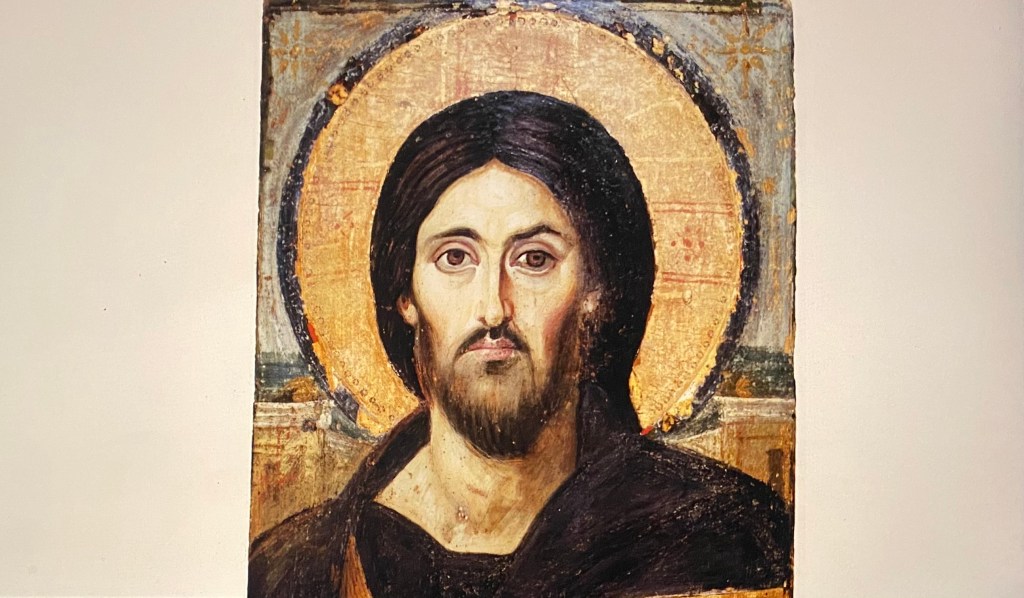
Photo: “This is my beloved Son, with whom I am well pleased; listen to him.”
Link for the Mass readings for Sunday, March 1, 2026

 Spiritual Stepping Stones