“Who are you” (Jn 1:19)? John did not claim or pretend to be something that he was not. He was clear to those leaders that arrived from Jerusalem to assess and questions him. John was clear of his place in serving God, about the mission and testimony or witness that God gave him to proclaim. John was not the messiah, he was preparing the way of the Lord. John shared that “there is one among you whom you do not recognize, the one who is coming after me, whose sandal strap I am not worthy to untie” (Jn 1:26-27). He, like Mary, did not point to himself but to Jesus.
The question also arose about who Jesus was. It was not only a question during his lifetime, but this query was also addressed during the early development of the Church’s Christology and still arises today. The readings of the Christmas Season, that we are still celebrating liturgically, in fact, all four Gospels, address the question of who Jesus is. As presented yesterday, in naming Mary, Theotokos, the God bearer, the Church was defining that Jesus was one divine person subsisting in two natures. In fact, the entirety of the Bible from Genesis to Revelation answers this question!
Just as the Jewish authorities asked John and Jesus who they were, people have continued to ask who Jesus is. The majority of the heresies that arose in the Church surrounded this question and those that do not know the history of these false beliefs and teachings may believe in them today and not know that they do.
From the account of the Mystery of the Annunciation (Luke 1:26-38), we recognize that at Jesus’ conception in the womb of Mary, Jesus remained fully divine while becoming fully human. He did not become the Christ at his baptism as the heresy of Adoptionism would propose. Nor was Jesus the most powerful, created being as the priest Arius would suggest in the third century. We counter the heresy of Arianism every Sunday when we recite in the Nicene Creed: “God from God, Light from Light, true God from true God, begotten not made, consubstantial with the Father; through him, all things were made.”
Arianism taught that Jesus was a created being, the highest of beings made by God, but created none the less. The Church teaches that Jesus is begotten not made. He was, is, and always will be God, the Second Person of the Trinity. He is God the Son, consubstantial, homoousios, which means of one and the same substance with God the Father. The Father and the Son are one in substance, yet distinct in their operation. The Father begets, the Son is begotten.
Adoptionism and Arianism are but two of the various early heresies that arose, of which Arianism gained more of a following. Arianism still rears its head today in practice as it did then because of those who are not able to accept that the divine could become human. This goes back to our starting question that was asked about John. “Who are you?”
A good question to answer for us ourselves. We are human beings created in the image and likeness of God, even though our likeness has been dimmed by sin. We are physical beings with a rational soul, we are invited to embrace the reality that we are human and through our participation in the life of Jesus, beginning with our baptism, we are adopted daughters and sons of God. Do we reject our humanity, our created status, trying to determine our own destiny on our own terms, to put ourselves in the place of God, or are we like John the Baptist, and acknowledge the gift of who we are and the mission God invites us to participate in?
As we continue to celebrate this Christmas Season (Yes, it is still Christmas!) and the new year that has just begun, may we embrace that each and everyone of us is a unique person, never created before nor will we ever be created again. Each of us has a particular vocation and part to play in building up of the reign of God. As we repent and turn away from sin, live our lives in accord and journey with Jesus, and as we, like Mary, hear, ponder, and observe the word of God (cf. Luke 11:28), we will come to know him and our purpose.
As we grow in our relationship, collaborate, and discern with Jesus each of our thoughts, words, and deeds, the smallest to the biggest, we to will be able to witness like John the Baptist. By our testimony, we too will prepare the hearts and minds of those we meet to encounter the forgiveness, mercy, and love of Jesus that we have experienced. Let us pray in these first days of the new year for a heart, mind, and soul that is open to following the love of the Holy Spirit so that we can know who we are, whose we are, the mission that the Father has given us, and begin to live it each day. Baby steps!
——————————————————————————————-
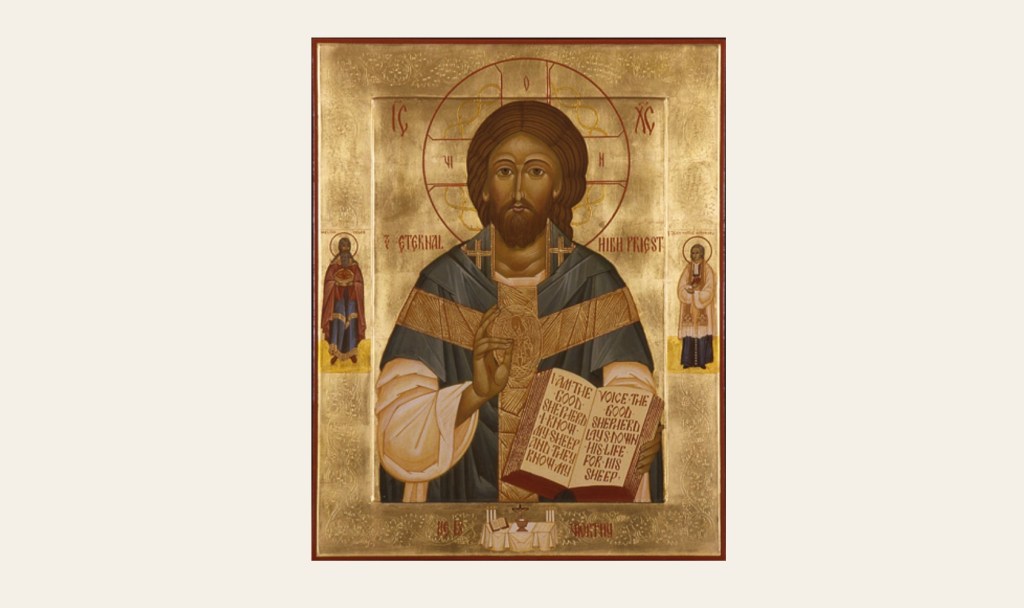
Photo: Icon of Christ the Great High Priest by Marek Czarnecki

 Spiritual Stepping Stones