“I have come not to bring peace but the sword.”

“Do not think that I have come to bring peace upon the earth. I have come to bring not peace but the sword” (Mt 10:34).

Seems to be odd words coming from the King of Peace! The reality of this statement though is the reality of his mission. Jesus entered the lives of individuals. Some said yes to following him and some said no; some saying yes and no within the same family. The image of the sword represents how sharp and stark this choice could and did cut.

During the time of Jesus and for most within the first generation of believers, there was not a lukewarm choice. You were either for Jesus or against Jesus. Being for Jesus also meant possibly dying for him. Jesus was either very dangerous because he was leading people to believe he was God, he was distorting the teaching of the Jewish faithful and leading people astray, he was just crazy, or he was who he said he was. These choices would have divided families and friends. As he continued to speak about those who would follow him, the choice did not become any clearer:“Whoever receives you receives me, and whoever receives me receives the one who sent me.”

Jesus spoke clearly that he was sent by God and if received that act would be the same as receiving his Father. Just prior to this statement, he said, “Whoever loves father or mother more than me is not worthy of me…” This also being true for brother, sister, husband or wife. These words would be shattering to those listening to him. What audacity to say follow him before even their own family and clan! Unless… Jesus is not just sent by God, but he is God himself in the flesh. If that be true, we must love him with all our hearts, minds, souls, and strength. If he is not God then those who opposed him were correct in calling him a blasphemer. The choice between family and friends around the table would be heated at best, unless everyone was in agreement either for or against.

When Jesus said, “I have come to bring not peace but the sword” (Mt 10:34), he meant that he and we as his disciples are not to settle for a false peace, a lethargic appeasement to just get along or to water down the Gospel message in the hope that others will receive it. Jesus demanded a choice. We are to decide whether or not we believe that Jesus is who he says he is. If he is God, then we must follow him and put his teachings into practice, as challenging as they are.

The good news is that Jesus, doing the will of his Father, draws close and gently leads us with his tender chords of love. Following Jesus and putting his teachings into practice, like taking up our cross and following him, is impossible without his help. He is also there to pick us up when we fall, if we are willing to accept his help. In sharing our faith, we do not carry a mallet and bludgeon others with the true, the good, and the beautiful. We share what we believe in the same way we have received it, through love, patience, compassion, and understanding. We put our faith into practice and share with those God brings into our lives, as well as our family and friends already present.

Allowing Jesus, to love us, we enter into the trinitarian communion of love as the Father’s beloved daughter or son. Experiencing his love helps us to detach from unhealthy attachments, disordered affections, and habitual temptations. No one and nothing else can truly feed our insatiable hunger and thirst. The love that we seek will be satiated by God alone. Living our faith in love will result in conflicts when we stand up for what we believe in, even with those closest to us. And yet, if we are to be free and are to have a chance of helping those who disagree, we must trust in and how the Holy Spirit guides us.


Woodcut: St Ignatius of Loyola surrendering his sword to Our Lady of Montserrat and renouncing his disordered affections, identity as a soldier, and courier of the Spanish court. He gave all for the love of Jesus.

Link for the Mass readings for Monday, July 13, 2026

Will we give to God his share? Will we receive his Son when he comes?

A foundational quality of a good leader, political or religious, would be that they seek the best interest of those they serve. Hopefully, they also seek to be good stewards. Unfortunately, self-interest is a tremendous temptation. For how long are they willing to approach the position as one who is willing to serve instead of being served? Another important attribute in a leader is their openness to critique and guidance when they are in need to hear it.

Jesus in today’s parable presents a landowner who turns his vineyard over to tenant farmers. They are to oversee the crops to bring about a productive yield of grapes come harvest time. A mutually decided upon part of the harvest would then be offered to the landowner. Unfortunately: “When vintage time drew near, he [the owner] sent his servants to the tenants to obtain his produce. But the tenants seized the servants and one they beat, another they killed, and a third they stoned” (Mt 21:34-35). Eventually, the owner sends his own son, and the tenants kill him.

Jesus offered this parable as a mirror to the “tenants” of his time, the chief priests and elders. The vineyard is an image used to represent Israel. Clearly, the owner is God, and the tenant farmers are those in leadership positions overseeing the care of Israel. We do not know which leaders hearing this parable took it to heart and changed their minds and repented from their self-centered focus. We do know that there were those who carried out exactly what Jesus laid out in the parable. They persecuted, beat, and killed the prophets, and would do the same to Jesus.

Jesus offered this parable hoping to soften the hearts of the leaders who were seeking to arrest him. He was hoping that they would repent, like Isaiah and the prophets had sought to influence the generations before him. Most of the leaders that Jesus shared this parable with unfortunately did not receive Jesus’ message, as was highlighted vividly when Jesus asked what the owner ought to do to with the wicked tenants. The chief priests and the elders did not show any mercy at all but instead, called for the death of the unfaithful tenant farmers. In refusing to repent and condemn those in the parable, they heaped punishment upon themselves.

Jesus said, “the kingdom of God will be taken from you and be given to a people that will produce its fruit.” The parable was not just for the chief priests and the elders, nor just for his disciples then, but also is for us today. All of us are stewards awaiting the return of the Son of the Land Owner. May we have eyes to see and ears to hear so that we may resist the temptation of the unfaithful tenant farmers. Let us not grasp at but instead receive and be grateful for what God has given us, resist the deadly sins of envy and greed, receive with hospitality his Son, and be generous as God is with us.

—————————————————————————————-

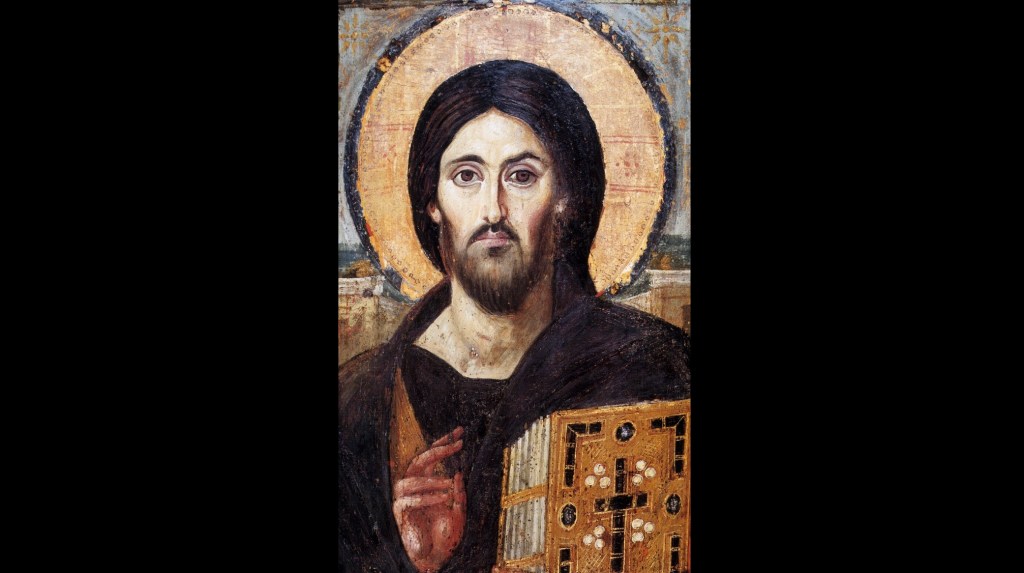
Photo: 6th century, Eastern Orthodox icon of Jesus. Grateful for his life, teachings, love, and guidance.

Link for the Mass readings for Friday, March 6, 2026

May we think, speak, and act as if Jesus was before us, because he is.

“[W]hat comes out of the man, that is what defiles him” (Mk 7:20).

Jesus offers a list in today’s gospel of what can be unleashed from within and then directed out toward another. These are examples of what defiles us because, at some level, we make the decision to think about, speak, and put into action those thoughts, words, and actions. Jesus is making a clear distinction that external things don’t defile or make a person unclean, “rather uncleanness comes from within, from the deep inner wellspring of a person’s words and actions” (Healy, 141).

To resist the temptation to defile ourselves and others, we can follow the lead of the writer from the letter to the Hebrews who offered a wonderful verse, which I pray each morning in my recitation of the Office: “Encourage each other daily while it is still today” (Hebrews 3:13). There are many that we will encounter or hear about each day that will do the exact opposite.

A valuable goal is to resist spending any time or energy supporting any thoughts, words, or actions that demean, belittle, or dehumanize. We can call those out who do so, stand up for those impoverished from these attacks who do not have a voice, but we must not succumb, engage, or in any way be lowered to the negativity unleashed. Otherwise, we become agents in perpetuating the same vileness and poison already unleashed.

Our thoughts, words, and actions matter because we are all interconnected, and even what we ruminate upon can be projected through our faces and directed out toward another without saying one word. Thoughts entertained can then lead to words and actions that deeply wound. Our thoughts can wound as well. We are better when we approach each moment accessing more intentional choices. Instead of reacting on automatic pilot, we can take a few, slow deep breaths, think, and pray about our response. If God is not calling us to think in some way, we renounce and resist speaking or acting upon it.

Let us choose to align our thoughts, words, and actions with those of Jesus. We can follow St Mother Teresa of Calcutta’s five-finger gospel as a reminder: “You-did-it-to-me.” What we say and do to the least of our brothers and sisters, we say and do to Jesus (cf. Mt 25:35-45). This begins when we resist defiling ourselves by never letting evil talk pass our lips and instead think, speak, and act in ways that empower, convict, and build up others. Our effort is strengthened when we choose to forgive any negativity hurled at us, and meet it with a posture of compassion that seeks to understand the perspective of the hurler. In our efforts, we are not alone when we call upon the help and strength of Jesus and strive to become ambassadors of his transforming love.

————————————————————————————————-

Photo: We become disciples of Jesus when we are willing to be transformed by his love and to live as he did and put into practice his teachings.

Link for the Mass readings for Wednesday, February 11, 2026

As Jesus heals us, may we help others to receive his healing.

“Whatever villages or towns or countryside he entered, they laid the sick in the marketplaces and begged him that they might touch only the tassel on his cloak; and as many as touched it were healed” (Mk 6:56).

The people of Jesus’ time were in need of healing, hungry to draw closer to God, often searching, wandering, and wounded. That some begged only to touch the tassel on his cloak is interesting. Had the story spread of the faith of the woman with the hemorrhage for twelve years who courageously reached out and touched the tassel of his cloak and was healed? Had the woman herself shared her story and inspired others who had all but lost hope to seek out Jesus?

Even though there was a lull in the momentum when Jesus’ healed only a few in his hometown, and Mark paused in his account to share the flashback of John the Baptist’s death, Jesus has not slowed and people continue to seek his healing. The apostles also have been sent to bring healing and with success. Though Jesus is not as visible to us as he was to those in the land of Gennesaret, he is just as present if not closer, especially in the sacraments, to us today. “Jesus is still the great Physician of our souls and bodies. In the power of the Holy Spirit he continues his work of healing and salvation through the Church, especially in the two sacraments of healing: Penance and the Anointing of the Sick” (Healy, 134).

Let us also not forget the gift of Jesus present in the Mass. After experiencing the word proclaimed at Mass as his disciples heard Jesus teach with authority, and then receiving his Body and Blood, we are not to go home as if nothing of any significance just happened. Jesus invites us to his banquet weekly, and daily, to encounter him so that in receiving his love and his presence, we may be transformed and go forth to bring Jesus who we have received to others. We are also to see Jesus present in others who are in need.

Pope Francis was asked in an interview by Fr. Antonio Spadaro, S.J., in 2013, “What does the church need most at this historic moment?” And Pope Francis answered, “that the thing the church needs most today is the ability to heal wounds and to warm the hearts of the faithful; it needs nearness, proximity. I see the church as a field hospital after battle.” We need to be “near”, in the same “proximity”, to bear Christ to one another: “The church sometimes has locked itself up in small things, in small-minded rules. The most important thing is the first proclamation: Jesus Christ has saved you. And the ministers of the church must be ministers of mercy above all.”

As in the time Jesus walked among the people of Galilee and they came to him seeking healing, we and so many are in need today. May we seek to breathe, receive, rest, and abide in God’s love, experience his healing, so that we may be then present, have compassion like Jesus and draw near to those who Jesus sends us. May we resist the temptation to keep others at a distance and refuse to be indifferent to the needs of those he brings to us in their time of need. May we too, in the words of Pope Francis, go out to “heal the wounds and to warm the hearts of the faithful” by being willing to accompany others in their sorrows, anxiety, trials, and tribulations.

We may be hurting and people are hurting. We are not called to fix others or their problems but to be present, to listen, to hear, and to allow the Holy Spirit to speak and love through us at the appropriate time, so that, in the end, we do not prevent people from encountering Jesus, but provide a means for them to encounter the divine Physician. Maybe we can be the tassel on the cloak of Jesus to help others to experience his healing.

—————————————————————————————————————

Photo: May we be Jesus to others and assist in his healing!

Healy, Mary. The Gospel of Mark. Grand Rapids: Baker Academic, 2008.

Spadaro, S.J., Antonio. “A Big Heart Open to God: An interview with Pope Francis”. America Magazine. September 30, 2013 Issue: https://www.americamagazine.org/faith/2013/09/30/big-heart-open-god-interview-pope-francis

Link for the Mass readings for Monday, February 9, 2025

Jesus summons, are we willing to follow?

Jesus went up the mountain and summoned those whom he wanted and they came to him (Mk 3:13).

Through the centuries mountains have been sites where people have gone to rise above their daily experiences, to rise above the clouds, where the air is crisper, cleaner. It is a means of gaining a new perspective, insight, transcending the human to touch the spiritual, and with the hope hearing the voice of God. When one of the Gospel writers inserts the detail that Jesus is present on a mountain, we can be prepared that something significant is going to happen.

In today’s Gospel of Mark, the good news revealed to us is that Jesus calls to himself the Twelve, the Apostles, to preach and cast out demons. They are to continue the ministry of Jesus. These are not perfect men, but each will have a part to play in salvation history. Jesus will entrust them with the deposit of faith that they are to protect, yes, but more so to proclaim by word and deed. Apostle means one who is sent.

Jesus will continue to call the Twelve to himself, to teach, mentor, model, and empower them so that they will continue his mission to call people to repent and believe in the Gospel. Even though, especially through the Gospel of Mark, it often looks as if Jesus may have made a mistake in his choice. The Twelve do not ever grasp who Jesus really is, and when Jesus needs them most, Judas will turn him over to the Temple guards, the others flee at his arrest, and Peter will publicly deny him three times. It will not be until after the Resurrection and Ascension that the seeds that Jesus had sown in them would begin to germinate, sprout, and bear fruit.

Just as Jesus called the Twelve. Bishops are the successors to the apostles and continue the apostolic succession we can see beginning is such lines of succession as with Jesus, John, Polycarp, and Irenaeus. The ordering of the names of Apostles that Mark shows this early hierarchy. Peter is first, James and John to follow. These three become the inner circle and participate in each of the significant events of Jesus’ public ministry. Andrew with his brother Peter were the first to be called. The other we can see in the reading round out the number of twelve. Jesus is showing that he is preparing the leadership for a new Israel.

We are called in our own unique way as well to be his disciples in union with the Bishop of Rome and our local ordinary. Each generation must experience and embrace the deposit of faith that has been given to us and pass it on to the next. Are we perfect, no. Do we have doubts, fears, weaknesses, yes. Does God call us and love us anyway? Yes. Like each Apostle, we are to go out and proclaim the good news that Jesus is our Lord! We do this daily with our words, faces, and actions. We are to think, look, speak, and act in ways that are kind, empowering, uplifting, and convicting while at the same time resisting the temptation to fix others. We are to strive to bear witness, be present, accompany and guide one another.

We all have much on our plate, some of us to overflowing. We may be thinking I cannot possibly do one more thing. Start small by bringing God into whatever we are already doing. He will give us the tools and accompany us as we seek to fulfill his will. As did the Apostles, we will make mistakes, make false starts, trip, fall, sin, and deny opportunities to reach out to be a witness. When we commit any or all of the above, resist beating ourselves up, learn from the experience, lean into Jesus, and prepare better for the next apostolic opportunity.

Jesus went up the mountain to pray. We are to make time each day to do the same. Let us begin our day today with a few moments of intentional stillness, to breathe, and ask Jesus what does he want us to do today. Are we worthy of his call? No, for all of us fall short of the glory of God. More important, are we willing? That is a question for each of us to answer today and take one step with Jesus on the way.


Photo: Jesus summoned me when I was about 17, I have been following him along the way step by wobbly step ever since. Each step with him gets better and better!

Link for the Mass readings for Friday, January 23, 2025

Praying persistently helps us to grow in our relationship with God and one another.

Jesus told his disciples a parable about the necessity for them to pray always without becoming weary (Lk 18:1).

In the parable that Jesus offered in today’s gospel account, he is not saying that persistence in prayer is changing God or somehow bending his will to our’s. We are not wearing him down like the woman did with the judge. God does not need us. God is completely and totally self-sufficient. We are the ones who need him. Our persistence, our daily habit of prayer, changes us, transforms us, helps us to develop our relationship by interacting with God more consistently. Things happening in our lives help us to see that we are fragile and vulnerable and in need of help. Our persistence in prayer will help us to experience that we are not alone in our challenges. When we are dealing with a crisis or very real trauma, our persistence and faithfulness in prayer will help us to experience the closeness of Jesus in our midst as he accompanies us through our suffering and grants us the strength not just to endure but to overcome.

In fact, the practice of stopping everything and praying for five minutes when a crisis arises, often helps us to resist slipping into a fight or flight mode and helps us to resist reacting automatically based on our emotions. Consciously choosing to breathe while praying helps us to act more prudently than impulsively. We may also come to see that what we thought was a crisis, may have been more of a problem to be solved rather than something catastrophic. Our instant reactions to perceived crises can often escalate an issue rather than de-escalate one.

In the greater scheme of things, God answers all prayers of petition or intercession by saying yes, no, or not yet. Most seem to fall in the not yet or not the way we originally intended category. Remaining patient and faithful can help us to move away from seeking to conform God to our will and instead allow him to expand our hearts and minds to his will. Through this expansion, we can come to see the situation from a broader perspective. Our persistence in prayer also helps us to move away from seeking instant gratification and instead trust more in God’s will and timing. Sometimes we are blessed for unanswered prayers because with time, hindsight, and some distance, we find our original request was more an apparent than an actual good.

Persistence in prayer is also a discipline that deepens the roots of our relationship with God. Ready access through our modern technology, higher internet speeds, one-click access, and overnight shipping, can offer plusses, but we have to be careful that this mindset does not shape our mental, psychological, and spiritual growth. Physical fitness, wisdom, or spiritual maturity is not instantaneous. More importantly, development as human beings and our relationships take time, experience, discipline, prayer, and trust in God’s plan.

Patience, persistence in prayer, freeing ourselves from attachment, developing an authentic and intimate relationship with God and one another are all worth the effort. We need to take some time to breathe deeply, slow down our pace, discipline ourselves to resist even seeking small acts of instant gratification each day. No matter how busy, it is important to slow down. Even when we stop to pray and feel like nothing has happened and that doing so feels like a waste of time, God is present. God loves us, has our back, and we can trust in that.


Photo: Blessed to have a moment to pray evening prayer back at St. Peter Catholic Church. Keeping our eyes on Jesus helps us to quiet our minds.

Link for the Mass readings for Saturday, November 15, 2025

Good to reflect as we end each day what we are grateful for.

Jesus said in reply, “Ten were cleansed, were they not? Where are the other nine? Has none but this foreigner returned to give thanks to God?” Then he said to him, “Stand up and go; your faith has saved you” (Lk 17:17-19).

Bloodline doesn’t matter, gender doesn’t matter, nation doesn’t matter, ethnicity or race doesn’t matter. Ask Mary the mother of Jesus, ask Mary Magdalene, ask the woman who suffered from hemorrhages for twelve years, ask the Roman centurion whose slave was dying, ask the Samaritan leper what matters. Each of them will share with us that what matters is our belief and faith in Jesus the Christ.

The lifeblood of Christianity is our belief in and developing of our relationship with Jesus, the Son of God, who made his dwelling among us. St Irenaeus of Lyons (born in Smyrna about 135-140 AD and died about 202-203 AD) in his work Against the Heresies wrote: “The Word of God, our Lord Jesus Christ, who did through His transcendent love, become what we are, that he might bring us to be even what He is himself.”

That Jesus became one with us in our humanity so that we can become one with him in his divinity is something to be thankful for! Many times when we are feeling down, maybe it is because we are focusing on what we do not have or who is not in our life instead of being thankful for who or what we do have. A way to adjust our perspective is to stop for a few moments and think about three things we are grateful for.

The leper from today’s Gospel helps us to take the next step. Once we allow ourselves to be aware of what we are thankful for, let us thank the One who made what we have possible. Our time on earth is too short to allow the temptations of indifference and complacency to take hold. May we be more aware and choose to reach out to those who are important in our lives and tell them how thankful we are that they are in it, how much they mean to us, and how much we love them. Including God the Father for his constant and abiding presence, the wonderful gift of the invitation of his Son, Jesus, to share in his divinity, and the Holy Spirit who loves us so that we may love one another.


Photo: Looking up can help us to pause and be grateful.

Link for the Mass readings for Wednesday, November 12, 2025

We have been created to love and to serve as Jesus loves and serves.

“When you have done all you have been commanded, say, ‘We are unprofitable servants; we have done what we were obliged to do'” (Lk 17:10).

This closing line from our Gospel reading today can be a hard verse to digest at first glance, especially with our track record of slavery in the U.S. We need to remember and recognize that this was a teaching that Jesus shared in a different time period, in a different culture, and in a place far removed from any clear modern context. The master/slave relationship is also a theme that Luke returns to often.

Another important point to touch upon when reading the Gospels is that when Jesus made the statement that, “we are unprofitable servants; we have done what we are obliged to do”, we are not to read this verse in isolation from the full context of Scripture. Jesus also shared a parable about a master and servants in which when the master returns, he waits on them (Luke 12:35-40). Jesus himself modeled this same service at the last supper when he washed his disciples’ feet (cf. Jn 13:1-17). This was the lowest of menial tasks. St Paul wrote to the Galatians informing them that in the Body of Christ there is no Jew or Gentile, slave or free, male nor female (cf. Galatians 3:28). The ultimate point is that God is God and we are not. We all have a part to play in participating in and promoting the kingdom of God by following his lead.

As a disciple of Jesus, we are not to seek adulation and glory. We are to serve God and one another without hesitation. We serve God because he is the director and we are the directed. He is the master and we are the servant. In aligning ourselves in this way, we also experience the intrinsic joy of following his will. As we follow Jesus’ lead and guidance, we grow in our relationship with him, his Father, and experience more of the love of the Holy Spirit. As the apostles followed Jesus, there came a point where he said to them that he no longer called them servants but his friends (see John 15:15). That is to be our hope as well.

No task is too menial or beneath us, nor do we need to be concerned about doing big and grandiose things. We just need to be obedient and act as God leads. Instead of reacting, losing our temper, fuming in anger, or twisting ourselves in anxious knots, we each can choose to smile, to hold a door, to respect and appreciate one another, to be patient and present to one another. When conflicts arise, breathe and ask the Holy Spirit to guide us before we react. We serve best when we listen with understanding, give others the benefit of the doubt, forgive, and allow ourselves to love and serve as God directs us.

Pope Leo shared during a recent gathering of bishops on September 11, 2025 that: “Service is neither an external characteristic, nor a way of exercising a role. On the contrary, those whom Jesus calls as disciples and proclaimers of the Gospel, in particular the Twelve, are required to have inner freedom, poverty of spirit and readiness to serve, which are born of love, to embody the same choice made by Jesus, who made himself poor in order to enrich us (cf. 2 Corinthians 8:9). He manifested the style of God, who does not reveal himself to us in power, but in the love of a Father who calls us to communion with him.” We may not be bishops, but we are disciples. We begin in simple ways and with each act of kindness, our hearts expand, we are moved to serve, to love and to grow in communion with God and one another. As St. Mother Teresa said, we are to be a pencil in God’s hand. In our willingness to be moved by God to serve, we as well as those in our realm of influence that we serve, will be better for the effort.

———————————————————

Photo credit: In giving ourselves prayerful pauses we can experience God’s love and so are recharged to love and serve some more.

Link of Pope Leo’s address to the bishops

Link for the Mass readings for Tuesday, November 12, 2025

Mammon or God? There is only one choice.

“No servant can serve two masters. He will either hate one and love the other, or be devoted to one and despise the other. You cannot serve God and mammon” (Lk 16:13).

Jesus consistently emphasizes the priority of making God primary in our lives. Anything that moves into the slot of preeminence before God is idolatrous. Anything, even family, as we heard a few days ago. We cannot have two firsts, because either we will “hate the one and love the other, or be devoted to one and despise the other.” This balancing act is not an easy discipline.

It becomes especially challenging when we look at mammon, money, or material wealth. Many of us seek our security in having a home, insurance policies, savings, retirement plans, market investments. Setting up this security is often considered prudent. The problem is when material security becomes the foundation of our life, our fulfillment, our god.

This has certainly influenced the Church at times with movements governed by a prosperity gospel. The approach to a faith life that is not so much building up a relationship with our loving God and Father, but one of seeking God as a holy investor. There is a perspective offered on verses such as the Parable of the Sower (cf. Mark 4, Matthew 13, and Luke 8) in which the primary intent in giving is to reap a financial return of ten, twenty, or a hundredfold. God certainly wants us to be good stewards, and he will indeed bless us and wants us to be generous and cheerful with our giving, but again, if in our giving the primary intent is to receive more of our treasure, we are serving Mammon and not God.

Following are two scriptural verses and two Church Father quotes that may help us to see that in giving away and not accumulating the material, thus trusting in God for our security, is the more prudent path:

“If one of your kinsmen in any community is in need in the land which the Lord, your God, is giving you, you shall not harden your heart nor close your hand to him in his need. Instead, you shall open your hand to him and freely lend him enough to meet his need” (Deuteronomy 15:7-8).

“For I was hungry and you gave me food, I was thirsty and you gave me drink, a stranger and you welcomed me, naked and you clothed me, ill and you cared for me, in prison and you visited me” (Matthew 25:35).

“When giving to the poor, you are not giving him what is yours; rather, you are paying him back what is his” (St Ambrose of Milan, 340-339).

“If each one of us took only what is necessary for his sustenance, leaving what is superfluous for the indigent, there would be no distinction of rich and poor” (St Basil of Caesarea, 330-379).

Our reactions to the above can be a barometer as to whether we are putting gold first or God first. God is to be our source and our fundamental option. The blessing we receive, the hundredfold we seek, is to be measured in love, mercy, and generosity received and given. Pope Francis, in a 2013 address, expressed his concern “that some homeless people die of cold on the streets [and this] is not news. In contrast, a ten-point drop in the stock markets of some cities is a tragedy. A person dying is not news, but if the stock markets drop ten points it is a tragedy! Thus people are disposed of as if they were trash. Consumerism has led us to become used to an excess and daily waste of food, to which, at times, we are no longer able to give a just value, which goes well beyond mere economic parameters” (Vatican Insider).

Do we place our trust, faith, and security in Mammon, or God? Do we build up treasure for ourselves at the expense of or indifference toward others or build up our treasure in heaven, aware of and reaching out to those who are in need? Were someone to observe us objectively, and closely would they say about us, “There goes someone that lives their life believing: In Gold we Trust.” Or would they say, “There goes someone that lives their life believing: In God we Trust?”


Photo: Seeking each day to breathe slow and allow each thought, word, and deed to be filtered through God’s will.

Link for the Mass readings for Saturday, November 8, 2025

God increase our faith.

Some Pharisees came to Jesus and said, “Go away, leave this area because Herod wants to kill you” (Lk 13:31).

Even with this warning, from some Pharisees no less, Jesus continued to teach openly and publicly as well as performed healings and cast out demons. He did not fear the threat of retribution even from the likes of Herod who had killed John the Baptist. He willingly surrendered all to his Father and would continue to do so, especially not being deterred from continuing his march toward Jerusalem.

It is interesting that there are those Pharisees that are attempting to help him. Could they have been moved by the courage of Jesus? His undeterred persistence for his mission and courage makes him a very dangerous man. He cannot be controlled, threatened, or coerced. Jesus is sure of what God has sent him to do and he is going to follow through with his Father’s plan even to the point of giving his life.

Many, even those like the centurion, who did not believe in him, after he ran his spear through his side, admired his courage, and something happened in that moment such that he came to believe that he was the Messiah (cf. Mark 16:39). Many of the first-century martyrs who followed Jesus to their own deaths were a big reason for those who came to believe and also became followers of this One who died on a Cross. Tertullian, one of the early Church Fathers, living from 155 – 220 AD, went so far as to say that: “The blood of the martyrs is the seed of the Church.”

We are all called by God to be martyrs, not necessarily by shedding our blood. Martyr literally means witness. Each one of us is called by Jesus to bear witness to what we believe and the One who we believe in. Faith is a gift. If we feel that we are weak in our faith, we are in good company, because Jesus said on more than one occasion to his Apostles, the ones he would send out as his witnesses, “Oh, you of little faith.”

The Apostles continued with the little faith they had. They trusted in Jesus and continued to move forward. It is in growing our relationship with Jesus that gives us our strength. If we feel like our faith could use a little shoring up, let us not choose the path of Judas who isolated himself from the forgiveness of Jesus. Let us instead ask God to increase our faith, to allow the Holy Spirit to dwell within us and transform us, and be open to opportunities to follow his will.

Jesus, please help us to be still and hear the Father calling us, challenging us, to resist indifference and be his witnesses in our everyday lives and to be more open to follow the stirring of the Holy Spirit and put his guidance into action. Each time we say yes to the will of God, our clarity, courage, and faith increase.


Photo: We can have confidence that when we turn to the Holy Spirit, he will guide us through any storm.

Link for the Mass readings for Thursday, October 30, 2025