The opening scene from today’s Gospel from Mark opens with Jesus teaching in the temple area. He poses this question to those gathered, “How do the scribes claim that the Christ is the son of David” (Mk 12:35)? The question that Jesus is offering engages in the Jewish debate regarding the promise of the Messiah or Mashiach in Hebrew, the Christ or Christos in Greek. Messiah or Christ is not a surname but a title meaning anointed one.
One interpretation of the long-awaited Messiah was a kingly figure descended from King David. Son of David is a common Messianic title. The blind Bartimaeus called out to Jesus using this title (cf. Mk 10:46-48). Jesus then quotes the beginning of Psalm 110 as he goes deeper. “David himself, inspired by the Holy Spirit, said: The Lord said to my lord, ‘Sit at my right hand until I place your enemies under your feet’” (Mk 12:36).
This statement can be a little confusing, especially if you are hearing this word proclaimed and not reading it closely. The first Lord referred to by Jesus has a capital letter “L”and the second lord has a lower case “l”. The reason for this is that in the original Hebrew the sacred name of God was not to be uttered or written. Instead, the Hebrew Adonai, meaning LORD, would be used to refer to God. The use of the word lord, Hebrew, adoni, with a lower case “l” could refer to a patriarch of a family, tribe, or military king and ruler like King David.
In this very short account from Mark today, Jesus deftly addresses some of the titles floating around about him, Messiah, Son of Man, Son of David, and with his final question, “David himself calls him ‘lord’; so how is he his son” (Mk 12:37). Jesus is saying that this One to follow David would be even greater than the expectations of these messianic titles because he preceded David and so is even greater than the genetic heir to David. Jesus is saying that he is the Son of God, LORD, as well as Lord. Just a little bit dizzy yet?
Jesus as Son of God, as LORD, as God, not only far surpasses even the highest ideal of messianic hope but would also be a direct challenge to the occupying Romans. For in the ancient Greek, of which Mark is written, Kyrios, means Lord. For the Romans, Caesar is Lord. Jesus is challenging the worldly establishment by saying that he, not Caesar, is Lord. He is challenging the religious establishment by saying that he is LORD, God.
Jesus, soon after speaking these words, will participate in his suffering, death, resurrection, and ascension, where he will return the right hand of God his Father. The enemies that will be subjected under his feet will be Satan, sin, and death, each of which he will defeat in his crucifixion, resurrection, and celebrate in his ascension as well as continue to lead us from his throne at the right hand of his Father.
This is why Jesus is our hope even and especially during our troubled times: personally, within our family and communities, country, and our world. Jesus is our Lord – not any emperor, president, or worldly leader. Jesus is our LORD to whom we are to place our trust and follow. Jesus our Lord, and our LORD, will lead us to freedom from our bondage to addiction, sin, suffering, fear, insecurity, powerlessness, poverty, self-sufficiency, and ultimately even our death.
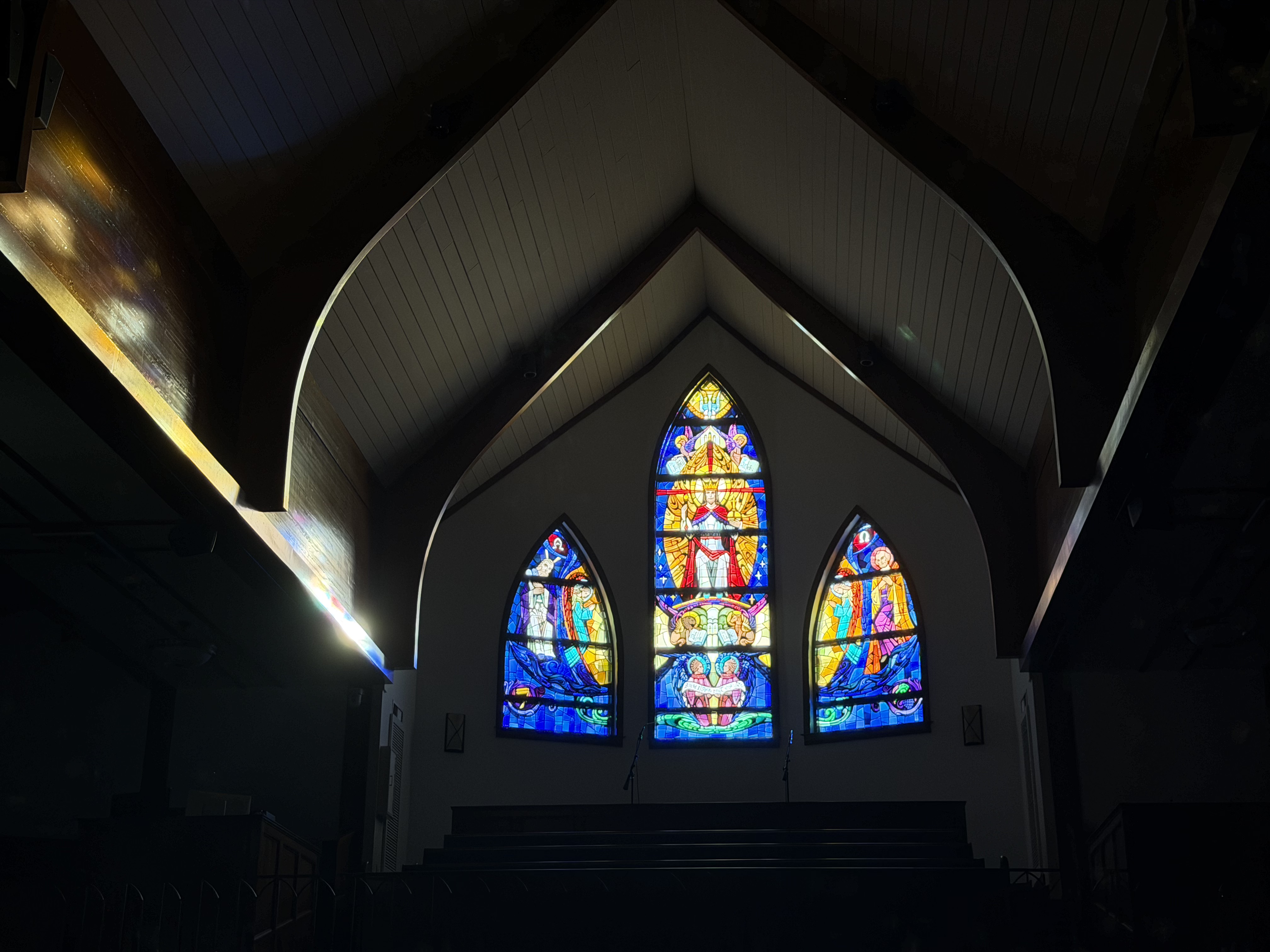
Photo: Jesus our Lord will lead us out of our present darkness and into his wonderful light.

