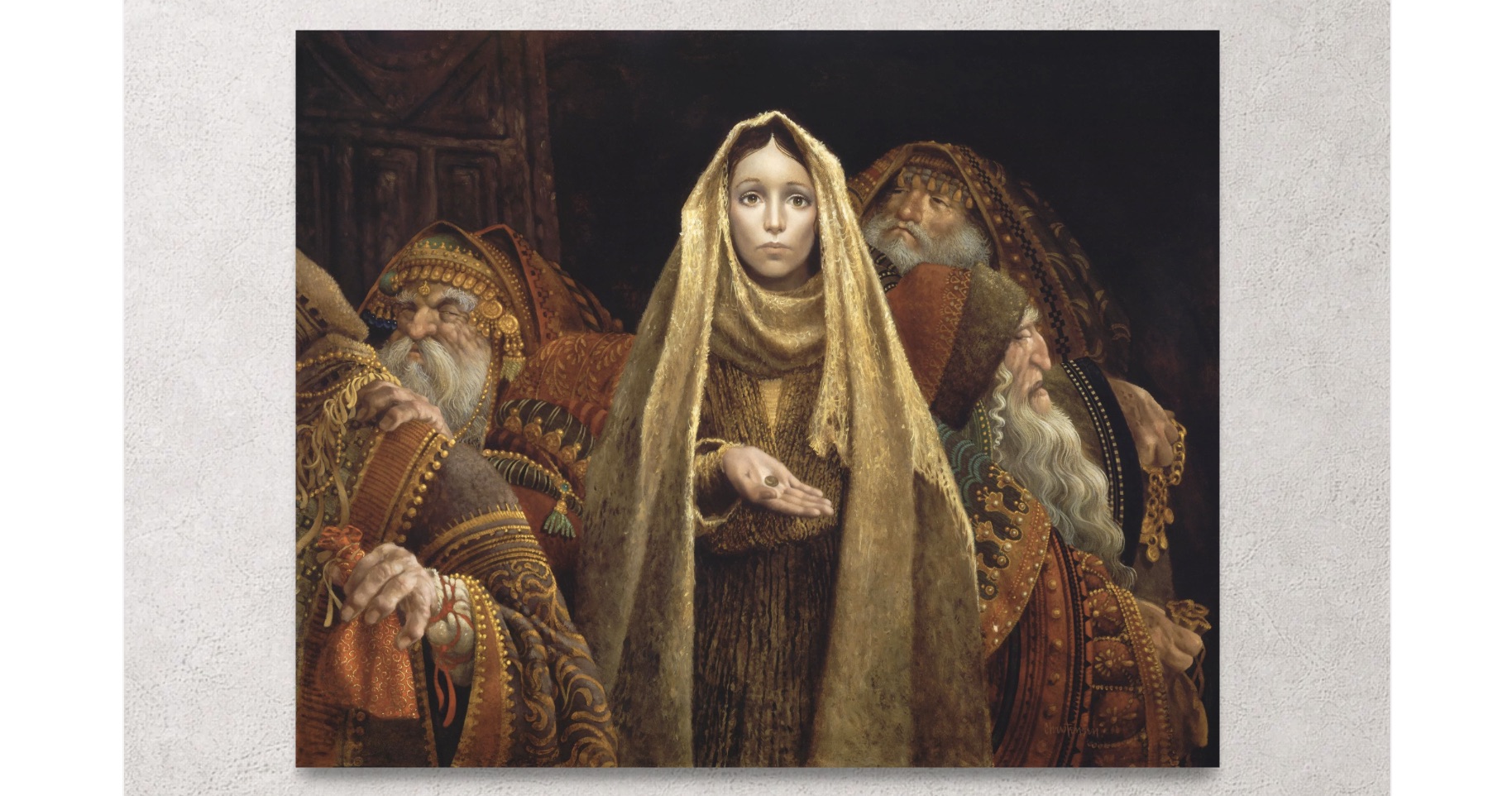
In our Gospel reading from Mark, there appear to be two separate accounts. In the first, we witness Jesus’ critique of the scribes, and in the second, the generosity of a poor widow is emphasized. There could not be a starker contrast between the two. Jesus points out those scribes with the primary motivation of self-aggrandizement, “who like to go around in long robes and accept greetings in the marketplaces, seats of honor in synagogues, and places of honor at banquets” (Mk 12:38-39). They make a lofty show of themselves, yet, what is worse is the following verse. “They devour the houses of widows and, as a pretext, recite lengthy prayers” (Mk 12:40).
The implication is that certain scribes used their position not to edify, provide care for, and lead widows closer to God, but instead chose to exploit them for their own selfish gain. As Jesus finished his rebuke of the scribes, he then observed those making contributions at the treasury of the Temple. A poor widow donated two coins. No one, except Jesus, appeared to notice her. Jesus called his disciples to him and said, “Amen, I say to you, this poor widow put in more that all the other contributors to the treasury. For they have all contributed from their surplus wealth, but she, from her poverty, has contributed all she had, her whole livelihood” (Mk 12:43-44).
Jesus commends this woman for her generosity. She does not make a fancy show of what she is doing, she quietly and simply gives all that she has. Is Jesus sharing his critique of the scribes who seek to exploit widows, just moments before sharing the generosity of this widow? Could her having so little have resulted from the exploitation of one of the scribes? We are not told why she has so little nor why she gives all she has, but her willingness to do so is clearly on display.
Often in the Gospels, Jesus holds up a mirror, as he did with the scribes, to those in positions of religious authority who place their focus on themselves, their own gain, and prestige. They are placed as stewards instead to help those they are supposed to serve, along with widows, orphans, the stranger, and those in need. Those like Matthew and Zacchaeus, though not scribes but tax collectors, embraced Jesus’ invitation of repentance, made a 180-degree turn from their old ways of self-service, and instead changed and began anew in following Jesus.
Will we be like the unnamed scribes and Pharisees who were not willing to look in the mirror that Jesus held before them, more interested in supporting their place of entitlement and privilege, and unwilling to change? Or will we, as did Matthew and Zacchaeus, allow our consciences to be convicted, be willing to repent, and rend our hearts so to be moved and more willing to love, so to stand alongside our brothers and sisters in need? The scribes are not the model in today’s reading, the widow was.
What affects one of us, affects all. If one among us is hurting, we are all hurting. We can do better to help one another. In allowing ourselves a time for a prayerful pause, Jesus will lead us to discern which thoughts to entertain, which words to speak, and actions and choices to make that are aligned with our loving God and Father’s will. Then we too will have the courage of the widow. She who did not give out of her excess but gave without counting the cost and trusted that God will provide. We will be more generous with our time, talent, and treasure when we are willing to trust God and freely give as he directs us.
Painting: “The Widow’s Mite” by James Christensen

