Jesus is our LORD!

The opening scene from today’s Gospel from Mark opens with Jesus teaching in the temple area. He poses this question to those gathered, “How do the scribes claim that the Christ is the son of David” (Mk 12:35)? The question that Jesus is offering engages in the Jewish debate regarding the promise of the Messiah or Mashiach in Hebrew, the Christ or Christos in Greek. Messiah or Christ is not a surname but a title meaning anointed one.

One interpretation of the long-awaited Messiah was a kingly figure descended from King David. Son of David is a common Messianic title. The blind Bartimaeus called out to Jesus using this title (cf. Mk 10:46-48). Jesus then quotes the beginning of Psalm 110 as he goes deeper. “David himself, inspired by the Holy Spirit, said: The Lord said to my lord, ‘Sit at my right hand until I place your enemies under your feet’” (Mk 12:36).

This statement can be a little confusing, especially if you are hearing this word proclaimed and not reading it closely. The first Lord referred to by Jesus has a capital letter “L”and the second lord has a lower case “l”. The reason for this is that in the original Hebrew the sacred name of God was not to be uttered or written. Instead, the Hebrew Adonai, meaning LORD, would be used to refer to God. The use of the word lord, Hebrew, adoni, with a lower case “l” could refer to a patriarch of a family, tribe, or military king and ruler like King David.

In this very short account from Mark today, Jesus deftly addresses some of the titles floating around about him, Messiah, Son of Man, Son of David, and with his final question, “David himself calls him ‘lord’; so how is he his son” (Mk 12:37). Jesus is saying that this One to follow David would be even greater than the expectations of these messianic titles because he preceded David and so is even greater than the genetic heir to David. Jesus is saying that he is the Son of God, LORD, as well as Lord. Just a little bit dizzy yet?

Jesus as Son of God, as LORD, as God, not only far surpasses even the highest ideal of messianic hope but would also be a direct challenge to the occupying Romans. For in the ancient Greek, of which Mark is written, Kyrios, means Lord. For the Romans, Caesar is Lord. Jesus is challenging the worldly establishment by saying that he, not Caesar, is Lord. He is challenging the religious establishment by saying that he is LORD, God.

Jesus, soon after speaking these words, will participate in his suffering, death, resurrection, and ascension, where he will return the right hand of God his Father. The enemies that will be subjected under his feet will be Satan, sin, and death, each of which he will defeat in his crucifixion, resurrection, and celebrate in his ascension as well as continue to lead us from his throne at the right hand of his Father.

This is why Jesus is our hope even and especially during our troubled times: personally, within our family and communities, country, and our world. Jesus is our Lord – not any emperor, president, or worldly leader. Jesus is our LORD to whom we are to place our trust and follow. Jesus our Lord, and our LORD, will lead us to freedom from our bondage to addiction, sin, suffering, fear, insecurity, powerlessness, poverty, self-sufficiency, and ultimately even our death.


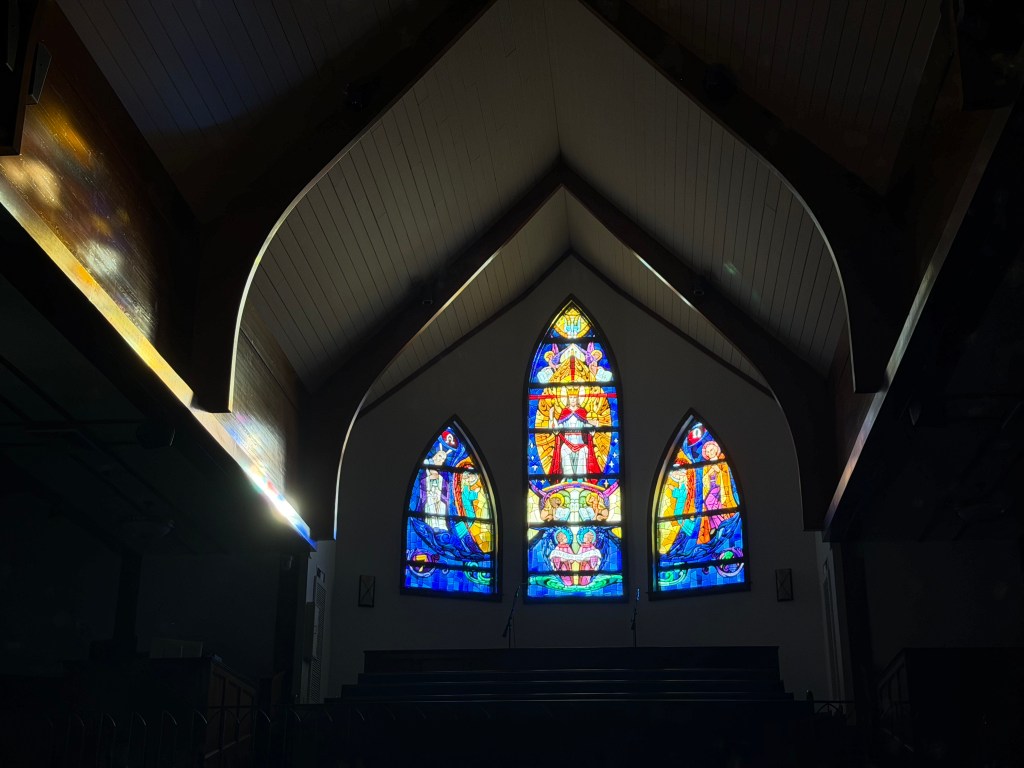
Photo: Jesus our Lord will lead us out of our present darkness and into his wonderful light.
Link for the Mass readings for Friday, June 5, 2026 

Jesus is the Lord of the temple, the Lord of our lives.

Jesus had not only created a scene when he, literally, turned over the tables in the temple, but had been doing so since the beginning of his public ministry. Jesus had been figuratively turning the tables on the religious leadership. The conflicts between Jesus and those in charge were not subsiding but only growing, especially now that Jesus was present at the Jewish spiritual center of the temple, the very seat of God. The chief priests, the scribes, and the elders, are becoming more concerned about the teachings and actions of this itinerant preacher and believe him to be a false prophet. They approach him when he returns to the temple and ask, “By what authority are you doing these things? Or who gave you this authority to do them?” (Mark 11:28)?

Jesus, who is the Lord of the temple, “the lord of the house” (Mk 13:35), recognizes that the “servants in charge” (Mk 13:34) of the house, are not seeking the truth in this question. “The question is full of hidden irony: the stewards of the temple, whose authority is only delegated, are demanding that the Lord of the temple answer to them for his actions” (Healy, 234). Jesus deftly turns the table on them. In doing so, they reveal that they do not believe that John or Jesus are operating under the authority of God, but they fear the reaction of the people gathering around their discussion. This is the time of the Passover, and many pilgrims have come to Jerusalem to celebrate. The area is teeming with people. The last thing that the Jewish authorities want is another scene as Jesus had staged from his turning over the tables the day before. They do not want to have the Roman centurions getting involved.

The chief priests, scribes, and elders refuse to answer Jesus’ question. Jesus follows like fashion then and does not answer their original question. This episode and exchange, as with the other conflicts with Jesus leaves his challengers frustrated and angrier. They believe Jesus to be a false prophet, yet they are not willing to call him out publicly. Indecisiveness further fuels their already growing resentment. Jesus though is at rest because he knows that he is following the will of his Father and has nothing to prove.

How do we do with conflict? Are we as surefooted and confident in the love of our Father as Jesus? If not, there can be many reasons. Foundationally, we need to ask ourselves: “Are we following the will of the Father in all that we think, say, and do?” The peace that surpasses all understanding that Jesus experiences and promises comes from the assurance that our loving God and Father is with us, has our back, and supports us. We also experience rest when our conscience is clear. The challenge is to be clear in our discernment that we know the difference between God’s and our own will, as well as when our decisions are in accord with or opposed to God’s. When not, then we repent and turn back to him.

We may receive clarity, although many times we are indecisive. The answer to knowing God’s will is knowing God. We encounter and develop a better relationship with our Father as we would with any other person. Though until we develop a deeper prayer life, that is easier said than done. As many of the saints attest, the closer they grew in relationship, the more distant he appeared. This is true because Jesus invites us to go deeper, so we come to the point that we resist relying on our emotions, inspirations, and consolations, as well as our capacity to make sense of what we are asked. Jesus leads us on an eternal path that has no end, cannot be exhausted, and we are to follow without hesitation. Jesus speaks to us in the silence of our hearts. Why do we listen? Because Jesus is our Lord, the Son of God our Father.


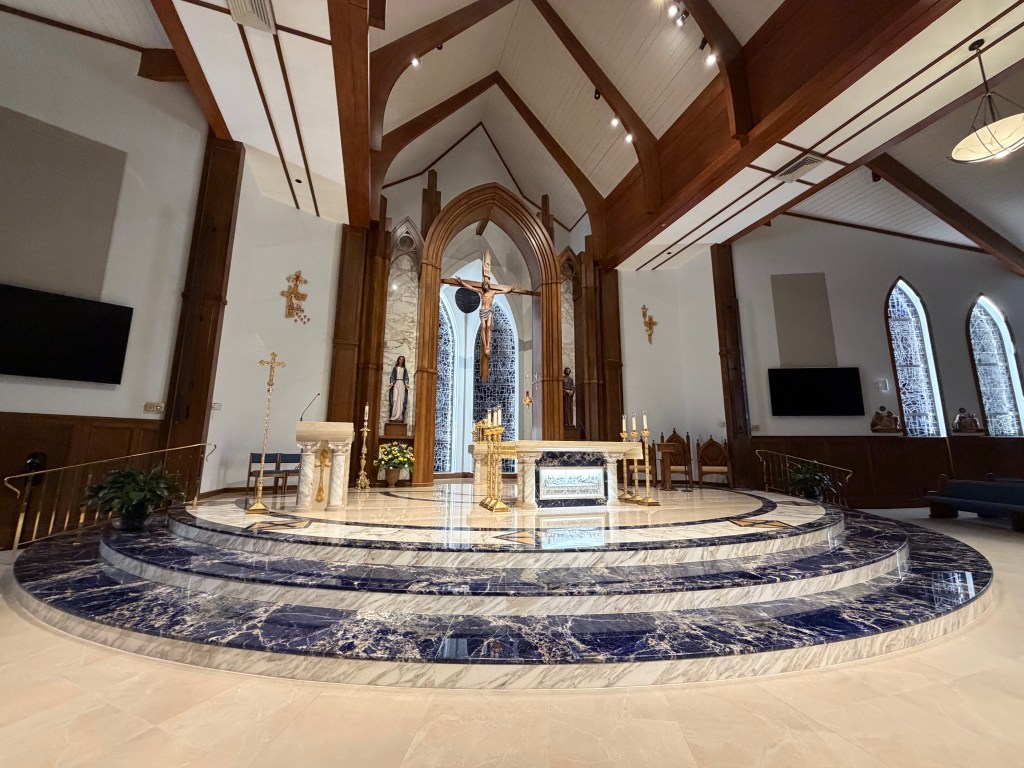
Photo: The more time we give to Jesus in silence, the more he becomes the Lord of our lives!

Healy, Mary. The Gospel of Mark. Grand Rapids, MI: Baker Academic, 2008.

Link for the Mass readings for Friday, May 30, 2026

Is the lord of the sabbath the Lord of our lives?

Then he said to them, “The Son of Man is lord of the sabbath” (Lk 6:5).

The disciples were traveling with Jesus, they gathered food where they could. In today’s Gospel, they picked heads of grain and rubbed them in their hands to make them easier to chew. The critique of those Pharisees, presumably, walking along with or close by to Jesus, was that his disciples were breaking the sabbath law by working and thus not keeping it holy.

The reason for this was that pious Jews would often practice what is called, building a hedge around the Torah, meaning that they would institute practices beyond the original law so that there would be no way of breaking it. Fr. Bill Burton, ofm, shared an example that has stuck with me since my Scripture studies in seminary.

There is a prescription in Exodus 23:19, that states that you should not cook a kid (baby goat) in its mother’s milk. So as not to even come close to breaking this law, observant Jews developed the practice, which continues from many today, to not cook any meat and dairy together; thus the idea of building a hedge around the Torah.

The hedge in today’s reading had to do with what constituted work and what did not to keep the sabbath rest intact and keep the sabbath holy. Jesus settled the debate by claiming that he was the lord of the sabbath.

The lord of the sabbath needs to be the Lord of our lives. We live in a fallen world, but even at its best, we live in a finite and fragile world. We as human beings can only do so much. The best we can do is to use our intellect and ability to reason while at the same time seek to discern God’s will and direction so that we may access the spiritual resources that God offers to us in our everyday affairs, especially when tragedy strikes.

Tragedy, pain, and suffering happen in our independent lives directly and in our world collectively, the list and variety are vast and varied. Each situation arises for different reasons, some sensible and others with no apparent rhyme or reason. The why to our own personal or broader national and international sufferings we may not ever receive an answer. Yet, in each instance, we are not abandoned, we are not alone. We need not despair because the Holy Spirit works with and through us when we turn to him and allow our hearts and minds to be open to his love working through us.

The Holy Spirit, through Mary’s yes, helped to bring our world a savior. When his time came, he healed, exorcised, preached and sought the unification of his people so to unify all of humanity. Many of the Pharisees could not accept that Jesus was the Messiah and instead saw him as a threat. In their minds, Jesus was disobeying God. If he wasn’t God incarnate, they would have been correct. That is the decision we need to make. If he is God, Jesus needs not only to be the lord of the sabbath, but the Lord of our lives, in and out of season, during our trials as well as our joys and celebrations.

—————————–

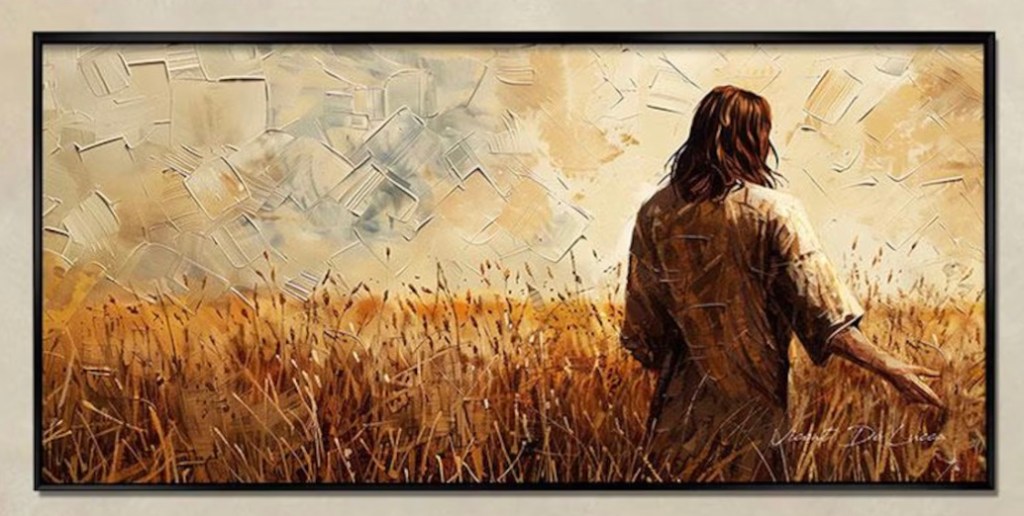
Photo: Jesus in the Wheat Field” by Hangwallz on Etsy

Link for the Mass readings for Saturday, September 6, 2025

May we choose to align ourselves with the Lord of the Sabbath and lead with love.

“The sabbath was made for man, not man for the sabbath. That is why the Son of Man is lord even of the sabbath” (Mk 2:27-28).

In making the above statement, Jesus was not discrediting or devaluing the observance of the Sabbath. He was weighing in on one of the common debates that Jewish people engaged in about what was considered work, and thus what could and could not be done on the Sabbath. Jesus went deeper to address the origin of the Sabbath observance in that it, “commemorates God’s creative and saving action for humanity, and alleviating hunger might be an example” (Donahue and Harrington, 112).

Although, the Pharisees who confront Jesus are most likely looking at a strict interpretation of Exodus 34:21 in which even during the time of harvest, one “must rest” on the Sabbath. The rubbing off of the husks in their hands to access the kernels of wheat within constituted such work. Jesus offers David and his followers doing the same thing in their time of hunger when they were fleeing from the soldiers of King Saul. In claiming this account, Jesus is aligning himself and his disciples with King David and his men. The Pharisees in this comparison would then be aligned with the followers of King Saul.

God created us, formed us, and breathed life into us. God seeks intimacy and closeness between himself and us his created beings, his children. God is our source and we are interconnected in our relationship with him and with one another. God continues to deal with us in a personal way. The Torah, the Law or the Teachings, is meant to enhance the intimacy and closeness of that relationship with God and one another, to provide boundaries and definition so that we can resist going astray.

Jesus came not to abolish but to fulfill the Law, to restore it from distortion, while at the same time bring it to a higher level. When asked what commandment is the greatest, Jesus announced that we are to Love God with all our heart, soul, mind, and strength and we are to love our neighbor as ourselves (cf. Mk:12:30-31). To live out this commandment then, we need to foster our relationship with God if we are to experience his love, mercy, and forgiveness, to fill up to overflowing, so to share with others what we have received, otherwise, we have nothing to give.

With or without a relationship with God we can experience emptiness, anxiety, fear, and loneliness. Without a relationship with God, and the community of the Church, we are more vulnerable to the temptations to satiate our hunger with the material, finite, and false goods, that are readily available, and hungering more, falling deeper into the lures of power, pride, prestige, ego, and addiction. We then seek to protect that false sense of self at all costs, and react defensively, as we feed our fear and pride. We buffer ourselves off from the very one we have been created for, and those we consider as other. In following this path, we isolate ourselves from God and one another and this provides fertile ground in which fear, prejudice, sexism, and racism can grow along with the manifestation of the dehumanization and objectifying of human beings.

As a part of the Church and actively engaged, we are constantly reminded that we are not alone and that all of us and creation are interconnected. As Pope Francis shared in his homily in 2018: “Having doubts and fears is not a sin. The sin is to allow these fears to determine our responses, to limit our choices, to compromise respect and generosity, to feed hostility and rejection. The sin is to refuse to encounter the other, the different, the neighbor when this is, in fact, a privileged opportunity to encounter the Lord.”

The Pharisees that were confronting Jesus felt threatened. They refused to see who he was. We know there were other Pharisees that came to trust in and follow Jesus, Nicodemus and most famously, Saul who became Paul. They were able to see past their blind spots and come to believe that Jesus was the Son of Man, the Son of God. We are offered a choice to see Jesus as a liar, a lunatic, and blasphemer, or as our Lord.

My invitation is for us to align ourselves with the Lord of the Sabbath, who walked with his disciples among a field of wheat one day, and who is now our Bread of Life this day. Empowered by the Eucharist we are filled with the love of Jesus, we will then better be able to let no evil talk to pass our lips and to say only the good things that people need to hear (cf. Ephesians 4:29). Receiving God’s love, we will better be able to will each other’s good, even toward those who profess hate. Feeding hate will only contribute to it. Meeting hate with love can provide an invitation for hearts to soften. As with Dr. King, whose memorial we celebrated yesterday, we are called to be instruments of the light to dispel the darkness and conduits of love to transform hate.

———————————————————

Photo: Rosary walk among the sea oats back in July, Riomar Beach, Vero Beach, FL.

Donahue, S.J., John R., and Daniel J. Harrington, S.J. The Gospel of Mark in Sacra in Sacra Pagina Series, vol. 2. Collegeville, MN: Liturgical Press, 2002.

Pope Francis full text of homily at Mass on World Day of Migrants and Refugees, Sunday, January 14, 2018: http://saltandlighttv.org/blogfeed/getpost.php?id=79091

Link for the Mass readings for Tuesday, January 21, 2025