Prayer is not so much about bending God’s will to our will, but it is about being willing to be transformed and conformed to God’s will. Surrendering ourselves to God in prayer helps us to realize that life is not all about us and we can begin the shift away from placing our sole focus on ourselves as the center of the universe. The world actually does not revolve around us. Accepting these truths is freeing. As we shift the focus away from ourselves alone and accept the invitation to grow in our relationship with the One who is the creator and sustainer of all that exists, we experience the peace and rest in our souls that we all seek.
Jesus guides his disciples on this point when he teaches them how to pray. Jesus said to his disciples: “In praying, do not babble like the pagans, who think that they will be heard because of their many words. Do not be like them. Your Father knows what you need before you ask him” (Mt 6:7-8). The babbling Jesus is referring about is how some of the pagan cultures of the time believed that if they performed the proper incantations, said the proper words, they could bend the gods to their will.
A great example of this is to read the account of Elijah in 1 Kings 20-40. Elijah while on Mount Carmel faced off against 450 of the prophets of Baal. He challenged them to call down fire from Baal to consume the sacrifice they laid out. They spent hours chanting and calling out to their god, dancing and even slashing at their flesh and there was no response. Elijah was heard with a simple petition and God responded by sending his fire to consume the entire sacrifice.
Jesus is teaching us not just that God is all powerful but that he is personal. Our Father knows what we need before we even ask. He really knows what is the deepest yearnings of our hearts even when we often don’t because we are distracted, diverted, and anxious about many things. Our minds and hearts are tempted and misled by so much noise and glitter. We are invited to slow down, breathe slowly and rest with the Lord and sit at his feet. Then we can get in touch with what we are truly experiencing and share with God what we honestly feel, whether that be deep pain, sorrow, or grief, contrition for sin, imploring for guidance, or expressing thanksgiving for his love and presence. Formulaic expressions and the mere volume of words mean very little compared to a few words said with clear intent, focus, and in a mindful and heart filled way.
Jesus helps us to understand that the form prayer takes or the actual words used do not so much matter as understanding why we pray. We pray to deepen and develop our relationship with the Trinitarian communion of God the Father, God the Son, and God the Holy Spirit. The very desire to pray is a prayer in itself because we are hearing the invitation of God to be one with him. The first step is to acknowledge this invitation and then to turn our hearts and minds to God. Fr. Thomas Dubay, in his book, Fire Within, paraphrases St. Teresa of Avila, the 16th-century doctor of the Church, in saying that “one vocal prayer, even so little as one petition of the Our Father, if well said, is better than many recited thoughtlessly or hurriedly” (Dubay 1989, 76).
Reciting the Our Father, or Lord’s Prayer, that Jesus shared with his disciples in today’s Gospel of Matthew, can be a struggle, because the biggest challenge to a life of prayer is taming, what some Buddhists call, the “monkey mind”. Our thoughts can be actively engaged, random, distracting, and even anxiety inducing within one minute. To overcome the challenge of an unsettled mind we can return to St. Teresa again. When we begin to pray, St. Teresa of Avila suggests that we begin “with self-examination and the sign of the Cross” (Dubay 1989, 77).
In making the Sign of the Cross, we can then breathe deeply and slowly, one inhalation and exhalation for each person of the Trinity. Then continue to breathe and rest in the loving group hug of the Father, and the Son, and the Holy Spirit. Breathing, receiving, resting, and abiding in God’s love is a great way to recollect, to prepare our hearts and minds to enter into a time of prayer. When we pray, we often come from whatever physical or mental activity and then start to pray, even something as easy as the Lord’s Prayer. We may then wonder why there is so much mental noise. Recollecting before we pray, allows us to experience a time of transition from the busy to the quiet.
Making friends with silence, we can bring to awareness some issues, struggles, temptations, and sins that we have been dealing with. We can settle into, instead of run away from or deny them and seek God’s help for guidance, healing, and reconciliation. In making the sign of the Cross, and taking one slow deep inhalation and exhalation for each Person of the Trinity, we bring our self, as we are, into the presence of the Trinity and invite him to dwell within us. We receive and experience the love, acceptance, and mercy of God and recognize that we are loved as we are and that we are not alone because we belong to and are a part of this infinite community of love. In this simple gesture, we are also uniting our body, mind, and soul with the One who will lead us in our prayer.
The next step is to imagine that Jesus is with us to guide us in our prayer. “Imagine that this Lord Himself is at your side and see how lovingly and how humbly he is teaching you” (Dubay 1989, 77). By mindfully engaging with our breath and our body, we slow down and allow ourselves to become still.
Finally, we can imagine Jesus teaching us the Our Father as if for the first time, as he did his disciples. Going slowly, one word, one verse at a time, allow Jesus to not only share his words, but pause and add our own. By doing so, we begin to discipline the focus of our mind, move from the beginning of a rote prayer, move into a dialogue with God, and receive the blessing of his mercy and love. “Focusing on the indwelling presence, says Teresa, is for wandering minds ‘one of the best ways of concentrating the mind’ in prayer” (Dubay 1989, 77).
—————————————————————–
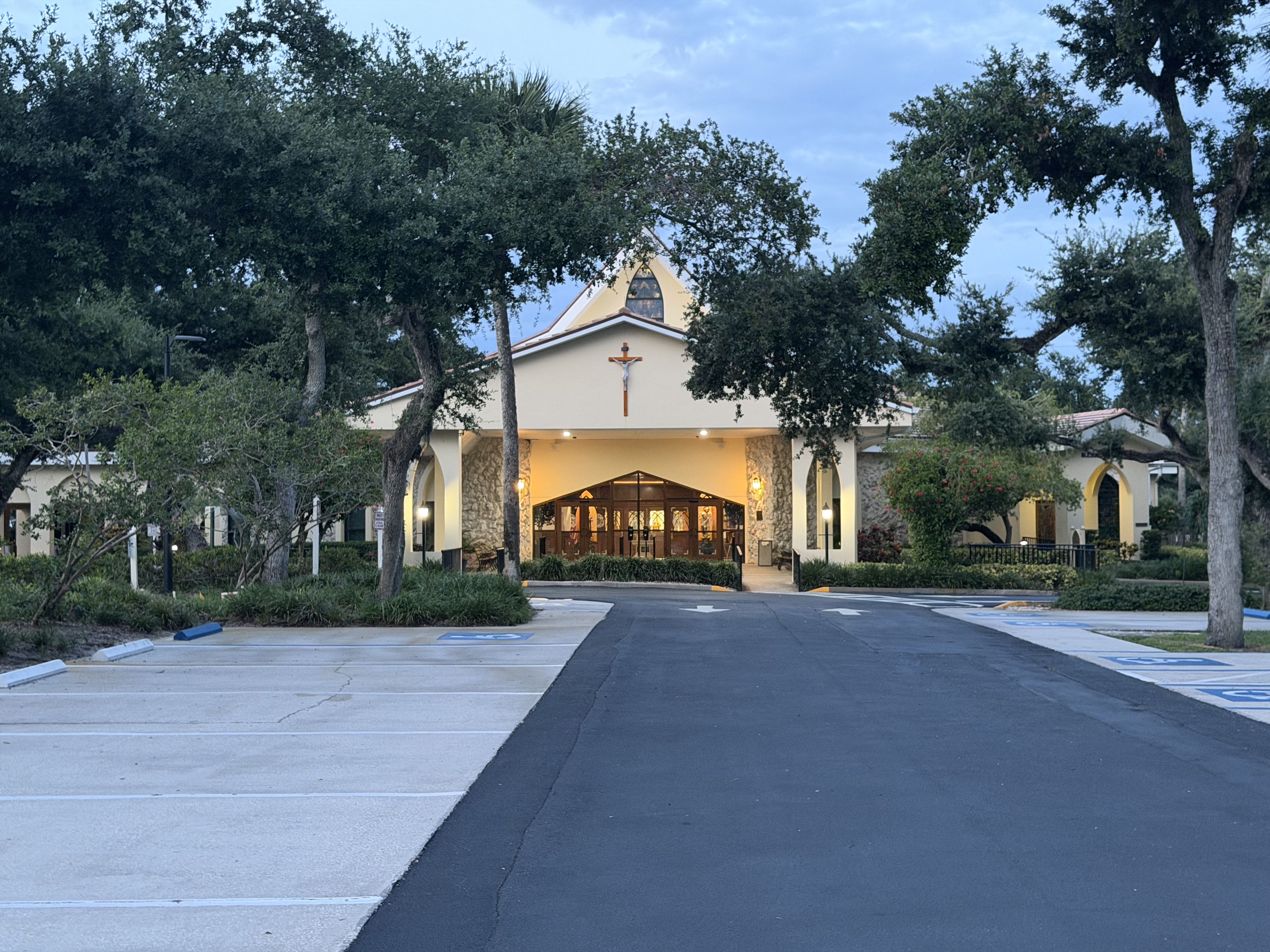
Photo: On our way, we can already begin to breathe and quiet our minds to ready ourselves for our time of prayer.
Dubay, S.M., Thomas. Fire Within: St. Teresa of Avila, St. John of the Cross, and the Gospel on Prayer. San Francisco: Ignatius, 1989.

