The teachings of the Beatitudes as well as the six antitheses are powerful lessons that can transform our lives when we put them into action. As we continue to walk through the next presentation of Jesus’ Sermon on the Mount today, Jesus presents common practices of living a devout life of faith. While at the same time as we learned before, Jesus raised the standard practice of these three pillars to a higher level. The key point he is making though has again to do with our end goal. Jesus continued to show his disciples how to be “perfect just as [our] heavenly Father is perfect” (Mt 5:48). The perfection to be attained is oneness with God. Jesus’ disciple’s then were and we continue to be today called to become holy, to be saints, for the purpose of deepening our bond and relationship with God and each other.
Our being perfected in Jesus is a process whereby we become less and Jesus becomes more. What decreases is our focus on self, especially the ego-self, our sense of self-centeredness. We do so by seeking to heal from those disordered affections that we have chosen instead of seeking the love our Father offers us and will fulfill us. Jesus offered three ways or pillars of healing in which when practiced help us to draw closer into communion with God and one another. We are to give alms, pray, and fast. We may remember that these practices are the three pillars of Lent that we put extra emphasis on during that penitential season.
When we give alms, pray, and fast, our intent must be properly ordered. If we give alms with the intention to “win the praise of others” (Mt 6:2), pray in a public display “so that others may see” us (Mt 6:5), and in our fasting “look gloomy” and “neglect [our] appearance, so [we] may appear to others to be fasting” (Mt 6:16), then the focal point remains on us. We think to ourselves, how holy and pious I am. In fact, if we act in this way, how hypocritical we are because, in each of these actions, we are not seeking to improve our relationship with God, build up his kingdom, or experience healing. Instead we build up our pride and ego by seeking affirmation, adulation, and disordered affections for ourselves.
Jesus calls us to give alms and serve out of love for others. To do so, we must first allow ourselves to be loved by God. We then see what our life feels like when we are loved by God. Being affirmed by him, we no longer seek to grasp for love, but now have something to share. We seek Jesus in prayer not to conform his will to ours, but to surrender to his will and allow the purifying fire of the Holy Spirit to purge us from the dross of our accumulated sin, selfishness, and attachments. In our time of prayer and examination of conscience, Jesus will reveal to us those apparent goods and disordered affections that lead us astray. From these areas we can fast, turn back to God, and in doing so, we will receive that which we long for in the depths of our souls, Our Fathers love and find rest for our souls.
Let us go back, read, meditate and pray with today’s readings, and ask Jesus to reveal to us one way that we are putting ourselves before God, one habitual vice that keeps us bound, and/or something that we are attached to that we can fast from. What is one way we can reach out and give ourselves to someone else? Prayer, fasting, and almsgiving are not only for Lent. Following Jesus’ guidance in each of these three practices will help us to begin to heal because we will begin to remember who we are, God’s beloved daughter and son. When we allow ourselves to breathe, rest, receive, and abide in God’s love we experience something greater than ourselves. No longer isolated, we belong to the Body of Christ. As such we become the hands and feet of Jesus and can offer the healing we have received.
—————————————————–
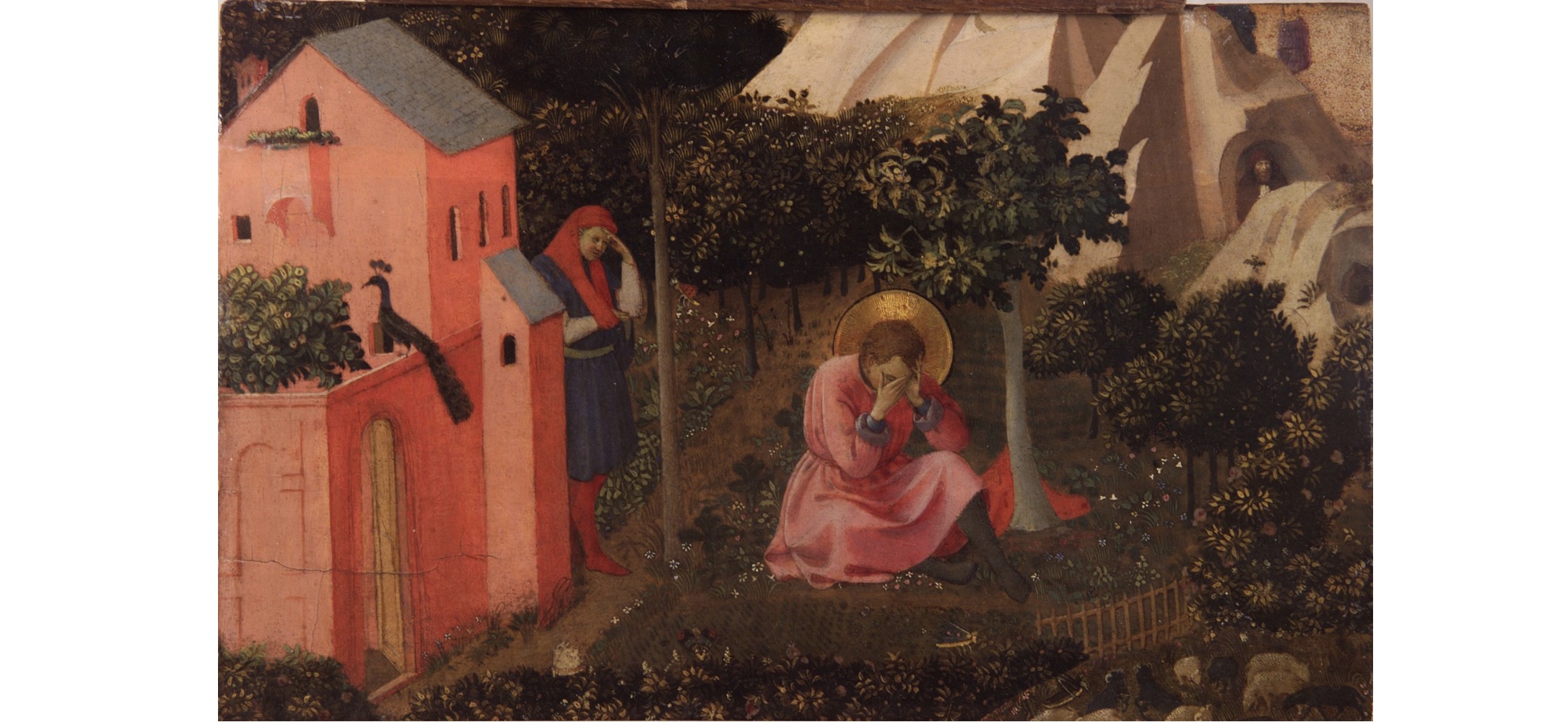
“Do you wish your prayer to fly toward God? Make for it two wings: fasting and almsgiving.” St. Augustine Painting by Fra. Angelico, “The Conversion of St. Augustine”.

