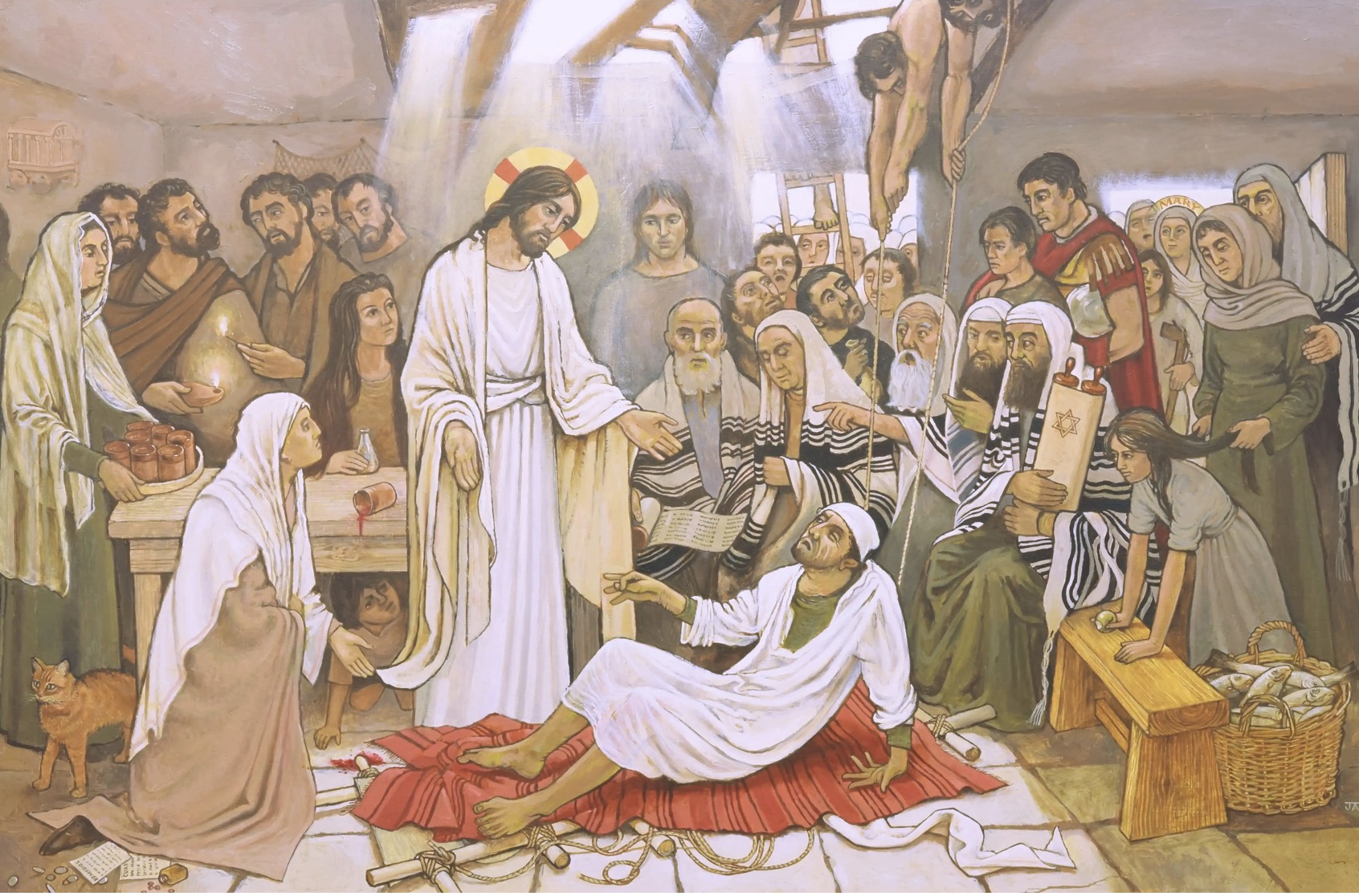
And there people brought to him a paralytic lying on a stretcher. When Jesus saw their faith, he said to the paralytic, “Courage, child, your sins are forgiven”(Mt 9:2).
Matthew’s account of this scene is much simpler than Mark and Luke’s, but the point is the same. The person paralyzed received healing because some people were willing to bear his weight and creatively bring him to Jesus. In neither of the three Gospel accounts do we know who the people are that bring this man to Jesus for healing. Were they family, friends, or neighbors, combination? It does not matter. They were aware of someone in need, they believed Jesus could heal him, and they put forth the effort to bring this man to Jesus.
Are we like the people in today’s Gospel; are we aware, do we care? St. Mother Teresa often said that people are “not only hungry for bread – but hungry for love, naked not only for clothing – but naked for human dignity and respect, homeless not only for want of home and bricks, – but homeless because of rejection.” If we are living our faith, indifference to the needs of others is not an option. Rationalizing why we ought not to care, or worse giving in to our fears and prejudices so as to dehumanize and reject others in need are counter to the call of Jesus.
When we may be closed off to helping others, a bit impatient or short, less than forgiving or merciful, it could be that we have been curving in upon ourselves and not allowing God to love us in areas we may not feel all that lovable. Yet, it is exactly there that Jesus yearns to enter. He seeks to love us in our most wounded places and where we feel shame. All sin is a curving in upon ourselves and away from God. Doing so also distorts reality and keeps us distant from the antidote. When we allow Jesus into our poverty, sin, and shame, we can be loved, forgiven, and consoled. Then we can embrace a disposition that is more open to sharing mercy, forgiveness, love, and care for others.
How is God speaking to and moving our hearts? There are so many who are hurting and suffering. May we not see people as interruptions but invitations to experience God’s grace. We just need to be honest about where God is leading us and act as the four in our Gospel reading did. When we are aware, willing to come close to those in need, access our personal gifts of creativity, and collaborate with Jesus, miracles can and still do happen. Structures of inhumanity and injustice can be turned around when we are willing to be loved by God and love others in return.
Pope Francis has been consistent and clear about the dignity of all life. He tweeted (do we still say tweet?) back in 2013: “It is God who gives life. Let us respect and love human life, especially vulnerable life in a mother’s womb.” During Mass on Sunday, January 14, 2018 he shared: “Migrants and refugees don’t represent just a problem to be solved, but are brothers and sisters to be welcomed, respected and loved.” On June 3, 2020, Pope Francis said, “My friends, we cannot tolerate or turn a blind eye to racism and exclusion in any form and yet claim to defend the sacredness of every human life”.
Painting: The Lord hears the cry of not just a select few but all of us in need. Are we willing to share our need, receive God’s love and so help others?
See also Mark 2:1-12, Matthew 9:1-8 and Luke 5:17-26

