Today is the last Sunday in Ordinary Time. Next Sunday will begin Advent and the new year in the Church calendar. In today’s Gospel from Matthew, Jesus offers a parable about the Judgment of the Nations that addresses the key criterion for judgment. Jesus eloquently clarifies what will determine eternal punishment and what will determine eternal life. It comes down to how we treat one another. Are we indifferent, blind to another’s suffering, or are we willing to bother, to get involved, to be, as Fr. James Keenan, S.J. wrote, “willing to enter the chaos of another.”
The gift of our faith is that Christianity is personal. We serve Jesus in being aware of and encountering one another. We are not to be about bringing world peace, ending hunger, providing homes for all. We are instead to treat each person we meet with dignity, to feed someone hungry, and to provide clothes and shelter for someone who has none. We are to see Jesus in our midst: “For I was hungry and you gave me food, I was thirsty and you gave me drink, a stranger and you welcomed me, naked and you clothed me, ill and you cared for me, in prison and you visited me.” (Mt 25:35-37). Jesus commands us to be aware, to accompany, and to make a difference, one life at a time.
The stranger is unfortunately a challenge to many today. Stranger, in Greek, xenos, can mean stranger, but here means foreigner, or immigrant in our usage today. Someone who has come from another country. They are vulnerable, without work, maybe even without food or water, depending on their journey and they are in need of hospitality and support. Immigrants are not illegal as some call them. There may be those that commit illegal acts, and if so then there is to be accountability, but the starting point that Jesus is giving us is not to diminish their dignity as human with a label, but to provide for those in need. In doing so, we are taking care of Jesus.
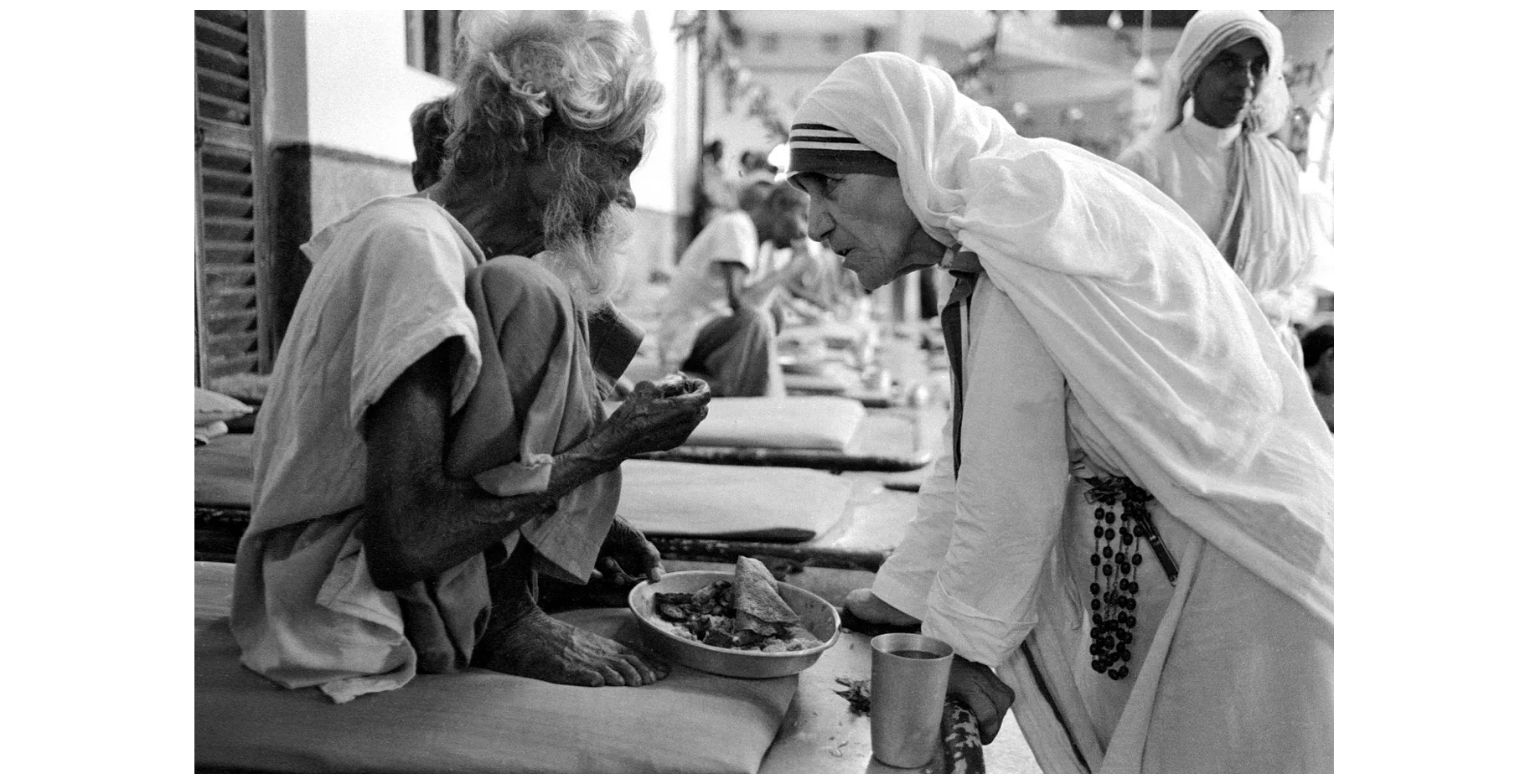
We are to see the hungry, the thirsty, the immigrant, the naked, the ill, the prisoner, as human beings, as brothers and sisters, as Jesus himself. For when we feed, provide drink, hospitality and welcome, clothing, caring, and visit, then we are taking care of Jesus himself. This was St. Mother Teresa’s “Five Finger Gospel.” – and she got it from this gospel – “You did it to me.”
There are many issues that people face and there is great need. There is no one size fits all for each situation and there are often complicated issues in addressing vast needs. What we need to resist though is dehumanizing others. Labeling them in any way that diminishes their dignity as human beings. Jesus is guiding us to take care of one another and the starting point of doing so is to see each other as human beings, children of God. For Jesus came to be one with us in our humanity so that we can become one with him in his divinity.
We can easily believe that there is so much that needs to be done that no one person can even make a difference. We can easily get overwhelmed. How do we even begin? One place to begin could be to pay attention to our interests and emotions. What do you find you spend your time doing already? When you read or hear a news report, what gets under your skin? This could be God speaking to you, moving you to help. The key is to resist looking out too abstractly or broadly when we are willing to see. Instead, it is more helpful to begin by making a commitment to making a difference one person at a time.
As we draw closer to Advent this week, it would be good to make a commitment to serve Jesus in one another. God is guiding us already, we just need to have eyes to see, ears to hear, and a heart that is open to be led. A positive step would be to take this week to look back at the year, or the past month, and evaluate how we have done in being aware of where we were willing to enter the chaos of another and where we weren’t. Then for assistance on how we can do better, may we spend some time reading and meditating on the Beatitudes and chapter 25 of Matthew.
As Pope Francis said in his 2014 homily these are: “Few words, simple words, but practical for all. Because Christianity is a practical religion: it is not just to be imagined, it is to be practiced. If you have some time at home today, take the Gospel, Matthew’s Gospel, chapter five. In the beginning, there are the Beatitudes; in chapter 25 the corporal works of mercy. And it will do you good to read them once, twice, three times. Read this programme for holiness. May the Lord give us the grace to understand his message.”
Photo: St. Mother Teresa saw Jesus in every person she met. May her witness inspire us to do the same.
Fr James Keenan article on Mercy

