While some people were speaking about how the temple was adorned with costly stones and votive offerings, Jesus said, “All that you see here– the days will come when there will not be left a stone upon another stone that will not be thrown down” (Lk 21:5-6).
As we read yesterday, Jesus observed the widow donating her two coins. Today Jesus observes those who are commenting about the wonders of Herod’s temple. Jesus responds by sharing, as did Jeremiah, that the temple will fall, and not a stone upon another stone will be left. The reality of this statement would come to pass in 70 AD when the Romans destroyed the temple and crushed the Jewish rebellion during the Jewish War from 66-70 AD. The only significant remnant of the temple still to this day is the outer retaining wall, also known as the Wailing Wall.
The people of the ancient Near East certainly witnessed and passed on tales of the rise and fall of mighty kingdoms beginning with Egypt’s impressive reign from about 3,000 to 721 BC, followed by Assyria who then gave way to Babylon. The Babylonian army would destroy Solomon’s temple as predicted by the prophet Jeremiah. The Persians would then overtake the Babylonians and push west only to be repelled by the unification of the Greek city-states under the Macedonian Philip and then his son Alexander the Great who would continue south and east all the way to India. The massive Greek empire would then give way to Rome. Rome would then fall in 476 AD.
As each empire fell, and especially during the fall of Rome, there was a great concern that the end of the world drew nigh. Throughout the ages up until the present day, nation has continued to “rise against nation, and kingdom against kingdom…” and the world has experienced “powerful earthquakes, famines, and plagues from place to place” (Lk 21:10-11). Each made their historical impressions on those who lived through them. There has also been a plethora of end of the world predictions from the ancients up to the more well known modern prognosticators such as Jeane Dixon, Pat Robertson, a handful of predictors around 2000, and more recent but also slipping into the rearview mirror of doomsday prophesies, Harold Camping. He caught a lot of attention with his prediction of the end of the world that was to have happened on October 21, 2011.
As of this typing, we are still here. The Gospels of Mark and Matthew record Jesus addressing the same concern of those questioning him: “But of that day or that hour no one knows, not even the angels in heaven, nor the Son, but only the Father” (see Mark 13:32 and Matthew 24:36, RSV translation). In Luke’s presentation from today’s Gospel, he moves further away from Mark and Matthew’s eschatological or end of times talk and spoke more toward the destruction of the temple.
We have a few more days of Luke and Ordinary Time to go before the end of the liturgical year. Kingdoms have and will continue to rise and fall (hopefully not in these next few days). Abuse of power continues to lead to many who are displaced from war, terrorism, and violence in many forms. Today we remember the memorial of St. Andrew Dūng-Lac and Companions who suffered horrific torture and brutal deaths and yet remained faithful and even joyful in the midst of what they suffered.
Fr. Paul Le-Bao Tinh testified, “The prison here is a true image of everlasting hell: to cruel tortures of every kind… in the midst of these torments, which usually terrify others, I am, by the grace of God, full of joy and gladness, because I am not alone, Christ is with me” (Magnificat, 345).
Many reach out to provide compassion and support but there is never enough help. Many are enamored by our technological ingenuity and advancements, as were those who were admiring the adornment of Herod’s temple. Are we in the final days? Only the Father knows.
Pope Leo from the beginning of his pontificate has provided the balanced interpretive key to address the newest wave of technological advancement: “In the era of artificial intelligence, when human dignity is threatened by new forms of dehumanization, ours is the pressing duty to remain profoundly human. We must lovingly safeguard the grandeur of humanity bestowed upon us and revealed in its fullness in Christ, the splendor of which no machine can replace.”
The answers to our deepest questions, our deepest hopes, as well as light in the darkest times are not going to be answered and found in machines. They will be found and fulfilled in Jesus, the Son who knows the Father, who will accompany and guide us through any challenge and strengthen us against any storm. Anxiety and worry are human emotions but also not the answer. Instead, may each thought, word, and action pass through the filter of a deep slow breath and guidance of the Holy Spirit. As we do so, we will know Jesus, his voice, and the will of our Father better. God who is our refuge and strength no matter what comes and we can even experience joy in the midst of our and the trials of those we hold close to our hearts, when we abide in God’s love and embrace.
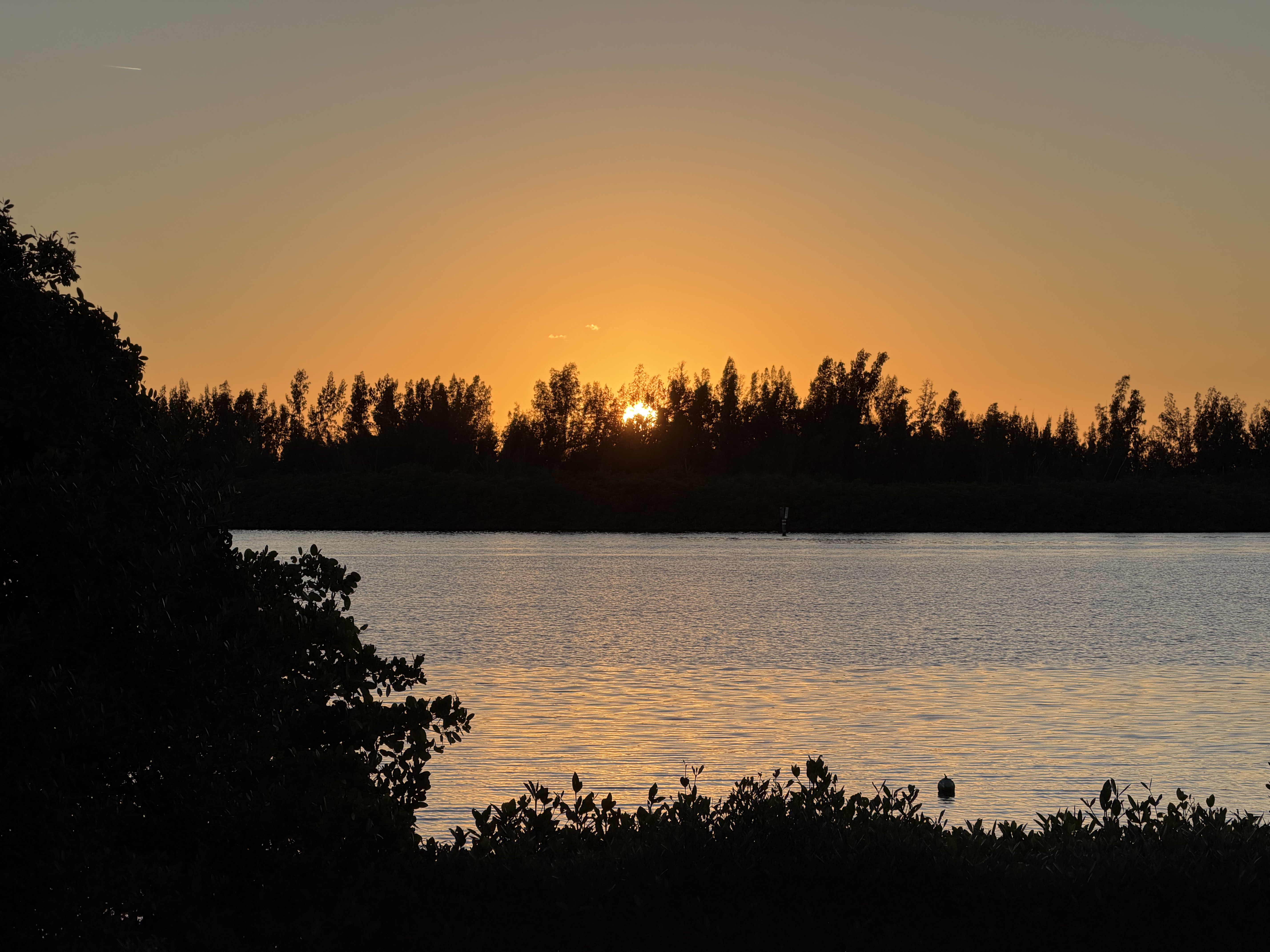
Photo: As human beings we can always wonder and enjoy the simple things in life, like a sunset. In that moment of quiet, followed with a simple breath, we can reconnect with the One who created the sun and loves us more than we can imagine. We are not alone, Jesus is with us!

