Jesus seeks to welcome, embrace, and bless us as he did the children.

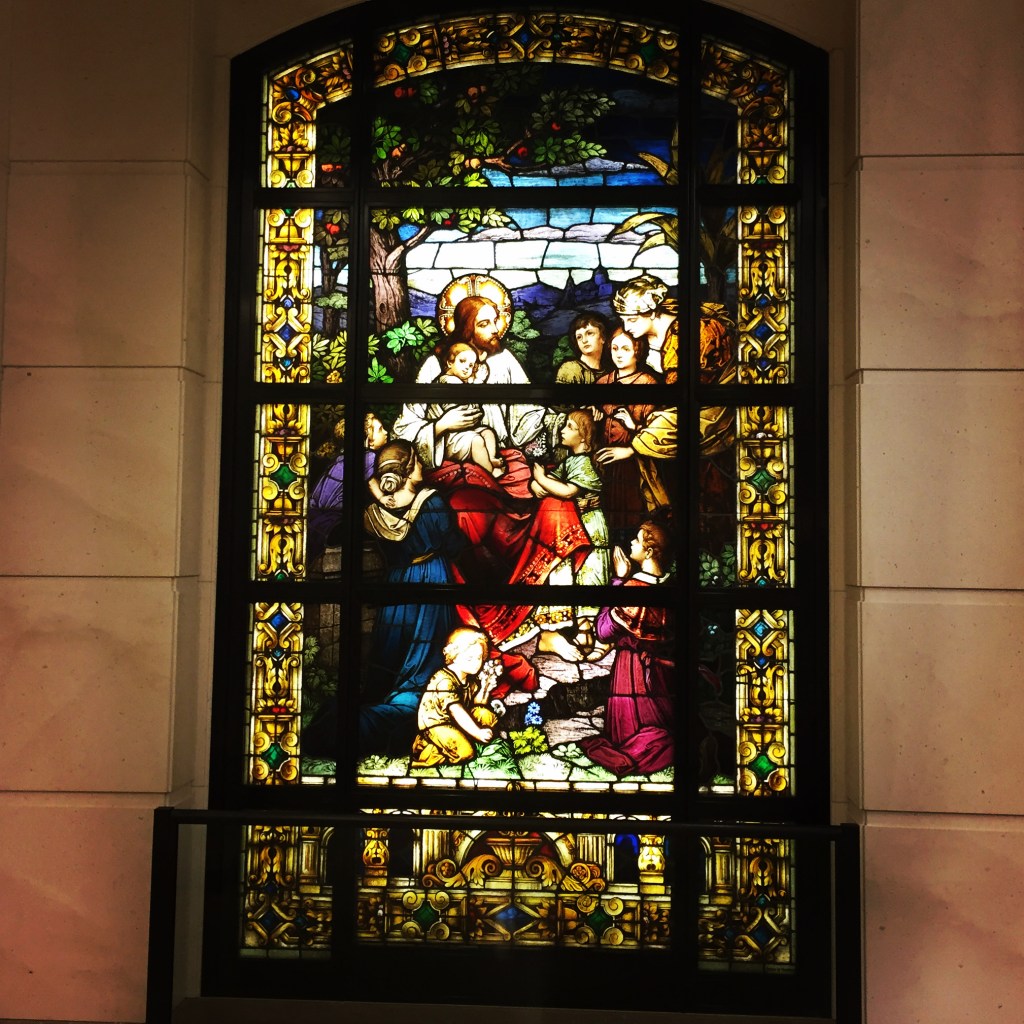
In today’s Gospel account, or pericope, people are bringing their children to Jesus to receive a blessing. To offer a blessing, especially this is an action a father would offer, was common. It is understandable that parents would want to bring their children to be blessed by Jesus. Even though children had very little status in the ancient near East of this time, especially in the very young because of high mortality rate, parents did care. They, as with others, sought Jesus for his healing touch, whether they needed a healing or a blessing.

Yet, the disciples step in to prevent this process from happening. Mark does not share the reason for their interference. The disciples apparently missed the lesson that Jesus sought to teach them earlier when they were arguing among themselves about who was the greatest. Jesus had then asked for a child to be brought to him and said, “Whoever receives one child such as this in my name, receives me” (Mk 9:37). This could be why Jesus was none to happy, in fact “indignant” for their interference. Jesus rebuked his disciples: “Let the children come to me; do not prevent them, for the Kingdom of God belongs to such as these. Amen, I say to you, whoever does not accept the Kingdom of God like a child will not enter it” (Mk 10:14-15).

Jesus consistently offered grace to those who might otherwise in the society of his time be prevented from receiving it. Jesus provided healings for the possessed, lepers, women, the blind, the lame, tax collectors and sinners. The very fact that this short account mentioning children is even included in an ancient near Eastern text says something profound. Jesus recognized the dignity of children as he already attempted to teach his disciples.

Children in the ancient Near East had no recognized social status. Orphans were at risk and needed to be taken care of. Children up to two years old were vulnerable in many ways and as such, experienced a high rate of infant mortality. Because of this reality, many parents may have developed an unconscious, defensive posture that they did not become too attached to their children until after they were two years of age. This harsh reality could also be a reason why these children were being brought to Jesus for a blessing.

Jesus, in his reaching out to the children to offer a blessing, impresses the point that he takes the life of children seriously and so encourages others to do so. There are historical accounts that Christians continued to take this teaching seriously. In ancient Roman society, if parents did not want a child, one recourse was to leave them in a local dump to die. Christians would retrieve the infants and bring them into their homes and raise them.

Jesus also used this opportunity as a teachable moment when he shared that “the kingdom of God belongs to such as these.” Jesus is recorded as using the image of God as a Father one hundred seventy five times in the Gospels. Jesus equating that the kingdom of heaven belongs to such as these would have been hard for his disciples to fathom. Maybe one of the reasons this message did not stick the first time. Jesus was helping his followers and us today to see the love of the Father for all his children. To enter the kingdom, we must accept that we are to depend totally on and place all our trust in God as our Father.

God has created us to be in relationship with him and one another. We need him just as much as an infant does for his or her very existence and survival. We do not buy or earn our way into the kingdom of Heaven because God and his realm is so transcendent, so beyond us, that we cannot possibly get there on our own efforts. We enter the kingdom of God through the door of his Son, who is the way, the truth and the life.

Just as Jesus opens his arms to embrace the children to receive and bless them, he seeks to do so with us. In our willingness to enter into and receive his embrace, we enter into the kingdom of our Father. It is relationship with God who we are wired for, he is our hope, our meaning, and our fulfillment. “[T]o receive the kingdom is as simple, trusting, and humble an action as receiving the embrace of Jesus. Indeed, to enter the kingdom is nothing other than to enter into a relationship with Jesus” (Healy, 201).

Thank you Jesus for the gift of loving us and revealing to us our dignity, value, and worth. Help us to accept and embrace this gift of your love so that we may love each other as brothers and sisters. Help us to promote a culture of life that recognizes and acknowledges the dignity and value of each and every person without exception from the moment of their conception, birth, throughout the ups and downs of daily life, up to and including our elder years until natural death.

——————————————————————

Photo: Stained glass depiction at the Cathedral of Our Lady of the Angels, Los Angeles, CA.Healy, Mary.

Healy, Mary. The Gospel of Mark. Grand Rapids, MI: Baker Academic, 2008.

Link for the Mass readings for Saturday, March 1, 2025

“What God has joined together, no human being must separate.”

“But from the beginning of creation, ‘God made them male and female. For this reason a man shall leave his father and mother and be joined to his wife, and the two shall become one flesh.’ So they are no longer two but one flesh.Therefore what God has joined together, no human being must separate” (Mk 10:6-9).

With this response, Jesus clarified the original plan of God from the beginning. Divorce, along with death and sin, was never part of God’s plan. God promotes unity, life, and truth.

God is a perfect communion of three Persons existing as one through their infinite self-gift to one another. While at the same time, each are distinct in their relation to one another. The Father is not the Son, the Son is not the Holy Spirit, the Holy Spirit is not the Father, each are distinct while at the same time they are one because of their infinite self-giving and receiving.

The Sacrament of Marriage is to be a finite expression of the reality of the infinite communion of the Holy Trinity. The Father, through infinite, self-sacrificial love, gives all that he is, holding nothing back of himself to the Son. The Son receives perfectly all that the Father has given and returns infinitely all that he has received to the Father holding nothing back. The Holy Spirit is the infinite love shared between the Father and the Son. 

Man and woman have been created in the image and likeness of God to do the same. When a man and a woman are brought together by God, “they are no longer two but one flesh.” The husband and wife are to also be a self-gift and offer sacrificial love to one another as do the three Persons of the Trinity. In each giving of themselves to one another and becoming one flesh in the marital act, there is an openness to a third person, born of the love shared in their union, a child. 

Jesus, did not come to abolish the law and the prophets, he came to restore and fulfill the truth of what God intended from the beginning. He does so here again with his teaching on marriage. As with many, if not most, of his teachings they can seem impossible to put into practice. not only in his time, but in ours where about fifty percent of marriages end in divorce. 

There are many reasons divorces come about, the scope of which is beyond what I can explore here. What we can do though is not lose hope and meditate upon a key phrase that Jesus offered, “What God has joined together, no human must separate.”

When we live and make our decisions apart from God’s will, we miss the mark. This is true with marriages as well. Many whose marriages do not last may not do so because they were not ordained by God. There were false or non compatible reasons the couple may not have seen or were unwilling to address early on. There also may be marriages in which God has led the pair to come together, although they did not build their marriage on God as their center and foundation, nor sought his help to persevere. 

When a marriage ends, there may be grounds for an annulment, which is not a Catholic divorce. The Church presumes a marriage is valid until proven otherwise. The annulment process looks at whether the marriage was valid at the outset and if proven not to be, there is an opportunity for healing and a new beginning, in which the individuals are free to marry. Another often misunderstood point is that if an annulment is granted, the children of this union are still considered legitimate.

The Sacrament of Matrimony is a wonderful gift and with Jesus as the center of the marriage there is the possibility for a faithful, indissoluble covenant that is open to procreation. As with any of the teachings of Jesus in this fallen world, marriage is hard but well worth the effort. Marriage is still possible when the husband and wife seek to put Jesus first in their lives, seek his help and guidance daily, pray individually and together, communicate, see as God sees not as man sees, and are willing to grow together, love and sacrifice for one another.


Photo: Very blessed and thankful that God brought JoAnn and me together and that we enjoyed 23 years of marriage. This time together has also helped me to become a better priest.

Link for the Mass readings for Friday, February 28, 2024

Whoever follows Jesus will not walk in darkness, but will have the light of life.

What we think, say, do or do not do, has consequences for ourselves and others. The smallest act of kindness, like suggesting, as Jesus did in today’s Gospel, of giving someone a drink of water goes a long way. The reality that 2.2 billion people do not have adequate access to the most basic of needs, safe drinking water (water.org), is an amazing and disheartening statistic. The most serious of sins in this regard is not bothering to care. Jesus shared clearly, in the Gospel of Matthew (cf. chapter 25), that what we do to the least of our brothers and sisters, we do to him.

We have a choice to act in ways: that limit or provide access for people seeking such basic necessities as food, water, and shelter; that harm or hurt; that divide or unify. Jesus uses graphic, hyberbolic words in today’s Gospel, such as “If your hand causes you to sin, cut it off. It is better for you to enter into life maimed than with two hands to go into Gehenna, into the unquenchable fire” (Mk 9:41-50). Jesus does not literally mean that we are to cut off our hand or foot, or pluck out our eye, but he is showing us the seriousness of sin. Sin cuts us off from the source of our life who is God. Identifying and repenting from our sins is important for our physical as well as our spiritual well being now and in the life promised to come after our death.

Sin invites us to walk a path that leads to death. God invites us to walk a path that leads us to life. “Although many people nowadays think of sin primarily as breaking a rule or violating a law, in Jewish Scripture, the word ‘sin’ (Hebrew chatá) literally means to ‘miss the mark’ or to ‘miss the path‘ (Pitre, 54).” God is inviting us to share in his life now and for all of eternity. We can walk away and chart our own course apart from God’s guidance or we can walk the path that he lights for us to follow. Jesus spoke bluntly and graphically to show his followers and us that to miss the mark, to sin, to chart our course on our own will have deadly consequences.

This is why Jesus began his public ministry echoing the prophetic tradition and John the Baptist when he stated, “This is the time of fulfillment. The kingdom of God is at hand. Repent and believe in the gospel” (Mark 1:15). Jesus came as a light to reveal to us our sins so that we can turn away from any illusions, false promises, and apparent goods that we are attached to, repent from them, and turn back to choosing to follow God first. Our lives will be much better when we seek first the kingdom God and see the world not as man does but as God does.

Venial sins hurt our relationship with God but mortal sins rupture our relationship with God. The antidote is the same for each, to be sorry for our sins, confess them, be willing to perform the penance to atone for our sins, so that we can be absolved, forgiven, and return to the path that leads to life. A daily examination of the Ten Commandments is a good place to start. The first three have to do with our relationship with God and the seven following have to do with assessing how we love our neighbors.

Examining the seven deadly or capital sins: wrath, sloth, gluttony, lust, greed, envy, and pride are also very important to examine. Asking the Holy Spirit to help us to see any of these sins which are the root of all of our sins is not an exercise in shame or condemnation. We do so in an effort to strengthen our will, to identify and renounce them so that we can be freed and healed from the unhealthy attachments and disordered affections that lead us astray. What can help us to overcome the temptation to any of these sins is to engage in practices to develop the virtues: meekness, diligence, temperance, chastity, generosity, and humility, that will counter each of the seven deadly sins listed above.

When we turn away from God and engage in thoughts, words, and actions that are divisive, dehumanizing, and self serving; when we rationalize and justify behavior that goes against our Gospel values and our consciences, we play a part in contributing through our personal sins to the condition of original sin that plagues our world. When we act in these ways, we are off the mark and going against God’s plan that we pray for each day: “May your kingdom come, may your will be done on earth as it is in heaven.”

Jesus is not calling us to jump out of bed today and amass heroic acts of virtue, nor is he asking us to change all alone, and all at once. The disciples took time to get on board with his message. It will take time for us to learn and grow as well. Jesus loves us more than we can ever imagine and when we open our hearts and minds to receive his love daily, we will grow in the humility necessary to identify and repent from our sins and grow in virtue.

——————————————————————

Photo: Hike through Runyon Canyon Park, Los Angeles.

Pitre, Brant. Introduction to the Spiritual Life. Image: New York, 2021.

Link for the Mass readings for Thursday, February 27, 2025

Spending time with Jesus and in his word will help us to be contemplatives in action.

An elitist posture can be dangerous in that others are excluded that ought to have access. There are those areas in which there will be limited access. Select positions such as a principal, CEO, or manager. At higher levels of sports, the arts, and civic leadership, there are limited positions available as well. Yet access ought to be granted for the most qualified. Artificial impositions regarding racial, ethnic, gender, or religious litmus tests are to be avoided. Regarding having access to God, worshipping as a community, and spreading his love and word, an elitist approach has no place.

Jesus addresses this concern in today’s Gospel from Mark. The Apostle John approaches Jesus to complain that someone who does not belong to their inner circle of disciples was healing in the name of Jesus. John even shared that they attempted to prevent this person from healing. Interesting that John was concerned that this man was not one of their number, as opposed to saying he was not a follower of Jesus. Also, this account appears shortly after John returns with Jesus to the failure of the disciples being able to exorcise the demon from the boy. This man was doing what those in the inner circle were not able to do. Jesus replied, “Do not prevent him. There is no one who performs a mighty deed in my name who can at the same time speak ill of me. For whoever is not against us is for us” (Mk 9:39-40).

Jesus shared in words what he modeled in action throughout his life. The kingdom of God is open to all those who were willing to receive him and receive the invitation of his Father to enter into relationship. That relationship with him creates a spark that ignites a fire in those of his followers to reach out to teach, preach, cast out demons, heal, and be present to others in their need in his name. The kingdom of God is not for the select few, not for the frozen chosen, or not to be an elite club. The depth of active participation is only limited by one’s willingness to be engaged in participating in the life of Jesus.

May we have ears to hear Jesus’ universal message today, seek that which unifies us more than what divides us, and, embrace his message that “whoever is not against us is for us.” This can be translated outward beyond our tradition as Catholics. There is much we can do together with Christians of other denominations, people from other faith traditions, and people of good will with no faith tradition.

There are many who are in dire need of support in our communities, states, countries, and world. May we resist the us vs. them mentality that the enemy tempts us to entangle us in and resist the temptations of indifference or feeling like we have nothing to contribute. Jesus calls us to worship communally, as well as step away daily and sit at his feet and be alone with him. In that time of intimacy, corporately and individually, we are loved, healed, transformed little by little, and sent to share what we have received from Jesus to be his contemplatives in action.

Jesus, please meet us in our time of worship and prayer, help us to come to know you, our loving God and Father better, and his will for our lives. Help us to hear and meditate upon your living word, that we may know, experience, and be transformed by the love of the Holy Spirit. May we breathe, receive, rest, renew, and abide in your love so that we may think, speak, and act from this place of being known and loved by you. Then, in the name of Jesus, when we find ourselves in situations of division, polarization, and dehumanization, we may offer the invitation to experience the healing balm of understanding, dialogue, forgiveness, love and hopefully reconciliation.

———————————————————————

Photo: Different ocean than I am used to but the same light from the sun shining on the waters. View of the Pacific off the Santa Monica Pier.

Link for the Mass reading for Wednesday, February 26, 2025

We become whole by serving the One who came to serve us.

Power and honor are attractive temptations. Power is alluring because we want to be in control. Many of us believe that control provides security and safety. Many of us believe that power provides access and control over our environment and situations as they arise. Honor has an attraction also because we want to belong, we want to be a part of. With honor and fame, we believe we will be accepted, liked, have access, without the risk of rejection.

Power and honor become a problem when they are grounded in our self and when we feel we attain them on our own initiative. They become an asset if we recognize them as gifts from God that help us to promote his kingdom. In and of themselves, power and honor are finite expressions. If they are only fueled by our insatiable desire to put our self first, front and center, we will not only constantly fall short, but we will constantly be seeking more because nothing finite can fulfill the transcendental hunger that we have to belong to someone so much greater than ourselves.

The disciples of Jesus fell for the temptations of power and honor in today’s Gospel from Mark. Jesus had just shared with them for the second time that he was to be handed over and killed and that he will rise again. The disciples do not understand what Jesus was saying to them and instead grasped at their idea of what the Messiah meant to them based on their experience and culture. In their minds, the messiah would be a powerful ruler that would overthrow the occupying army of Rome, and so they began to jockey among themselves for seats of honor in his kingdom.

Jesus was aware that the disciples were squabbling about who among them would be the greatest, even though they were not willing to admit to that fact. Jesus had been using this time as they drew closer to Jerusalem to instruct them more deeply about his role in his Father’s plan, but also guiding them in knowing theirs. Jesus sat down among them and said: “If anyone wishes to be first, he shall be the last of all and the servant of all” (Mk 9:35). Power and honor do not come by being served. True power and honor come from the source of all existence, God the Creator. Nor is the infinite power of God some impersonal force that we tap into.

True power is trusting not in the material and finite things of the world because they are unstable. True power comes from God, the one who is omnipotent, all-powerful, and worthy of all glory, honor, and praise. We receive the power of God by experiencing, developing, and sustaining our relationship with him, through participation in the life of his Son and the Love of the Holy Spirit. The path of discipleship is traveled not by those who are worthy but by those willing to follow the lead of Jesus, submitting to his will, embracing the gifts that the Holy Spirit grants us, and sharing what we have received.

Lent begins in just about a week. One thing we might want to consider is to relinquish our perceived access of control in a fallen world that is ever unstable and changing and instead place our hope and trust in the one who is our destiny, who is our hope, our refuge, and our strength: Jesus the Christ, the Son of the living God. Let us let go of the desire to be liked and affirmed by others which can lead to unhealthy attachments and instead strive to be true to who Jesus calls us to be. May we not seek our security in control and self-sufficiency but in trusting in God and serving him and his will.

——————————————————————————————-

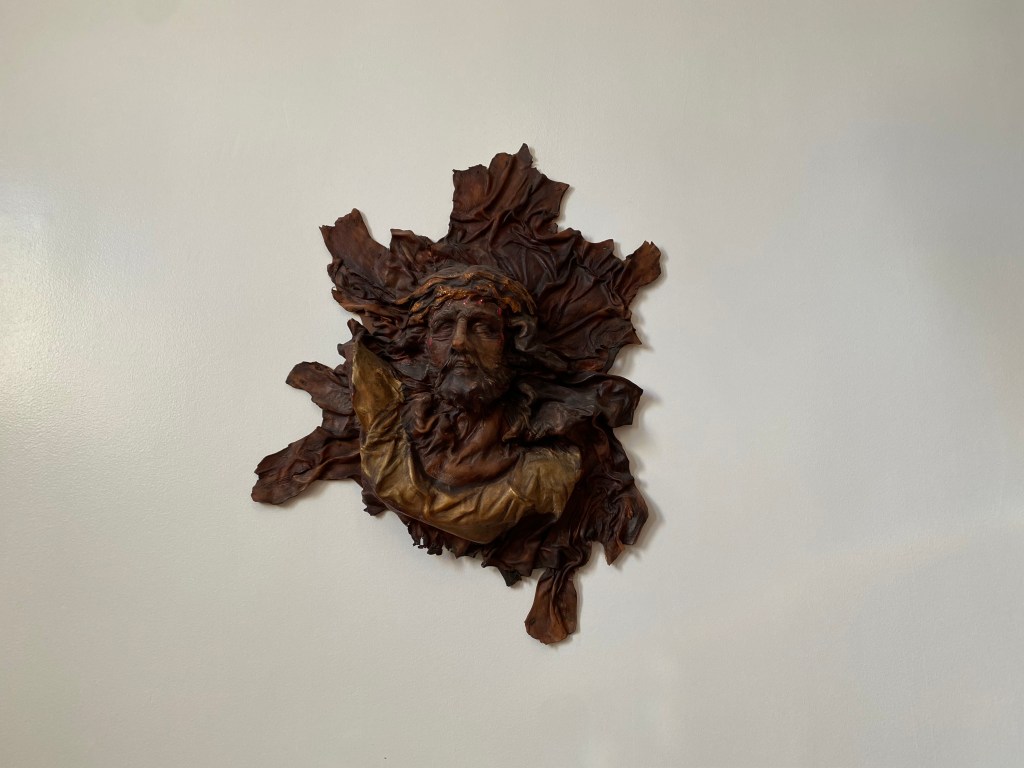
Photo: Sculpture of Jesus at the St. Clement Church, Santa Monica, CA.

Link for the Mass readings for Tuesday, February 25, 2025

Everything is possible when we believe, trust in Jesus and pray.

In the opening of today’s Gospel, we witness Jesus, Peter, James, and John returning from the experience of the transfiguration. While they were away, a man had brought his son to the other disciples to expel a demon from him but they were not able to do so. As they drew closer, the father appeals to Jesus: “But if you can do anything, have compassion on us and help us.” Jesus said to him, “‘If you can!’ Everything is possible to one who has faith.” Then the boy’s father cried out, “I do believe, help my unbelief” (Mk 9:22-24).

Jesus’ response to the man is clear and consistent with his teaching with authority, miracles, exorcisms, and healings. We see that the key ingredient over and over again throughout the Gospels is faith. Jesus receives this man’s request and seeks to empower him instead. What may be unclear is the man’s response, “I do believe, help my unbelief!” This statement may be a key to why Jesus’ disciples, who had exorcised and cast out evil spirits before could not this time. They were putting more faith in themselves instead of God. 

The man did have faith in Jesus to a point, for he brought his son to him believing that he could possibly heal him. His words now after his encounter with Jesus reveal the maturing of his faith, “But if you can do anything…” This request shows some doubt. This is much different than the woman with the hemorrhage who believed if she but just touched the tassel on his cloak she would be healed or the Canaanite woman who sought to have her daughter exorcised even though Jesus initially dismissed her for being a Gentile.

The father’s statement, “I do believe, help my unbelief!”, is beneficial to us all. The father believes in Jesus to a point, but recognizes he needs help from Jesus to go further. Jesus confirms that what is important in maturing in our faith life is being people of prayer. 

When his disciples talked to him in private, they asked him why they were not able to heal the boy and Jesus replied, “This kind can only come out through prayer.” Prayer is not some magic formula. Prayer is about becoming aware of God’s invitation to develop and mature in our relationship with him. When we make time for God and recognize his presence in every aspect of our lives, we come to know him and know his will, we come to know God’s voice. When we place him first before anyone and anything else, and trust in him, God’s grace builds on our nature and miracles happen. 

The exorcism of the young boy happened because his father appealed to Jesus hoping he could do something to help. The disciples could not heal him because they sought to do so through their will power alone instead of drawing on their relationship with God. The good news is that even though time and again the disciples fell short, they persisted in their faith and in their belief in Jesus. They learned, grew in their belief and trust in him such that they matured and recognized that apart from Jesus they could do nothing but with him, all things were possible. 

So much so, that we see Peter, who had denied Jesus, and reconciled with him after his resurrection, would come to encounter a man crippled from birth who was begging for alms. Peter said to the man: “I have neither silver nor gold, but what I do have I give to you: in the Name of Jesus Christ the Nazorean, [rise and] walk” (Acts 3:6).

Peter and the apostles’ faith grew over time, even through failure, sin, and unbelief, but they, like the father in today’s Gospel, did not give up, they continued to trust in and follow Jesus. We can mature in our faith as well. Let us begin our day with this prayer and return to it often: “Everything is possible to one who has faith.”

—————————————————

Photo: Jesus will guide us through any darkness and/or clouds. Rosary walk back in December.

Link for Mass readings for Monday, February 24, 2025

Jesus calls us not just to exist but to live by a higher calling which is to love.

The Word of God proclaimed is alive. God has given his Word for all people and for all times with the purpose to shape and form us to be a people uniquely his own (cf. Deut 26:18). We are to be holy as the Lord our God is holy (cf. Lv 19:1-2). To be holy means that we are to be set apart. There ought to be something different about us. The word church comes from the Greek word ekklesia. Ek means out, kaleo, means called. As Church then, we are called out from the world to be holy, to be saints. We become saints when we repent and allow God to forgive us and restore the glory and likeness that was lost in the Fall.

Jesus also called us to be salt and light. The intent of our thoughts, words, and actions are not to be divisive but unitive, not to be a source of darkness but illumination, and not to be dehumanizing but empowering. I have heard often after someone speaks or acts in a negative way a comment along the lines of, he or she is just being human. Meaning we are fallible, that we are not perfect.

This is only partially true. We are finite, imperfect beings, yes, but when we act in ways that are self-servicing and hurtful, we are not acting humanely. These words and actions are a reflection of our fallen and distorted humanity. The reality is that we are wounded by sin, but the good news is that we are not destroyed by it. We are more than our fallen nature, more than our base instincts. We do not have to stay stuck there, and for God’s sake, may we resist the temptation to condone any abusive or hurtful behavior as acceptable and normal!

All of us are in need of healing, and this begins when we diagnose our sickness accurately. God has not created us to merely exist, to go through the motions, to accept a minimalist approach, to be anxious and stressed moment by moment, and to consistently assume a reactive and defensive posture. God calls us to be so much more. As St Irenaeus has written, “The joy of God is the human being fully alive.” God didn’t create us just to survive, he created us to thrive!

How do we work to be fully alive, to thrive, to be holy? We love.

To love is not merely an emotional, romantic, or sensory feeling, but an act of the will. As St Thomas Aquinas taught, “To love, is to will the good of the other as other.”

This is how Jesus can say in the our gospel reading from Luke today: “But to you who hear I say, love your enemies, do good to those who hate you, bless those who curse you, pray for those who mistreat you” (Luke 6:27-28). As with many of the teachings of Jesus, these can be shocking and appear to be impossible to accept let alone put into practice. Loving our enemies was certainly something beyond comprehending in his day and age let alone ours.

When Jesus gave the great commandment, he was not saying anything necessarily new. In calling us to love the LORD with all our hearts, strength, and souls he was referring to Deuteronomy 6:5, and to love our neighbors as we love ourselves he drew from Leviticus 19:17. When Jesus stated that we are to love our enemies, this was unprecedented and sounds impossible to comprehend, let alone put into practice. Jesus does not leave his disciples or us hanging though. He outlines specific practices regarding how we can actually love our enemies.

We are to: do good to those who hate us, bless those who curse us, pray for those who abuse us, offer the other cheek to those who strike us, give to those in need, and to do unto others as you would have them do. Doing each of these makes loving our enemies easier, right? Not a chance. Each of these are just as challenging, if we are operating from our baser selves and fallen nature living in the world. But as I started, Jesus is calling us to go beyond a minimalist approach. He is calling us to be holy. As disciples of Jesus we are to be marked as different and one of the most powerful ways is by reading, praying, meditating, contemplating upon, and putting into practice Jesus’ teachings.

When we do so, our hearts and minds will change. We will change. The people of the world, love those who love them, do good to those who do good to them, and lend money to those who will pay them back. As disciples we are to resist the temptation to judge, condemn, and instead to forgive and to give, to love those who don’t love us, do good to those who mistreat us, and lend money to those who won’t pay us back. When we put these teachings of Jesus into practice we will be blessed by God abundantly and to overflowing with his love given beyond measure.

The words of the Gospel, the teachings of Jesus, mean nothing if they have no relevance to us, if we do not put them into practice and if we do allow our hearts to be transformed from hearts of stone into hearts of flesh. Jesus loves us and invites us to receive his love so we can heal, so we can experience forgiveness, and we can be forgiving, merciful and loving. Discipleship with Jesus is not an easy path to walk. It is possible to love our enemies, bless those who curse us, and pray for those who abuse us, when we seek to think not as fallen humanity does but as God does, when we ask Jesus to love through us until we can do so.

————————

Picture: Jesus putting his teachings into practice on the cross, where he loved his enemies, blessed those who cursed him, and prayed for those who abused him. Through his love and power we can do the same. Crucifix from the sanctuary at St. Vincent de Paul Regional Seminary in Boynton Beach, FL.

Link for the Mass readings for Sunday, February 23, 2025

“You are Peter and upon this rock I will build my Church.”

“You are the Christ, the Son of the living God” (Matthew 16:16).

If you have been walking through each of the daily readings through Mark, this quote from Peter might sound very familiar and you would be correct. For the Mark parallel version of this account was presented this past Thursday: “You are the Messiah” (Mark 8:29). Peter is saying more than he is aware of because he is speaking through the inspiration of the Holy Spirit not from his own insight, not as man does but as God does. He is recognizing that Jesus is the long awaited Messiah, but still not with full comprehension, as again we saw in Mark’s account when he Peter sought to rebuke Jesus for saying what kind of Messiah he would be.

That Jesus is the Messiah, the Christ, the Anointed One for whom the people of Israel have been waiting for with great anticipation, is beyond what anyone could have even imagined. Peter, in Matthew’s account, also stated that Jesus is “the Son of the living God.” Messiah and Son of God, bringing to the fore that Jesus is the preeminent priest, prophet, and king. Jesus indeed was the One to “gather the tribes and cleanse the temple and defeat Israel’s enemies” and Peter knew “that there was something qualitatively different about his Master” (Barron, 100).

Jesus does not hide or sidestep Peter’s affirmation. He commends Peter by saying, “Blessed are you, Simon son of Jonah.” (Matthew 16:17). Imperfect Peter, shared the deposit of faith that is the ground of what we believe as Christians. Jesus not only affirms this statement but goes further and renames Simon as Peter. Throughout the Bible when there are those who follow the will of God through their acts of faith they are renamed, as was Abram who became Abraham. Simon becomes Peter, the rock, upon which Jesus will build his Church.

Our lives will be changed when we not only accept this truth but like Peter follow Jesus. Step by faithful step, we come to know, Jesus the Christ, the Son of the living God. At each Mass we can behold Jesus re-presented on the altar, receive him, and consume him so that we can be transformed by his love. In reading these accounts we are invited to meditate, pray, and listen to God speaking to us through them. Being nourished by the Gospels we can then like, Peter, think, speak, and act not as humans do, but as God does.

When we allow God in, he will touch our minds, hearts, and the depths of our souls to reveal to us our sins and those areas of our lives in need of healing. Not to condemn us, but to free and heal us. When we trust in Jesus, when we are willing to take up our cross and follow him, our lives will never be the same. There is a freedom and love that we will experience that is beyond anything that we can ever imagine and it continues to expand and grow the more we receive and share what we have received.

Let us meditate on this great testament of faith given to us by Peter our first Pope. Let us ponder what it means that Jesus is the Christ the Son of the living God, and that he came to forgive and heal, guide and lead us to be members of his Church, the Body of Christ, so that we may conquer evil and reign with him in this life and into the next.


Photo: St. Peter with the keys in front of St. Peter’s Basilica. Accessed from Vaticannews.va

Link for the Mass readings for Saturday, February 22, 2025

To be a disciple of Jesus we need to follow the way of the cross.

Jesus summoned the crowd with his disciples and said to them, “Whoever wishes to come after me must deny himself, take up his cross, and follow me” (Mk 8:34).

Our life is not about us, and about what we can accumulate. It is not about achieving and placing our security in power, fame, wealth, and pleasure. Nor are we here on this earth to merely exist, to just get by, and live in survival mode. We exist to be loved by God, to love others as we have been loved, and to live life to the fullest.

The challenge is, are we willing to truly deny ourselves, take up the cross of Jesus, and follow him? The followers of Jesus hearing him say that was quite visceral as many of them had witnessed a crucifixion personally. It is a humiliating, degrading, and horrifically painful death. And yet, Jesus is saying openly that this is a requirement to following him as a disciple.

We may be removed from the, in the face quality of a crucifixion, but we can still recoil at the invitation to renunciation. To accept this cost of discipleship, it is helpful to recall Jesus’ words to Peter in yesterday’s account when Jesus convicted Peter for rebuking Jesus saying that he was to suffer, be rejected by the elders, and killed. Jesus rebuked Peter because he was “not thinking as God does but as human beings do” (Mk 8:33).

We take up our cross and follow Jesus when we are ready and willing to renounce any thought, word, or deed, person, place, or thing that we have place before God; when we are willing to put Jesus first in our lives whether or not we will be ridiculed, persecuted, or killed. This willingness to be Jesus’ disciple comes slowly with each, “yes”, as we see with Peter himself. He and the other Apostles, especially in the Gospel of Mark stumble time and again. Just like the blind man who Jesus just healed, it took a second healing for him to see (cf. Mark 8:22-26). To truly see as God sees will take time with us as well.

Peter affirmed who Jesus was, the Messiah, the Son of God, in one breath with the insight of God, taking a step ahead, and yet, in the next breath, he could not accept that Jesus would be a suffering Messiah and die, taking a few steps back. Peter would also deny him publicly to a slave girl (cf. Mark 14:66-72). Many times Peter would refuse to take up his cross, but he continued to “repent and believe in the Gospel” (Mark 1:15).

Jesus calls us to follow him. We do so one decision at a time. Like Peter, we will sometimes, think as humans do, while at other times, we will think as God does. We will say, “yes” more times than not when we are willing to allow our minds and hearts to be transformed by God’s love. As disciples, we are to follow the way that leads to the cross, which means letting go of our attachments, disordered affections, and idols, and as Jesus and Mary did, say “yes” each time to the invitation to follow our Father’s will. We will sink less when we keep our eyes on Jesus (Matthew 14:22-33) and remain faithful more when we follow Mary’s direction to do whatever he tells us (John 2:5).


Picture: Crucifix in the sanctuary of St. Ignatius of Loyola, ordination day.

Link for the Mass readings for Friday, February 21, 2025

St. Peter gives us hope that even though imperfect we can be perfected in Christ.

“Get behind me, Satan. You are thinking not as God does, but as human beings do” (Mk 8:33).

Peter received this rebuke from Jesus only moments after he recognized Jesus as the Messiah, the Christ. Acknowledging Jesus as the Anointed One was a significant insight inspired by God, but Peter still saw Jesus from his limited perspective, his preconceived notion of who the Messiah was to be. Peter was not alone in this presumption. For some five hundred years the chosen people were awaiting the promise and coming of the Messiah. The greater majority sought a Messiah in the mold of a new King David. One who politically and militarily would liberate the people from their Roman oppression. As was also echoed by the disciples, they offered that Jesus was the return of Elijah or John the Baptist, maybe one of the prophets like Jeremiah, although they do not ascribe to Jesus as being the one whom Moses promised would be sent “who would speak God’s definitive word” (Deuteronomy 18:15-18) (Healy,  161).

The Messiah would set things right. The Messiah would restore proper order politically as well as spiritually. Many of the Jews were not happy with the alliance that the Sadducees, who held control over the Temple, had with Rome. The Messiah would do just that but not in the way anyone would ever conceive of, except maybe for Elijah.

Peter got the first part right when he answered the question that Jesus asked, “Who do people say that I am” (Mk 8:27), but he saw not the suffering servant of Isaiah 53 but most likely some other view of the Messianic hope of Israel. Jesus makes a shift building on Peter’s first insight. He for the first time is speaking more openly by sharing how he would suffer, be rejected, and killed. Peter probably did not even hear anything about Jesus rising on the third day. He pulled Jesus aside and began to rebuke him!

We can learn from Peter’s boldness and misstep. In both instances, Peter confidently shared what he believed. In the first insight, that Jesus is the Christ, he was on target. In the second, he was off the mark by not understanding the reality of Jesus’ impending suffering and death and was corrected. Peter stated what he believed, sometimes insightful, sometimes shortsighted, yet through each experience, he learned. He came to learn when he was led by the Holy Spirit and when he was led by the enemy.

Sometimes they were hard lessons, such as when Peter rejected Jesus three times. Yet Peter kept coming back to Jesus. Peter was not lukewarm nor indecisive. Jesus’ reminder to Peter is a good one for us as well. That we are followers of Jesus as his disciples. We are not to attempt to lead Jesus as we believe to be correct but to be willing to be lead along his way as he directs.

I could use more of Peter’s boldness. What doesn’t work is being afraid of making mistakes. Jesus shared a key lesson with Peter that we need to fully appreciate, and that is, we need to understand things from God’s perspective instead of our own. Our discernment in this area will improve, as did Peter’s, when we build our relationship with God and trust in his will for our lives.

Making mistakes, sinning, and being tripped up by our temptations is not so much the problem as much as trying to rationalize or justify them, and staying in a state of self-justification and hardness of heart when we become aware of them. We need to instead face them with contrition, seek forgiveness, and learn from them if we are to mature in our relationship with God and no longer be enslaved. The good news is that we are not alone. Jesus walks with us each step of the way. Will he convict us and rebuke us as he did with Peter? Absolutely, and thank God. Because he loves us and seeks the best for us. In his conviction and through our willingness to be corrected, Jesus will provide the support, strength, and courage we need to get the most effective balance of boldness and humility as we put his guidance into action.

——————————————————————-

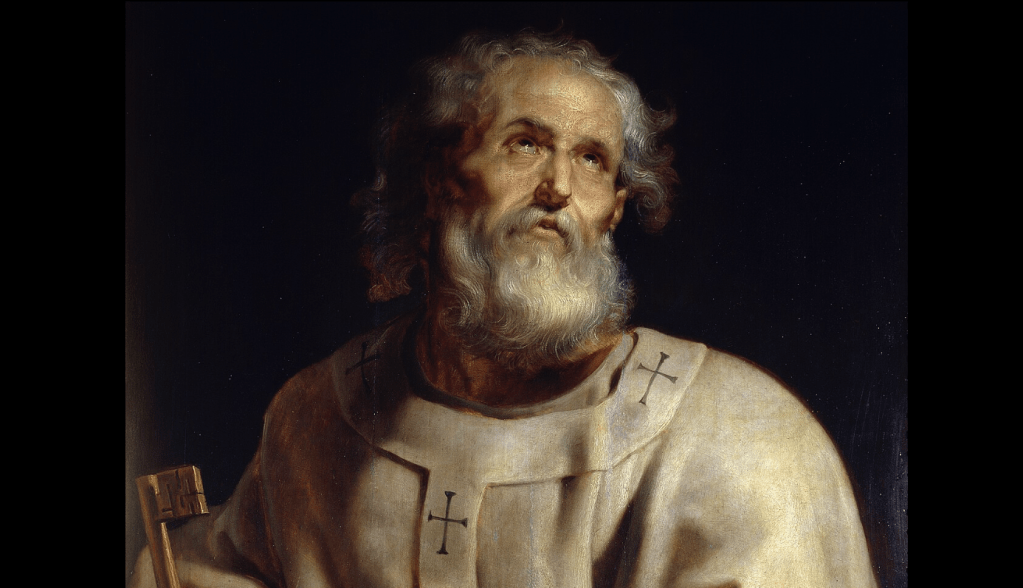
Painting: The Apostle Saint Peter by Peter Paul Reubens

Healy, Mary. The Gospel of Mark. Grand Rapids, MI: Baker Academic, 2008.

Link for the Mass readings for Thursday, February 20, 2025