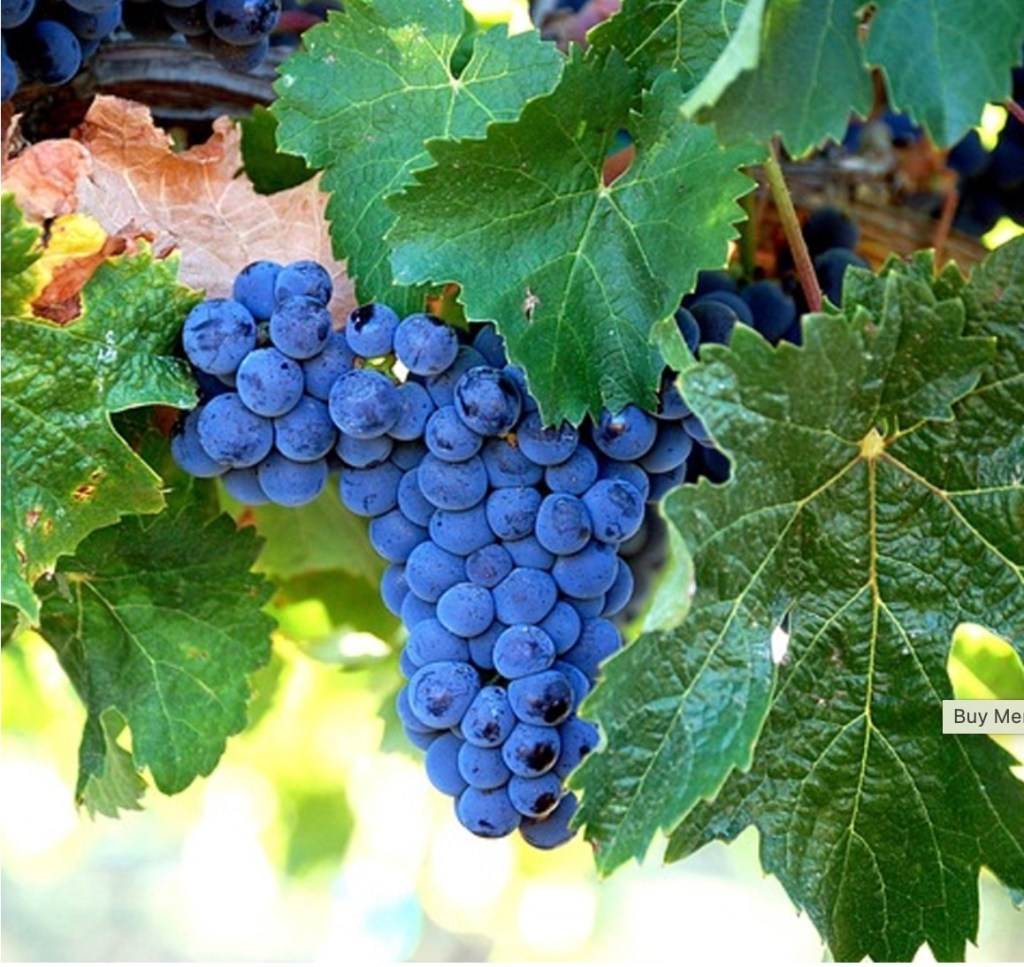
We are tenants serving in the vineyard of our loving God and Father.

“Therefore, I say to you, the kingdom of God will be taken away from you and given to a people that will produce its fruit” (Mt 21:43).

With these words, Jesus is speaking to the leadership of Israel, those entrusted to shepherd God’s chosen. Jesus is not, as some have unfortunately suggested, advocating supersessionism: the claim that the Church has replaced Israel in God’s plan. The Vatican II document, Nostra Aetate, Declaration on the Relation of the Church and Non-Christian Religions, states clearly: “It is true that the Church is the new people of God, yet the Jews should not be spoken of as rejected or accursed as if this followed from holy Scripture” (741).

There is clear evidence that there have been anti-semitic movements and supersessionist views in the Church and it has created division instead of interfaith communion, and there are traces that still support a view contrary to Nostra Aetate. There is still much to do to heal and promote better mutual understanding. We must remember that Jesus, Mary, Joseph, and the Apostles were Jewish. Pope Paul VI stated that we are all spiritual Semites.

What we need to glean from Jesus’ words is that we who say we believe in God are given a sacred trust and duty to care for one another and all of creation. In the parable that Jesus shares, God is the owner of the vineyard, echoing a similar analogy from Isaiah 5:1-7 which is our first reading. The appeal of each telling is an appeal to the leaders and elders to repent.

Jesus is speaking to us as well. The Church is not our Church, just as in the parable the vineyard does not belong to the tenants. We are to serve God by following his will and bear good fruit by living our baptismal call to live holy lives dedicated to God. We cannot go through each day with blinders on to the needs of those around us. Though we cannot meet all the needs everywhere and for everyone, we can begin to approach each day with an intent of being good stewards to those we engage with.

We can begin by looking at our own home. First, on the material level, do we have more than we need? Are there material goods that could be used better elsewhere rather than just taking up space? Then, going forward, we can purchase what we need and resist what we think we need. I need to apply this to books!

“Wealth, explains Saint Basil, is like water that issues forth from the fountain: the greater the frequency with which it is drawn, the purer it is, while it becomes foul if the fountain remains unused” (Compendium, 329). We need to seek God’s discernment so to better manage the gifts and resources that God has entrusted us with. We are to free ourselves from the attachment to our material goods and seek God first. He gives us more in one loving glance than any possession we have or ever will have. We are to be people of generosity giving freely with joy, not choking on our own stagnation of excessive acquisitions.

Assessing daily how we treat one another is also important. A good practice here is to follow St. Mother Teresa’s five finger Gospel: “You did it to me.” This was an embodiment of Matthew 25:31-46, where Jesus emphasized what you do to the least of my brothers, you did it to me. If we can approach each person we meet, in person as well as online, not as if they were like Jesus, but in fact Jesus, we might treat others with more dignity or respect.

The act of respecting the dignity of one person makes a big difference, certainly to that person. Respect ripples out to counter the negativity that permeates growing cynicism, distrust, division, and polarization. A waterfall begins with one drop. Helping people to feel they matter, that they have worth and dignity begins with one smile or a listening ear is just such a drop. Kindness and caring begins by listening to God tell us how much he loves us, be still long enough to rest in his healing embrace, and allow him to love us where we may not want to be loved or feel unlovable.

We can often get stressed, strained, frustrated, and angry when we consume too much of the news and allow ourselves to be saturated with the negativity of the world. Very little is within the realm of what we can have an impact on. Might be a good practice to consume less of the negativity, pray for the needs of the world, and allow the light and love of Jesus to reveal to us where we need to repent. repentance, forgiveness, healing, help us to receive more of God’s love. We are better able to resist serving ourselves but instead serve God in his vineyard in the unique way he calls us to serve.

We are called to work toward the common good of all, within our country and throughout the world. Doing so not in some abstract or utopian way, but in specific ways where we are invested in the lives of others. “Collaboration in development of the whole person and of every human being is in fact a duty of all towards all, and must be shared by the four parts of the world, East and West, North and South” (Compendium, John Paul II, 446).

We are not the owners of the vineyard, we are the tenants placed in charge by God. How we use our time, talent, and treasure matter. This is a good point of daily meditation and focus when examining our conscience each evening before we retire to the land of dreams. How have we done in the matter of being grateful to God, caring for one another, ourselves, and our environment? For those places we have fallen short, may we seek God’s forgiveness, and commit with God’s help to begin anew. Where we have done well, may we thank God for his guidance and continue to receive his love and follow his will, such that the water of generosity we draw continues to be pure so we may bear good fruit that will last.


Photo: When we remain connected to the vine of God’s love, we will bear good fruit.

Link for the readings for Sunday, October 4, 2026

Flannery, Austin. Vatican Council II. Fifth ed. Vol. 1. 2 vols. New York: Costello, 1998.

Compendium of the social doctrine of the church. Cittá del Vaticano: Libreria Editrice Vaticana, 2005.
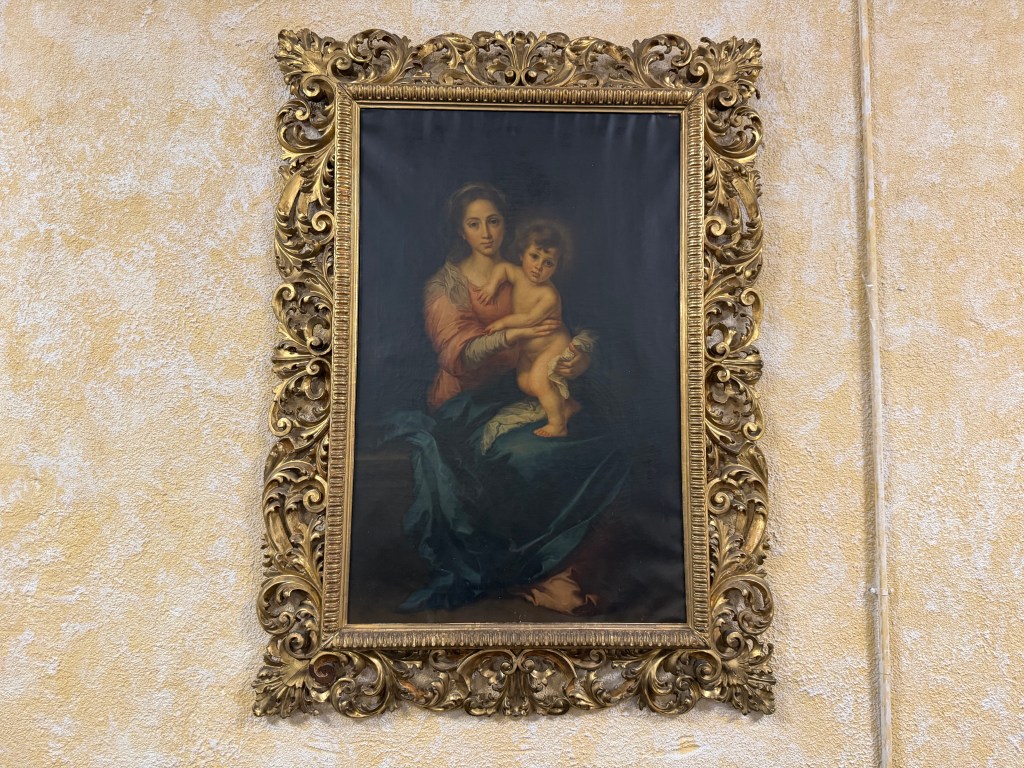

May we, like Mary, hear and act on the word of God.

He said to them in reply, “My mother and my brothers are those who hear the word of God and act on it” (Luke 8:21).

There are many popular genetic testing kits that are advertised on TV and through the internet. People have asked me is it possible to be a blood relation to Jesus. Jesus’ reply today can help you to save some money. Asking if we are a blood relation with Jesus is missing the point of Jesus’ life and ministry. What is more important than even blood is, “those who hear the word of God and act upon it.” God is to be first, even before family. We may experience a subtle shudder from this statement but to those of Jesus’ time, it would have been apoplectic. Family meant everything in the Ancient Near East.

Jesus is not making the point that we disregard family, he is instead teaching us that if we are to be authentically present to our family this will come about best by following the will of our Father in heaven. As we deepen our relationship with Jesus, hear and put his teachings into action, we begin to bear the relational fruits of the Spirit. Would not our familial relationships be much better if we were more loving, joyful, peaceful, patient, kind, generous, faithful, gentle and practiced more self-control? Jesus taught and showed from his own life that the path to fulfilling and intimate relationships flourish best when we put God first because as we grow closer in relationship with him, we also do so with those around us.

Another point we can glean from Jesus’ response in today’s Gospel is that our “family” is to transcend bloodline, tribe, and nation. Any one of “those who hear the word of God and act upon it” is spiritually akin to Jesus the Christ. The point is not that we have a genetic, lineal relation with Jesus, but that when we live and act according to our Father’s will, we become part of the infinite family of the Trinity.

Though our baptism and the sacraments, in our centering our lives around the hearing, reading, meditating and praying with the word of God and putting what we receive into action, we become brothers and sisters in Christ. We will act with more caring and kindness, seek common ground through dialogue, be more willing to walk beside each another and instead of judging give each other the benefit of the doubt more. We will love one another as Jesus loves us!

The pride of place is hearing the word of God proclaimed during Mass. We are also invited to read his word in our own daily time of quiet. In both situations, God’s word comes alive as he shares something of himself with us. The Holy Spirit nourishes, and gives us his life. As we then receive, at times struggle with, seek to understand, and put into practice God’s word, we come to know more intimately the Father, and the Son, and the Holy Spirit, the saints, and our brothers and sisters in Christ. We are one family in the Body of Christ when we “hear the word of God and act on it.” Just imagine what our parishes and communities will look like when we put this simple verse into practice.

————————————

Photo: Mary is the model of discipleship and part of Jesus’ new family, for who better than she heard the word of God and acted upon it when she said to Gabriel, “Behold, I am the handmaid of the Lord. May it be done to me according to your word” (Luke 1:38).

Mass readings for Tuesday, September 22, 2026

Spending time with Jesus and in his word will help us to be contemplatives in action.

An elitist posture can be dangerous in that others are excluded that ought to have access. There are those areas in which there will be limited access. Select positions such as a principal, CEO, or manager. At higher levels of sports, the arts, and civic leadership, there are limited positions available as well. Yet access ought to be granted for the most qualified. Artificial impositions regarding racial, ethnic, gender, or religious litmus tests are to be avoided. Regarding having access to God, worshipping as a community, and spreading his love and word, an elitist approach has no place.

Jesus addresses this concern in today’s Gospel from Mark. The Apostle John approaches Jesus to complain that someone who does not belong to their inner circle of disciples was healing in the name of Jesus. John even shared that they attempted to prevent this person from healing. Interesting that John was concerned that this man was not one of their number, as opposed to saying he was not a follower of Jesus. Also, this account appears shortly after John returns with Jesus to the failure of the disciples being able to exorcise the demon from the boy. This man was doing what those in the inner circle were not able to do. Jesus replied, “Do not prevent him. There is no one who performs a mighty deed in my name who can at the same time speak ill of me. For whoever is not against us is for us” (Mk 9:39-40).

Jesus shared in words what he modeled in action throughout his life. The kingdom of God is open to all those who were willing to receive him and receive the invitation of his Father to enter into relationship. That relationship with him creates a spark that ignites a fire in those of his followers to reach out to teach, preach, cast out demons, heal, and be present to others in their need in his name. The kingdom of God is not for the select few, not for the frozen chosen, or not to be an elite club. The depth of active participation is only limited by one’s willingness to be engaged in participating in the life of Jesus.

May we have ears to hear Jesus’ universal message today, seek that which unifies us more than what divides us, and, embrace his message that “whoever is not against us is for us.” This can be translated outward beyond our tradition as Catholics. There is much we can do together with Christians of other denominations, people from other faith traditions, and people of good will with no faith tradition.

There are many who are in dire need of support in our communities, states, countries, and world. May we resist the us vs. them mentality that the enemy tempts us to entangle us in and resist the temptations of indifference or feeling like we have nothing to contribute. Jesus calls us to worship communally, as well as step away daily and sit at his feet and be alone with him. In that time of intimacy, corporately and individually, we are loved, healed, transformed little by little, and sent to share what we have received from Jesus to be his contemplatives in action.

Jesus, please meet us in our time of worship and prayer, help us to come to know you, our loving God and Father better, and his will for our lives. Help us to hear and meditate upon your living word, that we may know, experience, and be transformed by the love of the Holy Spirit. May we breathe, receive, rest, renew, and abide in your love so that we may think, speak, and act from this place of being known and loved by you. Then, in the name of Jesus, when we find ourselves in situations of division, polarization, and dehumanization, we may offer the invitation to experience the healing balm of understanding, dialogue, forgiveness, love and hopefully reconciliation.

———————————————————————

Photo: Different ocean than I am used to but the same light from the sun shining on the waters. View of the Pacific off the Santa Monica Pier.

Link for the Mass reading for Wednesday, February 26, 2025

As Jesus purified the Temple, may he purify each of us.

Jesus entered the temple area and proceeded to drive out all those who were selling things, saying to them, “It is written, My house shall be a house of prayer, but you have made it a den of thieves” (Lk 19:45-46).

Luke’s account of Jesus casting out the money changers is the most succinct of all four Gospels. Luke uses the Greek term for “drive or cast out” – ekballō, eight other times. Each time he used it, Luke was making reference to exorcising demons and unclean spirits. The profanation of the body through possession of evil is equivalent to the desecration of the Temple precincts.

Jesus justified his actions of driving the sellers out of the Temple precincts by saying: “Destroy this temple, and in three days I will raise it up” (Jn 2:19). Jesus showed the dignity of our humanity, when he, as the Son of God, he entered our humanity. He entered into the chaos of our lives, our faults, and foibles, and our sins while remaining sinless himself. He showed that even though we have turned away from God, we were not destroyed and lost beyond hope. He reminds us that what God has created is good and that includes us. Even when we turn away, he continually and infinitely reaches out to us in love and calls us home.

One of the wonderful features of the upcoming holidays is that many families seek to come together and to return home. For some coming home has been longer than for others, for some there may be many miles of separation, and for others, coming home is no longer possible because they have changed their address from this life to the next. There are also those suffering today that are estranged from their families, those who are homeless, displaced, refugees and immigrants, or living in fear of deportation.

No matter who or where we are, Jesus is close. He became one with us to restore our communion with God and one another. He provides the living water that quenches the thirst of our deepest longings. Jesus, our Temple, our new covenant, the dwelling place of God, is alive and present to each one of us in every condition, situation, time, and the place we find ourselves. Through his resurrection, ascension, and our participation in his life, we can become precious stones, each a piece of his Temple.

Jesus meets us where we are and loves us as we are, yet he wants more for us. Jesus, please cast out, as you did in the temple precincts, all from our being that would defile, distract, or divide us, and purge anything that would keep us bound in sin. Send the Holy Spirit to reign in our hearts that we may embody and bear his love with all we meet so to be reconciled with God and one another. May we be inspired to work toward the unity of our human family so that all may have a place at the table.


Painting: By El Greco, 1600 – Christ Driving the Traders from the Temple

Link for the Mass readings for Friday, November 22, 2024

Jesus seeks to heal and free us from our labels.

In the Gospel reading today, Jesus is accused of being an agent of Beelzebul, the prince of demons, because he was exorcising a demon from a man that was mute. Jesus addressed the critique and showed the polarizing nature of the onlookers who were unwilling to see the healing before them for what it was. Jesus then stated the obvious: “Every kingdom divided against itself will be laid waste and house will fall against house” (Lk 11:17).

Satan seeks to sow discord and division. Jesus seeks to bring about unity. Now it is true, that five verses later in the Gospel of Luke, Jesus is recorded as saying: “Do you think that I have come to establish peace on the earth? No, I tell you, but rather division” (Lk 12:51). Anyone feeling a bit confused? Welcome to the wonderful world of the Bible!

To understand Scripture, we need to understand the context of the whole of Scripture, not just isolated verses. Throughout the ministry of Jesus, he seeks the unity that all may be one as he and the Father are one (cf. John 17:21), yet he has consistently experienced those that rejected his message and healings as witnessed in today’s Gospel account.

Jesus demands a choice. We need to decide if we are either going to be for him or against him (cf. Lk 11:23). The division Jesus is talking about results from those who choose not to recognize that Jesus is who he says he is and reject him and those who accept him for who he is. This choice continues to cause division within households, families, and friends even today.

The greater take away from today’s Gospel and Jesus’ teachings as a whole, is that Jesus is the way and the truth and the life (see John 14:6). Jesus is the Son of God made man. Some will reject this truth. Some will accept only parts of the truth that Jesus teaches, while others will say there is not objective truth. We who identify with this truth and give our lives to him as his disciples, then like Jesus, we are to embrace the gift of our diversity.

We are more united rather than divided when we resist limiting ourselves by mere labels. In our modern context, labels, such as liberal and conservative are not helpful. It is certainly easier to cast labels, but interactions with people and developing relationships are much more nuanced. We are not mere cardboard cut outs, or caricatures.

To better understand the essence of who we are as human beings demands greater time and experience with each other than an outward appearance or isolated statement may portray. Many times, once we have cast a label, we believe that we have “defined” the person. They are classified in their box and tied up in a neat and pretty bow, and woe to the person who resists being boxed and bowed.

I remember reading from one of the books from the tracker, Tom Brown, Jr., in which he described how many people when seeing a bird, such as a blue jay, robin, or crow, are often satisfied with the label, the naming of it, and move on from that sighting self-satisfied. They think that in that simple identification they now have come to understand all that there is to know about that species. So much of the essence of one of God’s amazing creatures is missed by such a simplistic and limiting classification!

Unfortunately, we do the same with each other. We make a prejudgment on a person or group of people because of a word, statement, stance on a particular issue, or particular belief. We then falsely believe we know everything there is to know about that person or group. This is a limiting and divisive approach. Jesus invites us to encounter, accompany, spend time, and break bread with people. In spending time with one another, dialoguing, and respecting each other, the caricatures can be filled in with some substance and we can come to know a little better the person beyond the prejudgment. Maybe, just maybe, someone who we have been keeping at arm’s length, we can actually grow closer to, despite our differences.

———————————————————————————

Photo: During 30-Day silent retreat, St. Joseph and Mary Retreat House, Mundelein, IL.

Link for the Mass reading for Thursday, March 7, 2024