Are we willing to come close as Jesus does for us?

“Whatever villages or towns or countryside he entered, they laid the sick in the marketplaces and begged him that they might touch only the tassel on his cloak; and as many as touched it were healed” (Mk 6:56).

The people of Jesus’ time were in need of healing, hungry to draw closer to God, often searching, wandering, and wounded, like sheep without at shepherd. This is just as true for us today. Though Jesus is not as visible to us as he was to those in the land of Gennesaret, he is just as present if not closer. We who receive Jesus in his Word proclaimed and through his Body and Blood, in the sacraments, prayer, healing, mercy, and grace are sent forth to bring Jesus to others.

We are not to go home as if nothing of any significance just happened in our gathering as the Mystical Body of Christ at Mass. Jesus does not send us to walk around with an air of superiority over others, to judge and condemn people, to refuse to help those in need because we feel they deserve the condition they are in, that they are “illegal” (people may do illegal actions but no person is illegal), that they chose their lifestyle, that they are lazy and just need to pull themselves up by their own bootstraps. Jesus was and is not indifferent to the plight of others. Jesus met people and continues to meet us where we are and as we are, and then he leads us with his “gentle chords of love” (cf. Hosea 11:4) to the truth of who his Father has created us to be.

Pope Francis was asked in an interview by Fr. Antonio Spadaro, S.J., in 2013, “What does the church need most at this historic moment?” And Pope Francis answered, “that the thing the church needs most today is the ability to heal wounds and to warm the hearts of the faithful; it needs nearness, proximity. I see the church as a field hospital after battle.” We need to be “near”, in the same “proximity”, to bear Christ to one another: “The church sometimes has locked itself up in small things, in small-minded rules. The most important thing is the first proclamation: Jesus Christ has saved you. And the ministers of the church must be ministers of mercy above all.”

Jesus, please help us to be present and willing to come near. Lead us to experience your love, mercy, forgiveness, and like you, be willing to enter into the chaos of one another. Help us to resist the temptation to keep others at a distance and refuse to be indifferent to the needs of those you bring to us in their time of need. May we too, in the words of Pope Francis, go out to “heal the wounds and to warm the hearts of the faithful” by being willing to accompany others in their sorrows, anxiety, trials, and tribulations.

People are really hurting all around us. Help us to let go of the need to fix them or fix their problems. Jesus, help us to be present, to listen, to hear, understand, and be open to allow the Holy Spirit to speak through us at the appropriate time, so that, in the end, we do not prevent people from encountering you, but become a means for them to encounter you, the divine physician, and be healed.

—————————————————————————————————————

Photo: Are we willing to grow together like these three trees? Rosary walk, St. Vincent De Paul Regional Seminary, Boynton Beach, FL.

Spadaro, S.J., Antonio. “A Big Heart Open to God: An interview with Pope Francis”. America Magazine. September 30, 2013 Issue: https://www.americamagazine.org/faith/2013/09/30/big-heart-open-god-interview-pope-francis


Link for Mass readings for Monday, February 5, 2024

Confession – Intimate and healing encounter with Jesus.

“So they went off and preached repentance” (Mark 6:12).

They, being the Twelve Apostles, preached repentance. There is a pattern. John the Baptist called people to a baptism of repentance. The first words of Jesus’ public ministry were, “This is the time of fulfillment. The kingdom of heaven is at hand. Repent and believe in the Gospel” (Mark 1:15). And now in today’s Gospel, the Twelve are going off two by two preaching repentance.

What does repentance have to do with us almost two thousand years later? What repentance had to do then. We all have in the deepest part of us a yearning to belong, to be part of, to be loved. We want to be seen, heard, and understood. We want our lives to have meaning, fulfillment, and a sense of worth and dignity. This deepest longing has been placed in us to be filled by God and as we receive and abide in God’s love, we are better able to encounter and share his love with each other.

The problem is that since the Fall, we all fall short of the glory of God. The good news is that we have not been totally corrupted. We are still good. Even though we have intentionally and consciously chosen to turn away from God and seek to feed our deepest longings with something or someone other than God. We can change. We can come to realize that who and whatever we place before the Father separates us from a deeper and more intimate communion with him.

We can realize that when we sin, we turn away from God, isolate ourselves from God, and feel the loneliness of that choice. This worsens when we decide that we don’t need God, that we are self-sufficient, and can take care of ourselves. Our hunger grows and is unsatisfied by the finite ways we try to fill our infinite hunger. The answer then is to slow down, be still, and listen to the invitation of God that he constantly offers and then to decide to repent, to turn back to him, to change our heart and mind.

What we see in the path blazed by John the Baptist, Jesus, and then his Apostles are the seeds of the Sacrament of Confession which Jesus will institute with the Twelve in the upper room after his Resurrection. Jesus has experienced the loneliness of the separation that we all feel in our sinful state. Only he felt it much more intimately and profoundly as he received the full assault of the weight of all our sin on the Cross. And what did Jesus do when he met the same Twelve who betrayed him? He forgave them and called them to forgive others in his name.

Jesus instituted the Sacrament of Confession to help provide the healing we need to repent and to turn back to the Father. He gave this gift to the Apostles who then passed it on to their followers, and who then successively passed this gift on through each generation of priests to our present day. Confession is a grace, a bridge that leads back to the Father that keeps on giving for those who come to receive this miracle of healing. “Confession is the personal gift of redemption, always unique, to each person, just as each person can accept and apply it” (Confession, Adrienne von Speyr, p. 93).

God the Father loves us more than we can imagine, and he wants us to experience his love. Confession is one of the most intimate ways we can experience his love. We are only as sick as our secrets. In Confession, we can bring forth the deepest and darkest of what we have done and what we have failed to do. We don’t need to buy into the lie that we will be abandoned if anyone knew. Instead, Jesus, who was abandoned, does not abandon us. Jesus forgives, loves, heals, frees, and restores us so that we can experience what we have been created for, to be loved by God and to love him and each other in return.


Photo: Rosary walk St. Vincent De Paul Regional Seminary, Boynton Beach, FL.

Link for the Mass readings for Thursday, February 1, 2024

God first before anyone and anything else will help us to experience more peace.

“Brothers and sisters: I should like you to be free of anxieties (I Corinthians 7:32).

Those in the Church at Corinth who heard this verse read to them as we just read or heard, would most likely have perked up. Who then, and now, would want to be in a steady state of stress? Who would rather experience a steady flow of peace, stillness, and tranquility?

Paul’s guidance to experience peace may be lost in his example of being married or not married. It is important to recognize that Paul is writing from the perspective that Jesus will be returning soon and not saying that one state is better than the other. His writings often reflect that if one is married it is good to stay married, if one is single or a virgin to stay in that state and not seek marriage.

Obedience to Jesus and his Father is the guidance that Paul gives. The husband and wife are going to feel the tension of their obedience to God and each other. They will be more divided, and this tension will grow when they put each other first over and above God. When we allow anyone or anything to have a place of priority before God there will be a greater potential for anxiety because we are placing our ultimate trust in someone or something that is finite and imperfect. When we are obedient to God and when he is first and primary in our lives, our wills will be more ordered to his will. To be obedient, we need to listen to his voice, and put his words into practice in our everyday lives.

Moses said before his death to those about to enter the promised land: “A prophet like me will the LORD, your God, raise up for you from among your own kin; to him shall you listen” (Deuteronomy 18:15).

“To him shall you listen.” As Christians, we believe Jesus is the One to whom Moses is speaking of, the one for whom we are to listen.

I remember Jesus being perturbed, angry, moved by compassion, experiencing sorrow, and extending love, healing, and mercy, but I don’t remember reading that he ever experienced anxiety. This is so because he was consistently obedient to and abided in the love of his Father. His Father also gave him authority to teach, heal, and cast out unclean spirits. Unlike the long tradition of rabbis who were given authority from those who they studied at the feet of, each rabbi would have traced their teaching pedigree through a succession of teachers back to Moses.

Jesus did not do so, and this may be one of the reasons the people were so amazed at hearing his teachings, witnessing his healing miracles, and the exorcising of unclean spirits. They wondered about where he had the authority to do, say, heal, and exorcise as he did. The demons and unclean spirits knew where Jesus got his authority from. They knew he was the Son of God and were obedient. When Jesus, as in today’s gospel, commands the unclean spirit to come out of the man, the spirit obeys. May we obey as well to love the Lord our God with all our heart, soul, and strength, and our neighbor as ourselves, in that order.

It may seem counter intuitive to place God before those closest in our lives; our spouse, family, and our friends, and even before ourselves, as Paul guides us to. Even if we do understand the principle, we may find it hard to put it into practice. David Kaiser-Cross, who was the associate pastor at Jupiter First Congregational Church, explained to me that if we put God first and strive to improve our relationship with him, as we grow closer to God, we grow closer to each other.

This is possible because as we receive and abide in God’s love, we are changed. We become more patient, more attentive, present, understanding, and loving. We experience forgiveness and healing. We are more grateful for what we have received. All of these graces lead us away from a selfish or grasping posture, and as we heal, we become less reactive, less insecure, less anxious, and more available to help others to heal and grow.

The more we are obedient and surrender to the commands of Jesus and put his guidance into practice in our lives, the more we will experience, not oppression but freedom, and the same peace that he experienced, “that peace that surpasses all understanding” (Philippian 4:5).

When we incorporate a daily practice of making time to be still, step away from our daily activities, even good and healthy ones and relationships, and rest and abide in the Father’s love, our anxiety will become less, and our peace and tranquility will become more. As challenges and conflicts arise, we will no longer be clinging to the person with white knuckles because of our fear of losing them, we will instead be more apt to remember to turn to Jesus, invite him into our situation because he is our anchor instead of them. We will be better able to let go of the unhealthy attachments that we have and allow for more breathing space between each other.

We will see our way through each crossroad with less stress, feel more of a sense of freedom and joy as we overcome our challenges. We will feel more stable and secure in our relationships with Jesus and each other as we work through each conflict. We will not feel we have to run away from or deny conflict as long as we remember that as we begin where we are right now, we are loved by Jesus as we are. May that reality be our foundation so that as we learn and mature, step by faithful step, we will consciously choose to be more patient and gentler with ourselves and each other.


Photo: One of the ways I have been experiencing more of God’s peace has been during my evening Rosary walks.

Link for the Mass readings for Sunday, January 28, 2024

Faith in Jesus instead of our anxieties and fears brings peace and stillness.

“Why are you terrified? Do you not yet have faith” (Mark 4:40)?

Jesus asked this question of his apostles after he quieted the wind and the waves. These were seasoned fisherman, so for them this must have been quite the storm. They even thought that they were not going to survive it as the waves not only tossed their boat but it also began to take on more and more water.

The question of faith was directed at their trust in him. Did they believe that Jesus was who he said he was and showed himself to be. If so, all would be well. Jesus called his apostles and brought them into his inner circle so they could not only experience his teaching, healings, and exorcisms but also to get to know him as the Son of God. As with any relationships, this takes time, and their faith, their trust in him in all circumstances was still growing. But as we read yesterday, faith as small as a mustard seed, will bring large results. This would come to pass with the apostles as well in time.

Our anxieties, fears, and insecurities are a good barometer of our faith in Jesus. These emotions are human and good in themselves as they are alerting us to a real or perceived threat. The challenge is to discern the real from the perceived and to determine when the threat has passed.

Where these emotions become a problem is when we believe in, place our faith in, and identify ourselves by them. Instead of saying to ourselves, I feel anxious, we define ourselves as anxious. Doing the opposite by denying and stuffing our emotions and feelings do not help either.

Jesus can help us to calm the real storms as well as the perceived storms in our lives. He can help and empower us to sit with our emotions, and ultimately get to the source of them and identify the root, identify if it is perceived or real, and then work through it. As with the apostles, when we continue to turn to Jesus, our faith and trust in him will grow, and we will also heal, mature, and grow through the storms in our lives.

Easier said than done? Yes for both our real and imagined storms. But for either, as we place our trust in Jesus, persevere, claim our authority in his name to renounce any attacks of the enemy, all things are possible!


Photo: Storm clouds on the way during retreat in January, all was calm and still.

Link for the Mass readings for Saturday, January 27, 2024

Out of our mind or following the lead of the Holy Spirit?

Jesus has been on a whirlwind tour since beginning his public ministry, by healing the sick, casting out demons, teaching with authority, and the number of people gathering around him continues to increase. He has just called the Twelve Apostles to himself, and he has gone home for a visit.

He is not exactly welcomed back with a tickertape parade though. Instead, When his relatives heard of this they set out to seize him, for they said, “He is out of his mind” (Mark 3:21). What exactly causes his family to think that he is out of his mind? Is it that Jesus has called Apostles, is it that people are following him in such great numbers to come to be healed? Both?

There are many speculations about the “hidden years” of Jesus referring to the fact that there is no mention of Jesus in the gospels from the moment he is twelve years old when Joseph and Mary lose him, until he is about thirty and beginning his public ministry. I am sure Mary didn’t tie him to the table all those years so he wouldn’t wander off again. The more I read the Gospel accounts, the more I believe that nothing special happened during that time. Jesus led an ordinary and very simple life and that is why nothing is written.

This could be the reason why his relatives are thinking that he is out of his mind. How can this simple carpenter all of a sudden be getting all of this attention? Who does he think he is? Does he think he is better than us?

It also reveals, as we have been seeing with the scribes and Pharisees, and possibly now with Jesus’ relatives, that when we get stuck in our routines, grind ourselves into a rut, and find our definition and security there, feel safe only in our comfort zones, we are not going to grow. When we are challenged to do so, we can be open to take the risk or dig in our heals. Many of Jesus’ relatives as well as the scribes and Pharisees, unfortunately are doing the latter.

Jesus, as he shared when he offered the image of the new wine skins, is inviting us to be open to the leading of the Holy Spirit. He challenges us not to settle, but to be open to risk and to move out of our comfort zones. We have not been created to merely survive. God created us to thrive and experience our lives by being fully alive.

I invite you to give yourself some quiet time, breathe slow and deep, and ask Jesus where he might be inviting you to stretch a bit and take a risk, and take a step or two out of your comfort zone. When we follow Jesus, it may get bumpy, but it will be well worth it!


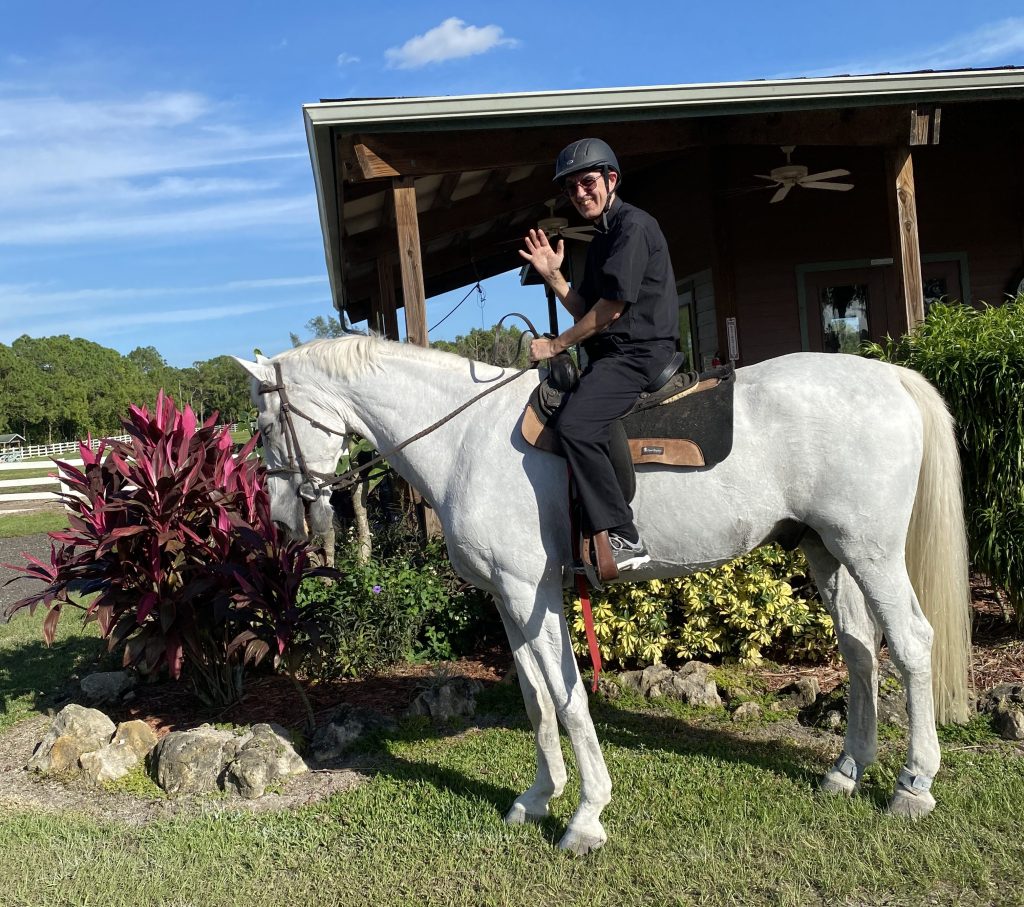
Photo: Over the Thanksgiving break, felt inspired to get back in the saddle. First time in 30 plus years. Very happy I did! What is God inspiring you to do?

Link for the Mass readings for Saturday, January 20, 2024

Forgiveness is possible and if we want to heal, necessary.

As was shared in today’s first reading, the very shelter that David and his men were hiding in, was the same cave that Saul happened to walk into by himself. David’s men encouraged David to take Saul’s life, after all they were there because they were hiding from Saul and his army. They could have easily overpowered him and taken his life. The threat would be put to an end and David would assume his rightful place as king.

And yet, David, refused. He chose not to give into revenge, to forgive, to trust in God’s justice instead of taking it into his own hands. After Saul exited the cave, David emerged and said: “I decided, ‘I will not raise a hand against my master, for he is the LORD’s anointed’” (I Samuel 24:11).

He could have easily justified Saul’s death as an act of self-defense but did not. He chose to surrender not to Saul but to God and trust in God’s justice. How many times do we do the opposite? We often react first and think later. We often don’t do forgiveness well, but God does. Forgiveness, is not easy, but it is possible if we ask God to help us to do so.

When we have been hurt or harmed by another, continuing to hold onto the hurt and pain only keeps it festering. Forgiveness is not condoning, justifying, or saying in any way that the action was acceptable. Forgiveness is the making of a choice to no longer accept or allow the pain inflicted to continue. Forgiveness is a choice to not participate in the cycle of violence, but to remove oneself from it, and not choose to act in kind.

I invite you to pray the Our Father this morning or sometime today, slowly, and with intention and attention to the words. When you get to: “And forgive us our trespasses as we forgive those who trespass against us…” Stop and breathe. Bring to mind any areas that you may be harboring some unforgiveness and ask Jesus to help you to forgive in this moment.

It is ok if you find it difficult or are not ready. The first step is to be aware and to identify where the unforgiveness lies. You can then ask God to forgive for you until you are able to forgive. Jesus will lead you each day until you can come to a place of healing where you will be able to forgive. Jesus sought help as well on the Cross when he said, “Father forgive them, for they do not know what they do” (Luke 23:34).

May we learn from David’s example today, may we share with Jesus our pain, and experience his healing and his love. And may we seek to and ask Jesus to help us to forgive so we can also be forgiven.


Photo: Rosary walk Thursday night, St. Vincent de Paul Regional Seminary, Boynton Beach, FL. The love and light of Jesus will shine through the clouds of our unforgiveness if we are willing.

Link for the Mass readings for Friday, January 19, 2024

May we bring some of the sabbath into today.

“May the Father of our Lord Jesus Christ enlighten the eyes of our hearts, that we may know what is the hope that belongs to our call” (Ephesians 1:17-18).

When we seek God first in all we think, say and do we will experience more peace in our lives. Taking time to begin our days by opening our heart and mind to God, receiving, resting, and abiding in his love helps us to have eyes to see a little more clearly than if we get up at the last minute and rush into the day at breakneck speed.

We see the importance of this in today’s Gospel. The Pharisees are following Jesus and his disciples to catch him breaking the law so they can bring charges against him. Jesus and his disciples are walking on the Sabbath. The Sabbath is a key identifying feature for the Jewish people.

The Sabbath is a day of rest in which the people are to remember his saving act of freeing them from their slavery in Egypt, honor God and his covenant with his people, and it is also a remembrance that God is the creator who rested on the seventh day and so made this day holy in which no work was to be done. The sabbath rest is one way to help the people to remember who they are as human beings created in God’s image and likeness.

Unfortunately, these Pharisees are seeking to subvert the law for their own agenda. Instead of having the eyes of faith to see God in their midst, on the Sabbath they are seeking to find a way to trap the One who is seeking to heal and save them from their scrupulosity. Jesus does not disregard the gift of the sabbath but seeks to restore it to its proper order as he heals on the Sabbath and allows his disciples to feed themselves when they are hungry. In Jesus saying, “the Son of Man is the lord even of the sabbath” (Mark 2:28) he is harkening back to the dignity of humanity who has been created very good.

We have been created very good. We are God’s beloved daughters and sons. May we give ourselves some time to begin this day in stillness and be grateful for the gift of this day, the gift that we have a God that loves us and wants the best for us, and return throughout the day no matter our schedule to give ourselves moments of rest and renewal, to spend time in God’s presence to be still, to be loved, and to be a light to others that we meet.


Photo: Looking up to the heavens and taking some deep, slow breaths is a good way to rest and reset!

Link for the Mass readings for Tuesday, January 16, 2024

The Holy Spirit is the new wine that will grow within us if we are willing to change.

God is not a tyrant. God is not checking his list and checking it twice to see who’s naughty or nice. God is not teeing up the football to pull it up at the last second as we are running up to kick it. God does not ask us to walk onto a rug and pull it out from under us.

Anything that God requires of us, asks of us, and the boundaries he establishes for us are done out of love for us. God wills our good and wants the best for us. God knows what will make each and every one of us in our own unique way fulfilled, to have meaning, joy, and experience freedom, love, and wholeness in our lives. God has a purpose for our lives that aligns with his will for the unity of all of humanity and creation.

It is from this context that we can understand our readings and the Bible as well. Saul is being corrected by Samuel because he was not obedient to God’s command. You cannot be partially obedient, as Saul was attempting to justify when he said that he obeyed the LORD and fulfilled the mission. Samuel showed that Saul had not done so (See I Samuel 50:8-23).

In the Gospel, Jesus gives the imagery of changing the old wine skins to new ones otherwise the old ones will burst as the wine ferments and expands. Newer and flexible skins are necessary (Mark 2:18-22). The new wine we are to receive is the life of the Holy Spirit within us, that can only breath and expand when we are willing to be flexible, to change and to grow. We can only change and grow when we are obedient to God.

Unfortunately, when many of us hear the words change, obedience, or discipline, we cringe or constrict. Yet, even in the natural, material world, there are many examples of the positive effects of a willingness to change, establish boundaries, order, discipline, and obedience. Resistance happens when we are operating under a false belief or apparent good that distorts our freedom. Freedom is not doing what we want, when we want, how and whenever we want. Those are examples of a freedom of indifference that leads us down the path of attachment, addiction, and slavery to sin.

God today is inviting us to experience a freedom for excellence. To have the freedom to play any instrument fluently, we need to be obedient to the teacher, discipline ourselves to practice, and be open to correction. Partial obedience, not being diligent with our times of practice, resisting guidance and correction, will limit our freedom to play. This is true in so many other areas of the arts, sports, occupation, relationships, family, and our spiritual life.

I still have the same guitar my father gave me when I was about seven. I still can’t play any music because I was not willing to discipline myself to play it and so I do not have the freedom to play any music. I have been obedient and put in the time and energy, discipline and sacrifice necessary to be ordained a deacon and blessed to have been serving as a deacon for these past ten years.

The bottom line is, do we trust the one who is guiding us? In this case, do we trust God that he has our best interest in mind? If we do, then we will be more likely to be obedient to his will, trust in his guidance, make the sacrifices necessary, and follow where he is leading us. That is what Jesus and Mary did, what the saints did, and what we can do, one step, one yes at a time. Easy? No. With his Son, Mary, the saints, still doing and willing to help us, as well as each other accompanying and supporting us, possible? Yes.


Photo: Rosary walk last night, St. Vincent de Paul Regional Seminary, Boynton Beach, FL.

Link for the Mass readings for Monday, January 15, 2024

Are we willing to follow Jesus as well?

Jesus said to him, “Follow me” (Mark 2:14).

Jesus said this to Levi also known as Matthew. As with Peter, James, John, and Andrew, there was no convincing, no preambles, or lengthy arguments, just “Come and see”, “Come and follow me, and I will make you fishers of men”, or as with today, “Follow me.” Each of these men did just that, they followed Jesus’ call and remained with him for the next three years and also were willing to give their lives for Jesus.

They did not start perfect, sin free, and ready to go. They were imperfect, were sinners, were not the best and the brightest, nor were they worthy. What all four had in common was that they heard the command of Jesus, and they were willing to follow him.

Jesus was criticized for calling Matthew and for eating with him and his friends. In doing so, Jesus was not condoning their sinful behavior, he respected them as human beings with dignity and worth first and foremost. He saw them as beloved children of his loving Father who needed help, redirection, forgiveness, and healing. His response to his critics was: “Those who are well do not need a physician, but the sick do. I did not come to call the righteous but sinners” (Mark 2:17).

Matthew and the other apostles did not answer their call just once. Each day they had to make a decision to walk away or to continue to follow Jesus. In their daily commitment, persistence, and trusting Jesus even when they did not understand him, they grew in their relationship with Jesus and were transformed. We receive the same call this morning. Jesus is saying to each of us, “Follow me.” As with Matthew and the Apostles, so with us, this is a unique call to be loved by him first and foremost. We are invited to breathe, rest, receive, and abide in his love.

This is an incredible invitation to start every day. To allow the loving gaze of the Divine Physician to rest upon us, the same eyes that looked upon Matthew, look at us. This can be as we first open our eyes, over a cup of coffee, or sitting in a quiet place we have created for ourselves. Jesus calls us in this moment and invites us to receive his love. As this becomes a part of our daily rhythm, as we begin to experience and rest in his love, we will begin to feel safe and secure in a way that nothing material can provide and nothing else but him can fill. As this foundation of love begins to grow within us, then we can begin to heal, acknowledge and confess our sins, and begin to distinguish between the voice of the enemy who wishes us ill or the voice of Jesus who seeks our freedom.

The liar asks us, “Are you worthy?” Our savior asks us, “Are we willing?”


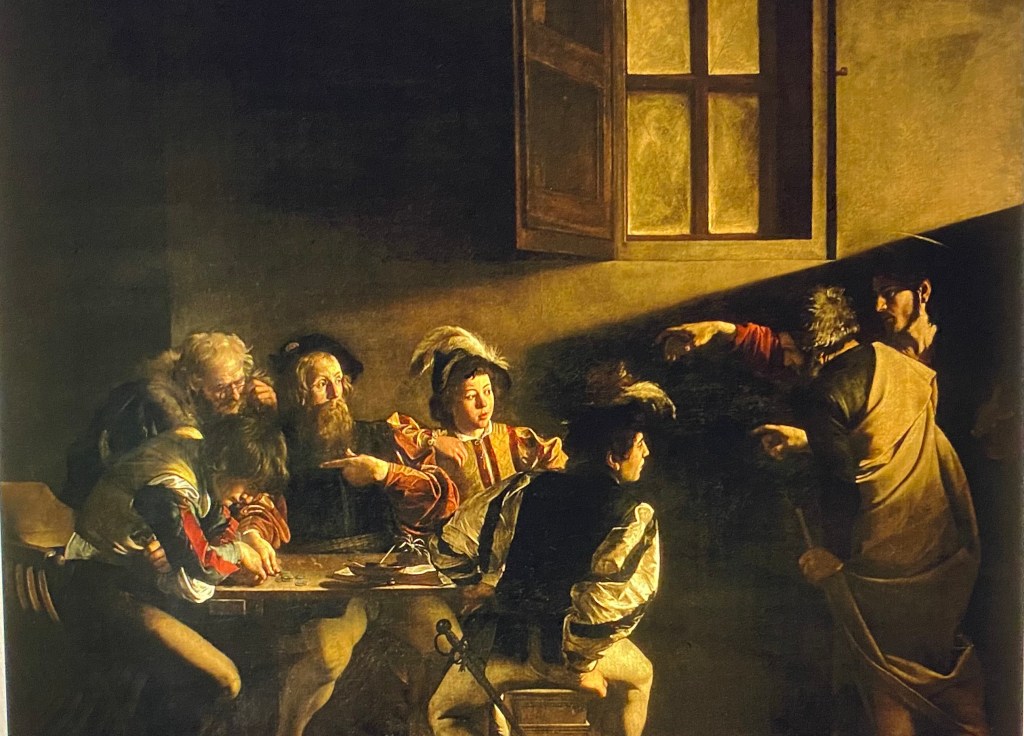
Painting: Caravaggio’s The calling of St. Matthew

Link for the Mass readings for Saturday, January 13, 2024

Spend some time with Jesus.

In our gospel readings, over the past few days we have experienced Jesus’ initial encounters with who will become his apostles. Andrew encountered Jesus and was moved by his experience during their time together and then went to tell his brother Peter about Jesus.

Today, Philip is found by Jesus, and Jesus asks Philip to follow him. Apparently, he does, and something happens because in the next scene Philip has found Nathaniel and shared with him: “We have found the one about whom Moses wrote in the law, and also the prophets, Jesus, son of Joseph, from Nazareth.”

Nathanael hesitates as he first hears this news. What pulls him up short, even though Philip has just shared with him that Jesus is the one who is to fulfill the promise of Moses, is where Jesus is from as revealed when he asks, “Can anything good come from Nazareth?”

The Pharisees also resisted believing in Jesus because of where he was from. Despite Nathanael’s hesitancy, he trusted Philip enough to “come and see.” Unlike many of the Pharisees, when Nathanael heard Jesus say that he had already seen him under the fig tree before they met, Nathanael let go of his prejudgment and believed.

Through the Apostles who came, saw, and believed, Jesus began his Church. As they came to know Jesus, like Nathanael, each had to let go of preconceptions that limited their understandings of Jesus. Also, their limitations as finite human beings held them back. Through their trust and belief, and commitment, they deepened their relationship with Jesus, and they were transformed, made new.

Jesus met them where they were in those first encounters, and slowly but surely, with fits and starts, missteps and misunderstandings, they grew and matured. Jesus has found and calls us as well.

Like his Apostles and those who continued and continue to follow Jesus through each generation since then, we too can come and see. We can see and experience him in his word alive in Sacred Scripture, personally in our time of daily prayer and meditation, as well as proclaimed during the Mass. We can encounter him intimately and are transformed by him in the Eucharist and the sacraments. We encounter him in our serving and love of one another and in our sharing of the experiences we had with him as Andrew and Philip did.

Jesus has come to be with you right now in this moment. He has found you just as he found Philip. I invite you to read today’s gospel passage slowly (John 1:43-51). You can read once or a few times, and then slow and deepen your breath, close your eyes, and allow yourself to enter the scene you just read.

Allow yourself to enter Jesus’ memory, invite him to lead you as you walk up to stand by Philip and Nathanael. Spend some time in silence with Jesus now. See Jesus turn his face from them and look to you. Is there anything or any thoughts that may be causing you to hesitate as did Nathanael? What does Jesus say to you? How do you respond? What happens next? Do you stay with Philip and Nathanael, or does Jesus lead you off to the side to talk? This time is for you and him to spend together, to get to know one another better. These questions are only guides to get you going. You can use some or all, or disregard some or all. Trust in Jesus, he will lead you. Enjoy!


Photo: Last night’s Rosary walk, Egret Landing, Jupiter, FL.

Link for the Mass readings for Thursday, January 5, 2023