We pray, love, and serve because we are loved by the One who is Love.

“[W]hen you hold a banquet, invite the poor, the crippled, the lame, the blind; blessed indeed will you be because of their inability to repay you” (Lk 14:13-14).

Jesus means what he says here, though I am not sure many of us are ready to live this Gospel out. If we are going to get to the point where we can, we must understand the deeper point that he is making. The words of Jesus above give us an example of what it means to love unconditionally. We are to resist the temptation of doing anything with the primary purpose of receiving thanks or praise. We are to instead reach out to those in need because they are in need seeking nothing in return. We embrace our dignity as human beings when we recognize the inherent dignity of another and serve them without hesitation, without holding anything back.

This is the root of what we mean when we say that we are believers in the God of Jesus Christ. God is a divine community of persons, Father, Son, and Holy Spirit. The Father gives all that he is to the Son perfectly, infinitely, holding nothing back. The Son receives all that he has been given perfectly, infinitely and returns, in like fashion, what he has received back to the Father, holding nothing back. The infinite love shared between the Father and the Son is the Holy Spirit.

The Son of God became incarnate, one with us in our humanity, and he also gave all of himself to us on the cross, holding nothing back. He conquered death, rose from the dead, ascended to the Father so that we now can participate in that same divine love given and received between Father, Son, and Holy Spirit. We do not give of our time, talent, and treasure, so that we will receive more of each. We give, we love, we will the good of each other, because we have been loved into existence and are continually loved more than we can ever imagine by God. We are to receive his love and love in return because that is who he created us to be.

The very fact that we exist, that we have life, is a gift, yet we are not meant to merely exist. Jesus teaches us that the height of our humanity is to allow him to love us and through us, love others unconditionally. When we look into the eye of each and every person we meet, we are to see a brother, sister, mother, father. With each smile, each embrace, each listening ear, each act of invitation to walk not ahead, not behind, but with another, and by simply being present, we reaffirm to each other that we have dignity. This is true because each and every one of us has been created in the image of God, who is Love.

——————————————————–

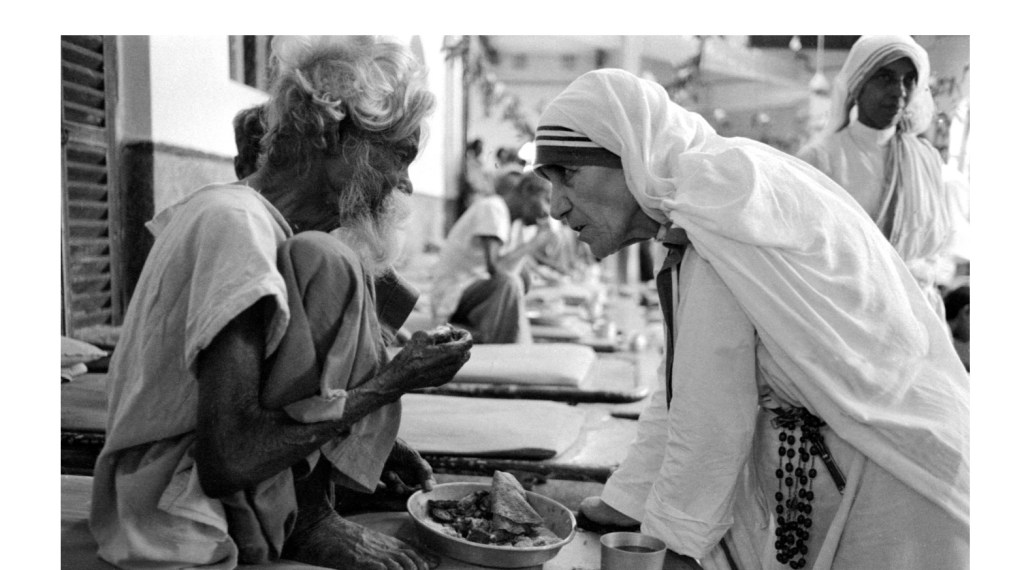
Photo: St. Martin de Porres lived out this gospel literally. From the Dominican monastery in Lima, Peru, he fed several hundred people a day, provided healing, financial support, and began a school for street children. St. Martin, pray for us that we also may be people of prayer and service.

Link for the Mass readings for Monday, November 3, 2025

We can all have more compassion and help to raise each other’s spirit.

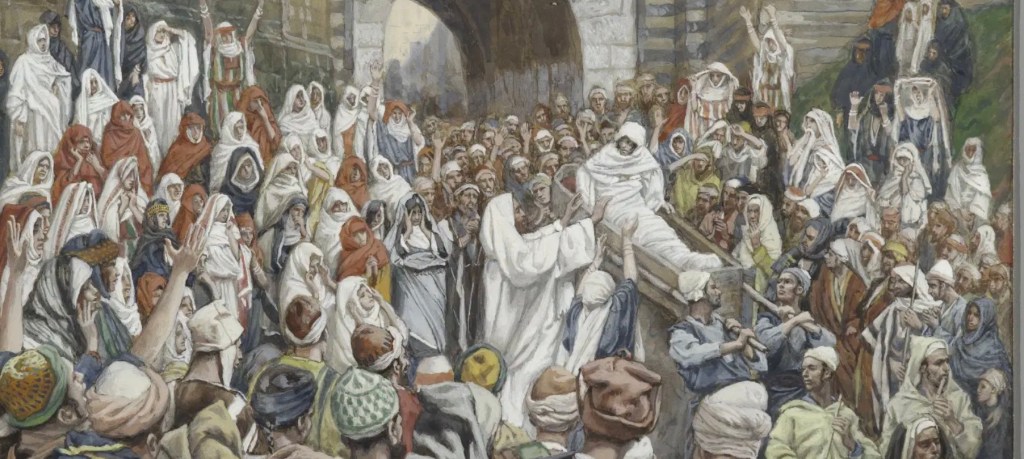
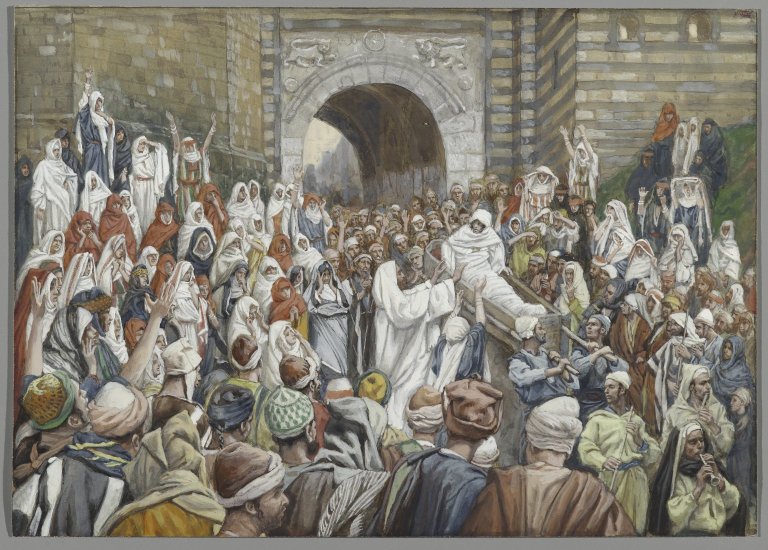
When the Lord saw her, he was moved with pity for her and said to her, “Do not weep.” He stepped forward and touched the coffin; at this the bearers halted, and he said, “Young man, I tell you, arise” (Lk 7:13-14).

Jesus’ immediate response to this woman was pity or compassion. The original Greek word used was splanchnizomai, meaning that Jesus was moved from the very depths of his bowels. The emotional depths to which Jesus was moved to reach out and help the widow of Nain, shows us his humanity. Jesus’ healing of the widow’s son, bringing him back from the dead, shows us his divinity. The entire event shows us the best of who we ought to aspire to be as his followers.

Instead of fear, judgment, prejudice, or indifference, may we instead follow the lead of Jesus and seek to understand, to place ourselves in the shoes of the vulnerable, misunderstood, and on the margins. May we start with those we interact with everyday in our families, our school and workplaces, our communities and places of worship. May our hearts, not be hearts of stone, but hearts of flesh so to be moved from the very depths with the same compassion and love of Jesus toward those, who, like the widow, are vulnerable and at risk.

We can all be more welcoming, hospitable, willing to walk with others and to share in their journeys. We can do this simply in our day-to-day interactions. Whenever we encounter another, may we resist that reactions of judgment, prejudice, or indifference that arise and instead be willing to be moved by compassion and concern and be present.

Listening and hearing each other’s stories, needs, and engaging in conversation are helpful in opening up relationships. Taking the time to smile, to listen, to respect one another even when disagree and being willing to work through conflicts, as well as giving others the benefit of the doubt, helps us to build and strengthen relationships.

Jesus looked upon those he interacted with as family. This widow who was weeping as she looked upon the dead body of her son was not a stranger to Jesus, but a sister in pain. Jesus was moved with compassion and immediately came close to help. He met and engaged with each person and treated everyone he came in contact with in the same way, as human beings. This was true with even those he was in conflict with like many of the Pharisees.

Jesus loved and showed people compassion and invited them to be free from that which bound them to their slavery to sin. He came to remind all of us of who and whose we are as his Father’s beloved children. “For whoever does the will of my Father in heaven is my brother, and sister and mother” (Mt 12:50).

JoAnn often prayed for God to reveal to her one person that she could help each day. When we ask, God will guide us and grant us greater awareness regarding those we can help. Our Father will also give us the means to be present and to assist. We may or may not be called to raise the dead, but we can all lift each other’s spirits, have compassion for one another, and see each other more as Jesus sees us, as brothers and sisters, not as somehow less or other, but each with dignity.

Come Holy Spirit, please stretch us beyond our comfort zones, beyond our limitations, and soften our hearts so that we too, like Jesus, may allow ourselves to be moved by compassion. Please help us to regularly and with more intention stop, breathe, and be more patient, understanding, and kind. Help us to love more, and with each person we interact with, to will each other’s good so that each of us are better for having met.

———————————————————-

Painting: “The Resurrection of the Widow’s Son at Nain” by James Tissot, 1890, online collection from the Brooklyn Museum

Link for the Mass readings for Tuesday, September 16, 2025

May we experience the love of God, so we can know him and each other better.

“Now this is eternal life, that they should know you, the only true God, and the one whom you sent, Jesus Christ” (Jn 17:3).

This is our goal, to know God. Eternal life, or heaven, is not only experienced when we die. Through experiencing the life of Jesus we can have a foretaste of heaven now. We can experience this as the joy that rises up from within, that is not merely pleasure, which is a response from the stimulation of our senses and which dissipates once the experience ends. Nor is joy even happiness which comes from the lasting memories of these pleasurable experiences. The experience of joy is not based on external situations and sensations, joy comes from an encounter with the living God who is present to us, closer to us than we are to ourselves.

We often first experience this joy, this closeness to God when we experience love exchanged between ourselves and another. Even a love that begins in infatuation is a drawing out of ourselves toward another. The hope is that this love matures and develops into a friendship.

This maturation happens when we spend time getting to know each other’s interests, goals, and dreams. We experience another as a person, and with time and continued trust, we begin to risk and allow our masks to be taken off. Inevitably, when relationships begin to mature, they will go through times of miscommunication, misunderstanding, and conflict. The relationship will come to a crossroads, but this does not mean that the relationship will come to an end. If the relationship devolves into abuse, dehumanization, and self-gratification alone, the relationship will end. But if there is a willingness to forgive, to work together, to meet each other with humility and seek mutual understanding, relationships will grow stronger and deeper. This is the fertile soil where love grows.

Our first experience of developing relationships is in our families. None of us are perfect, so none of us have had a perfect family life. Familial relationships develop in a similar fashion as listed above. We all go through ups and downs. The more that we can be present to one another, support one another, communicate and love one another, the more likely our familial relationships and friendships will also mature and grow.

Many of us hope to attain a place within where we can accept and love ourselves and develop mature relationships with a core group of family and friends. Most of us could be quite happy with that. Even as Jesus invites and guides us to reach this point of development, he continues to press us to strive to love beyond family, friends, and tribe. All of us are ultimately called to an unconditional love that sees in others a brother and sister seeking to be better stewards of God’s creation. This is not some utopian philosophy. Love happens through one concrete encounter, one person at a time. As we love God and one another, we lift all of humanity and creation up.

This will not happen through our own will power or discipline alone. Placing self over God and others, isolates and disconnects us from the True, the Good, and the Beautiful. God is not some transcendent, impersonal force, nor is God an omnipotent, tyrannical overlord. The God of Jesus Christ is a God of love, for “God is love, and whoever remains in love remains in God and God in him” (1 John 4:16). Jesus invites us into a relationship with him and his Father to experience the love of the Holy Sprit. When we assent to this invitation, we come to know and experience a foretaste of heaven on earth.

Jesus, please help us to experience the love of God by coming to know you, and in truly knowing you come to better know each other. May we see each other as God our Father sees us, as a unique gift that has never been nor ever will be again. Help us resist reacting to the rough edges and exterior projections of our inner wounds and instead guide us to be more compassionate and understanding, and willing to see the truth and fullness of the potential of each person. Help us to allow God to love others through us today, one person and one encounter at a time.

———————————————————

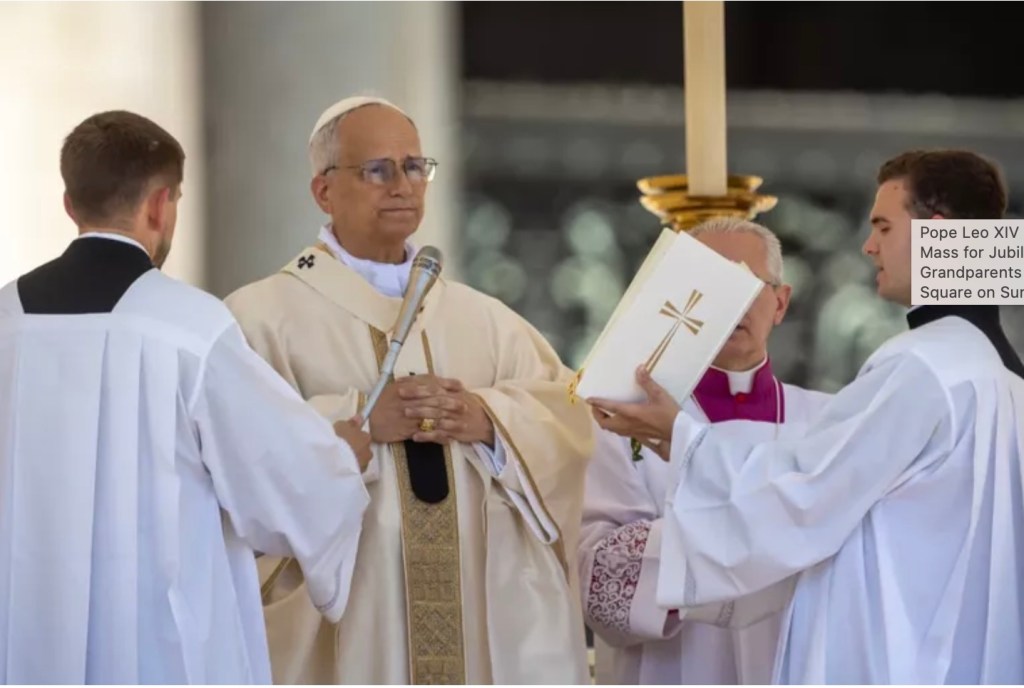
Photo: “The Father does not love us any less than he loves his only-begotten Son. In other words, with an infinite love” – Pope Leo from his Sunday, June 1, 2025 homily. (credit fromDaniel Ibáñez/CNA/ EWTN accessed from ncregister.com).

Link for the Mass readings for Tuesday, June 3, 2025

Ourselves first or God first, will impact our discernment in helping others.

The Parable of the Rich Man and Lazarus that is offered for us today from the Gospel of Luke 16:19-31 is well worth the read. Jesus challenges us through parables such as these. For the people of his time, those who had wealth and status in society did so, it was believed for the most part, because they were blessed by God. And likewise, those who were poor, were so because of God’s punishment. When the rich man and the beggar, Lazarus, die, I am sure Jesus paused to allow his listeners to imagine what would happen to these two men and to give their presumptions some time to ferment. Many would not have predicted what happened next.

Lazarus was taken up “by angels to the bosom of Abraham” (Lk 16:22). The rich man found himself suffering from the torment of flames, such that he was parched, begging just for a drop of water from Lazarus (cf. Lk 16:23-24). Abraham, the model of faith and father of Judaism, was not sitting with the rich man, who must have always been seated at the highest places in his day. Now that seat, at the bosom of Abraham, was offered to Lazarus. There was no hope at this moment for the rich man to cross over because of the wide chasm that separated them. An ironic subtlety was afoot as well in Jesus’ telling of the parable to the Pharisees. Lazarus the poor beggar is named, whereas, the rich man is not. Some biblical scholars, based on the context of this exchange with Jesus and the Pharisees, believe that Jesus was alluding to the rich man to be Herod Antipas and indirectly calling out the Pharisees for their too close of an association with Herod, especially in leading to the death of John the Baptist.

This state of suffering and separation for this rich man, the uncrossable chasm, is a revelation of the life he lived prior to his death. He walked over or by Lazarus day after day not giving him even a second look. Lazarus would have been grateful even for the mere scraps that fell from the rich man’s table, just as the rich man now sought just a drop of water from the finger of Lazarus. The rich man committed the root offense from which sprouts much of our sin; he failed to bother, to care, to love his brother, to will his good. He failed to come close to Lazarus who was in need.

Jesus’ parable of the Rich Man and Lazarus, echoes very closely Matthew 25:40, “whatever you did for one of the least brothers of mine, you did for me.” How we treat others matters. Failing to care, to reach out to those in need around us is sinful. We, probably like those who first heard this parable, experience time and again, a wicked mind storm that swirls with reasons, rationalizations, and justifications as to why we do not reach out to help others. The majority, if any, are not valid. We are invited to give and to love joyfully from a natural, not a hesitant disposition, to provide aid and support.

Almsgiving is one of the three pillars of Lent. The first step is to be aware of those who are in need. This can be in our own home! Second, when we see someone in need and we feel the wind and the waves of our mind surging with reasons of why not to help, it is important to take a breath and call on Jesus to calm the storm of our minds. In that moment of pause, may we allow our eyes to adjust so that we can see the person before us as a human being, as a brother or sister with dignity, value, and worth.

What we are to seek in each moment of encounter with another is the guidance of Jesus. We are to allow him to work through us so that we may be present and allow God to happen in whatever form or act of kindness that he directs us to take. We can do this best when we are daily entering into God’s word and allowing the Old and New Testament readings to shape and transform us. In this way, when we trust “in the Lord”, we will be “like a tree planted beside the waters” (Jeremiah 17:7-8).

Almsgiving as one of the pillars of Lent is a helpful practice that will help us to grow in compassion and generosity. What will help us to grow in the practice of this pillar as disciples of Jesus is to seek to be nourished by God’s word and his laws that teach us how to love one another. If not sure where to begin, we can pause and listen to Mary and do the same as she directed the servants at the wedding feast, “Do whatever he tells you” (John 2:5).

——————————————————————-

Photo credit: “The Rich Man and Lazarus” by John Everett Millais

Link for the Mass readings for Thursday, March 20, 2025

May we resist the hardening our hearts and allow ourselves instead to be moved with compassion.

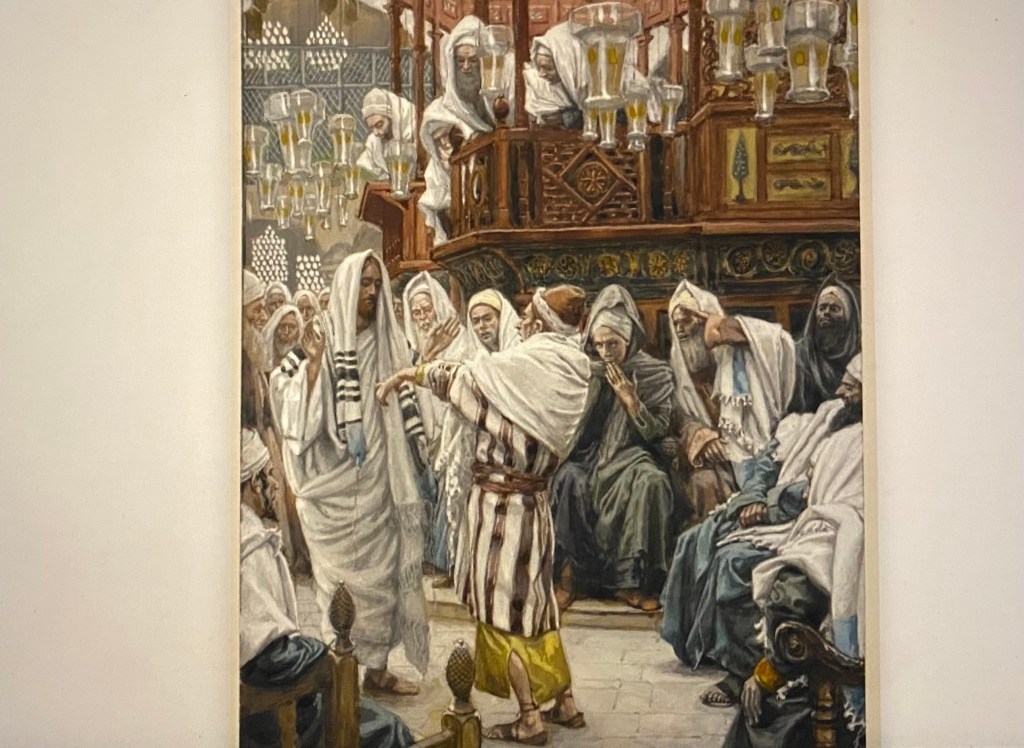
In today’s Gospel scene, Jesus enters the synagogue and sees a man with a withered hand. The eyes of the Pharisees are on him to see if, yet again, Jesus will heal on the Sabbath. Jesus is clear in his mind what he is going to do, though before doing so, he calls the man up and asks the Pharisees, “Is it lawful to do good on the sabbath rather than to do evil, to save life rather than to destroy it” (Mk 3:4)?

Jesus here is giving them a no-brainer of a question. Of course, one is to do good rather than evil on the Sabbath, to save life rather than destroy it! Yet, the Pharisees remain silent. Jesus expresses anger and grief. This may not only be an obvious question but more Jesus could be meeting the Pharisees on the ground of Scripture that they are using against Jesus. 1 Maccabees 2:41 records the account of the Maccabeans deciding to take up arms on the Sabbath to defend themselves against attack. With this in mind, Jesus may be appealing to those Pharisees that were challenging him to choose to see the healing of this man as a greater good. Unfortunately, their “their hardness of heart” shows they were not appreciative of the scriptural assistance.

At the peak of this fifth conflict in Marl, may we stop and imagine ourselves present in the synagogue and witnessing Jesus looking at the Pharisees and the Pharisees looking back at him. Ever been present when tensions were very high and there was dead silence? Imagine what was going through the mind of the guy standing in between them with the withered hand?!!!

The anger rising in Jesus may have had to do with the unwillingness of the Pharisees to show any compassion at all for this man. That they would hold so tightly to their self-righteous stance to refuse to even have a discussion about the matter. Not even to say in effect, “Yes, Jesus of course, it is lawful to do good, to save a life but what you are doing is unorthodox.” No. They refuse to dialogue. Their faces are set like flint, they dig in their heels. Even though Jesus is inviting them to take just a step to consider another alternative, they instead harden their hearts. In their silence, they are choosing evil over good, to destroy life rather than saving it. Pride has reared its grotesque head.

Jesus breaks the silence as he says to the man, “Stretch out your hand.”

The man is healed, but instead of rejoicing, and sharing the good news as Andrew did with his brother Simon, the Pharisees leave immediately to find the Herodians and begin to plot to not only undo Jesus but “to put him to death.” They who would refuse to see a mean healed on the Sabbath, did not hesitate to plan someone’s death on the Sabbath.

We have witnessed in today’s Gospel the evil of pride. We have witnessed the mercy of God presented and rejected. As is stated in the Catechism of the Catholic Church: “There are no limits to the mercy of God, but anyone who deliberately refuses to accept his mercy by repenting, rejects the forgiveness of his sins and the salvation offered by the Holy Spirit” (1864). That is what Jesus is angry about. Not only do the Pharisees resist any move in the slightest direction toward compassion, or their own repentance, they further separate themselves from the love of God. They start with a principle of defending the law, and walk out seething with a premeditated intent to kill Jesus, and on the Sabbath!

With each choice of putting self over another, pride grows. Its appetite is insatiable. Pride is known as the mother of all sins because of its disordered focus on self at the expense of all others and all else. The deadliest component of which is in direct opposition to God and separation from the very life force of our existence.

May we choose a different approach to Jesus, by surrendering our wills to him this day. May we ask him to reveal the darkness that dwells within us and grant us the humility to call it out and renounce anything that is not of God. May God grant us the courage to repent and the willingness to receive the healing touch of the Holy Spirit such that we might be transformed into Jesus’ image and likeness, so to know him and our Father more. May we reject evil and choose the good, reject pride and choose love, reject death and choose life. With each person we encounter today, may we reject the temptation to withdraw or scowl and instead offer a smile, a hand of welcome, and a listening ear.

———————————————————————-

Painting by James Tissot.

Catholic Church. “Article 8: Sin,” in the Catechism of the Catholic Church, 2nd ed. Vatican: Libreria Editrice Vaticana, 2012.

Link for the Mass readings for Wednesday, January 22, 2025

May we have compassion on others and be moved to help as Jesus did.

“Jesus walked by the Sea of Galilee, went up on the mountain, and sat down there. Great crowds came to him, having with them the lame, the blind, the deformed, the mute, and many others. They placed them at his feet, and he cured them” (Mt 15:29-30).

There is a key yet subtle point before Jesus began to heal that might be missed. Before great crowds came to him, Jesus “went up on the mountain, and sat down there.” This is no insignificant sentence. The posture of sitting on the mountain would have been recognized right away by the people of Jesus’ time. This was the posture of the teacher and sitting on the mountain a reference to Moses. Prior to the healing in this setting, as he did throughout the Gospels, Jesus taught about the reign of God. In fact, time and again, Jesus’ “works of healing took place in this context of his preaching of the kingdom of God” (Lohfink 2014, 58).

A great multitude of people came to Jesus to hear his message and also brought with them a wide range of needs. Jesus made himself available, restored, and healed those who were brought to him. He encountered them as they were in their present condition. There is no record in this Gospel account that Jesus asked for any identification, that he discussed their belief system before healing them, nor did he ask if they were Jewish or Gentile, and nowhere in this account did Jesus deny anyone who came to him. The response of those to being healed and restored was that “they glorified the God of Israel”. This is because, “where God is master, there is salvation and healing” (Lohfink 2014, 62).

The recorded accounts of mass healings in today’s Gospel are but a foretaste of the heavenly realm of eternal communion with the Father, where death will be destroyed forever. Jesus is the kingdom of heaven at hand, for as St Irenaeus wrote, “Jesus opened up heaven for us in the humanity he assumed.” Jesus came to show humanity what life with the Father is so that we could have a clear choice of what living with him is like and what living apart from his is like. Living with Jesus and following his teachings provides healing and life.

For three days, Jesus served the people who came to him, and as people were getting ready to leave, Jesus showed compassion yet again. He sought the assistance of the disciples because he did not want to send the people away hungry.

The disciples, of course, were taken aback because of the reality of the undertaking Jesus proposed. Jesus asked what they had with them and they shared just some bread and fish. Jesus took “the seven loaves and the fish, gave thanks, broke the loaves, and gave them to the disciples, who in turn gave them to the crowds. They all ate and were satisfied. They picked up the fragments left over–seven baskets full” (Mt 15:36-37).

This Advent let us make an extra effort to surrender our will to God. May we pray with and meditate upon the Gospels such that they become a living word that takes root in our hearts, may his teachings become relevant in our lives, and may they move us to also have compassion on those around us. May we resist the temptation to withhold our service because of someone’s religion, race, gender, creed, or political affiliation.

What matters is that we are willing to see in each person before us a human being with dignity and worth. Even if we feel we have little to give and that is not limited to material means, let us give as God guides us. As the disciples gave the seven loaves and fish, no where near enough to feed the thousands, Jesus multiplied what they gave him. Jesus will do the same through us. We just need to be willing to follow his lead and like Jesus be willing to feel compassion and love for others and let God happen. 

—————————————————————————

Painting: The Multiplication of the Loaves by Giovanni Lanfranco between 1620-1623

Lohfink, Gerhard. No Irrelevant Jesus: On Jesus and the Church Today. Collegeville, MN: Liturgical Press, 2014.

Link for the Mass readings for Wednesday, December 4, 2024

Let us share the compassion we have received from Jesus.

When the Lord saw her, he was moved with pity for her and said to her, “Do not weep.” He stepped forward and touched the coffin; at this the bearers halted, and he said, “Young man, I tell you, arise” (Lk 7:13-14).

Jesus’ immediate response to this woman was pity or compassion. The original Greek word used was splanchnizomai, meaning that Jesus was moved from the very depths of his bowels. The emotional depths to which Jesus was moved to reach out and help the widow of Nain, shows us his humanity. Jesus’ healing of the widow’s son, bringing him back from the dead, shows us his divinity. The entire event shows us the best of who we ought to aspire to be as his followers.

Instead of fear, judgment, prejudice, or indifference, may we instead follow the lead of Jesus and seek to understand, to place ourselves in the shoes of the vulnerable, misunderstood, and on the margins. May we start with those we interact with everyday in our families, our school and workplaces, our communities and places of worship. May our hearts, not be hearts of stone, but hearts of flesh so to be moved from the very depths with the same compassion of Jesus toward those, who, like the widow, are vulnerable, at-risk, and on the peripheries.

We as the Church, the Body of Christ, need to be more welcoming, hospitable, willing to walk with others and to share in their journeys. We can do this simply in our day-to-day interactions with one another. Whenever we encounter another, may we resist any judgment, prejudice, or indifference and instead be willing to be moved by compassion and concern and be present.

Listening and hearing each other’s stories, needs, and engaging in conversation are helpful in opening up relationships. Taking the time to smile, to listen, to respect one another even when disagree and being willing to work through conflicts helps us to build and strengthen relationships.

Jesus looked upon those he interacted with as family. This widow who was weeping as she looked upon the dead body of her son was not a stranger to Jesus, but a sister in pain. Jesus was moved with compassion and immediately came close to help. He met and engaged with each person and treated everyone he came in contact with in the same way, as human beings.

He loved and showed them compassion and invited them to be free of that which bound them to their slavery to sin. He came to remind all of us of who and whose we are as his Father’s beloved children. “For whoever does the will of my Father in heaven is my brother, and sister and mother” (Mt 12:50).

JoAnn often prayed for God to reveal to her one person that she could help each day. When we ask, God will guide us and grant us greater awareness of those we can help, and he will give us the means to be present and to assist. We are not called to raise the dead, while we can lift each other’s spirits, but we are called to have compassion for one another and see each other as brothers and sisters, not as somehow less or other, but with dignity.

May we allow the love of the Holy Spirit to stretch us beyond our comfort zones, beyond our limitations, so that we may experience a softening of our hearts and be willing to be moved by compassion. May we regularly and with more intention breathe and be more patient, understanding, and kind. May we be willing to love more, to will each other’s good with each person we engage with so that each of us are better for having met.

———————————————————-

Painting: “The Resurrection of the Widow’s Son at Nain” by James Tissot, 1890, online collection from the Brooklyn Museum

Link for the Mass readings for Tuesday, September 17, 2024