contemplation
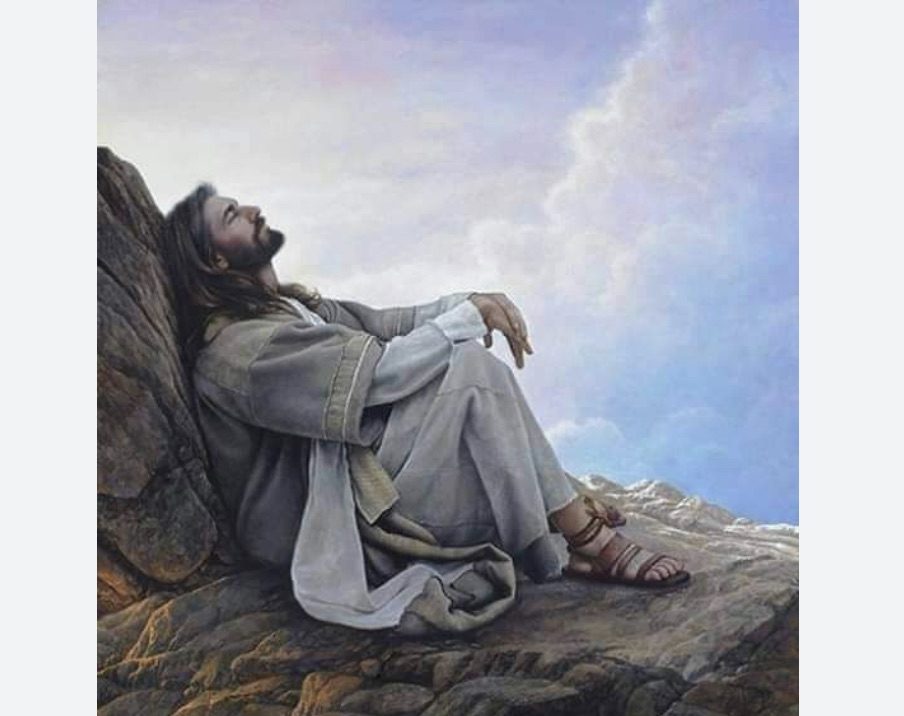
“Lord teach us to pray”.
Prayer is God’s initiative. God initiates prayer because he wants to be in relationship with us. When we feel the desire to pray, prayer has begun because this is our first awareness of God’s invitation to relationship. By our very nature, we are prayerful beings, we want to belong, to be a part of, and to be in communion. We seek to receive love and love in return. The challenge is that we can be led astray and seek disordered affections and substitutes for that which and who will fulfill our greatest desire for communion and love which is answering our deepest yearning as a living, craving, hunger and desire to be one with God and each another.
Yet, as Jesus’ Parable of the Sower shows, the desire to pray is not enough. The enemy can easily divert, distract, and steal our desire. We may not know how to pray or how to really pray. This was true for the disciples as well. Even though they prayed, most likely by reciting the Shema (Deuteronomy 6:4-9) each morning and evening as well as the Psalms, they saw something different about Jesus in his prayer. So we hear in the Gospel today from Luke: “Lord, teach us to pray” (Luke 11:1). Jesus then shared with his disciples the model and form of prayer which can help us today as well.
The first movement in our prayer is to acknowledge God’s invitation for dialogue, for relationship, and truth. Jesus teaches, “Father, hallowed be your name” (Luke 11:2). The very first instinct is to acknowledge that God, as Jesus teaches, is our Father. In our prayer with Jesus we acknowledge and so recognize that we are children of God. God is God and we are not. God is infinite and we are finite, created beings. May sound obvious but if we don’t get this starting point correct, we will be frustrated with prayer.
We can be frustrated if we approach God like a gum ball machine, seeking to get what we want, when we want, and how we want. We will be frustrated by seeking to bend God’s will to our own. God does not operate that way. God knows what we seek, need, and what will be best for us, better than we do. Our Father will give us that which we need and will fulfill us, especially the best gift of all which Jesus shares at the end of today’s reading: “If you then, who are wicked, know how to give good gifts to your children, how much more will the Father in heaven give the Holy Spirit to those who ask him” (Luke 11:13)?
The Holy Spirit, is the greatest gift we can receive. The Holy Spirit, the love shared between the Father and the Son, is who we seek in the depth of our souls. It is in following the promptings of the Holy Spirit that we not only come to know God, we come to know ourselves. The Holy Spirit gently leads us and each time we follow, we begin to recognize his voice and distinguish it from the father of lies. “Each act of fidelity to an inspiration is rewarded by abundant graces, especially by more frequent and stronger inspirations” (Philippe, 22).
As we follow the lead of the Holy Spirit in our prayer, come to breathe, receive, rest, and abide in God’s love, we will also be better able to do so in our daily lives and interactions with one another. We will better identify the lies, apparent goods, and even competition of actual goods so that we can clearly follow with each thought, word, and action the guidance of the Holy Spirit.
To get to this point of closer intimacy with God takes intention, daily time committed to meditating, praying, and contemplating his word. Also, when he leads to just be silent, for as St. Mother Teresa taught, “God speaks in the silence of our heart.” Oral prayer is the easiest way to begin. It is the first way to accept God’s invitation to pray. We can pray the Our Father, the Rosary, read Scripture, speak to him directly, and then from our time of vocal prayer, we can meditate and ponder what the Lord has given us to reflect upon. When the Holy Spirit inspires us to then be still and listen, let us do so. Our Father will speak to us in his word, in his silence, and/or sometimes with consolations.
Prayer is not so much about what we do. Prayer is more about lifting our hearts and minds to God and allowing ourselves to slow down enough to be aware of what God wants to do in us. Our Father seeks to helps us to identify our sins so that we can be free and confess them, he leads us to heal those places where we have preferred to keep locked up, and he wants to shine the light on how we are to serve him so that his kingdom will come and and his will, will be done on earth as it is in heaven.
To enter deeper into a life of prayer we need to trust Jesus. That is what made a big difference in the first days of my 30 day silent retreat in July of 2023. I followed the lead of my spiritual director and started to imagine myself sitting with Jesus as I read and meditated upon these words a few times, “to know the love of Christ that surpasses knowledge, so that you may be full of the fullness of God” (Ephesians 3:19), I leaned over and asked Jesus, “How can I know your love?”
He said, “Trust me.”
I did and that made all the difference in the following holy hours and successive days of the retreat, as well as the last two years.
We have been created to live a life of prayer. Jesus will teach us to pray, just as he taught his disciples. As we trust him and ask for the guidance of the Holy Spirit, God our Father will grant our request. My invitation to you who have read this far, is to set aside some time today, sit in a comfortable quiet place, take a few deep breaths, read through today’s Gospel account Luke 11:1-13 a few times, trust in Jesus, ask for the Holy Spirit, follow their lead, and let God happen!
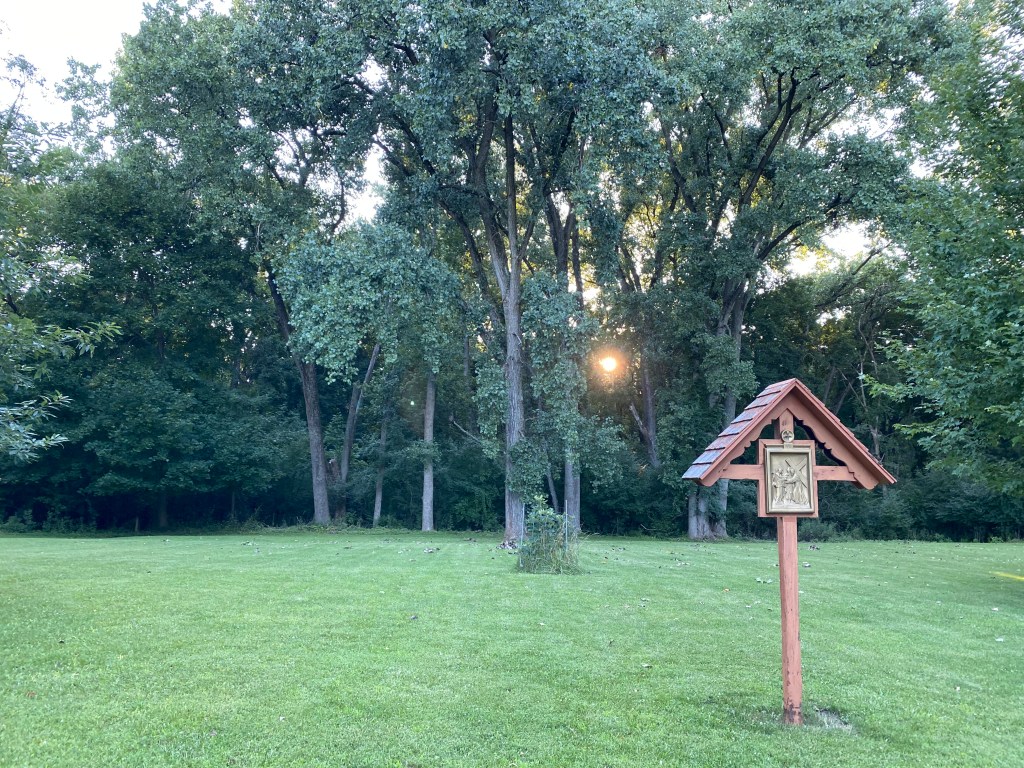
Photo: Bench view from where I sat with my first encounter with Jesus as related above and during many more of my holy hours back in July of 2023.

May we, with John, contemplate the true gift we have received.
Jesus Christ is born for us. Jesus Christ dies for us. Jesus Christ conquers death and rises again for us. Because of our place in time, December 27, 2024 AD – Anno Domini, In the year of our Lord, we are capable of experiencing his life, suffering, death, Resurrection, and Ascension into Heaven. The important question we need to answer is, “Does this new fact, this new reality in human history, make a real difference in our lives?”
Christmas did not end two days ago. We are still in the Octave of Christmas. The Church celebrates two octaves in the Church liturgical calendars, Christmas and Easter. These eight days are celebrated as such to impress on us the solemnity of the event of remembrance. From the vigil celebration of Christmas Eve on December 24 to January 1, the Solemnity of Mary the Mother of God, we celebrate the significant event of the Incarnation, the Son of God, the second Person of the Trinity becoming one with us in human history. The Masses celebrated within the Octave of Christmas, as well as the readings of Evening Prayer in the Liturgy of the Hours, reflect the celebration of Christmas Day each day for the eight days. It is like having a week-long birthday party.
If we are solely focused on gifts, the returning of gifts, and celebrations apart from the celebration of Jesus’ birth, if we are removed from the liturgical cycle and rhythm of the Church, it is easy to fall into the post-Christmas blues because it does feel like everything is done but the returning of gifts and getting a good after Christmas deal. Christmas music has been alive and well on many radio channels for weeks, but at some point on Christmas Day and often the following day, they stop. They stop at the time when they ought to begin!
The material and finite, no matter how wonderful, even our closest relationships, will never satisfy our deepest hunger and thirst. If you are experiencing any post-Christmas blues, today is great opportunity to let go of the material for a bit and enter into the gift of silence, and to spend some meditating and contemplating on what will satisfy. The greatest gift that we have been given, we began to celebrate again two days ago. The Son of God changed human history by his conception and birth and we are invited to participate in God’s great theodrama of human transformation. Today’s Gospel reading is a fast forward from this birth we are celebrating and the gift that keeps on giving, the reality of the purpose of the incarnation.
Jesus was born to die, to show the fullest extent of his obedience to his Father. In trusting his Father, Jesus died, experienced our greatest fear of death, and through the power of the Holy Spirt, conquered death and rose again. Mary Magdalene was the first to experience the empty tomb and shared this good news with the apostles. Peter and John ran to see. John arrived first. John remained outside, possibly out of respect, to allow Peter to go in first. Peter saw the empty tomb except for the burial clothes. When John entered, “he saw and believed” (Jn 20:8).
Are we willing to take the time to ponder as John did? To see beyond the merely finite and physical? To be willing to be still. Silent. To allow God to speak to us in the silence of our hearts? John, Mary, and Peter’s lives were changed and transformed because they encountered Jesus and chose not to ignore him or run away, but to give their lives to him. We are invited to do the same. Our hearts were created for this relationship with Jesus and our hearts will be restless until we allow ourselves to slow down, embrace the gift of silence, and allow ourselves to hear him speak in the silence of our hearts that we too may believe.
————————————————————–
Painting: Close up of St. John the Evangelist by Vladimir Borovikovsky
Link for the Mass readings for Friday, December 27, 2024

Come away and rest for a bit.
After hearing the accounts of the missionary trip, Jesus invited his apostles to step away from the crowds “to a deserted place [to] rest awhile” (Mk 6:31). Jesus is showing the apostles the importance of balance. There are times to serve and times to recharge, to reconnect, and spend some quiet and reflective time with him. Jesus is our model, our guide and teacher, but he is at the same time more than that. Jesus is the source and sustenance of who we are as a living craving, hunger, and desire to be one with God and each another. As the deer longs to refresh itself from the waters of a running stream, we long to be nourished by the living water, the love and communion with Jesus, and this is true for the atheist as well as the mystic alike, for each and every one of us, whether we are aware of this reality or not.
Our thirst for communion can be stifled because it is so easy to be caught up in our day-to-day schedule, life’s demands, and even survival. There is so much that needs to be done, and at the same time, there are so many distractions and diversions that vie for our energy and attention.
In today’s Gospel, the intent of Jesus is to escape with his apostles for some rest and renewal. They get in a boat to do just that, yet the crowd that they thought they had left behind has arrived on the other side before they did! “When Jesus disembarked and saw the vast crowd, his heart was moved with pity for them, for they were like sheep without a shepherd; and he began to teach them many things” (Mk 6:34). So much for being able to “rest away for awhile”! Or maybe the boat ride across was that moment of rest.
Choosing five to ten minutes to be still, to rest in the Lord, may not seem like much but can make a huge difference. Our challenge is to be able to discern and develop a healthy balance that becomes fruitful through aligning our will with Jesus. When we intentionally put God first and make the time each day to spend with him, often there is a serendipitous alignment that we experience in our day, that we did not think possible at the outset. This often happens when we consciously make time for stillness, for meditation, contemplation, and prayer, even and especially, during those moments when we may feel we just don’t have the time. As St. Francis de Sales taught, no matter what station we are in life it is good to pray at least thirty minutes a day, and for those who are busy, sixty.
If you haven’t practiced time sitting still and silent, that may be too much to ask in the beginning. It is better to start with small increments of time and be consistent.
I invite you to begin with today’s Gospel. Read it slowly and reflectively for a few minutes. Then step into and sit in the boat with Jesus and his disciples. Breathe in deep, let your head fall back to feel the breeze of the Sea of Galilee, feel the warmth of the sun on your face, and experience the rhythm of the boat on the water. Does Jesus remain silent and rest with you? Does he begin to teach, what does he share? In your time of quiet, do you have questions for him, what do you ask, and what is his answer?
Allow yourself to leave the desire for doing at the shore and rest in just being. Enter into the experience, and when the boat comes to shore, go forth into the day renewed and blessed by Jesus so to go forward with a heart and mind able to be moved with compassion to serve others. From such periods of renewal, breathing, resting, receiving, and abiding in God’s love, even for short periods, we can better embrace interruptions in our days with the heart and compassion of Jesus, and see them instead as opportunities of encounter and service.
—————————————————————-
Photo: Enjoying some quiet time with a Rosary walk in Egret Landing, Jupiter, FL as I prayed in the new year.
Link for the Mass readings for Saturday, February 3, 2024
 Spiritual Stepping Stones