In each of our readings for this Sunday, even the psalm, there is conflict. The reconciliation for this conflict is to accept and understand that God is God, and we are not. We are to place all our trust in him, follow his precepts and teachings and we will be in a much better place. Better because we will come to realize that the interpretive key to experience healing for ourselves and guidance through our conflicts, is to accept the invitation of our loving God and Father to be in relationship with him.
We have been created by an outpouring of God’s love, to receive his love, and to love God, our neighbors, and ourselves as he loves us. When we anchor ourselves in this truth, in putting God first, trusting in him and seeking to deepen our relationship with him, our lives will be more properly ordered and we will realize that not only are we not alone when we experience conflicts but we will have a firm foundation in God for guidance. When we have recognized that we have turned away from God through our sin, may we have the humility to seek forgiveness.
In our first reading then when Joshua complains to Moses because he hears about how Eldad and Medad are prophesying apart from the seventy who had come to receive the spirit God sought to bestow on them, Moses pointed out to Joshua that God can bestow the spirit on whomever he wills and, “Would that the LORD might bestow his spirit on them all” (Numbers 11:29)!
This same theme arises in the Gospel when John also complained to Jesus that someone, not one of the apostles, was driving out demons in Jesus’ name. Jesus tells him not to prevent him from doing so, “For whoever is not against us is for us” (Mark 9:40).
Both Moses and Jesus recognize and acknowledge that the power of God is at work among his people, and that this not to be prevented or inhibited in any way. That people are receiving the spirit of God and acting upon God’s guidance is what we are all to do! To give the spirit and love and for all to receive is what God wants for all of us!!! The love we have received is not for us alone, but for us to share.
James points this out clearly in his letter and reveals the danger of wealth when we cling to it and refuse to share. Wealth given by God is a gift and a gift given not for us alone. We are to be good stewards of what we have received and provide freely for those in need. We are not to grasp for wealth on our own terms apart from God’s guidance nor exploit or use others for our own gain.
One of most egregious of sins is withholding wages from workers that are due their pay; the cries of which “have reached the ears of the Lord of hosts” (James 1:4). Withholding wages of day laborers during the time of James could have devastating effects. It could mean the laborer or his family would not eat, he could not make a payment of debt and could be imprisoned, as well as other complications that posed a risk for those living day to day with no social net or means of support.
In the Gospel, Jesus shows vividly and graphically the seriousness of sin. Without mincing words, Jesus showed clearly that sin was not to be taken lightly and doing so has catastrophic effects not only in this life but for all eternity. This was especially true for those who lead others into sin. “Whoever causes one of these little ones who believe in me to sin, it would be better for him if a great millstone were put around his neck and he were thrown into the sea” (Mark 9:42).
This great millstone or donkey stone was massive. Some biblical scholars state that this stone could have weighed up to a thousand pounds. The donkey was hooked up to the stone, which was in the form of a massive wheel and then led by the donkey in a circle to pulverize wheat and other grains that was placed in a stone trough so to make flour. It is not hard to then imagine what would happen to someone who had this stone attached to his neck and thrown into the sea!
Jesus continued with more imagery by saying that it would be better to cut off a hand or a foot, and to pluck out an eye if any of these members would lead to sin. Jesus used such graphic language to show how destructive sin is in our lives, for each of us as individuals, as well as for families and communities. Sin has horrific consequences because it damages or ruptures our relationship with God and each other. The ultimate devastation would be an eternal life of separation from God.
Better to die a horrific death, than to die in a state of unrepentant mortal sin. Better to die maimed than clinging to a sin that would separate us from God for all eternity. Jesus is not wishing horrific deaths, physical dismemberments, or eternal damnation on anyone. He came not to condemn but to save humanity. His first public statement as he began his public ministry recorded back in Mark 1:15 is: “This is the time of fulfillment. The kingdom of heaven is at hand. Repent and believe in the Gospel.”
Jesus came to wake us up, to lead us away from our selfishness, our self-centeredness, and sin, to heal us from our fears and deepest wounds, and to guide us home to the very source of our being, the infinite spring of our sustenance and nourishment, the core of our deepest desire, which is to remember who and whose we are. To call us to repent, to turn back to God, and believe in the gospel, the good news, that we are God’s beloved daughters and sons. And yet, through a free act of our will, we can reject the love of our Father and choose to separate ourselves from the love that God wants to bestow upon us in this life and for all eternity.
We can also choose to make the psalmist’s words our own: “Cleanse me of my hidden faults” (Psalm 19:12). When we hide in the darkness and cling to our sin, we are listening to the father of lies who seeks division and our death. God will forgive us from anything. God never tires of forgiving us. We tire of asking. Let us come confidently into the light, into the confessional, and ask Jesus to reveal to us our sins. When we have the humility to be contrite, confess, and atone for our sins, we will know and experience Jesus’ mercy, forgiveness and love, and be reconciled to our God and one another now, in this life, and for all eternity.
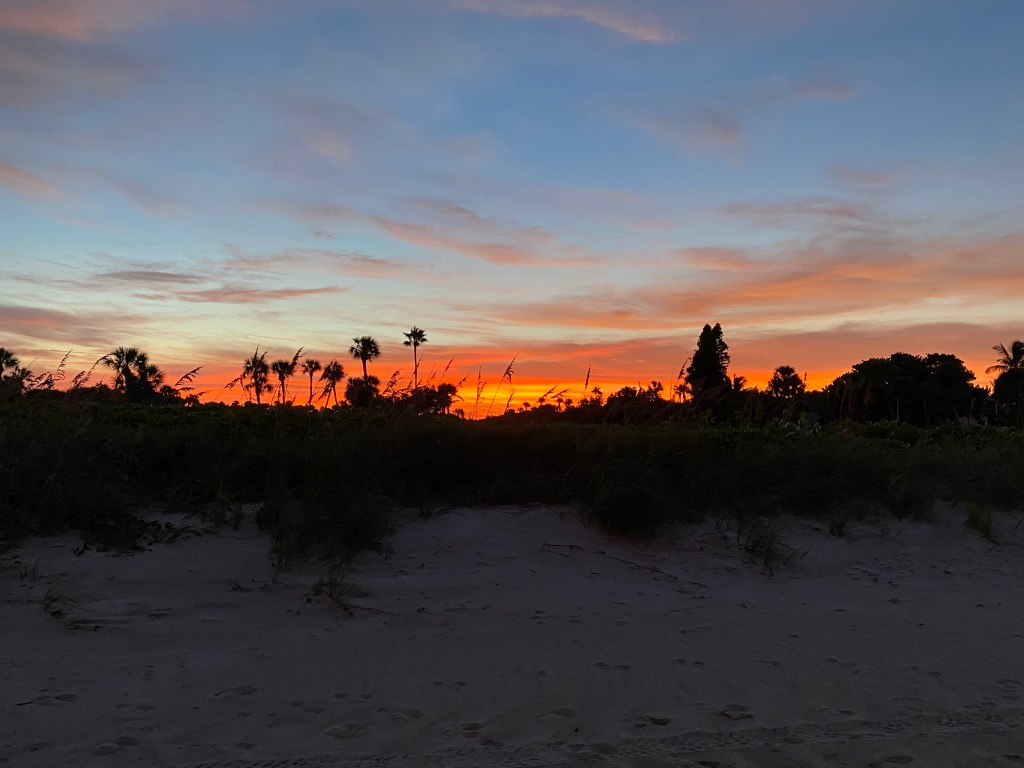
Photo: Rosary walk, Riomar Beach, Vero Beach, FL.
Link for the Mass readings for Sunday, September 29, 2024

 Spiritual Stepping Stones