Our path to eternal life begins when we accept the invitation of, then receive and share God’s love.

Jesus continues his conversation with Nicodemus in today’s Gospel from John. In the opening verse, Jesus outlines why he came into the world: “God so loved the world that he gave his only-begotten Son, so that everyone who believes in him might not perish but might have eternal life” (Jn 3:16). God has created us out of love and shepherds us out of love. God loves what he has created, and in his order and timing, he sent his Son to enter humanity to become one with us, to heal us and invite us to come out of the shadows and dark recesses of turning in upon ourselves, from living in fear and sin and sometimes at best survival and to experience peace, forgiveness, healing, and wholeness.
Loving means to risk being rejected. Jesus entered humanity as we all did, in the utter vulnerability of the womb. His very life was at risk from the moment of his conception. Mary, a young woman,  betrothed to Joseph, in a time and culture in which a woman found to be with child and not from her husband, could be stoned to death. Mary could have made a different choice, Joseph could have made a different choice, but both chose to follow the will of God. They resisted the temptation to close in upon themselves and make an isolated decision based on their own needs, anxieties, and fears. While all of creation held its collective breath, Mary and Joseph trusted God, they chose the light, they chose to protect life.
“Whoever believes in him will not be condemned, but whoever does not believe has already been condemned, because he has not believed in the name of the only-begotten Son of God” (Jn 3:18). Jesus did not come to condemn, he came to redeem, to save, to love us into eternity. For love to be real, it must be truly free. Free to the full extent that it can be rejected. To love is to risk rejection. Otherwise, what is experienced by the other is coercion, conditional, manipulation, pressure, but not love.
The Son of God entered the womb of Mary risking rejection by her, Joseph, and/or their extended family. The only difference between Jesus in the womb and Jesus who ministered to those on the margins was that he was smaller and more vulnerable. Those who, like Mary and Joseph, believe will come to have eternal life, and those who do not have already been condemned, not by God but by themselves who reject or turn away from the invitation. For they choose to curve in upon themselves and remain in their sin, choose to remain separated from God, choose the darkness instead of embracing the light.
Those rejecting God have been invited to receive his love also, but for reasons they may or may not be aware of say no. They may not even be aware that by some of their choices that they are choosing something other than God. We who choose Jesus are to receive and be his presence of love among those we encounter, even those who shy away or reject him. We may be the only Bible someone ever reads.
We are to protect the the unborn as well as those who have been born. We are not just pro-birth, but we are also pro-life. That means that each of us has a charism of who we are called to reach out to, speak up for, and touch with the love of Jesus, to be present to those who God brings into our lives. We can think, speak, and act by respecting the dignity of each person we encounter, in-person and online, supporting a consistent ethic of life from the moment of conception until natural death and at every stage in between.
“God so loved the world that he gave his only-begotten Son, so that everyone who believes in him might not perish but might have eternal life” (Jn 3:16). We, even in our wounds, imperfections, and sin, are loved by Jesus. We can reject or accept his love. As Pope Francis wrote: “We are called to be holy by living our lives with love and by bearing witness in everything we do, wherever we find ourselves.” As we receive and experience the love of Jesus, may we seek to love every person we encounter as he has loved us. If there are those that we might not necessarily include in every person, may we be willing to allow Jesus to love them through us until we can.

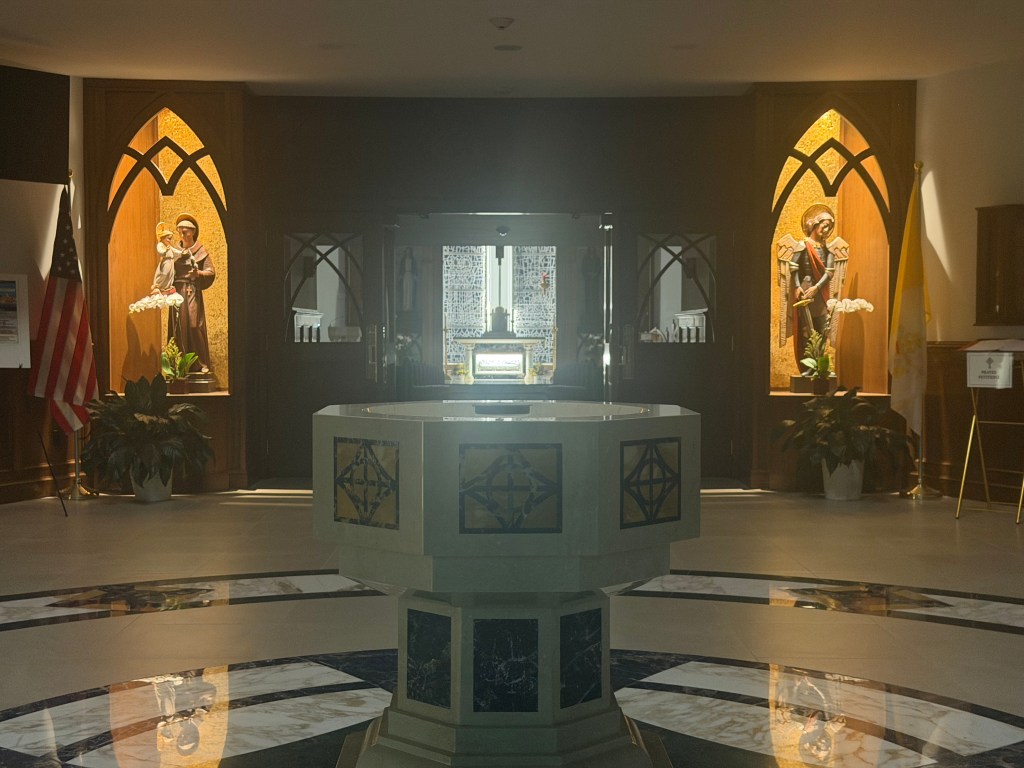
Photo: Quiet time with Jesus is a good way to breathe, receive, rest, and abide in his love.
Link for article on Gaudete et Exultate (“Rejoice and Be Glad”)
Link for the Mass readings for Wednesday, April 15, 2026

With Jesus we can live more fully now and better prepare for eternity to come.

“Heaven and earth will pass away, but my words will not pass away” (Lk 21:33).

Jesus is emphasizing here the soundness of his parable of the fig tree and its allusion to the fall of Jerusalem which would happen within this generation or forty years. The fall of Jerusalem would indeed come in 70 AD. The great temple in Jerusalem would come down and this time not be rebuilt.

All that exists and that we know will pass away eventually because all things are finite, they are limited and material. The readings of this week repeat the same theme that we are not to place our hope and trust ultimately in the things of this world. The longer we live, the more we will experience loss, even the death of those closest to us. I remember my maternal grandfather share with me when he was around ninety years old that most of the people he grew up with were no longer alive.

All that which is physical and finite will pass away, but the words of Jesus will not pass away. Jesus’ words are life. He is God, the second Person of the Holy Trinity. He is the Logos, the Word, the very reality of God. Hearing his word is not enough though. Once we hear his word, we are to then mediate, pray with, and ponder his words, put his words into action and practice them in our lives. In doing so, Jesus becomes one with us in our humanity and we, one with him in his divinity. In God’s time, we will begin to bear fruit. We will become like the fig trees when their buds burst open.

Momento Mori is the Latin phrase that means, remember you will die. Accepting the reality of death and contemplating on our own deaths is not a morbid exercise when we enter this pondering with the end goal in mind that we will be one day be with God for all eternity. Also, those who contemplate their deaths more regularly live their lives more fully now. When we practice our awareness of death, we better appreciate our and the lives of others  more because we come to see the fragile nature of our human condition.

Contemplating our death from time to time, also helps us to determine who and what is important to us. Dr. Leo Buscaglia, a professor at USC, while he was still alive had assigned his students an invitation to imagine that they had one week to live. They were to come up with a list of what they would want to do for that week and with whom they would want to spend it. After they turned in their assignments, Dr. Buscaglia then returned the papers and said, “Why not live this way now? Why do you have to wait until you are dying to start living your life more fully?”

Jesus invites us to resist the temptation to avoid uncomfortable situations as well as to resist clinging to wonderful experiences once they are gone. This healthy indifference helps us to experience the present gift of the moment where we will experience God and hear his guidance more clearly. Jesus helps us to live in this way because he lives in the eternal present. We are going to die someday, putting off until another day may be too late, so let us start living now.

Jesus, please help us to acknowledge that not only are we going to die, but that we need to die each day, and be free of curving in upon ourselves. Help us to open ourselves up to your promise of eternal life. Help us to discern the path you would have us to walk, guide us through our challenges and trials, and help us to bloom where we have been planted. When we listen to, meditate and pray upon, and put your words into practice, we will live more fully and experience your peace, joy, and love more deeply.


Photo: Slowing down to God’s pace helps us to hear and follow his direction, for his words will never pass away.

Link for the Mass readings for Friday, November 28, 2025