When we are willing to become like children, we take a few steps closer to the Kingdom of heaven.

“Amen, I say to you, unless you turn and become like children, you will not enter the Kingdom of heaven. Whoever becomes humble like this child is the greatest in the Kingdom of heaven. And whoever receives one child such as this in my name receives me (Mt 18:3-5).

The above response Jesus gave was to the disciple’s question regarding, “Who is the greatest in the Kingdom of heaven.” Jesus offered an unexpected response, as children had no esteem, honor, let alone greatness in the cultural realm of his time. Jesus was also not pointing out so much the innocence of children, but emphasizing that children were completely dependent on others for their very survival.

If we are to embark or stay on the journey that will lead us to the Kingdom of heaven, we need to do the same. Jesus is inviting us to give up our control, our apparent self-sufficiency, and surrender all we are to God and place our dependence on him alone. We are to depend on God as would an infant or young child depends on his or her parents.

Very young children also have not developed a defensive filter and they say what is on their mind, often with precise insights! They also provide good insights about what we say and do in their presence when they mirror us!!! How often do we access our default defense mechanisms by reading and automatically responding, or if we do pause, thinking about how we will be received or fearing an ulterior motive from the question? Jesus taught us that our yes is to be yes, and our no is to be no, and anything more is from the evil one (cf. Mt 5:37). We grow as his disciples when we accept this simplicity.

We grow in humility when we depend on God and place our trust in him. Doing so, we will experience more of the truth and see through our own rationalizations for accepting apparent goods instead of that which is truly good. Having turned away from the false promises and turned toward the truth, we will begin to discern between what St. Ignatius of Loyola calls the competition of goods – choosing between those things that are indeed good and those that align with God’s will for our unique station in life.

Trusting in God and depending completely on him for everything will also make our lives much simpler because we will no longer be chasing after that which is really not helpful or healthy. We will also come to accept that what we have, is a gift from God. Getting in touch daily with what we are grateful for, we will experience more peace and more rest, and as St. Jane de Chantal’s shared: “How blessed is the person who, in tranquility of heart, lovingly maintains the sacred sense of God’s presence! For this person’s union with divine Goodness will continue growing perpetually, though imperceptibly, and will fill her whole spirit with its infinite sweetness…”


Photo: Catching the sunset out of the corner of my eye, followed God’s invitation to sit outside and share my dinner with my Father!

Link for the Mass readings for Tuesday, August 11, 2026

Called to receive and share the love of God so people may experience the Kingdom of heaven which is at hand.

“As you go, make this proclamation: ‘The Kingdom of heaven is at hand” (Mt 10:7).

Summoned by Jesus, the Apostles were sent to proclaim that the Kingdom of heaven is at hand, that the God of all creation is present in our midst, and seeks to restore a relationship with his fallen creatures. This invitation is not new with Jesus. The Father has sought reconciliation and unity with his children since the fall. This is present also in our first reading through the words of Hosea who implored the people saying, “it is time to seek the Lord”(Hosea 10:12).

God has reached out and invites, generation after generation, not in some abstract way, but as he has done since he walked in the breezy time of the day with Adam and Eve. He came among them, he drew close to offer reconciliation, forgiveness, and intimacy and he continues to do so.

Salvation history is a record of God’s coming close to encounter and interact with individuals in every age. At the appointed time, our Father sent his Son to open the doors to the deeper trinitarian communion they share with the Holy Spirit. Jesus devoted himself to people, “accepting them, receiving them into fellowship with him and granting them forgiveness of sins. The power of his affirmation is to be found in his attention to the concrete individual, in particular to the despised, the abused, the sinner, but also involving himself with people in a very personal way… in giving himself away to them” (Gnilka 1997, 111).

We, as the Apostles, are called to do the same. Empowered by Jesus, we are not to bring about some abstract utopian ideal, but we are sent to enter into the chaos of the lives of real individuals: with our families and friends, those in our schools, communities, and places of worship, as well as on the margins. With each encounter, which may be the only Bible someone else ever reads, may we become a bridge to helping others to encounter the living Word of God. The Gospel is not just for a select few but for everyone. This is just as true today in our polarized climate of 2026.

Just as the sun rises on the good and the bad alike (cf. Mt 5:45), we are to examine ways in which we have contributed to division and separation instead of invitation. May we get in touch with our wounds as well as the sorrow for the hurt we have caused, for our actions and omissions, and for failing to reach out in love. May we receive and abide in his love that Jesus came to offer and then having received, be willing to be sent to share his love. We do so when we are more present, accepting, patient, understanding, kind, and forgiving person to person. In doing so, we will help people to experience Jesus and his kingdom which is at hand.

——————————————

Photo: View of the sunrise from my room. With each breath to welcome the new day I was blessed to receive the rays of the sun along with the love of the Son.

Gnilka, Joachim. Jesus of Nazareth: Message and History. Massachusetts: Hendrickson Publishers, 1997.

Link for the Mass readings for Wednesday, July 8, 2026

Our Father is pleased to give us the kingdom.

We live in a fallen world where suffering, violence, hatred, anxiety, and fear abound and this reality does not appear to be getting better any time soon. Yet, there is still cause for hope. Jesus says in the opening of today’s Gospel: “Do not be afraid any longer, little flock, for your Father is pleased to give you the kingdom” (Luke 12:32).

Unfortunately, far too many do not find comfort in these words. A common complaint is “Well, Jesus said these words some two thousand years ago, I do not see any kingdom, and not only has this world not gotten any better, but it also seems to be getting worse!” To say or buy into this perspective is to miss what God’s kingdom is.

The first words that we have recorded from the beginning of the ministry of Jesus were, “This is the time of fulfillment. The kingdom of God is at hand. Repent, and believe in the Gospel” (Mk 1:15). What Jesus said then and is saying to us now is that the kingdom of God is about a relationship and a relationship happens person to person and builds slowly over time.

Jesus came to restore the relationship that has been lost with his Father. We live in a fallen world because most of us have forgotten who we are – children of God. Instead of our primary focus being the building and strengthening our relationship with God, we are distracted, diverted, tempted, and led astray by so many other material pursuits and voices. We put ourselves first. We are the priority instead of God and each other. There is suffering, pain, and deep hunger in the world because too many are selfish and self-centered.

The “little flock” that Jesus is offering the kingdom of God to is the disciples who are willing not only to hear his word but those who are willing to receive and put God’s will into action and practice. Because the Apostles did just that, we can do the same today, but each of us have to make our choice about who we are going to follow and which voice we are going to listen to. Our Father is pleased to offer us the kingdom, relationship with him. Will we receive this gift and seek that which is above, or choose to be diverted and entranced by the things here below that only wither and fade?


Photo: God was willing to come close to us through his Son. Are we willing to come close to Jesus to know his Father and be a part of his kingdom?

Link for the Mass readings for Sunday, August 10, 2025

We can help to make visible the kingdom of heaven, relationship by relationship.

“As you go, make this proclamation: ‘The Kingdom of heaven is at hand” (Mt 10:7).

Empowered by Jesus, the Apostles were sent to proclaim that the Kingdom of heaven is at hand, that the God of all creation is present in our midst, and seeks to restore a relationship with his fallen creatures. This invitation is not new with Jesus. The Father has sought reconciliation and unity with his children since the fall. This is present also in our first reading through the words of Hosea, God shared how he sought to take care of his children, Israel. How he “drew them with human chords and bands of love”(Hosea 11:4).

God has reached out, generation after generation, not in some abstract way, but as he has done since he walked with Adam and Eve. He came among them, he drew close to offer reconciliation, forgiveness, and intimacy of relationship.

Salvation history is a record of God’s coming close to encounter and interact with individuals in every age. At the appointed time, he sent his Son to open the doors to a deeper communion with his Father. Jesus devoted himself to people, “accepting them, receiving them into fellowship with him and granting them forgiveness of sins. The power of his affirmation is to be found in his attention to the concrete individual, in particular to the despised, the abused, the sinner, but also involving himself with people in a very personal way… in giving himself away to them” (Gnilka 1997, 111).

We, as the Apostles were, are called to do the same. Empowered by Jesus, we are not to bring about some abstract utopian ideal, but we are sent to enter into the chaos of the lives of real individuals in our midst and on the margins in our own unique and personal way. The Gospel is not just for a select few but for everyone. This is just as true today in our polarized climate of 2024. We need to resist the temptation to be led by our prejudices and pride, of embracing an, us versus them mentality. For God, there is no us and them.

Just as the sun rises on the good and the bad alike (cf. Mt 5:45), we are to examine ways in which we have contributed to division and separation instead of invitation. May we get in touch with our sorrow for the hurt we have caused others, for our actions and omissions, and for failing to reach out in love. Jesus was sent by his Father to love us, he invites us to receive his love, abide in his love and to love him and others in his name. We do so by building relationships within as well as beyond our comfort zones. We do so when we are more present, accepting, understanding, kind, and forgiving and when we share person to person the light, love, mercy, and invitation of fellowship that we have received from Jesus. In doing so, we will help people to experience Jesus and his kingdom which is at hand.

——————————————

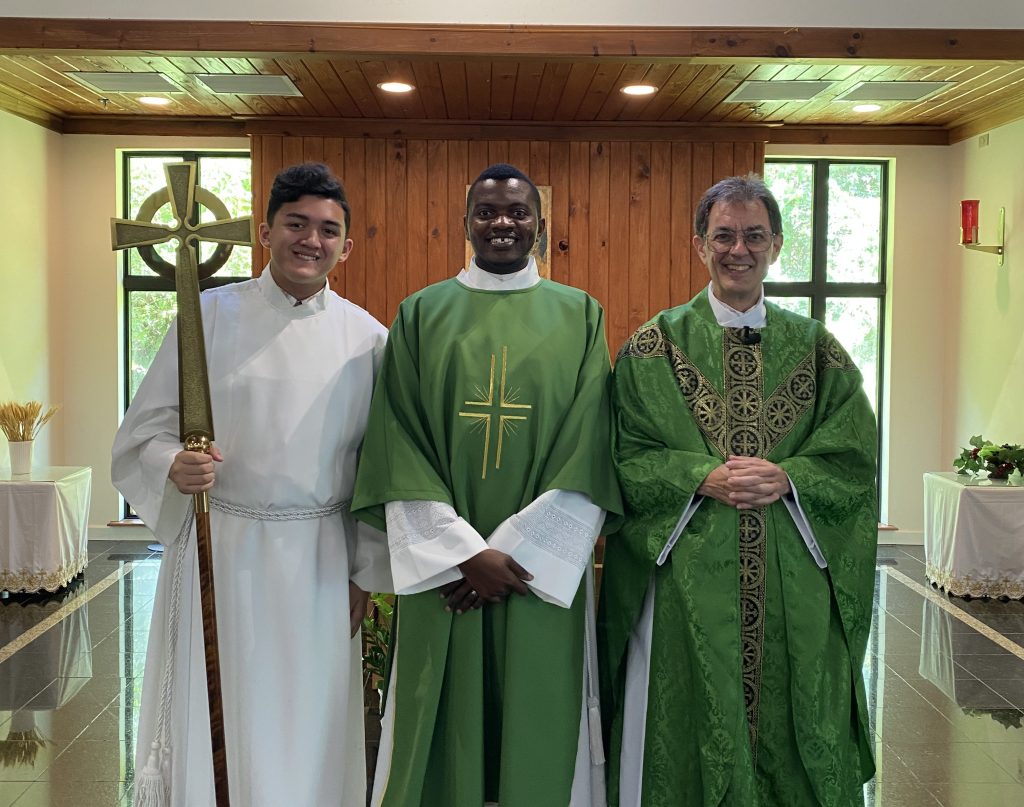
Photo: Blessed to be celebrating Mass with Dcn. Jude and a server from the Jesus Youth community in Delray Beach in June.

Gnilka, Joachim. Jesus of Nazareth: Message and History. Massachusetts: Hendrickson Publishers, 1997.

Link for the Mass readings for Thursday, July 11, 2024