Think about how good we feel after coming to be on the other side of healing from a bad cold or the flu, recovering from a twisted ankle, a broken collar bone, or other health conditions. If you have ever experienced an asthma attack or had the breath knocked out of you, it is such a relief to able to breathe fully again. We experience a feeling of wholeness that was missing during the midst of our suffering where we may have pondered a time or two whether or not we would ever get better.
The same can be said for estranged relationships. There is a distance of separation that can be agonizing, an inner gut-wrenching experience that gnaws away at us. We wonder if there can ever be a coming back together. When there is reconciliation, forgiveness, and mending of the brokenness, we can experience relief, lightness, and joy that we never imagined possible while in the midst of the conflict, the silence, and the separation.
Sin damages our relationship with God and one another. Unchecked and unbridled sin can rupture those relationships. The Pharisees and the scribes questioned why Jesus was eating with tax collectors and sinners, and Jesus replied: “Those who are healthy do not need a physician, but the sick do. I have not come to call the righteous to repentance but sinners” (Lk 5:32).
Jesus is a light in the darkness. For Levi and his friends, who were ambling in the darkness, Jesus shone gently and warmly. They realized there was a sage path to walk and they did. A great celebration of fellowship ensued in Levi’s home because these men and women, who had been outcasts, who were separated from the greater community were forgiven, welcomed, and embraced. They were loved by Jesus as they were. They did not have to change first for Jesus to call Levi and gather with them.
They were welcomed into the kingdom and reign of God. Their ticket to reconciliation and healing was accepting the invitation of Jesus, to receive and experience his love and welcome. Levi and the other sinners did not run from the light of Jesus, but were willing to recognize their need for healing, were willing to repent, to turn away from their prior ways of life, and so were reborn!
They were divinized because of their willingness to participate in the life of Jesus. Levi chose not to just be a repentant sinner, but continued to follow Jesus. He gave his whole life to him and allowed himself to be transformed. He chose to leave the path of darkness and to follow the Way. He continued to follow Jesus such that it was no longer he who lived, as Paul had experienced, but Christ who lived in him (cf. Galatians 2:20)!
Jesus invites us, as he invited Levi, to come and follow him. We are given the same invitation and opportunity for healing, discipleship, and transformation. Will we resist rationalizing and justifying our sinful thoughts, actions, and habits, welcome the light of Jesus that reveals our venial and mortal sins, and admit that we are in need of healing, repent, be forgiven, and be released from all the energy we have expended in protecting and hiding from ourselves and our God who loves us more than we can ever mess up?
We say yes, by quietly spending time, especially each evening, and recalling our day. When we are willing, Jesus reveals to us those ways in which we have not lived according to his will. Jesus does not reveal our sins to condemn or shame us, he does so to convict us in the hope that we will identify, renounce, and confess them. Then he will forgive us. Even when uncovering deeply rooted and mortal sins, through the intimate encounter with Jesus in the Sacrament of Reconciliation, we will be forgiven and freed.
Jesus loves us as we are. Yet holding on to our sin, keeps us at a distance from experiencing the greater breadth and depth of his love. We only need to be willing to be contrite, to embrace sorrow for the harm we have inflicted with our personal sins, and go to the Divine Physician in our time of prayer and/or Reconciliation. Once absolved, the heavy weight is lifted and we are healed and go forward into the light to engage in penance, atone for our sins, and are better able to forgive others as we have been forgiven, and to love as we have been loved!
——————————————————————–
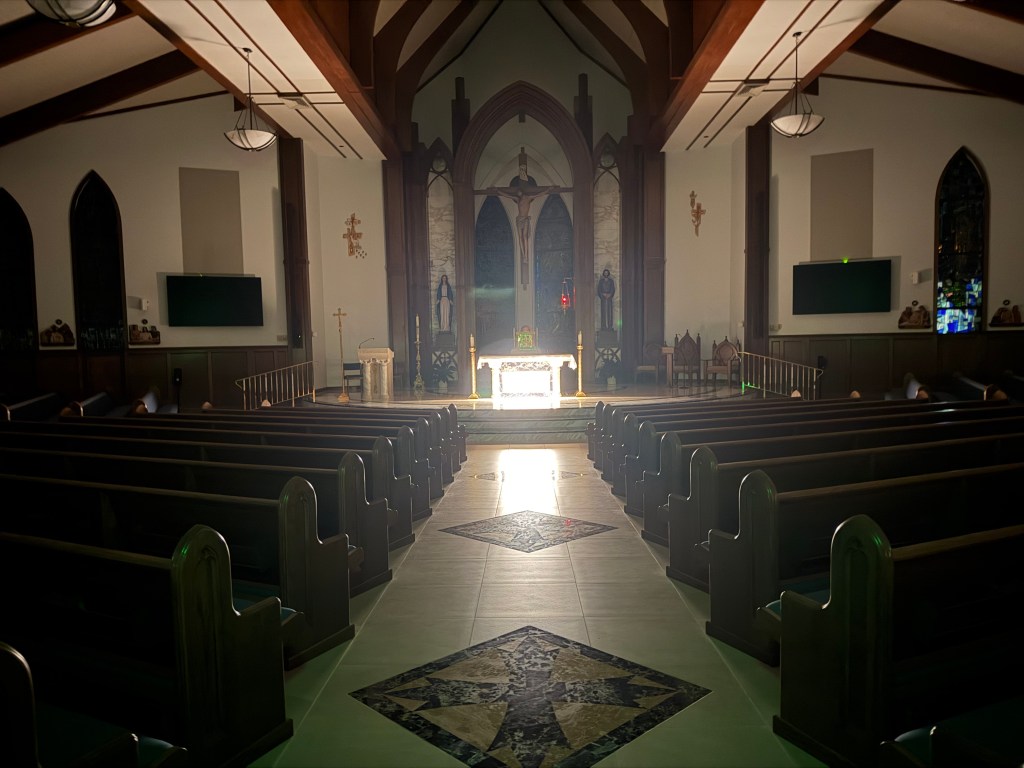
Photo: Jesus is the light that reveals the path to lead us out of darkness.

 Spiritual Stepping Stones