We are faithful and prudent servants when we receive, rest in and share God’s love.

“Who, then, is the faithful and prudent servant, whom the master has put in charge of his household to distribute to them their food at the proper time” (Mt 24:45)?

Jesus is calling us to be that “faithful and prudent servant” and the household we are to serve is our own homes, churches, places of worship, communities, states, countries, and world. For the world is our home and those we serve are our brothers and sisters. Jesus’ call is a universal call to solidarity. We are all invited to be united in this effort for and with one another because we are all created in the image of our loving God and Father.

God has created us, not as automatons or robots, or drone worker bees. He has created us as unique persons, one of a kind, distinct wonders that have never been nor ever will be again. Within our uniqueness, there is also the gift of diversity. We are not intended to be separate from one another, for God has created all of us to be interconnected, to be loved, and to love. What affects one, affects all.

Jesus clearly emphasizes this distinction in his parable, often called the Judgment of the Nations, when he stated: “Lord, when did we see you hungry and feed you, or thirsty and give you drink? When did we see you a stranger and welcome you, or naked and clothe you? When did we see you ill or in prison, and visit you?” And the king will say to them in reply, “Amen, I say to you, whatever you did for one of these least brothers of mine, you did for me” (Mt 25: 37-40).

Being faithful and prudent servants means being aware of and willing to attend to the needs of the hungry, the thirsty, the stranger, the naked, those ill, and/or imprisoned. This is not an exhaustive list. We are to allow our hearts to be open to have compassion upon those for whom God calls us to serve. We begin this process with prayer, for prayer is the most important thing that we can do each day. We are to make the time to spend in silence, to step away from the busyness and the noise, so we can hear God’s word and better discern his will.

Not all of us will be moved in the same way or for the same cause. It is important to remain open to the nudge of the Holy Spirit, trust his direction, and follow him regarding how and who we can serve, no matter how small of a gesture. One thing that can limit us is if we are unwilling to admit to and confess our sins, prejudices, insecurities, and/or biases. When we have the humility to confess and willingness to change and heal, God is ready to forgive, bring healing, and transform our hearts of stone into hearts of flesh.

As we are forgiven and begin to heal, we experience more of the love and mercy of Jesus. He empowers and strengthens us with his love. St. Teresa of the Andes said it well, “his love for me is infinite – an eternal incomprehensible love that led him to become man, that made him to be transformed into bread in order to be with me, to suffer and console me. If you give yourself to prayer, you’ll find that God will show himself to you, and make you fall in love with him.”

We become “faithful and prudent servants” when we experience God’s love by setting aside time to receive, rest in, and savor God’s love. We will no longer feel so alone, afraid, or anxious. We will, feel heard and seen; believe that we belong, are secure, and more stable. Resting in and abiding in God’s infinite love helps us to experience more peace, freedom, and hope. Being known and loved also helps us to see each person we encounter less defensively and more lovingly. The more of God’s love we are willing to receive, the more will give, and the more love we share, the more we will receive!


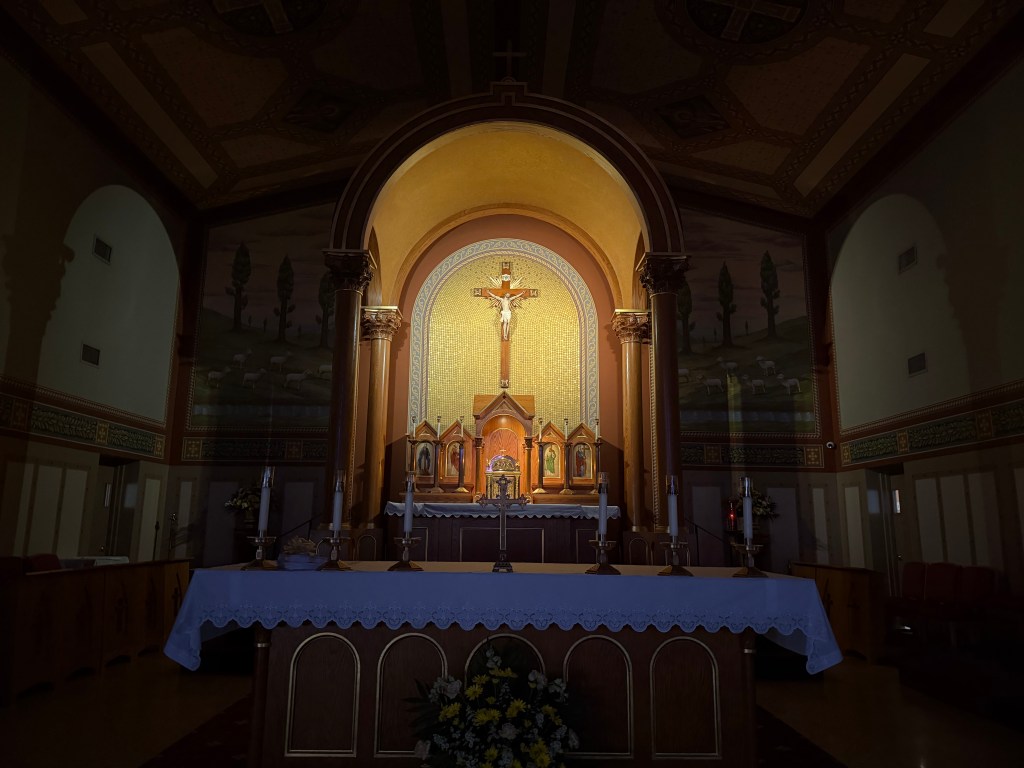
Photo: Breathing, receiving, resting, and abiding in God’s love at the chapel in Our Lady of Florida Spiritual Center.

Quote from St. Teresa of the Andes from pp. 384-385, Magnificat, Vol. 28, No. 6, August.
Link for the Mass readings for Thursday, August 27, 2026

“Prayer helps us to see.”

He took Peter, John, and James, and went up the mountain to pray (Luke 9:28).

Peter, John, and James experienced Jesus’ profound teachings, his powerful signs, his wonders, and they also witnessed his healings, casting out demons, and forgiving of sins, which, alluded to the reality that he was the Son of God. Peter, James, and John, although acknowledging Jesus as the Messiah, still pretty much looked at Jesus as a human being. In the encounter of Jesus transfigured, Jesus revealed to his inner circle of Apostles not only a foretaste of what was to come in heaven but a glimpse of his actual divinity, and the miracle of miracles, the Resurrection.

Jesus is not 50% God and 50% human. He is fully God and fully man. This is the Mystery of the Incarnation; the reality that the second Person of the Trinity took on flesh and became human. This is an important reality, because in this very act of Infinite Grace, the Son of God assuming humanity, Jesus, Emmanuel, God with us, as St. Irenaeus wrote, “opened up heaven for us in the humanity he assumed.” The Son of God became one with us in our fallen and sinful state so that we can become one with him.

Through participation in the life of Jesus Christ, we can be restored and deepen our relationship with his Father, and we too can be transformed. We can do more in this life than to survive and just get by. We can live beyond just recovery from healing from our wounds, beyond merely functioning and keeping our head above water. Jesus came to reveal to us that we are to live in the consolation and joy of being in relationship with his Father and so we can with St. Paul, “rejoice always!” With Jesus not only is recovery from wounds, addictions, sin, disordered affections possible; forgiveness, healing, reconciliation, wholeness, and a peace that surpasses all understanding possible.

“By revealing himself God wishes to make [us] capable of responding to him, and of knowing him, and of loving him far beyond [our] own natural capacity” (Catechism of the Catholic Church 1997, 52). This reality of the invitation of communion with the Loving God and Father of all creation is for all. Authentic joy and fulfillment are achieved through developing a relationship with the God of Jesus Christ.

Many may say they are happy and living a good life without having a relationship with Jesus Christ, they do not need God or his Church, and I would not disagree with them. I would only add that if we are honest with ourselves, there is more to life than the mere material and finite reality we see and what we experience with our senses. When we slow down enough, when we are actually still enough, we can experience a deeper yearning for more, and begin to see what is keeping us from the deeper reality Jesus is offering.

Even with great achievement, mastery, honor, and accumulation, there is still a lingering question, “Is this all there is?” We experience consciously or unconsciously a restlessness, we continually search to fill this unease, feeling satisfied for the moment, but eventually in short order, we are left empty, time and time again. This unease is our soul’s yearning, our transcendent nature longing for more, and that longing is for the infinite that the finite cannot provide or satisfy. St Augustine of Hippo articulated this desire and yearning so well in the opening chapter of his autobiography, Confessions: “You move us to delight in praising You; for You have made us for Yourself, and our hearts are restless until they find rest in You.”

The Feast of the Transfiguration is an invitation to embrace the fullness of what it means to be human, as the Son of God did through the Mystery of his becoming one with us, all of us, all of humanity, not just a select few. We are invited to embrace the fullness and rich diversity of our humanity; the reality that we are physical, emotional, intellectual, while at the same time, spiritual beings. Our fulfillment and joy come from a balance of nurturing the reality that each and every one of us have been created in the image and likeness of God and are to identify ourselves foundational as his beloved daughters and sons.

Peter, John, and James, as well as each of the saints, embraced the invitation of Jesus and were healed, experienced wholeness, and communion. The likeness to God that was lost in the fall of Adam and Eve was restored as they dedicated themselves to lives of prayer, repentance, service, allowing themselves to be loved by Jesus and to love in return. We can see the restoration of the likeness through such biblical imagery of Moses’ face that radiated after his intimate encounters with God and in the transfiguration of Jesus with not just his face but his whole being.

“The person who prays begins to see” (Pope Benedict). Setting time to be alone with God daily to speak with him, listen, simply rest and be still, as well as receive, hear, and follow the guidance of God will, and above all to receive his love, help us to see and experience reality, grow in holiness, and restore the glory he made us for. We embrace the gift of our common dignity when we love God, ourselves, and our neighbors as ourselves.
———————————————————————–

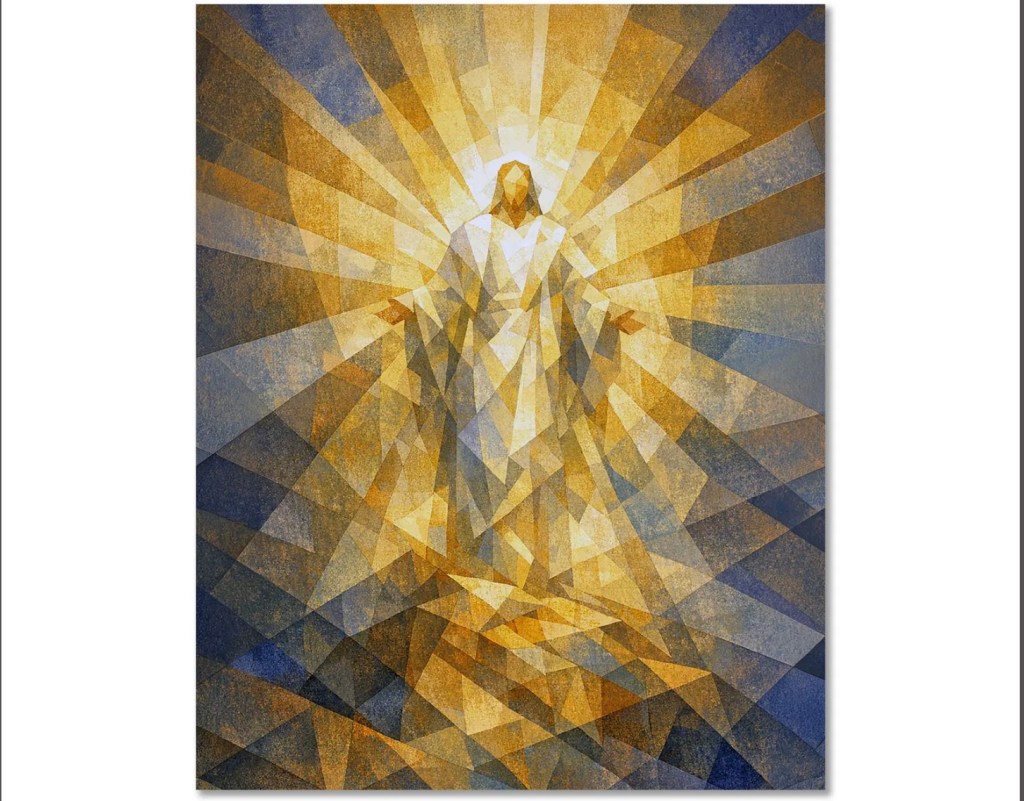
Photo: Jesus transfigured reveals the fullness of our humanity as physical and spiritual.

Link for the Mass readings for Wednesday, August 6, 2025

May we open ourselves to the wonder of God, creation, ourselves, and each other.

“Where did this man get such wisdom and mighty deeds? Is he not the carpenter’s son?” (Mt 13:54-55).

Jesus most likely worked as a carpenter. This was rough, menial work, and as a day laborer, a position that was looked down upon. We can even see evidence of this in the Gospel accounts. Mark describes Jesus as the carpenter, the son of Mary, Matthew in today’s account portrays Jesus as the carpenter’s son, and Luke and John just refer to Jesus as Joseph’s son, leaving out any reference to carpenter altogether. Most scripture scholars believe Mark was written first and if following that understanding, we can see a progression in the biblical tradition moving away from identifying Jesus as a carpenter.

Many people wonder what Jesus did from the age of twelve until he began his ministry around the age of thirty. Today’s reading can offer some insight into that question. Most likely, Jesus did nothing extraordinary, he was just as ordinary, if that, as any other first-century Palestinian Jew living in the small town of Nazareth, with a population of about 250 to 500 people.

Jesus’ return to his hometown and his teaching was first met with astonishment. The question then arose, “Where did he get such wisdom and how did he work such mighty deeds?” That the response to change moved to judgment so quickly could lead one to think that “the astonishment is not an expression of admiration but of suspicion and anger” (Curtis and Sri, 185). Who is he? Isn’t he just the carpenter of Nazareth, no better than any of us? In effect, “Who does he think he is?” Not only does this show that Jesus probably lived a very simple peasant life, but that Jesus’ social status was not very high.

The people’s hearts and minds of his hometown were closed to Jesus. THEY KNEW who he was and there was no way someone like him could do what they had heard, so they “took offense at him… And he did not work many mighty deeds there because of their lack of faith” (Mt 13:57-58).

How many times have we judged someone? Have we said to ourselves, “I know who he or she is.” We box them in, not as they are, but as WE see them, as we define or label them. We look at another individual not as a person with dignity, but as a two-dimensional caricature to satisfy our own prejudgments and lack of vision. We also do this to ourselves by limiting our potential when we say we can’t do this or that. Husbands and wives, having been married for years, can fall into the routine of everyday and not allow themselves to be surprised by one another, to wonder at what about each other they still don’t know!

Maybe we have had a similar experience as Jesus did in returning to his hometown, in that we have sought or are seeking to move beyond our particular social status, or follow a dream or career out of the norm of familial or community expectations. No matter our age, through no fault of our own, by pursuing this path some or many may feel threatened. Thus, not willing to accept our vision, those who are not willing to grow beyond what they have always known may meet us with misunderstanding, wariness, or even disdain.

I read an account from the writer/producer Stirling Silliphant regarding how one day Bruce Lee challenged him to run five instead of his usual three miles. Into their fourth mile, Stirling said, “if I run any more I’m liable to have a heart attack and die.” [Bruce] said, “Then die.” And then he ran off. Stirling was enraged at Bruce’s statement, that he finished the five miles. Afterward, Stirling approached Bruce and asked him why he said that.

Bruce replied, “Because you might as well be dead. Seriously, if you always put limits on what you can do, physical or anything else, it’ll spread over into the rest of your life. It’ll spread into your work, your morality, into your entire being. There are no limits. There are plateaus, but you must not stay there, you must go beyond them. If it kills you, it kills you. A man must constantly exceed his level” (p. 23).

Jesus consistently rebukes limiting attitudes and perspectives. His Father has a plan for our lives and so he invites us to open our minds and hearts, to see the potential he sees in us. Jesus, the carpenter, invites us to embrace the infinite possibilities that will arise when we participate in his life and love. With God there are no limitations. The villagers of Jesus’ hometown are said to have had a lack of faith or unbelief, and because of that limitation, Jesus “did not work many mighty deeds there” (Mt. 13:58). When Jesus challenged his disciples, he said that they had “little faith” (Mt. 14:31).

The disciples struggled to understand Jesus, but they were open to learning from Jesus. We just need a little faith to let Jesus in. If we are closed, if our hearts are hardened, Jesus will respect the boundary we have set. He will not go against our free will. If we give him just a little faith though, just as he was given and few loaves and fishes he fed thousands, Jesus will do wonders in our lives.

The Holy Spirit seeks to free us from the shackles that bind us, the limitations imposed upon us from without, as well as those we impose upon ourselves from within. Let us cooperate with the urgings of the Holy Spirit, to be free with each breath and step we take into embracing the freedom of the love of God. When willing to follow the lead of the Holy Spirit, receive and abide in the love of God, healing will begin, trust will arise, limiting attitudes can then give way to see ourselves and each other as beloved daughters and sons of our Father.
———————————————————————–
Photo: At the end of each day, God gives us the invitation to pause, breathe, ponder the gift of his creation, and call to mind what and who we are grateful for.

Mitch, Curtis and Edward Sri. The Gospel of Matthew. Grand Rapids, MI: Baker Academic, 2010.

Stirling Silliphant story accessed from Bruce Lee: The Art of Expressing the Human Body, compiled and edited by John Little. North Clarendon, VT: Charles E. Tuttle, Co., 1998.

Parallel Gospel accounts: Mark 6:3, Matthew 13:55, Luke 4:22, and John 6:42

Link for the Mass readings for Friday, July 31, 2026

Abiding in God’s love we will flourish and thrive.

The kingdom of heaven may be likened to a man who sowed good seed in his field. While everyone was asleep his enemy came and sowed weeds all through the wheat, and then went off” (Mt 13:24-26). 

The enemy in the parable we attribute to being Satan. In Hebrew, śā-țān means adversary or one who opposes. Satan is not a god or Demi-god, nor did God create Satan. He created a high arch-angel named Lucifer, just as he created the arch-angels, Michael, Gabriel, and Rafael. Lucifer opposed the will of God and took the stance of being his adversary. Satan seeks to bring about division, isolation, despair, and death. 

God seeks to bring about communion, expansion, hope, and life.

God did not nor does he create evil. Evil is not a thing but a deprivation of the good. God did not create but he does allow evil. God allows distortions of the good he promotes and invites us to participate in all that is good true and beautiful. Our Father loves us so much, angels and humans alike, that he is willing to risk that we will reject him. God is not a tyrant nor dictator. God loves us and wants us to choose him freely. Even when evil and the wicked may seem to flourish, God can still bring about a greater good.

There are times when we have turned away from God because of the pain we have witnessed and/or suffered. In our sin, we seek an apparent or disordered good, but miss the mark of intimate union with God. There are also times we say yes to our Father and his will, will follow those little nudges of the Holy Spirit, and allow Jesus to forgive us and love us in places where we feel unlovable and alone. The hope is that over time we will say no less and yes more.

Jesus shares the parable of the wheat and the weeds with the intention of helping us to see this reality of living in a fallen world where God has created all that is good and yet, in so many ways, bad things happen. God allows the wheat and the weeds to coexist. Jesus is relating a common agricultural application of his time. “The weed here is darnel, a poisonous plant whose roots would become intertwined with the rest of the wheat crop” (Mitch and Sri, 180).  

As humans, unlike wheat and weeds, we can change, we can mature, we can repent from our times of saying no and choose to say yes and walk a little closer with our God. The wicked are allowed to exist along the good until the final judgment. Disciples are to “watch and pray that [we] may not enter into temptation; the spirit is indeed willing but the flesh is weak” (Mt. 26:41).

Prayer is the most important thing that we can do every day and the enemy knows this. He will do whatever he can to divert, distract, or dissuade us from praying. If that doesn’t work then he is going to tempt us to pray in as functional or anemic a way as possible. For if he can keep us curved in upon ourselves, isolated, shaming or shoulding all over ourselves, then we are separated from our Father’s forgiveness, mercy, consolation, compassion, and love. I have been led astray in my life and earlier years walked away from God, but he never left me. 

Through small ways, God continually reached out and during my late teens, I started to say yes to his invitations. Building on the early stability from my mother and her parents, a moment of prayer with my father, following the nudge of the Holy Spirit to purchase a Bible, to read and pray with the Bible, to return to church and teach Sunday School, when I hadn’t a clue about what I was doing. God led me with his tender chords of love, gently and slowly, and with each successive yes, I experienced his love and our relationship was strengthened.

God encourages and invites each of us, just like a parent invites his or her child to walk. A mother or father encourages their small child to come to a wobbly stand and then encourages them to begin to take those first steps. If the child resumes to a crawl and then crawls away, the parent will go around and again meet the child, help to lift he or she up and then encourage them to walk again. In this intimate dance of love between the two, the child will eventually learn to walk. Sometimes, they will walk away and sometimes walk into their parent’s loving embrace. The parent is always close, to pick their child up when they fall as well.

So, it is with our relationship with God. He has sent his Son to be one with us in our humanity so that we can become one with him in his divinity. Slowly and steadily, Jesus guides us, to crawl, take baby steps, and walk into the loving embrace of the Father to share the infinite love between them who is the Holy Spirit. God is ever patient and ever-present. Yet, we often do not experience him in our lives, because we are preoccupied. We are distracted and diverted by so many other things or we are let down and disillusioned. Instead of bringing our pain, struggles, and sufferings to God, we believe the lie of the enemy that we have to be self-sufficient and stand on our own or we are weak.

God invites us to bring our worst to him. When we first received the diagnosis that JoAnn, my wife, not only had pancreatic cancer but that it had spread throughout her abdominal region. The prognosis was not good. There was a flashback to the earlier days of turning away from God. Not this time.

This time I turned to God and trusted in whatever was coming. JoAnn and I both received the grace of his peace and the closeness of his presence because we did not turn away from him, even though the outcome was not what either of us wanted or prayed for. Even though this was not fair any way you looked at it, no matter JoAnn was in perfect health except for the cancer… We accepted the devastating reality and decided not to take the time we were given for granted. Knowing our time was limited we decided to get things in order and make the best of the time we had left.

From this experience and others, I have realized that there is very little that we are truly in control of. But we can decide how we are going to live no matter the internal resistance or external circumstances. “He who sows the good seed is the Son of Man.” God has created us good. We are invited to grow where we have been planted, to mature, and to bear fruit that will become the seed to be sown in the lives of others. By our willingness to will the good of each other, we love as God loves us. 

There is evil and those who live wicked lives among us. We can choose to react in kind and be weakened by the poison of evil and other’s wickedness, we can give into despair, and we can curve in upon ourselves and/or bury our head in the sand. Jesus invites us to choose another way. We can be more intentional with the time we have been given. We can allow ourselves a prayerful breathe and pause before we choose to entertain each thought, before we speak each word, and choose instead of reacting, to act in ways that promote a patience and peace that surpasses all understanding.

Healing for ourselves and those we hold close to our hearts is possible, even in situations that appear to be hopeless. When we choose to abide in God’s love, the Holy Spirit will help us despite our wounds and weaknesses to heal and become whole again. Abiding in God’s love we will flourish where we have been planted, we will overcome the temptations that seek to undo us, and we will experience hope and joy.


Photo: On Rosary walk and then stopping to pause and breathe.

Link for the Mass readings for Sunday, July 19, 2026

Blessed is the one who hears and ponders the word of God and puts it into practice.

Curtis Mitch and Edward Sri, in their commentary on Matthew, offer three key insights into how to understand the beatitudes. Contextually, Jesus does not make up the genre of beatitudes himself. The Greek, makarios, can be interpreted to mean happy and “denotes blessedness or happiness not in the sense of an emotional state but in terms of being in a fortunate situation… In the Jewish tradition, beatitudes either commended those who take a certain path of life or promised future consolation to those in affliction” (Mitch and Sri, 88). 

The Hebrew Scriptures provide examples that Joseph and Mary would have read or shared from memory to Jesus, and he would have prayed with himself. “Forty-five beatitudes are found in the Old Testament, most in the Psalms and Wisdom literature, where they commend a certain quality, condition or situation. For example, the blessed are those who delight in God’s law (Ps 1-2), who take refuge in the law (Ps 2:12)… and trust in him (Ps 84:12).” (Mitch and Sri, 89).

Who is blessed to Jesus? Not even his own mother because she is his mother, but blessed is the one who hears and ponders the word of God and puts it into practice (cf. Luke 11:28). Jesus presents to his followers a path of how they are going to live a particular way of life. He is setting a road map that will guide them through the trials and tribulations that will come in doing so, and even when challenges arise, Jesus promises that his Father will provide consolation. Those who put the beatitudes into practice and live as his disciples will experience happiness and fulfillment. 

Mitch and Sri also show that “Jesus’ beatitudes represent a reversal of values, turning the world’s standards for happiness upside down” (Mitch and Sri, 88). Mature disciples of Jesus will come to experience consolation no matter the external storms that arise. Even in times of desolation, they will remain persistent and on course, so to come out on the other side stronger for having trusted that Jesus is with them even when they did not feel his presence. 

Jesus does not commend those who wage war as blessed, but instead: “Blessed are the peacemakers, for they will be called the children of God” (Mt. 5:9). Jesus does not promote the lives of the rich and famous, but instead: “Blessed are the poor in spirit, for theirs is the kingdom of heaven” (Mt. 5:3). Jesus does not affirm those who thirst for power, pleasure, wealth, and fame, but instead: “Blessed are they who hunger and thirst for righteousness, for they will be satisfied” (Mt. 5:6).

These are just a few of the eight beatitudes Jesus presented. A good practice is to review each of the eight beatitudes that Jesus presents in the beginning of his Sermon on the Mount. Which one(s) strike a nerve. Stop there and meditate with Jesus leading us. Where is he helping us to see a way where we can release an attachment so to better follow more faithfully?

Jesus invited his disciples to sit at his feet as the “new Moses”. He came up the mountain like Moses who came up to receive the law. Jesus did not come to receive the law, he came to “teach it” (Mitch and Sri, 87). As he begins his Sermon on the Mount with the Beatitudes, the other wonderful thing we will realize about the beatitudes is that he was not just sharing head knowledge but practical ways to inherit the kingdom of Heaven, to grow in intimacy with his Father and share in the love of the Holy Spirit. All practices that he himself lived through and through.

The Beatitudes, like the Ten Commandments, are boundaries that define us as the children and inheritors of God’s will and blessing. They help us to uncover that which seeks to lead us astray, to isolation, and to our death, and instead identify how to stay focused on that which leads us to eternal life. The most important thing we can do every day is to pray, and the enemy knows that, so he will seek with all his means to distract, divert, and dissuade us from doing so or to keep our prayer and practices merely at the functional level. 

Jesus offers us his love that we might trust him to allow his light to shine in our hearts and minds and the places we would rather no one would see. Even those places that we may feel unlovable, because even there, Jesus will love us when we let him in. He seeks to reveal our sin and failures, not to condemn and shame us, but to help us to see what is enslaving and isolating us and that which keeps us from greater intimacy with his Father. The light and love of Jesus help us to see what our lives are like without God and what they are like with him.

As our consciences become better formed through following Jesus’ teaching, such as the Beatitudes, as we allow him access to our wounds and sins, as we are loved by Jesus even there, we will be purified by the loving fire of the Holy Spirit, and we will then be blessed with a clean heart and see God. See our Loving God and Father who has made us to be happy, fulfilled, and at rest; a rest that we will find when we breathe, receive, rest, and abide in Him.


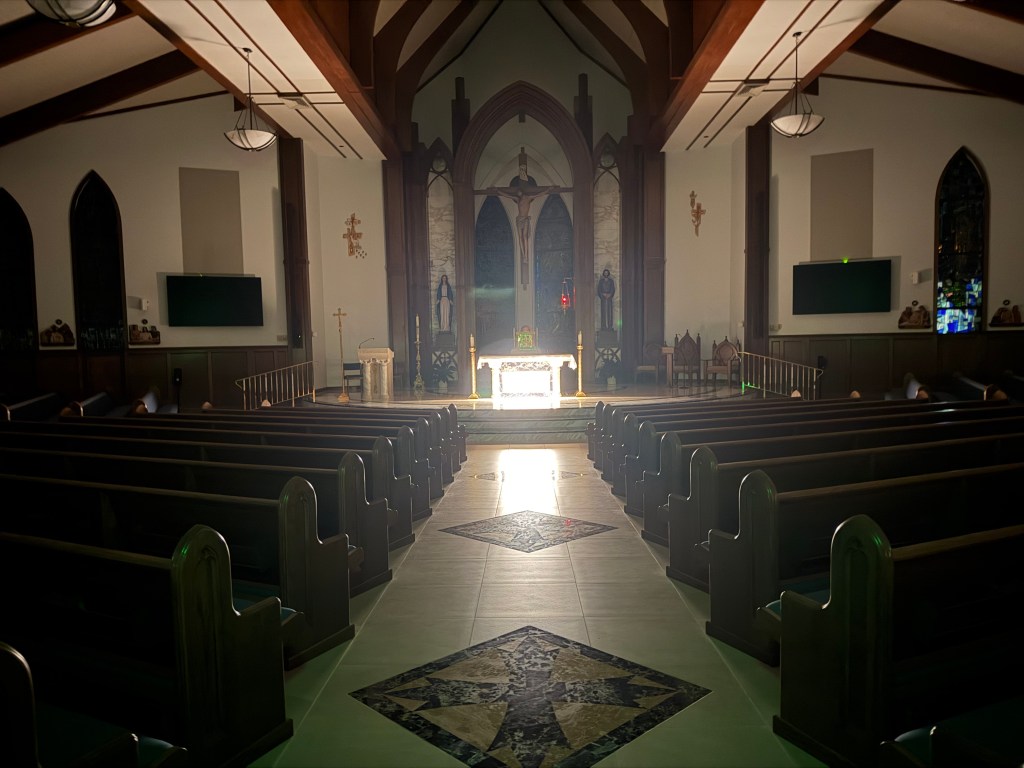
Photo: Quiet time praying Evening Prayer after the Saturday Vigil Mass at St Helen Catholic Church in Vero Beach.

Mitch, Curtis. The Gospel of Matthew. Grand Rapids, MI: Baker Academic, 2010.

Link for the Mass readings for Monday, June 8, 2026

Loving God with all our heart, soul, mind, and strength and our neighbor as ourselves begins the moment we allow God to love us.

“Which is the first of all the commandments” (Mk 12:28). This may have been a challenge to Jesus, or it may just have been a valid question of one seeking the Truth. Scribes were the experts in securing and making known the Torah. They could read and write, a skill not only used for protecting and passing on the faith, but also for the daily tasks of commerce and contract writing.

This question of the scribe was one that was asked often by those who sought how best to live out the Torah. Not only were there the Ten Commandments, but throughout the Torah, there were 613 prescribed laws! A common debate that was often entered into was which were the most important to follow to be faithful, as well as the minimalist approach, being, which were the most important to be followed so someone could just get by?

Jesus replied, “The first is this: Hear, O Israel! The Lord our God is Lord alone! You shall love the Lord your God with all your heart, with all your soul, with all your mind, and with all your strength. The second is this: You shall love your neighbor as yourself. There is no other commandment greater than these.” With this response, Jesus drew first on Deuteronomy 6:4-5 and then regarding loving your neighbor, Leviticus 19:18. By answering in this way, Jesus stated that when we orient our lives to who God has created us to be, which is to Love God first, place God at the center instead of ourselves, we can then better love our neighbors and ourselves.

St Augustine, the bishop of Hippo (354-430), echoed Jesus’ “Greatest Commandment” by stating that we can love God and do whatever we want. The order of that statement is aligned to the commandment Jesus gave. God is first. The problem many of us have is that we place ourselves first and seek to bend God’s will to our own. We look to flip the words to: do what I want and God will love me. It is true that God will love us, but we will not experience the intimacy of his love, just as we weaken intimacy with our human relationships when we put ourselves, our interests first before others.

When we shift our orientation to God first, such that he is the foundation of our life, our world opens up and expands. Many of us are wounded by our own sin and the sin of others. We retreat into defensive postures and actualize defense mechanisms to survive. These may be good and necessary at the moment, but the challenge is that if we continue to live in a posture of survival mode, we are merely existing.

God lays out for us a life of consolation and joy, and we can experience this more when we recognize our need for and open ourselves up to receive God’s love. When we allow him to love us, we can then receive his healing balm of forgiveness, love, and mercy. Once we begin to experience these gifts, we will begin to see ourselves and others, not from our own limited perspectives where we can slip into defensive postures that may feed our insecurities, biases, and prejudices, but see from the greater breadth and depth of how God sees us as his children, made in his image. We are not constricted by God’s love but expanded.

God reaches out to us in so many ways to tell us that he loves us more than we can ever imagine. Unfortunately, when we are diverted and distracted by other false pursuits and find ourselves opposed to his will, we limit our experience of his love. Yet, God’s love for us remains unconditional. God loves us as we are, right now, right at this moment. We just need to take some time to sit, breathe, and be willing to accept the gift of being loved for who we are as well as embrace the fullness of who he has created us to be as mental, physical, emotional, and spiritual human beings; as well as resist repressing any aspect of who we are, allow God access to all of us, and when we do we will grow in holiness and wholeness.

Through embracing God’s healing forgiveness, love, and mercy and being engaged in the fullness of our humanity, we can begin to relax our defensive postures. We can become advocates for healing the division, dehumanization, disrespect, and polarization in our realm of influence, in person, and online. In being loved, we begin to feel safe and no longer controlled by our fears and insecurities. Being loved, we will project, react, and should over ourselves less, and be more open to encounter and accompany one another as human beings, and experience our differences not as obstacles but as gifts for our mutual growth.


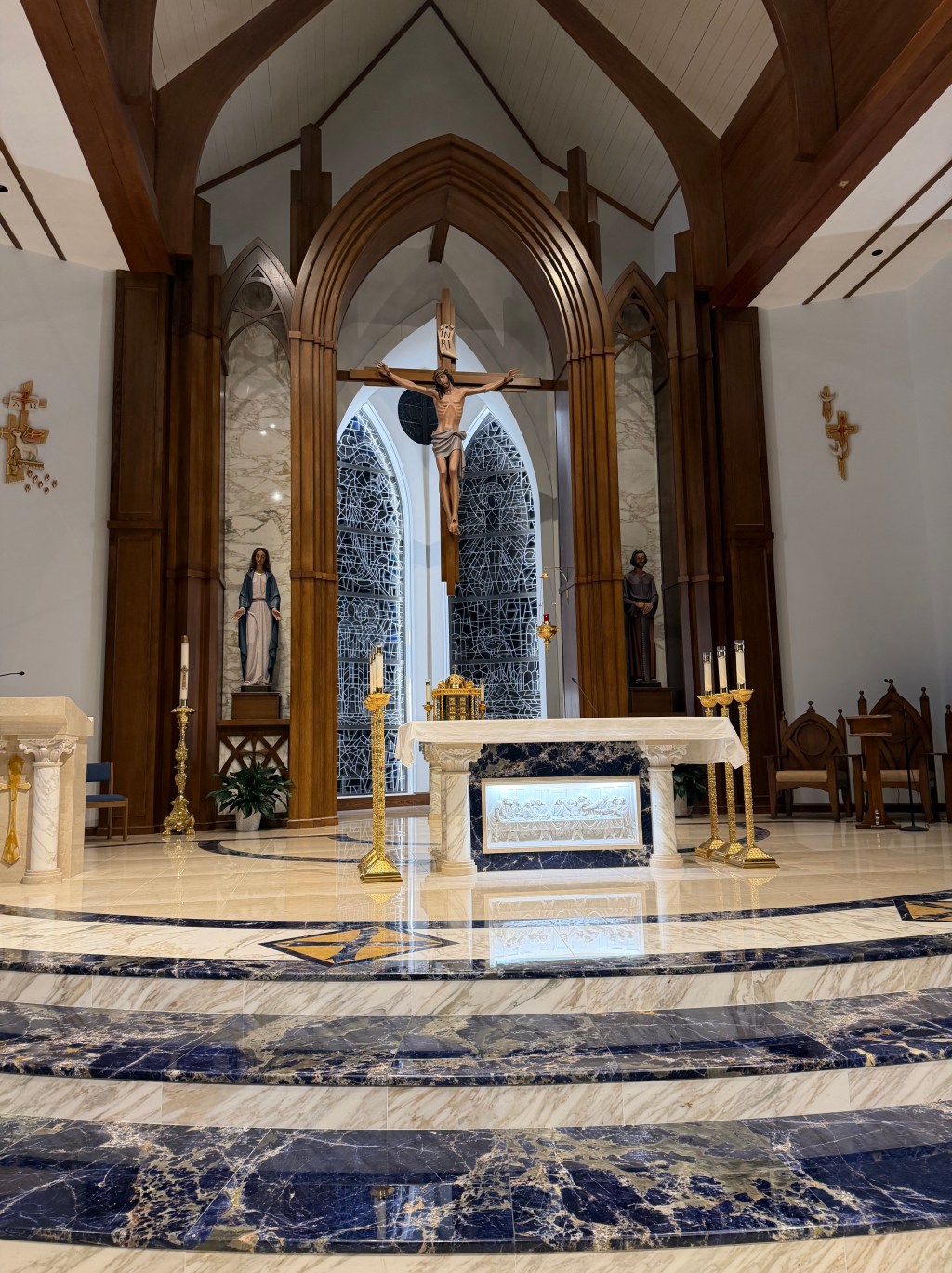
Photo: The fire of God’s love burns in each sanctuary lamp where his Son is present in the tabernacle. May we join him, sit awhile, breathe, receive, rest, and abide in his love.

Link for the Mass readings for Thursday, June 4, 2026

Jesus will open the Scriptures to us when we make the time to spend with him.

Just as we read yesterday, Jesus came among Cleopas and the other disciple on their road to Emmaus, Jesus does so again as the pair was recounting their encounter with the risen Jesus to the apostles. To assuage the fear brought on by his sudden appearance he said and to assure that he was no ghost, “Look at my hands and my feet, that it is I myself. Touch me and see, because a ghost does not have flesh and bones as you can see I have” (Lk 24:39). He then requested some fish and he ate and talked with his disciples as he had done in their times together before his death and resurrection.

We have heard about the resurrection of Jesus, maybe for years, but it is important not to get complacent with the amazing miracle that this is. Also, we need to resist the temptation to diminish in any way the significance of the transfiguration of Jesus. Jesus was and continues to be a hypostatic union, meaning Jesus is one divine person subsisting in two natures, the human and divine.

The humanity of Jesus through his resurrection was fully actualized and transcended the limitations of the three-dimensional realm that he had experienced in his humanity before. This is how he could disappear after making himself known in the breaking of the bread and how he just came through a locked door to interact with his disciples.

The relevance of the bodily resurrection of Jesus for us is that he, in dying and conquering death, is now the reality of who we will one day be. We will be perfected in Jesus to be as God has created us to be. The good news is that we do not have to wait to go to heaven for this process to begin! The path of becoming fulfilled and whole begins in this life, now, as we accept Jesus as our Lord, Savior, and Redeemer. Jesus in his encounter with his disciples from today’s reading from Luke continues the message he began at the beginning of his ministry, which is one of repentance and forgiveness.

When we were baptized we were born again as an integral part of the new creation given to us by the death and resurrection of Jesus. Through this grace, our humanity has been redeemed. Each day we are to live in humility, calling to mind our sins and repenting daily. God loves us as we are as his beloved daughters and sons, but he does not want us to stay where we are. Jesus will help us to identify that which stunts our growth and healing, that which leads us astray and diverts us from growing in closer relationship with him. Jesus suffered and died for each and every one of us, and he also seeks to live through us. Jesus is the foundation and source of our lives and he is our means to salvation. Jesus has come to show us that we are not in competition with God, but that his Father, our Father, seeks to be in communion and solidarity with us.

One of the best ways to grow in our relationship with God is to rest and renew in God’s word. We are blessed that the Church gives us daily readings at Mass that we can read, meditate, and pray with each day. We can also certainly work through one of the Gospels or any book of the Bible at our own pace. God has a word to communicate with each of us when we make the time to be still, breathe, read, and pray.

Jesus opened up the minds of Clopas, his companion, and the Apostles. Jesus will open our minds as well, help us to understand the Scriptures, and reveal himself to us when we are willing to slow down long enough and are committed to doing so daily. Even when we feel tired, let us resist scrolling through social media or surfing channels, which actually don’t help us renew, but instead continue to overstimulate our nervous system and can get us hyped up on dopamine.

May we instead rest and abide in God’s word which will help our minds to come to rest, renew, and discern better how to resist frittering away the precious time that God gives us each day. In reading the words of the Bible, in meditating and praying with them as well as just resting in God’s presence, we will slow down enough to remember who and whose we are. When we can rest in that truth, healing continues, and wholeness is possible.

——————————————————-

Photo: Where I end that majority of my evenings now. Breathing, reading, meditating and praying with the Bible.

Link for the Mass readings for Thursday, April 9, 2026

“I have not come to call the righteous to repentance but sinners.”

Think about how good we feel after coming to be on the other side of healing from a bad cold or the flu, recovering from a twisted ankle, a broken collar bone, or other health conditions. If you have ever experienced an asthma attack or had the breath knocked out of you, it is such a relief to able to breathe fully again. We experience a feeling of wholeness that was missing during the midst of our suffering where we may have pondered a time or two whether or not we would ever get better.

The same can be said for estranged relationships. There is a distance of separation that can be agonizing, an inner gut-wrenching experience that gnaws away at us. We wonder if there can ever be a coming back together. When there is reconciliation, forgiveness, and mending of the brokenness, we can experience relief, lightness, and joy that we never imagined possible while in the midst of the conflict, the silence, and the separation.

Sin damages our relationship with God and one another. Unchecked and unbridled sin can rupture those relationships. The Pharisees and the scribes questioned why Jesus was eating with tax collectors and sinners, and Jesus replied: “Those who are healthy do not need a physician, but the sick do. I have not come to call the righteous to repentance but sinners” (Lk 5:32).

Jesus is a light in the darkness. For Levi and his friends, who were ambling in the darkness, Jesus shone gently and warmly. They realized there was a sage path to walk and they did. A great celebration of fellowship ensued in Levi’s home because these men and women, who had been outcasts, who were separated from the greater community were forgiven, welcomed, and embraced. They were loved by Jesus as they were. They did not have to change first for Jesus to call Levi and gather with them.

They were welcomed into the kingdom and reign of God. Their ticket to reconciliation and healing was accepting the invitation of Jesus, to receive and experience his love and welcome. Levi and the other sinners did not run from the light of Jesus, but were willing to recognize their need for healing, were willing to repent, to turn away from their prior ways of life, and so were reborn!

They were divinized because of their willingness to participate in the life of Jesus. Levi chose not to just be a repentant sinner, but continued to follow Jesus. He gave his whole life to him and allowed himself to be transformed. He chose to leave the path of darkness and to follow the Way. He continued to follow Jesus such that it was no longer he who lived, as Paul had experienced, but Christ who lived in him (cf. Galatians 2:20)!

Jesus invites us, as he invited Levi, to come and follow him. We are given the same invitation and opportunity for healing, discipleship, and transformation. Will we resist rationalizing and justifying our sinful thoughts, actions, and habits, welcome the light of Jesus that reveals our venial and mortal sins, and admit that we are in need of healing, repent, be forgiven, and be released from all the energy we have expended in protecting and hiding from ourselves and our God who loves us more than we can ever mess up?

We say yes, by quietly spending time, especially each evening, and recalling our day. When we are willing, Jesus reveals to us those ways in which we have not lived according to his will. Jesus does not reveal our sins to condemn or shame us, he does so to convict us in the hope that we will identify, renounce, and confess them. Then he will forgive us. Even when uncovering deeply rooted and mortal sins, through the intimate encounter with Jesus in the Sacrament of Reconciliation, we will be forgiven and freed.

Jesus loves us as we are. Yet holding on to our sin, keeps us at a distance from experiencing the greater breadth and depth of his love. We only need to be willing to be contrite, to embrace sorrow for the harm we have inflicted with our personal sins, and go to the Divine Physician in our time of prayer and/or Reconciliation. Once absolved, the heavy weight is lifted and we are healed and go forward into the light to engage in penance, atone for our sins, and are better able to forgive others as we have been forgiven, and to love as we have been loved!

——————————————————————–

Photo: Jesus is the light that reveals the path to lead us out of darkness.

Link for the Mass readings for Saturday, February 21, 2026