It is lawful to do good rather than evil, to save life rather than destroy it.

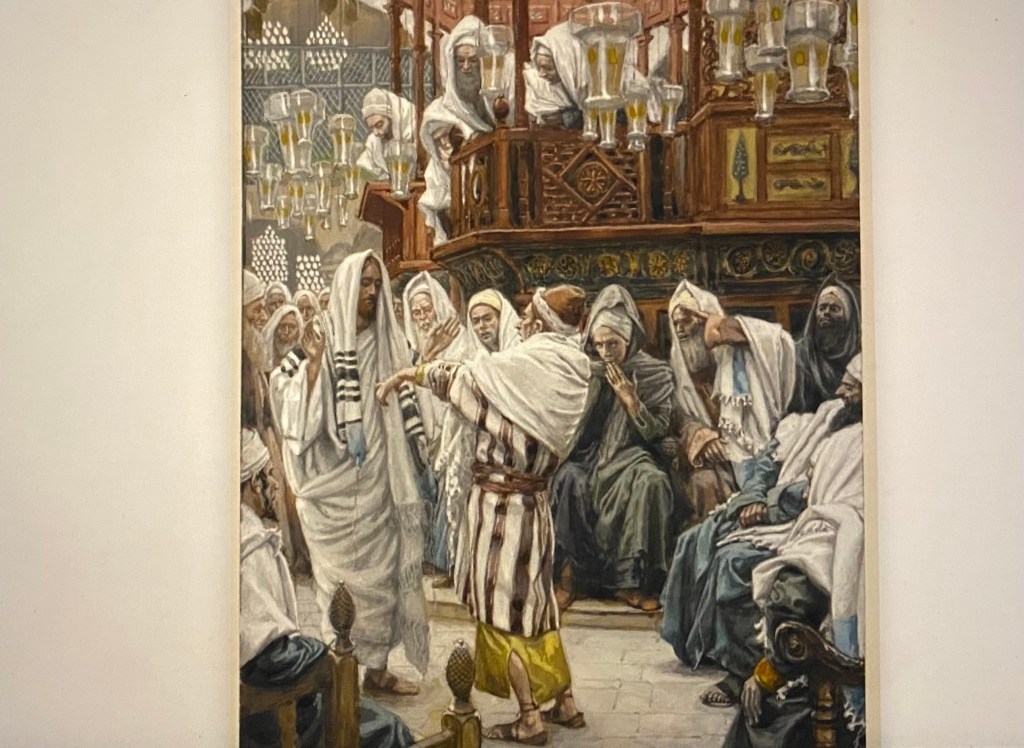
In today’s Gospel scene, Jesus enters the synagogue and sees a man with a withered hand. The eyes of the Pharisees are on him to see if, yet again, Jesus will heal on the Sabbath. Jesus is clear in his mind what he is going to do. Before doing so, he calls the man up and asks the Pharisees, “Is it lawful to do good on the sabbath rather than to do evil, to save life rather than to destroy it” (Mk 3:4)?

Jesus here is giving them a no-brainer of a question. Of course, one is to do good rather than evil on the Sabbath, to save life rather than destroy it! Yet, the Pharisees remain silent!!! Jesus expresses anger and grief. Jesus is meeting the Pharisees on the ground of Scripture that they are using against him and giving them an opportunity to soften their hearts. 1 Maccabees 2:41 records the account of the Maccabeans deciding to take up arms on the Sabbath to defend themselves against attack. With this in mind, Jesus may be appealing to those Pharisees that were challenging him to choose to see the healing of this man as a greater good. Unfortunately, “their hardness of heart” shows they were not appreciative of the scriptural assistance.

At the peak of this fifth conflict in Mark, before we continue, may we stop and imagine ourselves present in the synagogue. Witness Jesus looking at the Pharisees and the Pharisees looking back at him. Have you ever been present when tensions were very high and there was dead silence? Imagine what was going through the mind of the guy standing in between them with the withered hand?!!!

The anger rising in Jesus may have had to do with the unwillingness of the Pharisees to show any compassion at all for this man. That they would hold so tightly to their self-righteous stance and refuse to even have a discussion about the matter. Not even to say in effect, “Yes, Jesus of course, it is lawful to do good, to save a life but what you are doing is unorthodox.” No. They refuse to dialogue. Their faces are set like flint, they dig in their heels. Even though Jesus is inviting them to take just a step to consider another alternative, they instead harden their hearts. In their silence, they are choosing evil over good, choosing to destroy life rather than save it. Pride has reared its grotesque head.

Jesus breaks the silence as he says to the man, “Stretch out your hand.”

The man is healed, but instead of rejoicing, and sharing the good news as Andrew did with his brother Simon, the Pharisees leave immediately to find the Herodians and begin to plot to not only undo Jesus but “to put him to death.” Think about the massive irony! They who would refuse to see a man healed on the Sabbath, did not hesitate to plan someone’s death on the Sabbath.

We have witnessed in today’s Gospel the poison of pride. We have witnessed the mercy of God presented and rejected. As is stated in the Catechism of the Catholic Church: “There are no limits to the mercy of God, but anyone who deliberately refuses to accept his mercy by repenting, rejects the forgiveness of his sins and the salvation offered by the Holy Spirit” (1864). That is what Jesus is angry about. Not only do the Pharisees resist any move in the slightest direction toward compassion, or their own repentance, they further separate themselves from the love of God. They start with a principle of defending the law, and walk out seething with a premeditated intent to kill Jesus, and on the Sabbath!

With each choice of putting self over another, pride grows. Its appetite is insatiable. Pride is known as the mother of all sins because of its disordered focus on self at the expense of all others and all else. The deadliest component of which is in direct opposition to God and separation from the very life force of our existence. Choosing to be prideful, we foster attitudes of vanity, arrogance, and a disordered self-reliance. We can think the center of universe revolves around us, and that is not only untrue, it is unhealthy.

If there are places where we see any tendrils of pride, amen! Slash them, repent, and ask Jesus to give us the antidotes to pride, humility and obedience to God. Choosing these virtues frees us from the isolating grip of pride so we may experience the healing communion of Jesus. May we reject evil and choose the good, reject pride and choose love, reject death and choose life, resist the temptation to withdraw or scowl and instead offer a smile, a hand of welcome, and/or a listening ear.

———————————————————————-

Photo: Jesus, thank you for your light and love that reveals our sin, so we can repent, confess, heal, and be forgiven and free and who you created us to be.

Catholic Church. “Article 8: Sin,” in the Catechism of the Catholic Church, 2nd ed. Vatican: Libreria Editrice Vaticana, 2012.

Link for the Mass readings for Wednesday, January 21, 2025

Acknowledging our sins is the antidote to our pride.

“…whoever exalts himself will be humbled, and the one who humbles himself will be exalted” (Lk 18:14).

From the Christian perspective, humility is not false modesty. Where someone thanks us for doing something and we say something like, “Oh, it was nothing.” This response is often a conditioned response that, consciously or unconsciously, is given to elicit more praise and to keep the focus on ourselves and what we have done. “Sure it was something, you did all that work…” The more appropriate response would be, “You are welcome.” Then the topic of conversation can move on to other matters.

Humility has to do with our primary focus. Are we focused first and foremost on ourselves and placing the focus and energy in boosting our ego, jockeying for a position that is front and center? Or are we focused first and foremost on establishing that God is the core and foundation of our every thought, word, and deed and we are thankful to him for each breath we take?

We are nothing without God. Without him, we would cease to exist. We may bristle at such statements because our cultural influences often promote that what we have and achieved has come because of our own hard work and merit. There is some truth to the effort and energy we may have expended to achieve what we have, but if we think back, many others also had a part to play in where we are today, including God.

From a heightened sense of self-exaltation, we also tend to have less empathy or mercy for those who may have less or are struggling financially, emotionally, psychologically, morally, or spiritually. We might look down our nose at others thinking or saying outright, “What is wrong with them and why don’t they get their act together?”

Where in point of fact, “There, but for the grace of God, go I.” Situations in life, whether we are up or down, can change quickly. The point Jesus is making clear in today’s Gospel is that we are far from how perfect we think we are. We are all sinners and fall short of the glory of God. Recognizing this reality is a good place to be, as Jesus points out. Being willing to recognize our sinfulness is the first step to freedom.

The contrite tax collector “went home justified” because he came to terms with his sinfulness and confessed it so he could be forgiven, healed, and restored by God. The Pharisee who felt he needed no help because he “was not like the rest of humanity” closed himself off from the healing balm and reconciliation that he truly needed. His prayer was actually to himself and not to God. He did not see himself as a sinner, because of his own pride and arrogance, and so cut himself off from the love and mercy of God.

Our spiritual life does not begin to mature until we utter the prayer of the tax collector. “O God, be merciful to me a sinner”. If we don’t believe we need God, we keep ourselves at a distance. Until we acknowledge our dependence upon God and allow his light to shine in us to reveal our sins, we are in danger. Our own self sufficiency and reliance skews the view that we are sinners and are in need of forgiveness. “The antidote to pride is the total abandonment to the mercy of God and total trust in his grace to empower us to turn from sin and live charity” (Bergsma, 263).


Photo credit: The light of Jesus shines in our darkness when we are willing to receive him.

Link for the Mass readings for Sunday, October 26, 2025

Bergsma, John. The Word of the Lord: Reflections on the Sunday Mass Readings for Year C. Steubenville, OH: Emmaus Road Publishing, 2024.

May we resist the hardening our hearts and allow ourselves instead to be moved with compassion.

In today’s Gospel scene, Jesus enters the synagogue and sees a man with a withered hand. The eyes of the Pharisees are on him to see if, yet again, Jesus will heal on the Sabbath. Jesus is clear in his mind what he is going to do, though before doing so, he calls the man up and asks the Pharisees, “Is it lawful to do good on the sabbath rather than to do evil, to save life rather than to destroy it” (Mk 3:4)?

Jesus here is giving them a no-brainer of a question. Of course, one is to do good rather than evil on the Sabbath, to save life rather than destroy it! Yet, the Pharisees remain silent. Jesus expresses anger and grief. This may not only be an obvious question but more Jesus could be meeting the Pharisees on the ground of Scripture that they are using against Jesus. 1 Maccabees 2:41 records the account of the Maccabeans deciding to take up arms on the Sabbath to defend themselves against attack. With this in mind, Jesus may be appealing to those Pharisees that were challenging him to choose to see the healing of this man as a greater good. Unfortunately, their “their hardness of heart” shows they were not appreciative of the scriptural assistance.

At the peak of this fifth conflict in Marl, may we stop and imagine ourselves present in the synagogue and witnessing Jesus looking at the Pharisees and the Pharisees looking back at him. Ever been present when tensions were very high and there was dead silence? Imagine what was going through the mind of the guy standing in between them with the withered hand?!!!

The anger rising in Jesus may have had to do with the unwillingness of the Pharisees to show any compassion at all for this man. That they would hold so tightly to their self-righteous stance to refuse to even have a discussion about the matter. Not even to say in effect, “Yes, Jesus of course, it is lawful to do good, to save a life but what you are doing is unorthodox.” No. They refuse to dialogue. Their faces are set like flint, they dig in their heels. Even though Jesus is inviting them to take just a step to consider another alternative, they instead harden their hearts. In their silence, they are choosing evil over good, to destroy life rather than saving it. Pride has reared its grotesque head.

Jesus breaks the silence as he says to the man, “Stretch out your hand.”

The man is healed, but instead of rejoicing, and sharing the good news as Andrew did with his brother Simon, the Pharisees leave immediately to find the Herodians and begin to plot to not only undo Jesus but “to put him to death.” They who would refuse to see a mean healed on the Sabbath, did not hesitate to plan someone’s death on the Sabbath.

We have witnessed in today’s Gospel the evil of pride. We have witnessed the mercy of God presented and rejected. As is stated in the Catechism of the Catholic Church: “There are no limits to the mercy of God, but anyone who deliberately refuses to accept his mercy by repenting, rejects the forgiveness of his sins and the salvation offered by the Holy Spirit” (1864). That is what Jesus is angry about. Not only do the Pharisees resist any move in the slightest direction toward compassion, or their own repentance, they further separate themselves from the love of God. They start with a principle of defending the law, and walk out seething with a premeditated intent to kill Jesus, and on the Sabbath!

With each choice of putting self over another, pride grows. Its appetite is insatiable. Pride is known as the mother of all sins because of its disordered focus on self at the expense of all others and all else. The deadliest component of which is in direct opposition to God and separation from the very life force of our existence.

May we choose a different approach to Jesus, by surrendering our wills to him this day. May we ask him to reveal the darkness that dwells within us and grant us the humility to call it out and renounce anything that is not of God. May God grant us the courage to repent and the willingness to receive the healing touch of the Holy Spirit such that we might be transformed into Jesus’ image and likeness, so to know him and our Father more. May we reject evil and choose the good, reject pride and choose love, reject death and choose life. With each person we encounter today, may we reject the temptation to withdraw or scowl and instead offer a smile, a hand of welcome, and a listening ear.

———————————————————————-

Painting by James Tissot.

Catholic Church. “Article 8: Sin,” in the Catechism of the Catholic Church, 2nd ed. Vatican: Libreria Editrice Vaticana, 2012.

Link for the Mass readings for Wednesday, January 22, 2025