Real love has a cost.

Our Gospel today, may not appear to be related or confusing in the analogies that Jesus is making. Jesus first begins by stating that to be a disciple of his, there is a need to, first hate “father and mother, wife and children, brothers and sisters, and even his own life,” and then be willing to “carry his own cross” (cf Lk 14:26-27). Jesus continues to talk about the wise builder calculating the cost of materials and labor to be sure he has enough to complete his project. In the same way, a king preparing for battle, assesses whether he has enough soldiers to win, and if not, he needs to be honest and prudent enough to “ask for peace terms.”

With each point, Jesus is emphasizing the cost of his discipleship. Nowhere in the Gospels and definitely not here in today’s, does Jesus say, follow me and all will be wonderful, there will be no pain, no suffering, and you will have all the material pleasure this world can offer. There is a cost to discipleship and those who seek to follow him in his time and our’s must pause and be aware of the cost.

Is the cost really to hate our mother and father, family and friends, and ourselves? This is graphic language. It is also an important reminder that each word and phrase we read in the Bible is to be read in the context of the whole Bible, not on its own or in isolation. Dr. Brandt Pitre identifies where the same Greek work miseō translated here in Luke as hate is used in the same context in Genesis 29:31, “When the Lord saw that Leah was hated, he opened her womb…” The way miseō is used in this context in Genesis helps us to interpret Jesus’ usage which is to “prefer one person over another” (Pitre). Jesus is saying, starkly, that we are prefer God over and above anyone or anything else.

Another help to recall where Jesus himself, in Luke 7:27, is emphatic that we are to love our enemies. To say that we are to love our enemies and hate, in the sense of loathing, our family would not make sense. It does make sense in the context of we are to place God first before any other person. This interpretation also aligns with the fourth commandment which is to honor our father and mother. We honor our father and mother best by living out the first three commandments that have to do with putting God first.

Context also helps us to understand that the hyperbolic language used by Jesus is a rhetorical strategy common to rabbis to make a point by waking up their listeners to get their attention. This statement did just that and continues to do so. The Catholic author, Flannery O’Connor, can help us to understand what Jesus is doing in describing her own writing shared that: “To the hard of hearing you shout, and for the almost blind you draw large and startling figures”. 

Why? To awaken the listener’s from their spiritual stupor. But even when we step back from Jesus’ hyperbolic language, the message to a first century Israelite, as it is for us today, is still hard to fathom.  Jesus is making it clear to the multitude that is gathering around, and letting them know clearly, that if they really want to follow him, there will be a cost. God must be first in their lives before all else, even the closest of family members and most intimate of friends.

Throughout the gospels, Jesus is consistent about the demands of being a disciple of his. A relationship with God is not just knowing about him, but knowing him intimately, and that means transformation. Not only is God to be first before family and friends, God is to be first before even ourselves. Being self-reliant, self-focused, and self-centered will not do. St. Teresa of Avila puts it quite well: “We shall never learn to know ourselves except by endeavoring to know God; for, beholding his greatness, we realize our own littleness; his purity shows us our foulness; and by meditating upon his humility we find how very far we are from being humble.”

Jesus is inviting us today to be his disciple, his student, and to join him in the most wonderful experience and adventure known to humanity. The Son of God who became one with us in our humanity is inviting us to be one with him in his divinity and to share in the communion of love that he shares with the Father and the Holy Spirit. To do so, we need to be as prudent as the wise builder and king. We need to assess the cost that Jesus is demanding of us. We are in the same position in this moment as the young rich man was who asked Jesus, “What do I need to do to inherit eternal life” (see Mt 19:16-22). The man was not willing to accept the cost of discipleship and walked away sad.

We have been created by Love, to receive his love, and to love in return, God, ourselves, and one another. Love is the greatest gift that we can receive and what we all seek in the depths of our souls. Jesus is giving us the key to unlocking the treasure chest and that key is to put God first before family, friends, self, and anything else. The way we put God first is to spend time with him every day. The amount of time is not as important in the beginning. What is most important is to set up a time you can commit to, show up, and let God happen.

If you are not sure what to do when you show up, you can start simply. Make the Sign of the Cross, take three, deep breaths, one for the Father, one for the Son, and one for the Holy Spirit. Continue to breathe slowly and receive God’s love for you and you alone in this moment. Remain until your mind starts to wander, then you can pray one slow and intentional Our Father. One Our Father said with meaning is more important than a thousand rattled of with no meaning. They are just words. When we pray, we are not just speaking words, we are speaking with someone: God our Father, who created us for this very moment: to be loved.


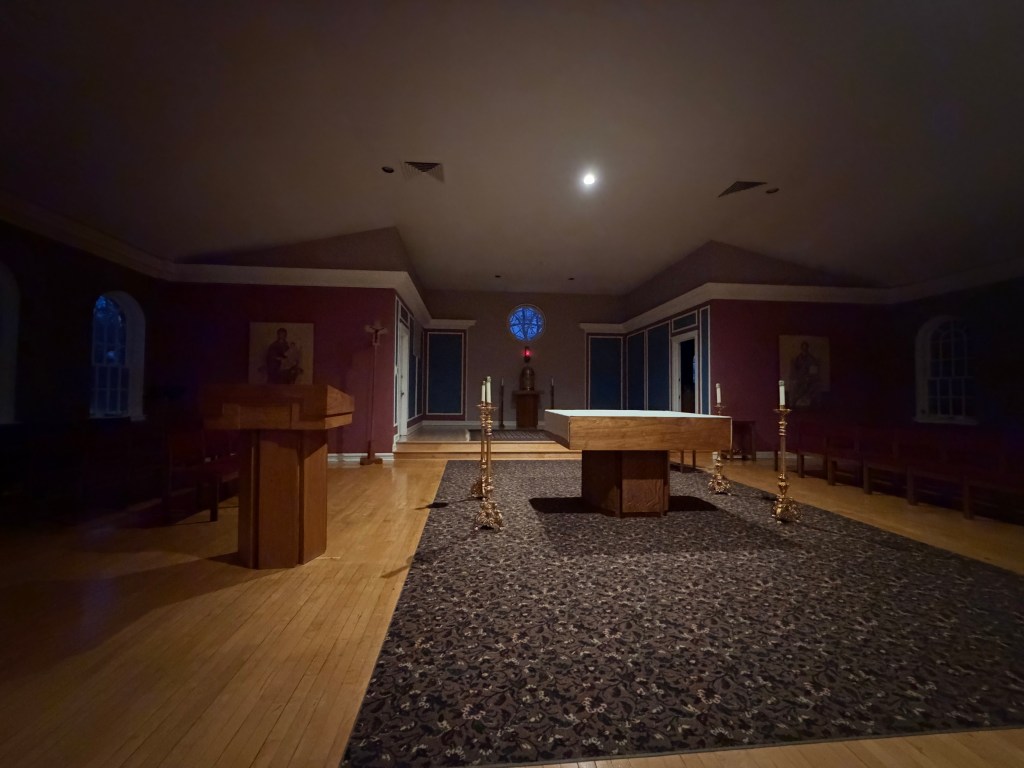
Photo: Spending time with Jesus in prayer each day – priceless!

Dr. Brandt Pitre. “Mass readings explained.” 23rd Sunday in OT

Flannery O’Connor quote accessed from “Listening to Flannery O’Connor” National Catholic Reporter.

Link for the Mass readings for Sunday, September 7, 2025

The Spirit of God will reveal the truth of his infinite love for us.

Today we celebrate Trinity Sunday. The Trinity is the foundation of not only our faith but the reality of all that exists. God has been, is, and always will be. God exists as a communion of three Persons, God the Father, God the Son and God the Holy Spirit. Three Persons in one God, but not three beings.

Anything we say about God is going to be woefully inadequate regarding the truth of who God is. Jesus, as the Son of God incarnate, revealed to his disciples the truth of who he is and who his Father is. As he approached his crucifixion, he began to prepare his disciples for the coming of the Holy Spirit. “I have much more to tell you, but you cannot bear it now. But when he comes, the Spirit of truth, he will guide you to all truth” (John 16:12-13).

We consistently how hard it was for the disciples to understand that he was the Son of God, that he in fact is God. Jesus to explain the Holy Spirit to them he knew would not happen. But the seeds that he planted would take firm root for the appointed time at Pentecost which we celebrated last Sunday. The Holy Spirit would come upon Mary and the Apostles, and then we see them, as expressed in the Acts of the Apostles, coming into their spiritual maturity as they are willing to be led by the Holy Spirit.

We are not going to understand the deepest truth of our faith and who God is by intellect and reason alone. To begin we have a better chance of saying what God is not. God is not a being, not one being among many, nor the greatest of all beings. God is not in the same genus as us, nor in any genus. God is not even a supreme being, because God transcends beyond all space and time. God is completely self sufficient, thus he does not need us for our existence, nor does he need anything to exist. God is the very ground and source of all being.

God is infinite act of existence, or in the Latin of St Thomas Aquinas, ispum esse subsistens, the sheer act of “to be”. This means that God has no limitations. To say that God is three Persons is even harder for us to comprehend because we often in our modern sense use the words person and being synonymously. To use the word person in speaking of God means to speak relationally.

We describe God as Father because he begets God the Son, God the Son is the one begotten. The Son is not generated or created, because the Son has always existed with the Father. This is true because they are not finite beings separate from one another. They are infinite, though distinct, in their relation to one another. God the Holy Spirit is then the Love shared between God the Father and God the Son. God within himself then is an infinite communion because of the infinite giving, self-emptying, and infinite receiving between each other. Each Person gives and receives infinitely, perfectly giving all and holding nothing back.

We will never fully comprehend God because he transcends our finite reality. We will be frustrated also if we treat the mystery of God as a problem to be solved. God is not an equation to formulate but a person that we can encounter and develop a relationship with. This is possible because to be in relationship with God and one another is the very reason we have been created. God draws close to us, he reveals himself to us, he seeks us out, his created beings. We are blessed to live in a time when he has already drawn close to us in the Person of his Son through the love of the Holy Spirit.

Jesus and the Holy Spirit continue to reveal the truth of God the Father to us. When we allow the Holy Spirit to dwell within us and follow his guidance, we too can experience the communion of love shared between God the Father, God the Son, and God the Holy Spirit.

The best way to understand, to know, to build our relationship with God, is not to force God to fit into our finite reality, mindset or limited view, but to be open to, “the Spirit of truth,” and “he will guide [us] to all truth” (Jn 16:13). The Holy Spirit will guide and lead us to all truth when we resist curving or turning in upon ourself and instead make the time to be still, to breathe, to ponder his living word, and lift our hearts and minds to him in prayer. When we do so we will be expanded and transformed by his love and conformed to God’s will. This gift of grace will grow the more we are open to opportunities to be loved and to love in our everyday moments. For where the willing of the good of each other is, God is, because God is love” (1 John 4:8).

When we as fathers follow the will of the Father, when we are willing to be loved by the Holy Spirit and to love our children and others in return, and when we are willing to sacrifice and serve as Jesus, we are at our best. Happy Father’s Day!


Photo: Spending some quiet time receiving the love of God.

Link for the Mass readings for Sunday, June 15, 2025

Jesus invites us to share in the love he and his Father share.

Jesus bestowed his love and his grace upon his Apostles as a gift. The fundamental option, our ultimate end goal, that which we seek from the very depths and core of our being, is to experience the same love that the Apostles experienced. The Creator of all that exists, the One who so transcends our comprehension, that is so beyond our ability to comprehend fully, has come close to us, become one with us in the person of his Son, and loves us more than we can ever imagine.

This reality, the core of the deposit of faith that they received, was not to be hoarded, buried, or to be shared with a select few. This living gift of grace was to be shared by the Apostles, the ones who Jesus called by name, who he hand-picked to receive his message and then sent them forth to proclaim his word. They were to protect it for the purpose of transmitting it accurately to their successors so that it would then be passed on to each successive generation who would receive and make it relevant for their own time.

Jesus said to his Father in his farewell discourse, as recorded by John that: “I made known to them your name and I will make it known, that the love with which you loved me may be in them and I in them” (Jn 17:26). Through our participation in the love of Christ, we are perfected and conformed by his will such that we too can experience and share in the love of the Father.

The Trinity is at the heart of the Gospel, the Good News. The Trinity is a divine communion of three Persons, Father, Son, and Holy Spirit. We have been created with a burning hunger and desire to experience this same communion. Why do we resist saying, “Yes” or more fully embracing this joyous invitation? St Thomas Aquinas in his Summa Theologiae, or Summa, outlines four substitutes or temptations that we may put in place of our highest hope and good; these are wealth, honor, pleasure, and power. In and of themselves, these are not unhealthy desires, as long as God is first and we orient ourselves to them from God’s perspective. Then they will be properly ordered by God’s direction and will.

When we assume the posture of pride, believing that we are the center of our lives and we seek wealth, power, pleasure, and/or honor for our own sake and self-aggrandizement, each will be distorted and disordered. These finite pursuits will leave us empty, or worse lead us into the crippling slavery of addiction. How many times have there been reports of someone who has amassed most or all of these four, and then come to a place of such despair and emptiness that they had taken their own lives?

Through a properly ordered sense of power grounded in love, defined by St Thomas, as the willing the good of the other, those in positions of power and privilege are called to be a voice for those who otherwise would not have a voice. Those with access to wealth, are to recognize that this is a gift from God, and they are to be good stewards of what they have received to help and support others, not only in the limited stance of a hand-out but as a primary means to provide a hand up. To accompany and shepherd those who do not have access such that they can arrive at the point where they can be provided with access, skills, and means to participate in the dignity of meaningful work and gainful employment.

The ultimate goal of pleasure is to embrace the Beautiful, the gift that God provides in which we can experience and enjoy the wonders of his creation. At the same time, we can be participants in the expression of creativity through the arts as well as our everyday actions by finding joy in our interactions with one another. If honor, fame, and glory arise in the faithful, they arise not for their own sake or as to heighten the focus on themselves. This attention comes with the responsibility to further radiate the light and love of God so to evangelize and draw others to the Good, the True, and the Beautiful, as did Peter when he preached and three thousand came to accept the love of Christ. When Pope Francis visited the United States the news for a week was filled with joy and hope. When St Mother Teresa accepted the Nobel Peace Prize she began her speech by saying, “As we have gathered here together to thank God for the Nobel Peace Prize” and ended with the words, “God bless you!” These are all examples of God being the source and focus to bring about the proper alignment and use of wealth, power, pleasure, and fame.

Jesus revealed the love with which his Father loves him and sent him to share with us. He invites each and every one of us to receive and live in the love that he shares with his Father such that we may experience the very presence of the Holy Spirit dwelling within us. May wealth, power, pleasure, and honor, not be distractions or diversions to our embracing the love of God, but a means to radiate his light and love, and to provide opportunities and access for others who otherwise would not have any access.

“Humanity’s participation in the divine communion is the goal of the Father’s saving plan, indeed, the goal of the whole of human history” (Martin and Wright). Relationship with God is to be our fundamental option, our ultimate goal, such that we strive to open our hearts and minds daily to breathe, receive, rest, and abide in his love, be filled with, and experience his joy, and radiate his presence through thought, word, and deed. In this way, we are sent to accompany others, to share God’s presence and love with those who are in need of hope.

In respecting, serving, standing up for the goodness and dignity of each person; in teaching and guiding others to experience the truth; and above all to help others to encounter the beauty and love of the Holy Spirit; we provide others the opportunity to experience the transforming love of the Trinity. As disciples, may we turn away from sin and all that divides, and share our witness and testimony of love and service as led by the Holy Spirit. As we do so, we will help us to make our corner of the world a little bit better today than it was yesterday and to take one step closer toward helping others to realize the salvation and unity that Jesus gave his life for.

————————————————————————————————–

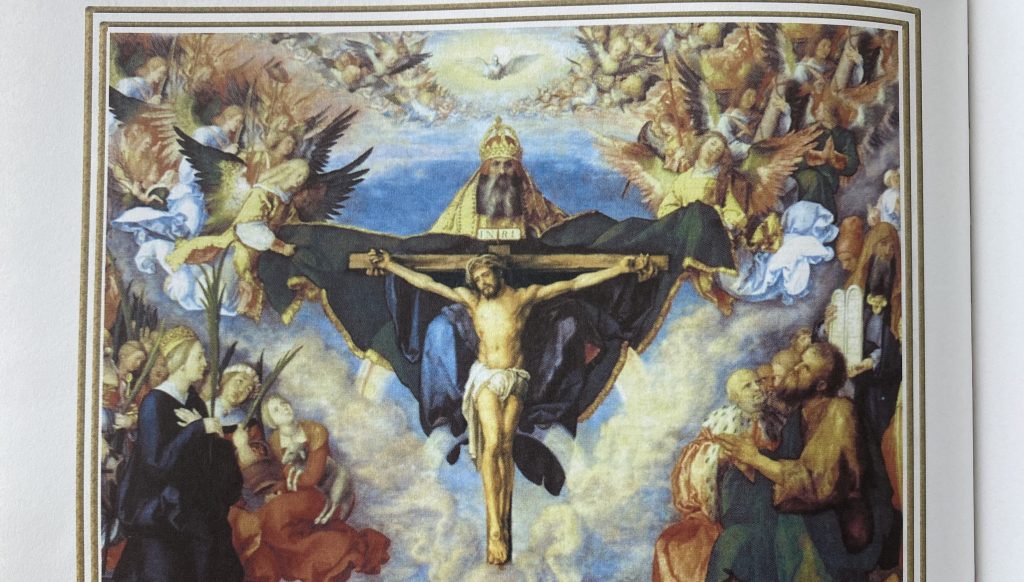
Photo: Accessed from Roman Missal. p. 497. Jesus showed his love for us in giving us all of himself on the cross, holding nothing back.

Martin, Francis and Wright VI, William M. The Gospel of John. Grand Rapids, MI: Baker Academic, 2015.

Link for the Mass readings for Thursday, May 5, 2025

The Holy Spirit will help us to continually embrace wonder and experience truth.

Benjamin Franklin is quoted as saying, “Wise men don’t need advice. Fools won’t take it.” Most of us may fall somewhere in the middle. Hopefully, we are less foolish and moving more along to path of gaining wisdom. Jesus continues his best efforts in today’s Gospel to offer guidance and assurance to his disciples that the Holy Spirit will continue to be their guide after his departure. “I have much more to tell you, but you cannot bear it now. But when he comes, the Spirit of truth, he will guide you to all truth” (Jn 16:12-13a).

Surely, Jesus could see the dimming lamps in the eyes of his disciples. As discussed yesterday, comprehending the death of the Messiah, his Resurrection, and return to the Father was a bit much to digest. Also, there was only so much that they could grasp with their finite intellect. Until they experienced the infused contemplative insights given to them by the Holy Spirit, there was only so much the apostles were going to be able to digest of what Jesus was sharing with them about the inner life of the Trinity, the divine communion of love between he Father, and the Son, and the Holy Spirit.

Yet, Jesus, though, still needed to share what his Father gave him to share, and the disciples were to take in what they could. Jesus’ death and Ascension were not to put an end to their learning, deepening of their understanding, or further developing their relationship with Jesus and his Father. The Holy Spirit would continue what Jesus started, and would to lead them to all truth, the fullness of the foundational relationship that is the source of all that exists, the Holy Trinity.

Anyone involved in teaching anyone anything or learning something for one self will know, that just telling someone something does not mean that learning has happened. There is a process of introduction, integration, practice, review, mistakes, corrections, and adjustments until some proficiency is achieved. With the disciples, this is the same. Jesus did not just present things once and move on to the next order of business. That is why John declared at the end of his Gospel that: “There are also many other things that Jesus did, but if these were to be described individually, I do not think the whole world would contain the books that would be written” (Jn 21:25).

I am sure a part of what John was talking about here were the lessons, corrections, and guidance Jesus offered. Just as Joseph modeled for and guided Jesus in his trade in carpentry, so Jesus learned from him through observation, practice, mistakes, adjustments, and corrections. Jesus guided his disciples in the same way, as a mentor with his apprentices. He was now assuring them that even though he would be leaving them, the guidance and leading would continue with the support of the Holy Spirit.

The lessons about the immanence of God, God within himself as a Trinitarian communion, that Jesus taught were not as concrete as sawing, hammering, and planing wooden beams though. God is not a being, not even a supreme being, meaning that he transcends our ability to comprehend the fullness of his reality. We will never fully comprehend God or exhaust the richness and the depth of our relationship with God. What the apostles and the saints to follow and we can still experience today is God’s grace building on his nature. When we read, pray, and meditate with these sacred texts, the Holy Spirit will communicate with us and grant us insights beyond any intellectual endeavor.

On the human level, we are guilty of malpractice in our relationships when we assume that we know everything there is to know about someone else. The gift of the person, the human being, is that we are ever-developing and growing in the mystery and wonder of who we are and who we are called to be. We can always surprise each other. If this is true for us in our relationships with each other, it is much more so in our relationship with God. Once we get to one level of understanding, we plateau for a time, but that is not the end of the journey, that is only a time to savor, to ponder, and contemplate until we are ready to go ever deeper into the truth that the Holy Spirit will reveal to us.

Our tradition teaches us that the fullness of God has been revealed in Jesus Christ, which is true, yet to comprehend that revelation will take a lifetime and continue on into eternity just to scratch the surface. St Thomas Aquinas (1225-1274), a Dominican Friar, who is considered the Angelic Doctor of the Church, was one of the top theological influences during the Scholastic Period, yet close to the end of his life he had a deep and intimate encounter with God in which he came to realize that all of his intellectual achievement, all that he had written, mattered no more than a pile of straw compared to that which God had revealed to him in a single moment of infused contemplation.

Arguably one of the wisest persons of his time, and some would say one of the most brilliant minds ever, was also one who was steeped in daily prayer and continued to be open to the majestic wonder of the glory of God. May we too continue to embrace the gift of wonder, the gift of learning, and never settle, rest and savor yes, but continue to learn and grow, to seek and hunger for the Good, the True, and the Beautiful, to continually have our hearts and minds open to allow the Holy Spirit to guide us “to all truth”!


Photo: A momentary pause during my Rosary walk to observe the interplay between some mangrove stems and barnacles. Many invitations to experience God’s wonder when we get out and about!

Link for the Mass readings for Wednesday, May 28, 2025

We are to be “carriers of God’s love to everyone.”

When Philip asks Jesus to show him the Father, Jesus responds: “Have I been with you for so long a time and you still do not know me, Philip? Whoever has seen me has seen the Father” (Jn 14:9). Even though Philip had lived with Jesus, experienced the authority of his teachings, witnessed his works of healing and exorcism, witnessed to the inclusiveness of his ministry, he, as we, struggled with comprehending what Jesus was talking about regarding the unity between his Father and himself.

One of the reasons is that God is God, and we are not. God is not one being among many, he is not even the Supreme Being, nor is God even in the genus of being. God so transcends our reality and sphere of understanding that any words we say about him are going to be limited. God is Infinite Act, God simply is. We are finite. At the same time, this does not mean that God is an impersonal force. God transcends all of his creation, time, and space, is the source and foundation of all that exists, and yet he is closer to us than we are to ourselves, each and every one of us.

God came closer still when, in the Person of his Son, he came to dwell among us. This is what Jesus meant when he said to Philip that when he saw him, he saw God. Each person, God the Father and God the Son are distinct but because of their infinite essence they are also, as we say in the Nicene Creed each Sunday, consubstantial, they are of one and the same substance.

The Son became one with us while remaining fully divine and in full communion with his Father, so we can become one with him and experience the intimate relationship that they share. We participate in the life of Jesus because he became human, and as human beings, God created each of us as being interconnected with one another. So, what happens to one of us, happens to all of us.

Through our Baptism and participation in the sacraments, we participate and become conformed to the Body of Christ so to encounter Jesus in an ever deeper intimacy and share in the divine Communion between God the Father and God the Son, as well as the Love that is shared between them who is God the Holy Spirit.

The wonderful gift of participating in the relational communion with the Holy Trinity, is not just for us alone as some treasure to sit on, as some secret knowledge to be shared with only a chosen few. This is a universal message to be shared with all. As we grow in our relationship and participation with God, we are to make him known to others. We do so through our participation in the life of Jesus. As Jesus said to Philip, “[W]hoever believes in me will do the works that I do, and will do greater ones than these, because I am going to the Father” (Jn 14:12). Jesus seeks to work, love, and serve through us as the Father did through him.

Each of us is given a particular charism, a ministry of service to build up the kingdom of God. The key is to believe in Jesus and seek his guidance so that he can help us to discern how best we can serve him and build up his Body. Those we call saints were those who came to know that one thing that God called them to do. They then surrendered all to their vocation.

This is not just for clergy or religious, this is for each and every person on this planet. The only requirement is that we are willing to follow Jesus, say yes to the invitation to experience the love of the Holy Spirit he freely offers, and be willing to be sent to allow God to happen in our interactions with one another. As St. Mother Teresa said we are to “become the carriers of God’s love to everyone.”

Let us embrace today the reality that the God of all creation loves each and every one of us more than we can ever imagine. Embrace the unique relationship he calls us to participate in, which is a share in his Trinitarian Communion. Embrace this unique blessing so that we can open our hearts and minds to the service and ministry he calls us to through our participation in the life of Jesus the Christ, the Son of the Living God, through the Love of the Holy Spirit.

———————————————————-

Photo Credit: Photo I took of St Mother Teresa in Massachusetts in the early 90’s. No zoom either, that’s how close I was blessed to be!

Link for the Mass reading for Saturday, April 27, 2024