“Whoever has my commandments and observes them is the one who loves me” (John 14:21).
Especially in our modern, western mind set, the idea or mere mention of following commandments may cause a bristling. Mostly this is because of the witnessing weakness of our fallen nature expressed in egregious ways through the abuse of power, abuse in relationships, and a weakening of trust in secular and religious institutions.
Jesus though is offering more of a challenge as he draws the following of commandments and love together. He is sharing with his apostles in the beginning stages of his farewell discourse, and before his crucifixion, what he feels is most important to share. His testament that he not only wants to give, but these final words he wants to impart upon them in such a way that they continue to learn and receive his teachings, put them into practice, allow themselves to be transformed by and so perpetuate them.
Just as commandments can lead one to bristle, love has many more superficial meanings than what Jesus means. One reason is that, even though the English language has a plethora of words to utilize and choose from, there is only one word for love and it is interpreted and used in many ways. In Ancient Greek, there are four words that are used to connote love. There is eros, which has to do with attraction. It is the beginning stage of love because we are drawn out of ourselves as we are attracted to another. The next word for love is philia, which aligns with friendship, a wanting to be together, to share between friends. If our love matures it moves from attraction or infatuation to friendship. The third word, storge, is the deeper love shared with family members which can be through blood or a deepening of friendship. The fourth word is agape, which is unconditional love, a sacrificial love.
When Jesus shares that we are to follow the commandments, he is not demanding that we do so as a tyrant would. He is providing boundaries, guard rail, parameters for us to grow and mature as people who love, who, in the words of St Thomas Aquinas, will the good of the other as other. As humans, we are social beings. We want to belong, to be accepted, and to be a part of. We seek meaning, purpose, and fulfillment in our lives. This is best done through cooperation and collaboration with God and with one another, striving to love unconditionally, agape. We desire to belong, to be loved, and to love in return. Yet, we need to ground our love in God first or our pursuit of love and belonging will be disordered.
As a good son of St. Augustine, Pope Leo XIV quoted Augustine in his inaugural Mass as Pope last year: “Lord, you have made us for yourself, and our heart is restless until it rests in you (Confessions, I: 1,1).” We are made by God to be loved and to love in return. Nothing we seek in this world will satisfy this deepest hunger that we all have in our soul besides the love God has for us. Unfortunately, we succumb to many disordered affections in pursuit of the love we seek. We are led astray by apparent goods that leave us hungry, thirsty, and wanting for more.
If we operate from a self-centered posture in which we are only turned in upon our self, and we only seek to manipulate and get from others, or worse, objectify others. Instead of working for consensus and sharing a common vision, we will ultimately be empty with the exchange on any level, because even in our relationships as with material things, we will be left wanting more. This is true because once the immediacy of the stimulation, whether material, emotional, or sensual, ends, so does the experience of the feeling. Some happiness may linger from the effect, but we will never be filled or satisfied with that which is finite. We will continue to seek more and more until the pursuit of instant and constant gratification ensnares us and we are entangled in a web of addiction.
God’s commandments, grounded in love, are meant to provide boundaries for us, training wheels, and to keep us free from enslavement to sin. The commandments point us to that which is not apparently but truly good for a wholesome and whole life. At the same time God’s commandments and the teachings of Jesus help us to mature as persons moving away from a posture of being self-centered to becoming disciples that love as Jesus loves.
Discipline in this way is meant to be a means of freedom for excellence such that we can become who God calls us to be and who we truly desire to be. God is not in competition with us. He is our biggest fan. As St Irenaeus wrote, the glory of God is the human being fully alive! When we can rest in the truth that God loves us as we are, even in our sin, when we can stop, breathe, receive, rest, and abide in his love, we can begin to settle and feel safe. Our restlessness can slow, the grasping can release, and we can just be, be loved, be ourselves, and experience peace.
Commandments and morality imposed indiscriminately, without reason or an end goal is a bludgeon. Love and mercy without accountability and justice can be enabling. Jesus’ invites us to receive and observe his commandments so that we may be freed from disordered affections and so properly order and discipline our desires and passions to be free to love authentically. Jesus knows what will truly fulfill and give us deeper meaning. May we trust in and learn from the deposit of faith passed on from Jesus to the Apostles, to each successive generation, as well as the ongoing guidance of the Holy Spirit, our Advocate that the Father sent in his name (John 14:26).
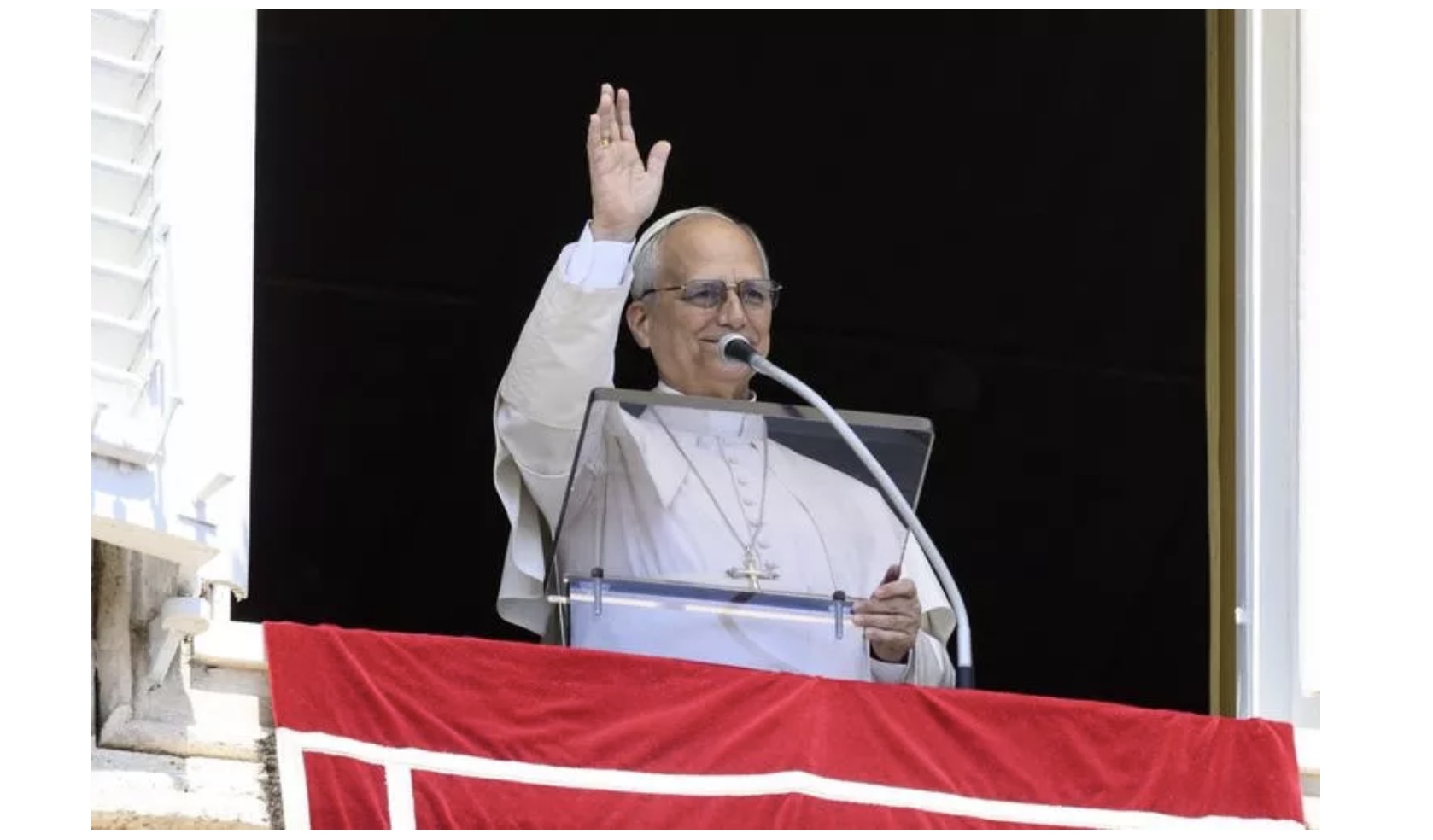
Pope Leo XIV, the vicar of Christ, implored us about a year ago: “Brothers and sisters, this is the hour for love! The heart of the gospel is the love of God that makes us brothers and sisters.” We are brothers and sisters, disciples of Jesus, when we receive and put into practice Jesus’s commandments, when we love him and his Father, we are given the discernment to reveal the lies of the enemy, we grow, and mature in our spiritual lives. The “heart of the gospel” Pope Leo preached in his inaugural address echoed again in his Sunday Regina Caeli address, May 3, 2026.
Having faith in God and Jesus “frees our hearts from the anxiety of possessing and acquiring, and from the illusion that we must pursue a position of prestige to have worth. Each person already has infinite worth in the mystery of God, which is the true reality. By loving one another as Jesus has loved us, we impart this awareness to one another… through love, amidst a multitude of brothers and sisters, each one discovers that they are uniquely made.”
Let us allow and continue to allow the tender chords of the Holy Spirit’s love to draw us deeper into intimacy with Jesus so that we can be transformed, forgiven, and healed by his love, and so freed from the false lures and promises that seek to divert us from being the beloved daughters and sons of God our Father that he has uniquely created us to be.
Photo: Pope Leo Regina Caeli address (Vatican Media)
Quotes above from Pope Leo XIV Inauguration Mass, May 18, 2025: Transcript of Pope Leo XIV’s Homily

