Reflections on the Gospel Reading for the Day
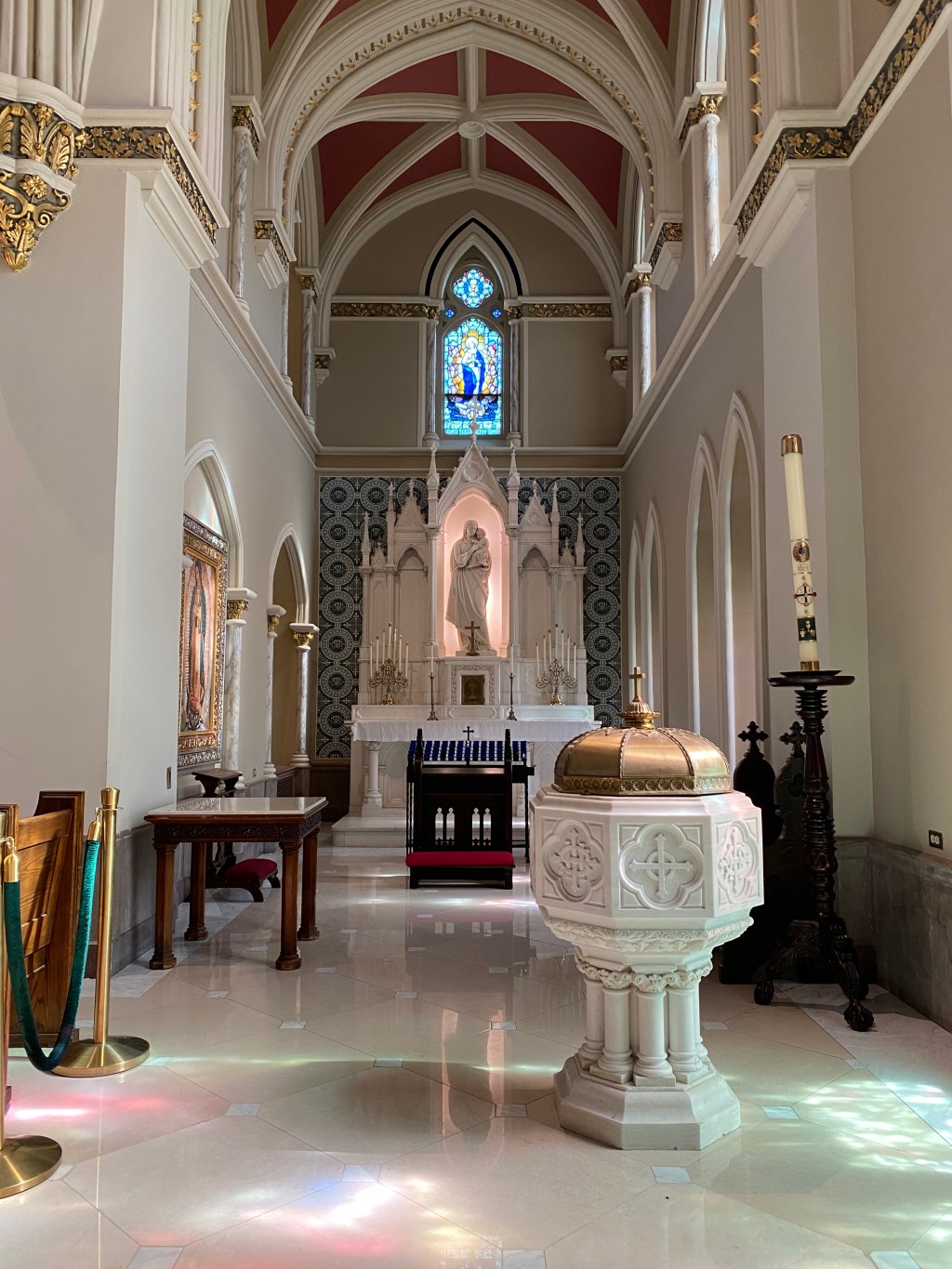

Why was Jesus baptized and does it matter in our lives?
Today we celebrate the feast of the Baptism of the Lord and the ending of the Christmas Season. From the timeline of each of the Gospels, even though they emphasize different points, Jesus’ baptism is a significant step in the life of Jesus.
It is good to occasionally reflect on our own baptism and the vows made on our behalf if we were baptized during our infancy or we actually remember if we were baptized older. Each time Catholics enter church, we dip our fingers into the Holy Water. We then bless ourselves with the signing of the Cross. We participate in this act to affirm that we choose again to live by the baptismal vows we or others made on our behalf.
Reflecting in this way, we may see this feast as important to us as well. But we might ask, why is Jesus being baptized? Wasn’t he the Son of God and haven’t we been taught that Jesus is like us in all things but sin? Yes and yes. And this is the wonderful gift of the Bible that the words of Scripture invites us to enter into the tension of humanity and spirit.
Jesus was not participating in baptism as an act of repentance, he was joining in solidarity with us in our fallen and sinful nature, while at the same time affirming that we are not destroyed by sin but only wounded by it. Jesus came to redeem us, to save us, to help to reconcile our fractured relationship with his Father. In the words of St. Irenaeus, “Jesus opened up heaven for us in the humanity he assumed.”
We recall and celebrate this reality that the Son of God, non-being, Infinite Act of Existence, became a finite, human being and then even assumed our sinfulness, while remaining sinless himself. The pure, unblemished, Lamb of God would be the sacrificial offering on the cross. Just as in his birth there were images of his death; the cave foreshadowed his tomb, the swaddling cloths his shroud, and being laid in a trough that was to feed animals, by his death he would become the bread of life to feed us. His baptism also reveals signs of his death.
Jesus was willing to participate in John’s baptism, which was a foreshadowing of his crucifixion, because he loved his Father and was willing to follow his Father’s will all the way. He was willing to show unconditional love for us, by his willingness to walk among sinners coming to John for a baptism of repentance, he his solidarity with fallen humanity. He was showing that not only in his baptism but also in willing to die for us, he would take upon the sins of the world on the Cross. He came among us as human being so that what he assumed, he would redeem. The muddy waters of the Jordan he would be baptized in would also be made pure such that in our baptism we would be made clean, we would be cleansed of all stain of sin.
We have choices each and every day, each and every moment to make. We can turn our back on our God and Father and his love for us, and instead listen to false promises, seek after apparent goods, and give in to temptations and diversions that may satisfy for the moment but leave us empty in the end. Even if they do satisfy for the moment, we will not only be hungry and thirst again, we will never be satisfied and only want more. We can live a life for our selves alone working toward an eternity of eternal separation from the one who loves us more than we can ever know.
We can also choose another path, to allow God to love us, to receive his love and his guidance, to accept his invitation to be in relationship with him, to participate in the plan that God has for us, and to follow his beloved Son. By our baptism into the life of Jesus, we become adopted children of the Father so that we can hear each day, “You are my beloved daughter, you are my beloved son, with whom I am well pleased.” We can actualize our potential and experience the joy and meaning of a life of fulfillment as we collaborate with God and strive to live out the grace he has given us toward a life of eternity with God while at the same time helping others to do the same.
How come Jesus never sinned? Because he never said no to his Father. Jesus always said, “yes.” Jesus’ baptism also revealed the Trinity into whom we are baptized in. When Jesus prayed after his baptism, he did so as the Son of God, fully human and fully divine. As he was praying the Holy Spirit came down upon him like a dove and the Father spoke of him saying, “You are my beloved Son with whom I am well pleased.”
During our Baptism we were indelibly marked, eternally conformed to Jesus and became adopted daughters and sons of the Father, with whom he is well pleased! Such that our Baptism, our being born again, born from above, is just the beginning. God the Father has a part for us to play in bringing about his kingdom. It does not matter how small. We are called to be holy, we are called to be saints. Each and every one of us, each and every day, are invited to say, “yes” to God’s will, to live out our baptismal vows to commit to playing our part in salvation history.
We are not alone in this endeavor. The saints represented in stained glassed windows, with the light shining through, are not just there for adornment. They are examples and reminders of those, who though sinners, and imperfect like us, made a decision one day that their baptism mattered, that they were going to say, “yes” to God. That day, and each day that followed, they allowed the light of Christ to shine through them to others. We can do the same, as the saints cheer us on. The Father and the Son have also sent the Comforter, the Holy Spirit, to empower us through his love, to give us the guidance, the ears to hear, and the courage to act. All that needs to happen for us to begin and continue to live out our baptismal call is to say, “yes,” as Mary did today, tomorrow, and the next day, and in each moment to the will of our Loving God and Father.
Painting: Baptism of Christ by Battistello Caracciollo
Link for the Mass readings for Sunday, January 12, 2025

May we awaken each morning seeking to decrease so God may increase in our lives.
“So this joy of mine has been made complete. He must increase; I must decrease.”(Jn 3:29b-30).
How could John be feeling joy with decrease? This is counter to what many aspire to in our country. Aren’t we supposed to obtain more, be more popular, and not rest on our laurels if we are to be happy? If our end goal is, fame or honor, wealth, power, and/or pleasure, then yes, that would be true. But John is giving us an insight here about what brings us real joy.
True joy comes from within when we have found our meaning and purpose in life, our mission. John was clear about his mission. John came to prepare the way of the Lord. He experienced this from the time when he leaped in the womb when Mary first arrived to see Elizabeth. From that moment, he was preparing the way for Jesus and continued to do so into his adult life. He was not distracted by how many people he was or was not baptizing, but instead was focused on preparing people to be ready for the coming of the “Lamb of God, who takes away the sins of the world” (Jn 1:29).
John was not threatened by Jesus as was Herod, he is overjoyed that the time of fulfillment had come. What John had been called to do by God he had been doing. The reality that Jesus increased and John decreased brought John joy because this was the fulfillment of his mission. How many of us get to experience the fruits of our labor?
If we want to be happy, experience joy, and be fulfilled in our life, then following the lead of John the Baptist is a pretty good way to start. I do not necessarily mean selling off everything, moving to the wilderness, and subsisting on a staple of locusts and honey. The important point is that John cultivated a relationship with God. He came to know his voice, was open to his direction, acted on God’s leading, because he was clear of the part he was to play in salvation history.
Each and every one of us come to know our mission, our specific role to play in God’s plan when we slow down daily, pray, spend time reading and meditating on his word. We become consciously aware of the relationship God is inviting us to participate in. As we do so, we will better experience the Holy Spirit who “impels us to open the doors and go forth to proclaim and bear witness to the good news of the Gospel, to communicate the joy of faith, the encounter with Christ. The Holy Spirit is the soul of mission” (Francis 2014, 48).
I have been blessed to have been instilled with a sense of mission during my days with the Franciscans in my early twenties, my twenty-three years of marriage to JoAnn, and my twenty-five plus years teaching. Each of these as well as all of my other experiences have prepared me well for this next chapter of my life serving as a priest. The key practice that has helped me during each step along this path has been to ask God what he wanted me to do, to trust in his guidance, and follow him.
When we make the time to listen, we will hear and begin to recognize the voice of Jesus in the silence of our hearts, we will better discern where we are placing our time and energy, and will be better able to discern what and who we have placed before God as idols and let them go. When we are willing to have eyes to see and ears to hear, we will see where God is inviting us through his creation, our experiences, and relationships. As we step out of our comfort zones and risk, follow the lead of the Holy Spirit, and are willing to allow Jesus to increase within us, he will not only confirm for us but provide for us the means to accomplish our mission.
—————————————————————————–
Photo by Josh Sorenson from Pexels
Pope Francis. The Church of Mercy: A Vision for the Church. Chicago: Loyola Press, 2014
Link for the Mass readings for Saturday, January 11, 2024

Jesus has come close that we might be healed.
The man in today’s Gospel scene takes a tremendous risk by approaching Jesus. He is a leper and so considered unclean. The appropriate response when someone was coming into his general vicinity would have been to give as wide a berth as possible, if not remove themselves from view entirely, or to make themselves known to be unclean to any passerby.
This state of uncleanness was not a mere sense of hygiene. This was considered ritual impurity. So anyone touching or being touched by a leper would be considered ritually impure. For this reason, lepers were ostracized from family, friends, and the larger community socially as well as being forbidden access to public worship. This is a horrific state to find oneself in, for as human beings we are social beings who want to belong, to be a part of, and to be loved.
The leper cast aside all social norms and fell prostrate before Jesus and said, “Lord, if you wish, you can make me clean” (Lk 5:12). Jesus knew full well the social norms, and it is very telling that not only did Jesus heal the man, but he did so by placing his hand on him. He could have easily said, “I do will it. Be made clean” (Lk 5:13), without touching him and the man would have been healed. There are Gospel accounts of Jesus doing just that.
Jesus says more in his willingness to touch the leper than he does even with his words of healing. He does not keep the man at a distance but instead places himself on the same level as the man. In Jesus’ touch he is not made unclean, but the man becomes clean. The tremendous stigma of this man having to be separated from something as simple, yet as significant, as a human embrace is removed. With that simple touch, Jesus comes close and in doing so, the man will no longer be kept at arm’s length but restored to his community and the opportunity for fellowship.
This is what the Son of God has come to do. He has come close to all of us. He has become human so we can see the face of God. We can experience the tenderness of his touch, and being understood when no one else can or is willing to do so. Jesus has come close so that we know that we are not alone, that we are loved more than we can ever imagine, more than we can ever mess up, more than our worst mistakes, or gravest sins. Jesus has come close so we can experience how it feels to forgiven, healed, to belong, to be loved and cared for. Having received this wonderful gift, we are also invited to come close to love as we have been loved.
One of the simplest ways to love is to be willing to sit with and experience one another, even while running the risk that we will be offended or offend, while at the same time, being committed to staying the course and developing relationships. When we are willing to see each other as human again, to come close, to hold each other accountable, and to respect each other even when we disagree, then we might be advocates of healing, hope, love, and unity.
——————————————————————————————————-
Photo: Mosaic of Jesus Heals the Leper, in the Cathedral of the Assumption, Monreale, Sicily.
Link for the Mass for Friday, January 10, 2024

How can we participate with Jesus to make this “a year acceptable to the Lord”?
He said to them, “Today this Scripture passage is fulfilled in your hearing” (Lk 4:21).
Jesus spoke these words to his hometown congregation in Nazareth who had just heard him read the passage from the writings of the prophet Isaiah. Jesus proclaimed that he was the one to whom Isaiah was talking about. Luke chose to highlight this event as the starting point of Jesus’ public ministry, of bringing glad tidings to the poor, proclaiming liberty to the captives, recovering sight to the blind, letting the oppressed go free, and proclaiming a year acceptable to the Lord (Lk 4:18-19).
This message of universal healing, restoration, and reconciliation for all people would be an aspect of the mission of Jesus. He presented the message that he would be the vehicle to bring the love and redemptive work of his Father to all the nations, to invite all people to be aware of the reality present to them: that God his Father is inviting all into communion and relationship. The poor mentioned were not just in reference to those experiencing material poverty, but also to those finding themselves on the margins of society, the outcasts, those on the peripheries. The captives were not only those imprisoned for debts or crimes but those bound in the chains of their own sin and addiction. The blind were not only those who could not physically see but those who experienced the spiritual blindness of pride and arrogance. The oppressed were not just those under the iron fist of totalitarian and dictatorial regimes, but those pressed down through their own anxieties and fears.
In what ways are we in need of Jesus’ teaching, healing, and restorative power? What is keeping us on the peripheries, apart from communion and fellowship? What sins, disordered affections, and/or addictions, fears and anxieties keep us bound? What is keeping us blind to the reality that God is in our midst and seeking a deeper relationship with us? Today we hear or read again Jesus’ words proclaimed in the Gospel. Jesus invites us to be healed and to align ourselves with his will and ministry of loving service to others.
We still need to hear the same words that Jesus spoke to the people of his own hometown. Are we willing to listen? Will we hold on to our biases and prejudices, to our tribe, nation, political party at the cost of losing our integrity, reason, and dignity? Or can the words of Jesus be a light for us to see our dark and fallen nature? Resisting the temptation to turn away from but instead allowing the light of Jesus to shine in our darkness opens us to the gift of our uniqueness as individuals, the richness of our human diversity while at the same time recognizing that we truly are all interconnected.
The Psalmist stated that, “From fraud and violence he will redeem them” (Psalm 72:14) and John wrote, “whoever does not love a brother whom he has seen cannot love God whom he has not seen” (1 John 4:20). With these words from today’s readings we can begin again. We can allow ourselves to be loved by God who loves us more than we can imagine and has a plan for us beyond our wildest imagination. To receive this gift, we are called to examine our consciences, turn to God with a contrite, sorrowful heart for what we have done and what we have failed to do.
As we do so, may we experience the healing hands of Jesus on our bowed heads and the warmth of his forgiveness and love pouring through us as we are purged from our sin and pride. Then, in recognition of how much suffering and pain is present in our country and world, we can open our hearts and minds to the guidance of the Holy Spirit to participate with him in choosing love over hate, bringing the invitation of healing and reconciliation to others, and committing to bringing about “a year acceptable to the Lord” in this new year of 2025 (Lk 4:19).
————————————————————————
Photo: Pondering like Mary and loving our brothers and sisters as John invites us to are good ways to begin our year. Hoping to also get back into our church soon to see and pray with this stained glass image in person.
Link for the Mass readings for Thursday, January 9, 2025
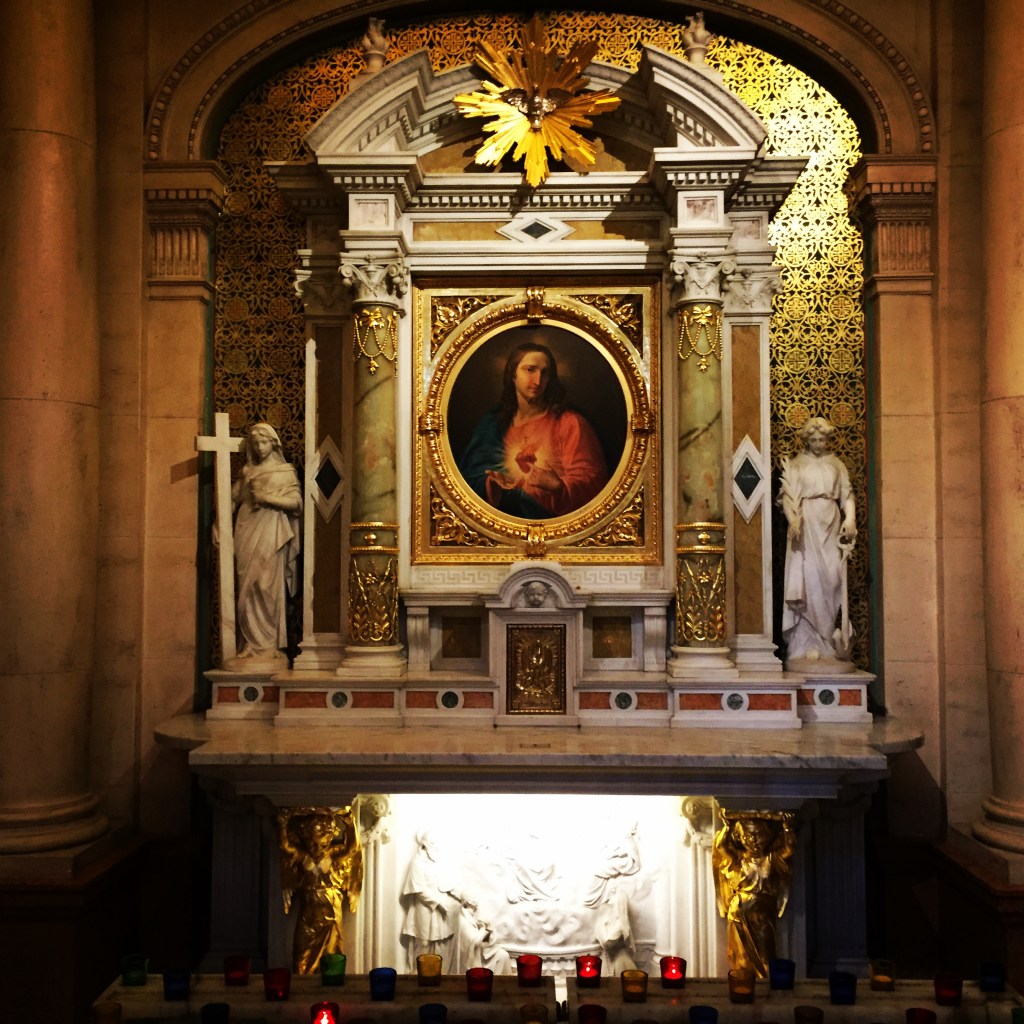
God invites us each day to come away and spend some quiet time with him.
And when he had taken leave of them, he went off to the mountain to pray (Mk 6:46). We often read in the Gospels that Jesus went off by himself to pray. I am sure this was not a practice that he began during his public ministry, but one that he learned and developed from Mary and Joseph. The Apostles themselves witnessed Jesus praying, and in the account of Luke 11:1, one of his disciples asked Jesus how to pray.
Pope Francis in a general audience he gave in 2013 shared that, “the Church is apostolic because she is founded on the preaching and prayer of the apostles” (Francis 2014, 37). Jesus prayed, he taught his Apostles to pray, and we are at our best when we are people of prayer. We hear of prayer and that we need to pray, but what is prayer and how do we pray?
That we desire to pray, that we even want to be closer to God is already a prayer because we are experiencing an invitation from God to draw close to him, to develop a relationship with him, to come to know the one who knows us better than we know our self.
Fr. William Barry in his book, God and You, describes how prayer is becoming consciously aware of our relationship with God. This helps to counter the idea that God is like a gumball machine in the sky, we just need to say the right types of prayers, be good, say them in the proper order, we will get what we want, and we will be happy. “God is in relationship with each and every created thing in the universe and in relationship to the whole of it… whether that being is aware of the relationship or not.” The amazing thing about God is that “he will not force himself on us. He continually tries to arouse our awareness and interest in him” (Barry 1987, 12-13).
God reaches out to us in so many ways such as a majestic sunrise or sunset, the ebb and flow of the waves on a beach, and the brilliant radiance of a starlit sky. He also does so through our trials of sickness, pain, others who are being hurt, or encountering injustice. He is also present through our every day relationships and experiences. The key is to be aware of what is being stirred up within us when we experience something and allow ourselves to “wonder about the experience and its meaning” (Barry, 13).
What is most important regarding becoming people of prayer is our awareness, our becoming conscious that we have a relationship with God. “This relationship is based on God’s actions to establish it and his desire that we become conscious of who he is and wants to be for us. Our consciousness depends on our willingness to pay attention to God’s actions, or at least to experiences that might be actions of God, and to let our desires for God be aroused” (Barry, 14).
Another question that Fr. Barry answers regarding prayer is that if God knows everything about us, why bother to pray at all? God is not just wanting information. Again, he is inviting us to enter into a relationship. He wants to know whether we believe he cares how we feel and whether we are willing to let him in, to let him know what we feel and desire. It is important to be honest in our dialogue and be willing to reveal ourselves to God, while at the same time, be open and willing to allow him to reveal himself to us. This is how we build authentic relationships with God and each other (cf. Barry, 15).
Jesus, thank you for inviting us in so many small ways each day to spend time with you. Though we can allow our harried pace, distractions, diversions and temptations to lead us away from the gift of your presence, please help us to slow down, to breathe, and rest in the wonder of how our God and Father is present to us, and how the love of the Holy Spirit is working in our lives daily. Help us to realize that we don’t need to be perfect to come to you, to say the right words to be heard by you, nor that we have to say any word at all, and help us to be free to just rest in your loving gaze.
——————————————————————–
Photo: Some time praying at the side altar at St. Ignatius Parish, San Francisco back in October of 2019.
Barry, William A. S.J. God and You: Prayer as a Personal Relationship by William Barry SJ. New York: Paulist Press, 1987.
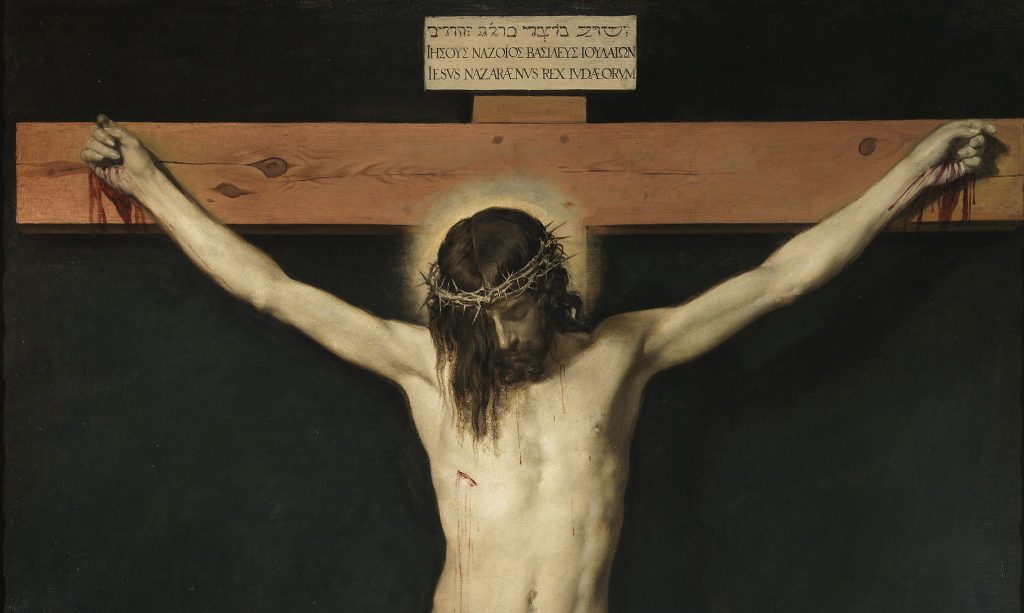
God “sent his Son as an expiation for our sins” so we can be free to love as he loves us.
“God sent his only-begotten Son into the world so that we might have life through him. In this is love: not that we have loved God, but that he loved us and sent his Son as expiation for our sins” ( 1 John 4:9-10).
To understand why Jesus was sent by his Father “as expiation for our sins” it is helpful to take some time to ponder the truth and reality of the Trinity. Beyond all time, “love is of God” or another translation of the same verse: “God is Love” (1 John 4:8). God is, always has been, and always will be. God is a community of three divine Persons, Father, Son, and Holy Spirit. They are distinct by their very nature while at the same time they are one because of their infinite communion.
The Father eternally begets the Son, the Son is eternally begotten, all that the Father is he gives to the Son and the Son receives perfectly all that the Father has given, the Son returns perfectly all that he has received from his Father holding nothing back, and this intimate, infinite, divine eternal sharing between the Father and the Son is the infinite love expressed between them, the Holy Spirit.
All that exists has come into existence because of the outpouring of the love of the communion of the Trinity. At a particular time and place, the Father sent his Son to be conceived in and born of the Virgin Mary and so the Son of God, fully divine, became fully human. He lived a fully human life while remaining fully divine and experienced our humanity with a specific purpose. Jesus was born that he would die for us and restore us to our likeness that was intended from the very beginning.
The ultimate expression of the infinite giving of the Son and holding nothing back, returning all to the Father, is Jesus’ death on the Cross. He loved us so much that he was willing to give all of himself, leaving nothing by giving his very life for us, that we might be freed from our sins. He took upon himself the worst of our humanity, injustice, extreme brutality and horrific violence, betrayal, selfishness, and death. He did so by conquering the darkness of our fallen world through this selfless act of love.
The crucifixion shows that the love of God, the love we are to aspire to, is not expressed as a mere emotion, sentiment, or feeling. Love, in St. Thomas Aquinas’ language, is to will to good of the other as other. Jesus loved us not in some abstract, utopian ideal. He loved each and every human being that ever existed, is existing, and will ever exist, by willing our good such that he gave his life “as an expiation for our sins” for each and every one of us. He loved, willed the good, of those who tortured and killed him, as he asked his Father to “forgive them, for they know not what they do.”
Let us accept the life that our loving God and Father wants us to fill us with in this new year. A life of sharing in the love of the Father, and the Son, and the Holy Spirit. We are capable of loving when we are willing to receive this unconditional love of God, when we are willing to repent from our sins, and let go of anything that we hold on to, anything we place before the love that God wants to share with us. As we breathe, receive, rest, and abide in his love, we heal, we are forgiven, we are redeemed, and we can then love others as we have been loved.
Painting: Close up of Christ Crucified by Diego Valasquéz
Link for the Mass readings for Tuesday, January 7, 2024

Some guidance from Jesus, St. John, and St. André Bessette, for the new year.
The beloved disciple John shares with us today a wonderful compass to guide us into the new year. From his first letter he writes that God’s “commandment is this: we should believe in the name of his Son, Jesus Christ, and love one another just as he commanded us” (I John 3:23).
Before we can believe in God’s Son, we need to trust him. For many if not all of us at some point in our lives who have experienced being hurt, betrayed, or wounded in any way, trust can be hard.
That is why the Son of God was willing to be sent by his Father. He wanted to become one with us so that he could not only experience all the pain and suffering of our humanity but that he could take that upon himself, even death, so he could conquer them and heal, restore, and show us the way back to the Father, through our suffering and pain and into healing.
We can trust Jesus. Jesus not only has our best interest in mind, but he knows the plan of his Father for our lives and he can lead us to experience his love and our vocation as we trust him by taking one step at a time. He gives us enough light to see two steps ahead and when we take those steps, he will give us enough light to see the next two.
We can trust Jesus, but each thought or invitation we hear in our mind is not necessarily from Jesus. Some may appear good and true, but are only apparently so. For as John continues: “Beloved, do not trust every spirit but test the spirits to see whether they belong to God” (I John 4:1).
The devil and his demons tempt, entice, divert, and distract us, with the ultimate goal to lead us away from the love of God, the source of our true fulfillment. They seek to plant seeds of so doubt, so we believe that God does not have our best interest in mind. And once those seeds of doubt begin to sprout he seeks to isolate us from our Father by fertilizing those doubts with distrust in our minds and hearts. And when we sin, the devil condemns and shames us, and leads us to believe that we cannot be forgiven and that no one will accept us for what we have done or for who we are.
God never tempts us, he invites us and challenges us to move beyond our sins and our fears. He gently coaxes us to come out of the darkness of our self-centered, protective cocoon, and into the gentle light of his love. He does so patiently, sometimes with a firmness of a good parent, but gently. We hear his voice mostly in the quiet and stillness of our heart. When we do make a mistake, he does not condemn us, he convicts us to learn, to renounce our mistake. When we sin and turn back to him, he forgives and embraces us. We then begin again strengthened by his grace and greater clarity.
God loves us more than we can ever imagine no matter what we have or have not done, he loves us more than we can ever mess up, and he loves us even in the act of our sin. He has shown this love most profoundly in sending his Son so we can see his face and experience his love, forgiveness, and mercy. We can experience that he loves us as we are right now, right where we are in our weakness and imperfection.
The key to walk free from the “fowler’s snare” (see Psalm 91:3-4) is to heed the words that Jesus began his public ministry with: “Repent, for the Kingdom of heaven is at hand” (Matthew 4:17). God does not seek to punish us. Neither does he want us to stay in our sin and separation from him. God’s love calls us to more. Feeling guilty and shame is a false humility that keeps us separated from God because our focus remains on ourselves.
God imparts within us a sense of guilt, so that we experience our separation from him. Being in touch with this experience, helps us to choose true humility which leads us to trust in the love of God and believe in his mercy. When we sincerely and contritely confess our sins, do penance, and with his help seek to sin no more, Jesus will forgive, free, save, and restore us to our right relationship with God.
When we are willing to allow the gentle light of Jesus to shine in our darkness, Jesus helps us to see what our life is like without God and with God. He helps us to be able to see the difference between the apparent goods and the true good so that we can make a clearer decision. Will we choose darkness, separation, and death or light, reconciliation, and life?
St. André Bessette, whose feast day it is today, could have fallen for the devil’s tactics. He who was sickly since he was an infant, lived in poverty as a child, and who then lost his parents when he was only twelve, and struggled with illness for all of his ninety-one years, could have been bitter towards God. André chose instead to trust in God and how he could make this statement: “Do not seek to have your trials removed. Ask rather for the grace to bear them well.”
Living a devout life of faith as a youth, his pastor encouraged him to apply to religious life and he sought at twenty-five to enter the Congregation of the Holy Cross. His poor health continued to plague him and at the end of his novitiate year, he was not asked to continue. André continued to trust in his Lord and his long standing ally St. Joseph. His novice master and bishop saw the light of Christ in this young man and petitioned that he be given an extension and he was eventually admitted into the order and served as a brother. His birth name was Alfred. Upon his profession he took the name of André who was the pastor who had mentored and recommended the pursuit of his vocation.
André was assigned the position of porter, the door keeper, because of his lack of education and frail health. A role that many would not look on with any esteem, André welcomed with open arms. Seeing in this position the opportunity to greet Jesus at the door with each knock and person he met. Looking back at his life he would say, “When I entered the Congregation, they showed me the door. And I stayed there for forty years.”
During his time of service, through the intercession of St. Joseph and his unwavering trust in Jesus despite much opposition and his continued frail health, thousands experienced being heard, loved, and healed. Through St. André, they experienced a foretaste of heaven.
St. André is a model for us on how we can in this new year “believe in the name of his Son, Jesus Christ, and love one another just as he commanded us…”, trust only in the Spirit of God without hesitation, and when we do fall, “Repent, for the Kingdom of heaven is at hand.”
God loves us so much and wants to share his life with us so that we can share in his relationship. Are we willing to resist the lies of the enemy, trust in the love of God, seek his guidance in all circumstances, discern and let go of anything that is not of God? When we do so, we will heal, be forgiven, and be set free to love and love in return. This journey begins and continues by trusting in God the Father’s Son whom he sent.
Photo: St. André Bessette, pray for us!

May the light of Jesus rise in our hearts.
When Jesus was born in Bethlehem of Judea, in the days of King Herod, behold, magi from the east arrived in Jerusalem, saying, “Where is the newborn king of the Jews? We saw his star at its rising and have come to do him homage” (Mt 2:1-2).
At some point as they approached Jerusalem, the magi lost track of the star, did it become cloudy, did they close in on the city during the day, or did they believe it was the proper protocol that in entering this foreign region that they ought to check in with Herod first before proceeding? We do not know. Somehow, these magi were led by a star with the belief that they were to pay homage to the king of the Jews in a distant land. Early teachings in the Church ascribe to the interpretation of this account as the book of God’s creation, in the presence of this light could only take them so far. The illumination that brings them to Jesus is the Book of God’s word, the Jewish Scriptures that would tell them that the messiah they sought is to be born in Bethlehem.
Pondering another thought: What drew them from their home miles away? What inspired them to leave the comfort of their everyday routine? This was no easy journey, and it was a risky adventure. Yet something or someone inspired them, invited them to come and more inspiring is that they said, “yes.” And though they were misdirected for a time, or if their capacity of reason had reached its limits, and they were then guided by the inspired word of God, when they left the audience of King Herod and resumed their pilgrimage, they again saw the star and were “overjoyed” (Mt 2:10).
That joy must have multiplied when they came before the infant that they sought because their physical response was one of prostrating themselves before the baby king, the one for whom they risked all and sought for. They had now found. This action though of prostration was reserved only for divinity. In reality, their journey had only begun. Their lives would be forever changed and they would go back a different way than they came. The magi would not return to Herod, nor would they return to their home quite the same. They would not return from this journey and just go back to business as usual. The magi carried within them their encounter with the Christ; the light that drew them, they now carried inside of them.
They would proclaim him in the East. The magi did what they were called to do. They came to encounter the Christ and bring his light to the world. They and those who followed the same invitation are why we are still able to hear this same message today.
Today is the feast of Epiphany, and it is on this day that we celebrate that the King of the Jews, Jesus the Christ, has made his salvation known to the whole world. The manifestation of God’s glory came to the Jews first as the chosen people of God and then to all the Nations. The Son of God has become one of us and one with us so that all people are given the offer to be saved.
We too are invited. We like the magi are called to put the light of Christ first in our life. Let us seek each day to encounter him and his plan. Distractions, diversions, and temptations, anxieties and anticipations as well as many appealing and apparent goods will attempt to lead us astray, yet to put Jesus first will help all other priorities to fall into their proper order and place. Let us follow the gift of our God given intellectual talents and capacity to reason, but also realize that this will only take us so far. Time in the living words of the Bible will help us to stay focused on our journey and to deepen our relationship with the One who has invited us to know him.
Bishop Robert Barron in his book, To Light a Fire on Earth, writes about becoming part of God’s “Theodrama”, using the Swiss theologian, Hans Urs von Balthasar’s term. God is directing all of creation, all of the cosmos, and each of us to play our part. “The key”, Bishop Barron writes, “is to find the role that God has designed for us, even if it looks like a bit part… When, through faith, we see every moment and every creature as an ingredient in the divine plan, when we know that there is a gracious providence at work in the universe, we live in joyful surrender and with a great sense of wonder.”
This is what the Epiphany is about. Jesus manifesting his light to us and in us so that we can see what keeps us from living our lives fully committed to God and what and who is helping us to grow in our relationship with God. With clearer sight, it is easier to decide how to proceed. The light of Christ helps us to also see that we are not the center of the universe. God is. “When we decenter the ego, and live in exciting and unpredictable relationship to God, we realize very clearly that our lives are not about us. And that’s a liberating discovery” (Barron 2017, 164-165).
May we follow the lead of the magi, who followed the light of Christ, and prostrate ourselves before our Lord and Savior. Let us surrender to him our ego and self-centered way of life. Let us acknowledge and let go of those things that prevent us from deepening our relationship with God and one another. When ready, let us rise again as did the magi, forever changed, and live our lives each day for God and following his will. Jesus is the true light to lead us through any darkness.
—————————————————————–
Photo: Epiphany light over Holy Cross Catholic Church tonight. May we like the moon that reflects the light of the sun, reflect the Light of the Son of God.
Barron, Robert and John L. Allen Jr. To Light a Fire on the Earth. New York: Image, 2017.
Link for today’s Sunday Mass readings for the Epiphany, January 5, 2024

 Spiritual Stepping Stones