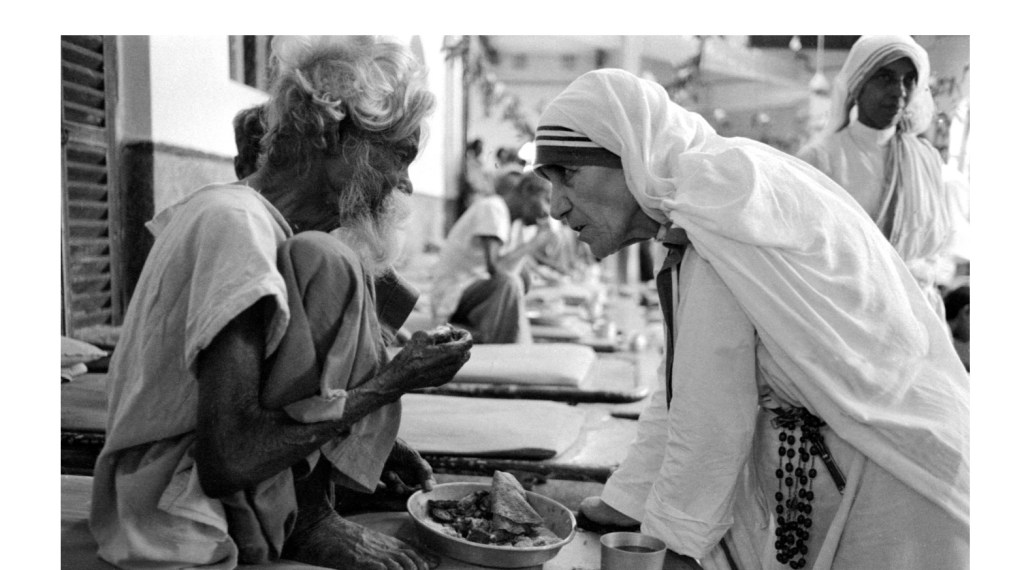
Greed corrupts our hearts, giving sets our hearts free.

Take care to guard against all greed, for though one may be rich, one’s life does not consist of possessions” (LK 12:15).

Jesus wisely warns us to resist the temptation of greed, which can be defined as an intense, selfish desire for something. Here Jesus addresses the greed of material wealth, but we can also have unhealthy selfish desires for anything. Jesus also stated that “one’s life does not consist of possessions.” Material goods are finite and will not fulfill us. They can be good when used for the purpose they were intended for and in moderation.

God provides for our needs. Fostering an attitude of thanksgiving for that which we have received and then being good stewards helps us to resist the temptation of greed. St Clement of Alexandria (150-215 AD) wrote: “How could we do good to our neighbor if none of us possessed anything.” God does bless us, and from what we have been given we are to assist those in need. The problem comes when we interfere with the flow of receiving what God has given us by hoarding what we have received and rationalizing our unwillingness to share. Also, when we look to our wealth as our safety net, instead of God’s providence, we begin to cling to what we have and develop an unhealthy attachment. We buy into a false security in placing our trust in material wealth. We need to remember that the material and finite here below will not satisfy nor will it last, we need to set our heart and mind to God and the things above first and foremost.

Acts of almsgiving, willing the good of and support for one another in need, will help us to resist the temptation of greed and help us to be open conduits of God’s mercy. Pope Leo XIII (1810-1903 AD) wrote that “Once the demands of necessity and propriety have been met, the rest of your money belongs to the poor.” How many of us are willing to put that quote on our bathroom mirror? More so, put it into practice? How about posting this quote from John Chrysostom (349-407 AD) over our closet and reading it before we enter: “The man who has two shirts in his closet, one belongs to him; the other belongs to the man who has no shirt.”

God has given us the greatest gift we could ever receive, his Son, Jesus. In so doing, he has given us the gift of our salvation which is a reason to rejoice! He loved us and all of creation into being and is loving us into eternity. We are invited to participate in the love experienced between the Father and the Son and the Holy Spirit.

We do this best when we resist clinging to the material and finite and instead being thankful for the gift of life and invitation to be in relationship with his Son. May we resist clinging to and instead share that which we have received from God, our infinite source and spring of eternal Love. We will be fulfilled and joyful, not by how much we have saved up in our bank accounts, but by how much love we invest in serving one other.


Photo: No sunset is the same. Each one has its own unique beauty and to watch provides a wonderful gift. We receive the gift God gives us and let it go. A good rhythm to practice in our daily lives.

Link for the Mass readings for Monday, October 20, 2025

We give alms, pray, and fast to grow in our relationship with God and one another.

The teachings of the Beatitudes as well as the six antitheses are powerful lessons that can transform our lives when we put them into action. As we continue to hear or read Jesus’ Sermon on the Mount today, Jesus presents not only common practices of living a devout life of faith. As before, Jesus raised the standard practice of these three pillars to a higher level. The key point he is making though has again to do with our end goal. Jesus continued to show his disciples how to be “perfect just as [our] heavenly Father is perfect” (Mt 5:48). The perfection to be attained is oneness with God. Jesus disciple’s then and we today are to strive to become holy, to be saints, for the purpose of deepening our bond and relationship with God and each other.

Our being perfected in Jesus is a process whereby we become less and Jesus becomes more. What decreases is our focus on self, especially the ego-self, our sense of self-centeredness. Jesus provides for us three ways in which we can practice drawing closer into communion with God and one another. We are to give alms, pray, and fast. We may remember that these practices are the three pillars of Lent that we put extra emphasis on during that penitential season.

When we give alms, pray, and fast, our intent must be properly ordered. If we give alms with the intention to “win the praise of others” (Mt 6:2), pray in a public display “so that others may see” us (Mt 6:5), and in our fasting “look gloomy” and “neglect [our] appearance, so [we] may appear to others to be fasting” (Mt 6:16), then we are seeking to do so in such a way that the focal point is on us. We think to ourselves, how holy and pious we are. In fact, if we act in this way, how hypocritical we are because, in each of these actions, we are not seeking to improve our relationship with God, build up his kingdom, or give glory to God but to build up our own pride and ego by seeking affirmation and adulation for ourselves.

Jesus calls us to give and serve out of love for others, so that others may be healed, have their basic needs met, become empowered, and strengthened in their relationship with God. We seek Jesus in prayer not to conform his will to ours, but to surrender to his will and allow the purifying fire of the Holy Spirit to purge us from the dross of our accumulated sin, selfishness, and that which we are attached. In our time of prayer and examination of conscience, Jesus will reveal to us those apparent goods and disordered affections that lead us astray. From these areas we can fast from, turn back to God, and in doing so, we will find rest for our souls.

In our prayer today, let us ask Jesus to reveal to us one way that we are putting ourselves before God, one habitual vice that keeps us bound, and/or something that we are attached to that we can fast from. What is one way we can reach out and give ourselves to someone else? Prayer, fasting, and almsgiving are not only for Lent. Following Jesus’ guidance in each of these three practices will help us to grow closer to God and recognize the needs of others. We become the hands and feet of Jesus when we are willing to allow him to lead us to serve others with the love of the Holy Spirit.

—————————————————–

“Do you wish your prayer to fly toward God? Make for it two wings: fasting and almsgiving.” St. Augustine Painting by Fra Angelico, “The Conversion of St. Augustine”

Link for the Mass readings for Wednesday, June 18, 2025

Ourselves first or God first, will impact our discernment in helping others.

The Parable of the Rich Man and Lazarus that is offered for us today from the Gospel of Luke 16:19-31 is well worth the read. Jesus challenges us through parables such as these. For the people of his time, those who had wealth and status in society did so, it was believed for the most part, because they were blessed by God. And likewise, those who were poor, were so because of God’s punishment. When the rich man and the beggar, Lazarus, die, I am sure Jesus paused to allow his listeners to imagine what would happen to these two men and to give their presumptions some time to ferment. Many would not have predicted what happened next.

Lazarus was taken up “by angels to the bosom of Abraham” (Lk 16:22). The rich man found himself suffering from the torment of flames, such that he was parched, begging just for a drop of water from Lazarus (cf. Lk 16:23-24). Abraham, the model of faith and father of Judaism, was not sitting with the rich man, who must have always been seated at the highest places in his day. Now that seat, at the bosom of Abraham, was offered to Lazarus. There was no hope at this moment for the rich man to cross over because of the wide chasm that separated them. An ironic subtlety was afoot as well in Jesus’ telling of the parable to the Pharisees. Lazarus the poor beggar is named, whereas, the rich man is not. Some biblical scholars, based on the context of this exchange with Jesus and the Pharisees, believe that Jesus was alluding to the rich man to be Herod Antipas and indirectly calling out the Pharisees for their too close of an association with Herod, especially in leading to the death of John the Baptist.

This state of suffering and separation for this rich man, the uncrossable chasm, is a revelation of the life he lived prior to his death. He walked over or by Lazarus day after day not giving him even a second look. Lazarus would have been grateful even for the mere scraps that fell from the rich man’s table, just as the rich man now sought just a drop of water from the finger of Lazarus. The rich man committed the root offense from which sprouts much of our sin; he failed to bother, to care, to love his brother, to will his good. He failed to come close to Lazarus who was in need.

Jesus’ parable of the Rich Man and Lazarus, echoes very closely Matthew 25:40, “whatever you did for one of the least brothers of mine, you did for me.” How we treat others matters. Failing to care, to reach out to those in need around us is sinful. We, probably like those who first heard this parable, experience time and again, a wicked mind storm that swirls with reasons, rationalizations, and justifications as to why we do not reach out to help others. The majority, if any, are not valid. We are invited to give and to love joyfully from a natural, not a hesitant disposition, to provide aid and support.

Almsgiving is one of the three pillars of Lent. The first step is to be aware of those who are in need. This can be in our own home! Second, when we see someone in need and we feel the wind and the waves of our mind surging with reasons of why not to help, it is important to take a breath and call on Jesus to calm the storm of our minds. In that moment of pause, may we allow our eyes to adjust so that we can see the person before us as a human being, as a brother or sister with dignity, value, and worth.

What we are to seek in each moment of encounter with another is the guidance of Jesus. We are to allow him to work through us so that we may be present and allow God to happen in whatever form or act of kindness that he directs us to take. We can do this best when we are daily entering into God’s word and allowing the Old and New Testament readings to shape and transform us. In this way, when we trust “in the Lord”, we will be “like a tree planted beside the waters” (Jeremiah 17:7-8).

Almsgiving as one of the pillars of Lent is a helpful practice that will help us to grow in compassion and generosity. What will help us to grow in the practice of this pillar as disciples of Jesus is to seek to be nourished by God’s word and his laws that teach us how to love one another. If not sure where to begin, we can pause and listen to Mary and do the same as she directed the servants at the wedding feast, “Do whatever he tells you” (John 2:5).

——————————————————————-

Photo credit: “The Rich Man and Lazarus” by John Everett Millais

Link for the Mass readings for Thursday, March 20, 2025

Let us take up our cross and repent this Lent.

Jesus said to his disciples and all who could hear him: “If anyone wishes to come after me, he must deny himself and take up his cross daily and follow me” (Lk 9:23). We can best take up our cross daily by putting into practice the three pillars of Lent offered yesterday, which are almsgiving, prayer, and fasting. These disciplines aid us in resisting the temptations from those substitutes that we can place before God, seeking our fulfillment, stability, and security in power, pleasure, honor, and wealth apart from or instead of God. We can also allow ourselves to be tempted to stray from the guidance of the 10 Commandments as well as succumb to the root causes of all our sins found in the six capital or deadly sins: Avarice or greed, and some would include sorrow as another capital sin, envy, pride, wrath or anger, lust, gluttony, and sloth.

Giving ourselves some time to be still and to breathe deeply is a good action to begin Lent. It is important to make the simple practice of recollection a daily and often daily routine. From this place of letting go and just stopping from everything else, of making intentional time to spend with God alone, we can then pray about how we can put these pillars of Lent into practice for these next forty days. If forty days are too much, think about the next week, or even just how we can put one, two, or all three into practice today.

As we make steps to slow down and be still, we will also need to be aware of our own resistance that may crop up. We also need to be more aware of our sinful inclination to be indifferent or fearful of being present to those in need in our realm of influence. Praying and seeking the help of God to give us the discernment and the eyes to see who among us are in need, the courage to act and to give of ourselves to others can also be a good start. This is how we will be moved to acts of almsgiving with our time, talent, and treasure.

Returning to prayer throughout the day will help to establish a habit of prayer. This often is accomplished best when we schedule set times to read, meditate, pray, and contemplate on the readings of Lent, to be still and rest in the Lord before the Eucharist in adoration or present in the tabernacle, pray the rosary, walk or sit among the beauty of God’s creation, and/or spend some quiet time reading a spiritual book, or the life of a saint. It is also good to just be silent and still. While at work, it can be as simple as stopping for a few moments at set times, say every three hours, to take a breath, and repeat a verse or short prayer, such as, “God come to my assistance, Lord make haste to help me.” When we are feeling tired, instead of calling to mind that fact, ask God for strength and the guidance to be sure to get the proper rest.

Each day it is helpful to evaluate what we consume, what time and energy we expend, and discern what we can fast from. We can identify what foods aren’t healthy for us, what activities that we can let go of so we can devote more time to practices that empower, encourage, and lift up others as well as ourselves. We can fast from thinking, speaking, or acting in any way that is unkind, belittling, or demeaning.

When we put something in place that will help build a foundation for a closer walk with Jesus like reading the Bible, spending time in prayer, walking outside, taking a course online or in person, spending time in silence, we have to take something out of our lives. May we take something away that would lead us astray. Jesus guides us to take up his cross and follow him. Doing so helps us to discipline ourselves so that we will be free from that which seeks to enslaves us.

We take up our cross when we make time to pray, to be still, and follow God’s lead. We take up our cross when we fast from any negative, demeaning, or derogatory thoughts, words, and actions and replace them with thinking, speaking, and acting in ways that bring hope, encouragement, and life. We take up our cross when we embrace opportunities to give of our time, talent, and treasure to build up and serve others in our realm of influence. Let us take up our cross today and each day during this season of Lent and repent, to turn away from sin and turn back to God, so to know better the One who died on the cross for us, the One who gave his life for us that we might restore our relationship with our God and Father and experience the love of the Holy Spirit!

——————————————————-

Photo: One way to take up our cross is to turn away from our phone, getting lost in anxious thoughts, or looking down at the ground, and instead look up to the glory happening above! Doing so yesterday on the way to Mass! “Repent and believe in the Gospel.”

Link for the Mass readings for Thursday, March 6, 2025

Prayer, fasting, and almsgiving takes the attention of ourselves and places it back on God and neighbor.

In our Gospel reading from Matthew today, Jesus presents us with the three pillars of Lent: almsgiving, prayer, and fasting. With each pillar, he cautions his disciples to resist the temptation of engaging in these spiritual practices such that the focus is placed on us and that we believe we ought to receive accolades for our efforts. The purpose of almsgiving, prayer, and fasting is to grow in humility the virtue that is the antidote to the capital sins of all capital sins, pride.

“Pride is undue self-esteem or self-love, which seeks attention and honor and sets oneself in competition with God” (Catechism of the Catholic Church, p. 895). We are to have a healthy sense of self that rests in the truth that we are God’s children and loved by him. Pride is disordered when we seek to put ourself first before God and stand opposed to God, saying we know better than he does. When we set ourselves apart from God and seek determine our own course we remove ourself from the protection and guidance of God and open ourselves up to the other capital sins such as anger/wrath, sloth, gluttony, lust, greed, and envy.

Each of these sins are considered capital sins in the tradition of the church because they are at the root of all sin, all disordered affections that can lead us away from the true, the good, and the beautiful that God wants to share with us in our lives. The three pillars of Lent that Jesus shares with us helps us to identify and root out these sins from our lives because all three help us to repent by taking the focus off of ourselves and returning it back to God where it belongs.

When we make the time to pray, to slow down and allow ourselves to be loved by God, we will experience his peace and rest. We may also then get in touch with any unresolved issues or reactions that may be the source of our anger and outbursts. Prayer helps us to grow in the virtue of patience which counters the sin of anger. Putting into action each of these pillars will help us to counter sloth which is more than physical laziness although our spiritual apathy can grow from physical laziness. Making a firm resolve to put into practice prayer, fasting, and almsgiving this Lent will help us to shake off the wet blanket of sloth. Fasting is the surest way to counter the sins of gluttony and lust which are both a disordering of our appetites for sensual pleasures. As we fast we will grow in the virtues of temperance and chastity. The practice of giving alms and willing the good of our neighbors counters the selfish grasping of greed and envy. When we practice being generous and kind and trust that God will truly provide for our every need, we will find less temptation to grasp and hold on and seek the downfall of others.

Jesus’ words help us to check in as we begin this Lent. Even if each Lent we have put into practice prayer, fasting, and almsgiving, we need to take a deeper look at our motives. We give to others not “to win the praise of others”, not even to receive thanks, but specifically because another is in need. We pray, not “that others may see” us, to puff ourselves up, but to empty ourselves into the arms of our Father, recognizing how dependent on him we really are. We fast not “to look gloomy like the hypocrites”, so to draw attention to ourselves, but we fast to discipline ourselves from any unbridled passions and pleasures. We recognize that our discipline comes from acknowledging that apart from God we can do nothing and only with God that all things are possible.

Today as we receive our ashes, and even if there are those reading who do not, we are reminded that from dust we have come and to dust, we will return. We are created, finite beings, that are given a limited time to live our life on this earth. This is important to acknowledge so that we resist the temptation of taking our life, the gift of our time on this earth, for granted. We will also enjoy our lives more if we don’t take ourselves too seriously.

We are reminded to repent and believe in the Gospel. Jesus, can help us to recognize and be contrite for our sinful thoughts, words, and actions and reveal to us the empty promises of our distractions, diversions, and temptations. Through our participation in almsgiving, prayer, and fasting, we turn back to the source of our lives. We will experience and better identify our restlessness, and seek not satisfaction with the finite, material things that will not last, but come to recognize that our fulfillment comes only when we find our rest in the One who has made us for himself, our loving God and Father who awaits us with arms wide open.

——————————————————————-

Photo: “Repent and believe in the Gospel.” Me we all do so this Lent and come out holier than we enter!

Link for the Mass readings for Wednesday, March 5, 2025